How To Effectively Practice Your Instrument

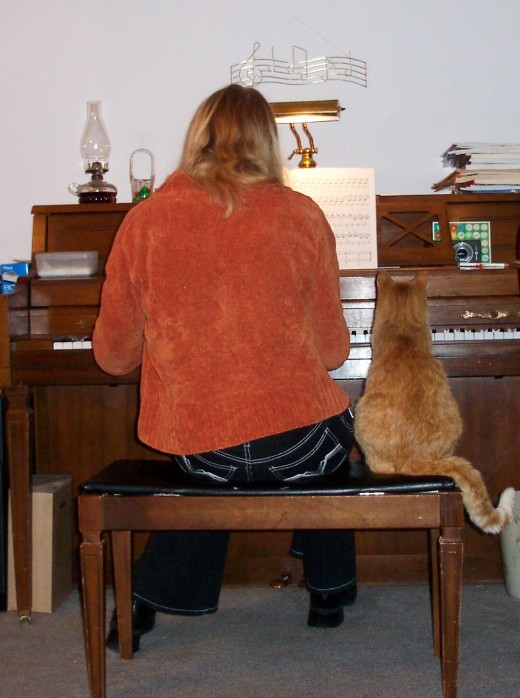
How do you practice the piano, or any other instrument? Simple, right? You just plod your way through a piece, playing it over and over until you can play the whole thing without too many mistakes…or not. Sure, you can learn the notes of a piece fairly well that way, and your teacher might pass it off as acceptable, but it’s not going to make you a concert pianist (or other instrumentalist). I actually wrote most of the contents of this hub a few months ago, when a friend asked me to write out for her the steps for effectively practicing a piece. I was a bit shocked at first—she’s in her third year as a music major in college, and she plays at an advanced level. I quickly realized that a lot of people who play well, even college music majors, don’t really know how to practice effectively. A lot of them plod through it, drill the notes, learn the piece, then go to their lesson, and their teacher practically spoon feeds them everything about the dynamics, articulation, and expression. They end up being able to play the piece beautifully and musically, but they have a hard time achieving the same effect with a piece that they try to learn without a teacher’s help. This hub is mostly geared toward the piano and an intermediate or advanced level, but even if you’re a beginner or you play another instrument there’s a lot in here that could help you.
¨ Before you ever pick up the piece and try to play it, do a little bit of research on the composer and the time period that the piece was written in. Different time periods had different rules for everything from pedal usage to articulation to trills and ornamentation. It is also helpful to know if the piece was written for harpsichord or another keyboard or stringed instrument—this will help with determining when and how to use the pedal, and the general style. If you don’t know much about the time period or composer, it may help to listen to other music written around the same time. This is an important step that is often overlooked by students and teachers alike. After you have done your research, it’s time to pick up the piece.
¨ First, learn the notes. Try to learn the whole piece before going on to another step, so you don't end up with part of the piece polished and part of it shaky. If you find you know one part of the piece well and you don’t know another part at all, ignore the part you can play for a while and just practice the part you don’t know as well. There have been times when I have just practiced one or two measures out of a piece, until I could get them right. More often it will be an entire section or page that gives you trouble.
¨ Next, concentrate on the rhythms. Obviously you won’t have completely ignored the rhythms while learning the notes, but this is where you make sure you are doing all of the rhythms correctly. If you are having trouble with a rhythm, write it on another piece of paper and break it down as much as you need to, until you understand it. Then put it back with the rest of the piece and play it in context. If you have trouble with that, play just one hand at a time through that part until you get it, then put it back together with both hands.
¨ Run the piece with a metronome. Start at a speed slower than what you think you can play it at. If there is one section you have more trouble with than the rest of the piece, work on just that part with the metronome until you can play it at the same speed as the rest of the piece. Then put it back together, and gradually increase the speed until you have it up to the desired tempo. Never increase the speed until you are 100% confident at the speed you are currently going (this is usually my downfall). This step is often ignored or avoided, but if you want to see just how important it is to use a metronome, take a piece you know well and play through it with the metronome. You will likely be surprised at how hard it is to stay with the metronome. If you learn a piece using the metronome, there will be fewer problems to go back and fix later.
¨ Pay attention to the dynamics. Take the piece (or copy it if it's in a book) and go through the whole thing, circle or highlight all of the dynamic markings you find, including the crescendos and diminuendos. Practice the piece, making sure you get all of the dynamics in there, but if you don't like something, don't be afraid to change it. A lot of dynamic markings are the editor's markings and not the composer's, especially with Baroque and earlier music.
¨ Find all the expression markings, and do everything I said to do with the dynamic markings. Expression is one of the most important aspects of playing a piece—it’s what makes your playing musical. If I wanted to hear a piece played perfectly and I didn’t care about the expression, I would just plug it into a computer. The expression you put into a piece should incorporate what’s written, but it’s more than just what’s written on the page. It’s what makes your interpretation of the piece yours.
¨ If you are like me, you will start memorizing the piece as soon as you start learning the notes. If you are like most other people, you won't memorize the piece until you make in effort to do so. If that's the case, don't memorize it until after you add in all the expression markings (along with your own expression)--you will play it much better and more expressively if you memorize it with everything you want to do already learned.
¨ It can also be useful to listen to a recording of the piece, or several recordings if they're available. It depends on your preference—and your teacher’s—whether you want to listen to recordings before you ever play it, while you're learning the notes, or while you're working on the dynamics and expression, but it is a good idea to do it at some point. Most libraries have a lot of recordings. Youtube is also a good place to look for recordings, and for a lot of pieces you will be able to find more than one recording with different performers. If you can’t find a recording of the piece anywhere, your local classical radio station might be able to help you out (I’m serious—I’ve asked them to find obscure pieces a few times, and they were always able to).
A lot of this might seem like common sense, but I’ve seen over in over again in friends and students that it isn’t. I certainly didn’t just instinctively practice this way—my knowledge and current practice methods are the result of a ton of research that I did in high school on teaching, practicing, and playing my main instrument, the oboe; being drilled into my head by a frustrated college piano teacher; and careful observation of friends and students. I must also admit that even though I know all of this and have written it down, I’m still guilty of overlooking or avoiding some of these steps when I practice—and I always pay for it later. So if you’ve managed to read all the way through this long hub, save yourself time and frustration, and be a better person than I am—follow all of these steps the first time, as you’re learning a new piece.