Advantages of Business Strategy: 7 Keys to Competitive Advantage

Business Success is Hitting the Target

What are the advantages of business strategy? How can formulating a business strategy help for-profit organizations gain and maintain a competitive advantage? How can an enterprise succeed when so many seem to fail in the global economy of the 21st century? The key seems to be in a proactive strategy that is forward thinking even when the past was meager at best. Embraer Aeronautics learned the advantages of formulating a clear business strategy and how it could propel it to the top of their industry. Embraer Aeronautics of Brazil is one of the largest airplane manufacturers in the world, but was not always so. For 10 straight years the company struggled to make a profit, then a new CEO took over; quizzed all of its existing customers about what they wanted from Embraer; and designed and implemented a new strategy. From his efforts, he found that the advantage of defining and implementing a solid business strategy was that it gave his organization Embraer a competitive advantage in the airplane manufacturing industry.
SWOT Analysis
Analyze Strengths and Weaknesses
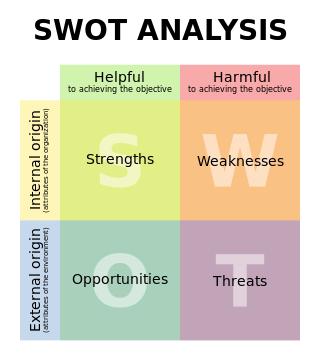
Defining a solid business strategy begins by analyzing the strengths and weaknesses of the organization. In order to properly assess the qualities of a company, the management has to be brutally honest about its ability to compete. Every part of the enterprise must be scrutinized for its capacity to outperform the competition in its industry.
When he became Chairman and CEO of GE, the candid and charismatic Jack Welch made it clear that any division of the company that was not number one or two in its industry would be sold off or shut down. In this way, Welch forced division managers to be brutally honest about their ability to compete in the marketplace.
Assess the Opportunities and the Threats
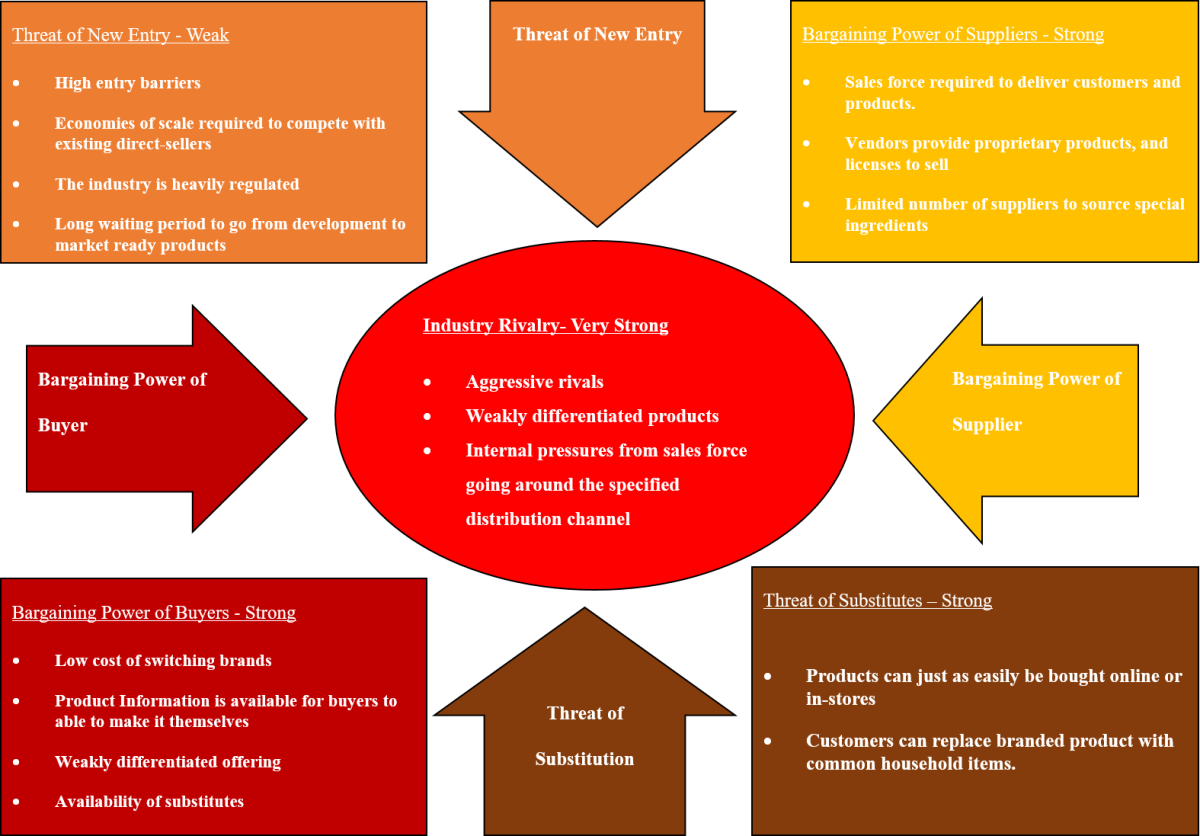
The second key to competitive advantage is to assess the opportunities and the threats. Opportunities can be defined as the possibilities of available for exploitation by the business. Threats are any obstacles that might hinder an organization from fulfilling its strategy. Michael Porter, an expert in organizational behavior, sites five common factors that influence or apply pressure to an enterprise; they include threats like new entrants into the corporation's chief industry; new laws or governmental regulations; and the strength of consumers and or suppliers. Having a keen understanding of opportunities and threats can help an organization formulate a targeted strategy that will lead to a competitive advantage.
Determine Core Values
A third key to formulate a winning business strategy is to determine your core values. What do you stand for? What is the ultimate message of your company? What are the key assumptions that your organization is built upon? Honesty? Integrity? Stellar customer service? Quality employees and staff members? A product beyond compare? Community service? Determining your core values will help you focus and design a business strategy that will give your organization a competitive advantage.
Apple co-founder Steve Jobs was determined that Apple would create and offer products and services that met and exceeded customers expectations. To Jobs, nothing was allowed to get in the way of this passion and drive to keep Apple as the chief innovator in the consumer computer related products and services. Jobs was not known to have the best employee bedside manner. His passion drove him to drive others to go exceedingly beyond what they imagined they previously believed they had the ability to do. Jobs defined Apple's core values and never wavered. At the time of his untimely death, Apple had grown to be the world's most valuable company in terms of stock equity value.
Define Your End State Goals
The fourth key to developing a successful business strategy is to define your end state goals. These are the main objectives of the organization. After analyzing strengths and weaknesses, assessing opportunities and threats, and determining core values, then management can proceed to put together its core strategy. Defining the main objectives will help the organization focus its energy on what it can do and push aside unrelated activities. What do you really want to accomplish? What are you equipped to do? What can your enterprise do better than anyone else? What need is your company uniquely positioned to satisfy? (Biehl). Defining your end state goals that are consistent with your core values will help you gain a competitive advantage.
Assess Related Risks
Another key to competitive advantage is to assess the risks related to the end state goals or main objectives. Business strategists Cornelius de Kluyver and John Pearce advise business leaders to balance strategic interests according to risk. Risk is the probability of success or failure. Usually, when the potential gain is substantial, then the risk is greater and vice versa. Top management must carefully weigh each action according to whether the desired result will be worth the effort or financial outlay.
Implement the Strategy
A business strategy is only as good as its implementation. So, the sixth key to defining a winning business strategy is to make it happen. The major key to effective implementation is communication at all times and on all levels. In order to put the strategy into action, top management has to define metrics (small steps) and targets (timetables) that will guide the organization step by step to its end state goals or major objectives. Many organizations go through the struggle to define a new business strategy, but never follow through to the implementation stage. Putting the strategy into play will lead to a competitive advantage.
Evaluate the Business Strategy
The seventh key to a winning business strategy is to evaluate each stage and make adjustments. No strategy is flawless. Putting mechanisms in place to review and alter weaknesses in the plan will help refine the strategy and make the organization more effective. Astute evaluation and related adjustments will lead to competitive advantage.