Boxing for a Better Core
Albert Isordia
IDEA 2009
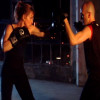
Kill the body and the head will follow. This saying is well known to professional boxers. Without a strong core to withstand punishment and generate powerful explosive movements, a fighter is beaten before he or she has begun.
The core consists of the deep abdominal muscles and the muscles closest to the spine. Boxers understand that to develop devastating strikes, they must use kinetic energy. This power is launched from the ground and must be channeled through the body. It is then amplified through efficient use of the core complex. They must also be able to contract those same core muscles to absorb and deflect body blows.
Learning Objectives:
After completing this course you will be able to use boxing style training to:
- Develop balance
- Develop coordination, rhythm, and timing
- Improve flexibility
- Increase power delivery from the core muscles
- Correct postural misalignment
- Increase cardiovascular endurance and breathing efficiency
- Contract the abdominal complex muscles quickly
Core Anatomy
Transversus Abdominus, Internal Oblique, Lumbar Multifidus, Pelvic Floor Muscles, Diaphragm, Latissimus Dorsi, Erector Spinae, Iliopspoas, Hamstrings, Adductors, Rectus Abdominus, External Oblique
Training Techniques
- Functional boxing movements
- Drawing in for impact
- Pilates based conditioning
- Resistance training
Training Tools
Resistance Tubing
Floor Matts
Boxing Fundamentals
Solo
- Standing:
- jabs , cross, hooks, uppercuts
- body blocks
- Floor:
- Plank,
- plank and punch straights
- plank and punch hooks
- Crunch and punch solo
Notes:
Partner
- Standing
- Evasion skill drills
- Bobbing, slips, bob and weave, lean away
- Crunch and punch partner ankle to ankle.
Impact Training
- Floorwork draw crunch and punch (partner impacts the center).
- Standing draw, palm impact front and side.
- Thai kickboxer's shin block side to side (oblique work)
- Thai kickboxer's shin block crescent style (rectus abdominus & obliques)
Pilates Based Conditioning
- Hundred
- Criss Cross
- The Saw
- The Hug
- The Spine Twist
Boxer's adaptations
- Sitting haymakers
- Feet together
- Feet Apart
- Hundred punches
- Run and Punch
Resistance Tubing
Chest Press
-Contracting T.A. (Transverse Abdominus),R.A. (Rectus Abdominus), firing Pectoralis Major / Minor
Forward Step
-Contracting R.A. and firing the Erector Spinae and Iliopspoas)
Rows
-Contracting T.A. (Transverse Abdominus), firing Latissimus Dorsi, and Erector Spinae
Backwards Step
- Contracting T.A. (Transverse Abdominus), firing Hamstrings, Adductors, Gluteus Maximus
Lateral Step
-Contracting T.A. (Transverse Abdominus), firing Hamstrings, Adductors, Gluteus Maximus, and Medius
Cable Cross
-Firing the Trapezuis, Deltoid and Rhomboids, Contracting the T.A.
Bow and Arrow
-Firing the Rhomboids and Latissimus Dorsi
Side Twist
-Working the T.A. (Transverse Abdominus),R.A. (Rectus Abdominus), Erector Spinae, Iliopspoas and Gluteus Medius
Albert Isordia
Bibliography:
ACE Group Fitness Instructor Manual. 2nd ed.
NASM Essentials of Personal Fitness Training (Lippincott/Williams & Wilkins, 2007)
Verstegen, Mark. Core Performance The Revolutionary Workout Program to Transform Your Body and Your Life. New York: Rodale Books, 2004.
Championship Training / Heart of a Champion (2005) DVD
Starring: Roy Jones Jr., Mackie Shilstone
The Complete Book of Pilates for Men: The Lifetime Plan for Strength, Power & Peak Performance by Daniel Lyon (Sep 27, 2005)