create your own

What Does Agnostic Mean?

77
rate or flag this page

By Chuck


Agnosticism and Atheism are Not The Same

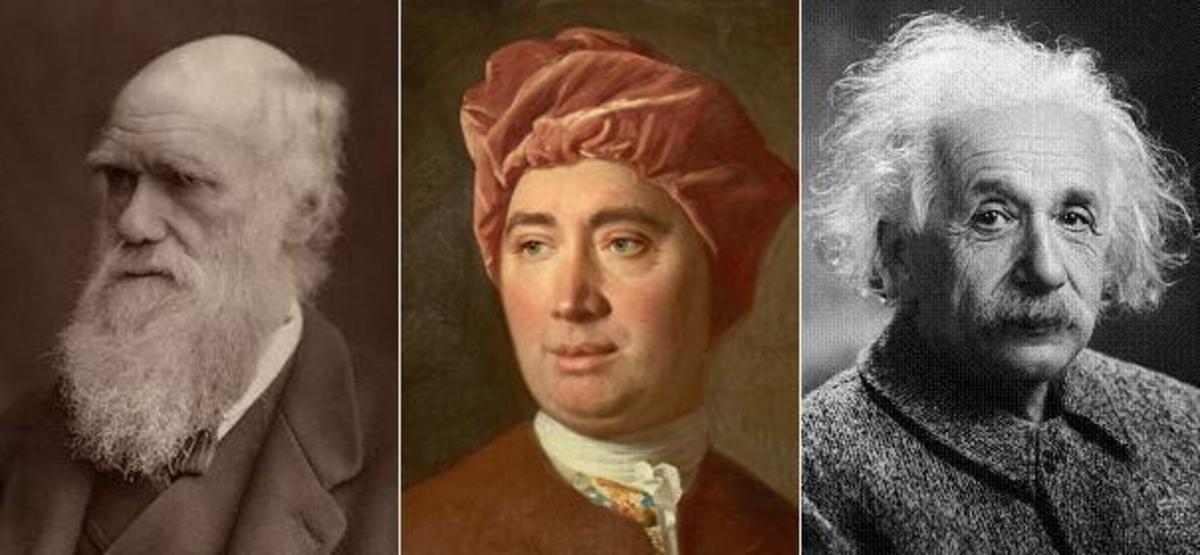
Agnostic is a term created by the English zoologist Thomas Henry Huxley (1825 – 1895) in 1869. The word agnostic comes from the combining of two Greek words, a which means without and gnosis which means knowledge. Thus, agnostic refers to the belief that certain things are unknowable (without knowledge or no knowledge to back up the belief in the existence the thing in question).

Huxley invented the term agnostic to explain his idea (actually his philosophy) that it is impossible to know whether traditional Western religious beliefs, such as the existence of God, of Heaven or Hell, or an afterlife, etc. are true or not. While the terms agnostic and agnosticism are generally applied to religious beliefs some, such as the Merriam-Webster Online Dictionary, also apply the term to non-religious opinions (such as political opinions) the truth of which cannot be proved or disproved. The British philosopher Bertrand Russell, in his short essay entitled What Is An Agnostic?, included a paragraph on Soviet Communism which he described as a dogmatic faith, the doctrines of which agnostics would also treat as unknowable knowledge despite the fact that this was a political rather than a religious dogma (the rest of the essay dealt with agnostics' views of religious dogmas).

The main difference between an agnostic and a person who worships a god is that the agnostic bases everything on reason while the person who worships relies on both reason and faith. Agnostics do not deny the existence of God, rather they say there is no way, with reason, to prove or disprove the existence of God. Traditional Western religious belief is also based upon reason but, when the limits of reason are reached, these people use faith to justify their belief in the existence of God. In the New Testament Gospel of John is the story about the Apostle Thomas who refused to believe that Christ had risen from the dead until the risen Jesus appeared before him. After he had touched the holes in Jesus' hands, Thomas believed and then Jesus admonished him with You became a believer because you saw me. Blest are they who have not seen and have believed. (John 20:29-30). In this passage St. Thomas, like an agnostic, required physical evidence before he believed. However, following Thomas' belief based upon physical evidence, Jesus announces that future followers will not have have physical evidence upon which to base their belief but will have to rely on faith.

Agnosticism is not synonymous with atheism. An agnostic neither accepts nor denies the existence of God. Instead, the agnostic position is that the existence of God can be neither proved nor disproved. An atheist, on the other hand, denies the existence of God. Here is a rough definition of terms and the beliefs that they encompass (the explanations below are highly simplified and do not fully explain the beliefs of each, however, a Google search of each of the words below will provide an abundance of information on each one).

Theism (from the Greek word theo or god) this is a belief in one or more gods (monotheism - a belief in one god, polytheism – a belief in multiple gods). Theism is not only a belief in the existence of a god or gods but also a belief that the god or gods are actively involved in the world with us (example, the Christian belief that God knows all, sees all and has concern for his creation and the people in it).

Deism is a belief in God and that God created the world but, once the world was created, God stood aside and does not take an active interest in what goes on in the world.

Agnosticism – neither believes nor denies the existence of God and feel that it is not possible to prove or disprove God's existence.

Atheism (from the Greek a which means without and theo which means god) is a belief that there is no such thing as a god or gods.


RSS for comments on this Hub

wajay_47  says:
3 years ago

Thanks, Chuck. That was very informative. Liked it.

Brad Rhoads  says:
3 years ago

It turns out that there are proofs for the existence of God.

William Baker is one of my profs at Moody Graduate School...

The Philosophical ArgumentsBy Dr. William BakerThe value of the philosophical arguments that follow is that they help us realize thatChristianity is rational; that biblical faith is not blind, but based upon sound thinking. Inevangelizing a world that believes Christianity is an escape from reality, it is importantfor us to know these arguments well.The logic that lies behind each of these arguments is that of cause and effect. Eachargument reasons from effects, or phenomena, to a sufficient cause, something that allhuman experience seems to support. In other words, a ball flying through the airrequired something or someone strong enough to put it into motion; a house on thecorner must have been built by men with sufficient materials and time.

THE COSMOLOGICAL ARGUMENTThe question behind the cosmological argument is, How do we explain theexistence of the cosmos (Greek for "world" or "universe")? Thiessen argues,"Everything begun must have an adequate cause." 1 Likewise, James Buswell explainsthat unless something comes from nothing, something eternal must exist; and that"something eternal" is the sufficient cause to which the universe owes its existence andgreatness.2Materialistic atheists once challenged this argument by affirming that the universeitself is eternal; that there is no evidence for the cosmos having a beginning. However,modern science suggests that the cosmos did have a beginning. For example:• physics teaches that energy becomes less available in a closed system; our world is"running down" (the second law of thermodynamics). Therefore, since the universe isnot constant and since it has a projected end, it cannot be eternal.• astronomy is increasingly favorable toward the theory of an expanding universe (inwhich things are moving increasingly farther from each other) beginning with a primalexplosion; thus, a beginning.• geology recognizes the disintegration of radioactive minerals and uses thisinformation to date the universe. If something has an "age," it cannot be eternal!• chemistry holds to a theory of the consumption of hydrogen which is the source ofmost energy; thus a beginning.God's Plan and Sovereignty, and Man's FreedomThe only alternative to materialistic atheism, other than believing in the existence ofGod, is the absurdity that something comes from nothing. It takes irrational faith toaccept this as an explanation of the universe, although many scientists do theorize thisway The principle of cause and effect is built into our experience, and indeed is thefoundation of science itself. The cosmological argument strongly argues for a sufficientcause; however, it does not establish that this is an intelligent, personal, moral, andperfect being

THE TELEOLOGICAL ARGUMENTThe Teleological Argument (from Greek telos meaning "purpose") asks thequestion, How do we account for the obvious purpose and design of our universe? Onthe basis of all observable data, that which has purpose or design implies an intelligentcause. Psalm 94:9 says, "He who planted the ear, does He not hear? He who formedthe eye, does He not see?"In everyday observation this argument is illustrated by the fact that all objectsrevealing a design (e.g., automobiles, computers, watches, aircraft) are assumed tohave, as their ultimate cause, a designer. The universe itself, through laws of natureand physics, is characterized by design and specific order; thus, a designer exists.Added to the first, this argument establishes that the sufficient cause is intelligent.But again, it has its limitations; we cannot yet say that our sufficient, intelligent cause ispersonal, moral, and perfect.

THE ANTHROPOLOGICAL ARGUMENTThe Anthropological Argument (from Greek anthropos meaning "man") asks thequestion, How do we explain man's personality? Reason tells us that something ascomplex and wonderful as "personality" could not arise out of nothing, or eveninanimate matter. Ultimately, its sufficient cause must be a greater personal being -God.Assuming this, the Bible explains the sufficient cause of man's personality inGenesis 1:27: "And God created man in His own image, in the image of God He createdhim; male and female He created them."The anthropological argument, combined with the previous arguments, leads us tothe conclusion that our sufficient cause is intelligent and personal.God's Plan and Sovereignty, and Man's FreedomTHE MORAL ARGUMENTThe Moral Argument is perhaps the most convincing of all arguments for God'sexistence. It asks the question, How do we explain man's conscience? The logic is this:Man's consciousness of, or sensitivity to rightness and wrongness implies theexistence of a fixed moral law and, therefore, a lawgiver. Some argue that this moralsensitivity is created by people for the sake of their own advantage or desires. It ismerely personal convenience. How do you explain, then, people who do something thatis to their disadvantage because of a sense of "rightness"? (I give money to supportrefugees; I return a lost wallet with cash in it.) Where does the drive to abide by thatrightness come from (or the self-condemnation and rationalization when one doesn'tabide by it!)?Another objection is that moral sensitivity results from the consensus of the welfareof society; that is, it is the imposition of the majority rule upon an individual. Societyhowever, is only the aggregate of individuals (who apparently sense right and wrong).Further, it is beyond the cultural realm, for some morals are agreed upon by all societies(e.g., respect of property, punishment for heinous crimes like murder, rape, etc.). Theseobservations can only be explained by recognition of a consciousness of right andwrong within every man.Man's conscience testifies to the existence of a higher law, hence a lawgiver,outside of himself, outside of his society This argument offers further support for theexistence of God by saying that the sufficient, intelligent, personal cause, is a morallawgiver.

THE ONTOLOGICAL ARGUMENTThe Ontological argument (Greek for "existence") is perhaps the most debated ofall the theistic arguments for God's existence. It asks the question, Where did the ideaof a perfect being come from? Since "every idea in our human culture has somecause,"3 the idea of a perfect being must have a cause. In an imperfect universe it isreasonable that a perfect being put such an idea into man's mind.It has been argued that many ideas exist of beings which do not exist (such as theimaginative creatures of the film world). However, each of these creatures arecombinations of impressions of real things. The argument, after all, states that everyidea has a cause, not necessarily an objective reality. What real things in man'senvironment could cause his idea of a perfect being? Only the existence of a realGod's Plan and Sovereignty, and Man's Freedomperfect being - God.Some believe that by thinking of imaginary flawless qualities in an imperfect man,one can arrive at the idea of a perfect being. Not so when we try to conjure up a beinglike the God of the Bible; He is totally foreign to our thinking (compare non-Christianreligions to the Bible). He is forever surprising man, forever acting in ways we do notexpect and cannot guess.Thus, the arguments taken together reason that there is a sufficient, intelligent,personal, moral and perfect being - that is, the God of the Bible.God's Plan and Sovereignty, and Man's Freedom

tiberiu -RO-  says:
2 years ago

I want to get more information about this religion and if it is posible something relevant in my language(romana).Tell me about the difference between agnostiq and other religion(ortodox,catholic,other..).Please send a short description

Vincent Von Lupin  says:
2 years ago

Agnosticism is not a religion. It is like atheism in that it has no set beliefs, creed, or structure. An Agnostic like an Atheist is free to question and dispute the existence of god. Most people in fact are Agnostics, or at least have had spats of agnosticism. It is the easiest ideology to accept and understand. It shares the same root with Atheism in that Agnostics question faith, and are ok with the answer "I don't know". It is hard to pigeon hole Agnostics, even more then Atheists because their is no set of beliefs. Usually, and I hope no one will take to much offense to this, Agnostics are just atheists who are timid and do not go the next step.

So for example the difference between a Catholic and a Agnostic, are very huge. A Catholic believes in One Abrahamic god, but also in the trinity(Three gods in One) a whole slew of demi gods(read as Saints), Angels, devils, miracles, and so forth. A Catholic must be Baptized and go to ritualistic Cannibalism (read as Communion), they must give confession, believe in sin both original and by their acts, and be redeemed. They also believe the pope is the most holy person and has direct access to god. Heaven and hell exist, you used have to eat fish on Fridays, women can't be priests, you can't use condoms, and many other wacky and not so wacky things.

An Atheist doesn't believe in any of that, an agnostic says "It's cool, I just don't see any evidence for it, so untill you prove it to me It might be true it might not be." These people are fence sitters refusing to pick a side. Thats cool though because they never get caught up in faith. They lose out on the bad qualities and can generally take the good qualities. If you are religious and a Catholic you can't really pick and choose you get the whole religion good and bad. Its why many people are really agnostic even if they claim to be religious. They doubt and don't believe lock stock and barrel.

optionquest profile image

optionquest  says:
16 months ago

Brad, in your reply above you start by claiming "proof". Yet you only mention hypotheses, which can be argued to no end, e.g. The Euthyphro Dilemma, etc. See my hub called A Kingdom of One and see how you like my reasoning on the subject. I take the agnostic view, that we don't know, and it is silly to claim that we do. It takes maturity to admit that, and to live comfortably without "faith" in fairy tales.

Nia L profile image

Nia L  says:
4 weeks ago

Intersting hub. You might this interesting too:

http://hubpages.com/hub/Scientific-Evidence-of-the

Submit a Comment

Members and Guests

Sign in or sign up and post using a hubpages account.


optional


  • No HTML is allowed in comments, but URLs will be hyperlinked
  • Comments are not for promoting your hubs or other sites

working