William Kennedy Smith Case: All the Names If You Please
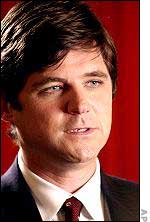
Acquitted in 1991 Rape Trial
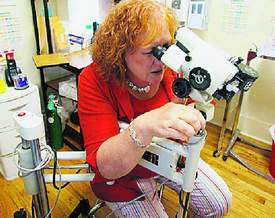
Special Camera Measures Injuries
"Hello. My name's Patricia Bowman. I'm the one who accused William Kennedy Smith of rape."
Now it can be told!
Miss Bowman, her name and face shrouded by media throughout the long Palm Beach, Fla., trial, no longer eschews publicity. By agreeing to appear on national television, Miss Bowman likely will become a household name -- and face.
Withholding the names of women who make accusations of rape became a widely discussed issue when the Smith case surfaced. Most electronic and print media declared they would protect the accuser by not revealing her name and by not showing her face. The trial, and events connected with it, drew unbridled media attention.
Law Declared Unconstitutional
The debate over the wisdom, or right, of the media to identify one who makes an accusation of rape began even before the case went to court. When a Florida newspaper, The Globe of Boca Raton, printed Patricia Bowman's name the state attorney of Palm Beach charged the newspaper with violation of a 1911 state law by revealing her name; a judge then ruled the law unconstitutional. Despite anonymity elsewhere in the nation, and throughout the world, Miss Bowman's identity had been common knowledge in Florida throughout the trial.
Bad Journalism
Those who believe it best to protect the identity of women who make accusations of rape, presumably to help alleviate the pain that publicity would bring as well as to encourage others to report rape, are wrong. Withholding the names of such accusers is both bad journalism and a threat to the rights of everyone, not to mention unfair to the accused.
Few people involved in criminal cases would allow use of their names if the decision were up to them. Newspapers frequently receive pleas from those accused of shoplifting, prostitution (or johns), possession of drugs, et al, to please not use their names. The paper is often told: "I'll lose my job." "If my aged mother finds out she'll have a heart attack."
Press Bows Under Pressure
Newspapers also bow to pressure not to reveal the addresses of people who are victims of burglaries.
It is unquestionably difficult for a woman to publicly make an accusation of rape with its attendant trial, noted for embarrassing and frequently degrading testimony and cross-examination.
Use of Names Protects Public
The simple truth of the matter is that those accused of a crime, or the victims of burglaries, are protected by using their names and by reporting the details of their arrest or of the burglary. The same is true of accusers; they are protected by using their names, not by withholding their identities.
In the Smith case, perhaps it is clear now to Miss Bowman that it would have been better if her name and face were not cloaked in anonymity. While it was the media who made the decision to keep her identity secret, not Miss Bowman, one word from her could have changed that.
Media who opt for keeping secret the addresses of people visited by burglars, of johns who are arrested, or of women who publicly accuse men of rape, are misguided. Their motives are good, but their judgment is poor.
Such media should take counsel from their own efforts to maintain their constitutional freedom of the press and the hard-fought freedom of information they demand from others.
Media Puts Spotlight on Danger
Communities in this country are alerted to crime by newspapers and the electronic media. It is through these media that citizens become aware of danger, the first step necessary to take action to protect the community.
If citizens are not aware that burglars find their neighborhood fair game, or if police can make arrests with impunity because crimes are not reported, then citizens face an insidious danger; they are not being protected.
As one rights group reportedly pointed out recently, the stigma attached to rape victims will never disappear as long as the crime of rape is treated differently from other crimes.
I wrote this column as an "Editor's Notebook" for The Hour newspaper of Norwalk, Conn., on Dec. 21, 1991. I now write my views on a wide variety of topics on HubPages.