- HubPages»
- Pets and Animals»
- Tropical Fish & Aquariums»
- Freshwater Aquarium Animals
Keeping Aquarium Snails

Snails are nearly ubiquitous in freshwater aquaria. Aquarists vary in their attitude towards snails - many see them as a scourge that must be controlled, if not eliminated outright. Bulletin boards are full of questions about how to control snail populations. Snails are easily introduced on plants, rocks or other decorative items like driftwood. Most reproduce quickly and some, like Malaysian Trumpet Snails, quickly grow to the level of infestation. Some snails eat plants, and can damage aquarium plants. Some will eat eggs, even baby fish. And some play a role in the life cycle of fish pathogens.
Many aquarists seem snails in a more positive light. Snails consume algae and can keep glass and rocks clean. Snails consume dead plant parts and uneaten food that might otherwise decompose and foul the water. Trumpet snails burrow through the substrate and bring oxygen into these substrates.
Quite apart from this utilitarian view of snails, some aquarists see them as desirable pets, and may dedicate aquaria to certain species. Popular pets include Olive Nerita snails, Ramshorn snails and Apple snails (also known as Mystery snails).
Olive Nerita snails
Olive Nerita snails are small omnivorous snails which are native to the Gulf of Mexico, the Caribbean and southern Florida. As suggested by their name, they are brown, green or olive-black in colour. They are good at consuming algae and uneaten food, and do well in small aquaria. Their larvae require brackish water - this means that they will not breed in aquaria. This is a plus for many fish keepers, since they fear plagues of snails.
Ramshorn snails
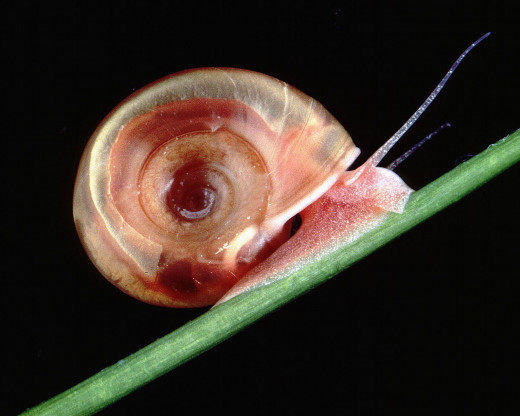
The name ‘Ramshorn snail’ is applied to just about any snail that has a tightly spiral-coiled shell like a ram’s horn. Some Ramshorn snails carry parasitic flukes which can infect fish and humans and should be quarantined for at least 30 days before they are introduced into your tank.
Apple or Mystery snails
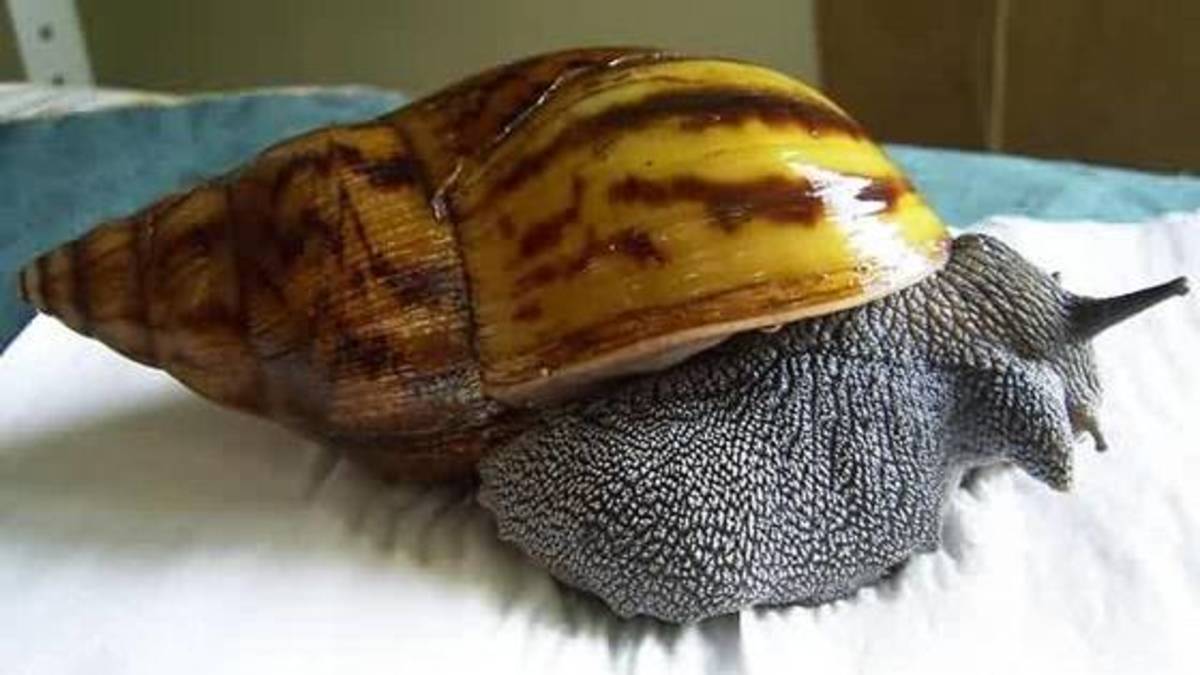
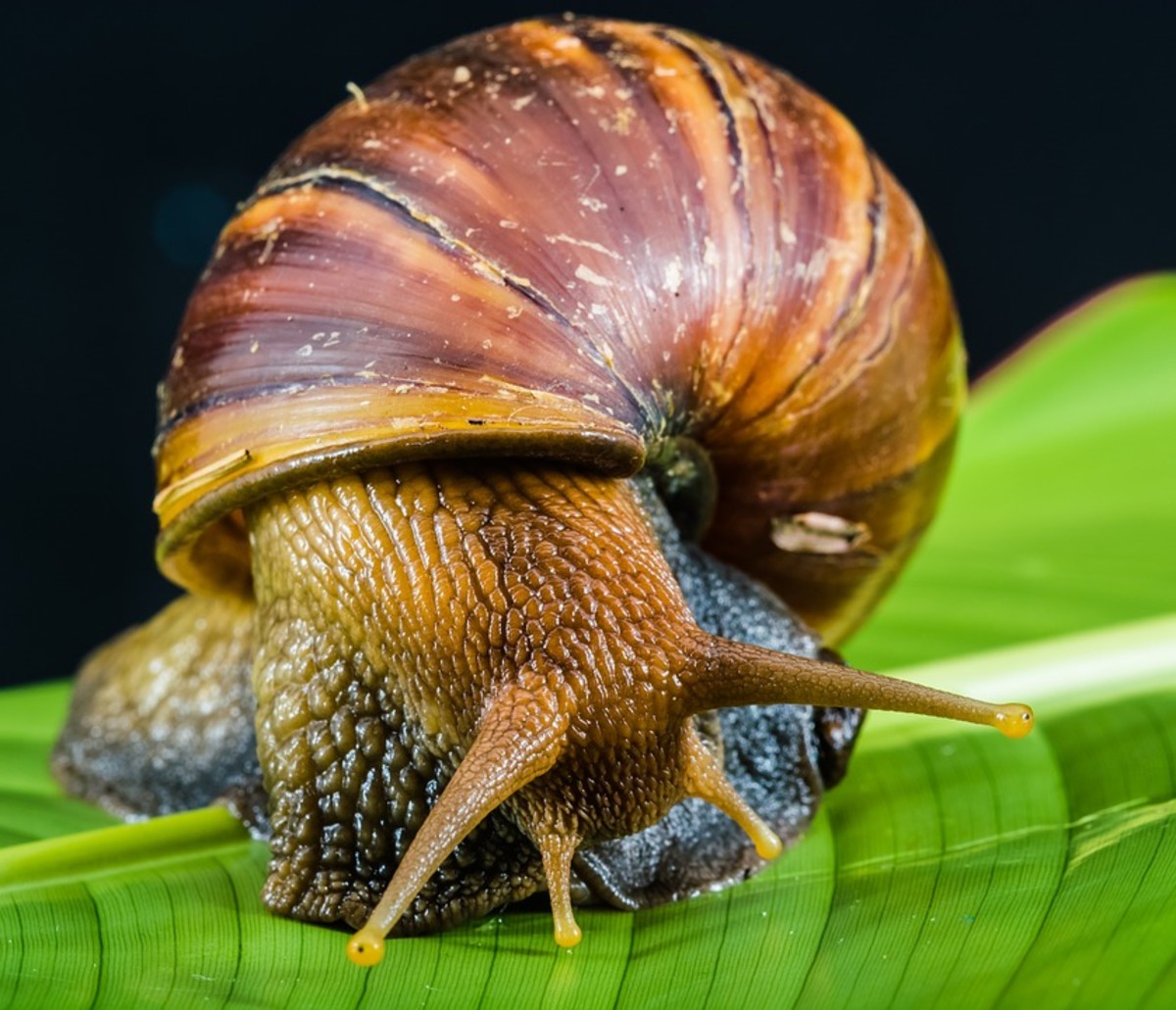
Apple or Mystery snails are the largest snails commonly kept in aquaria. They are often offered for sale in pet stores, where brightly coloured or albino varieties are available. Apple snails are large and can tolerate more boisterous or aggressive tank mates. They are not, however, good choices for planted aquaria because they will readily eat live plants. The South American or Channeled Apple snail, Pomacea canaliculata is a serious pest in some parts of the world, including the southern United States and Vietnam.
For this and other reasons, snails should never be released into bodies of water. Excess snails should be killed and disposed of in properly.
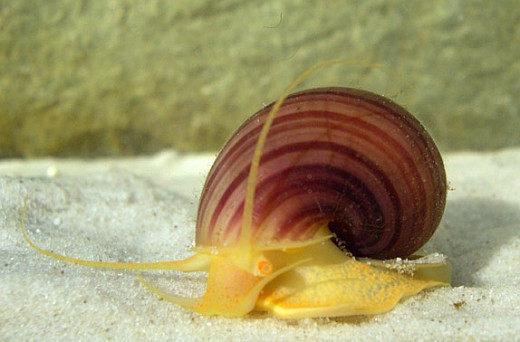
Assassin snails
Assassin snails (Clea helena) are attractive brown and yellow striped snails that are popular with some aquarists because they are predators that feed on other snails. They are sometimes promoted as a way to control snail populations, but given that it takes a large population of assassin snails to really get a snail population under control, they are at best a management tool.
Get them for their own sake, as attractive pets. If you need to control your snail population, there are other more effective methods.
Controlling snail populations
One of the most common questions people have about aquarium snails is how to control a booming snail population. There are a lot of tools available, including snail traps and snail-eating fish. In the end though, snail management is about managing the amount of food available to the snails. If your snail population is exploding, consider the possibility that you might be overfeeding your fish. Cut back on the amount of food you add to your tank and work on cleaning your gravel. Other tools for controlling snail populations include killing them (many fish are happy to munch on crushed snails) and removing and destroying their egg masses.
In the end, it's about available energy. If there's excess food, your snail population will grow. If there's insufficient food, it won't.
References
Howe, Jeff. Invert Your Tank. Freshwater and Marine Aquarium, March 2008.