Are All Geniuses Crazy?
77
Genius in the movies
I watched the movie "Proof" some time back - Gwyneth Paltrow plays the daughter of Anthony Hopkins, and both are extraordinarily mathematically gifted. The story was interesting, in its own way, but what struck me most was its thematic connection with movies such as "A Beautiful Mind" and "Good Will Hunting." The presupposition each movie makes is that a person with a high degree of genius mathematical intellect must also, necessarily, be crazy.
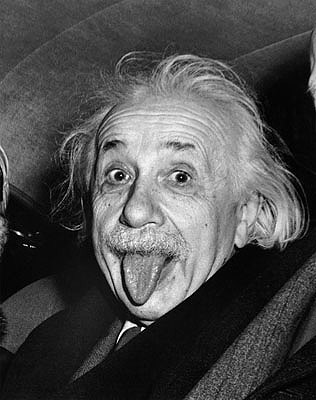
This theory comes from where? Einstein, presumably, since he was brilliant, but didn't have the presence of mind to comb his hair. Hair combing being the sign of unequivocal sanity, of course.
But what's interesting to me this common thread we're supposed to automatically understand as the viewer, which is that mathematical genius is just a step from psychosis, or paranoid schizophrenia. Certainly it borrows some origins from that of the (idiot) savant - the functional illiterate whose cognitive powers are, somehow all channeled into one talent that they master above all else - such as playing the piano, or solving complex mathematical algorithms.
What we don't understand
It makes for an interesting premise, and it's even more intriguing to me why we, the audience, buy it so readily. In high school, my two best friends were mathematically gifted. One was probably destined to be an engineer by the age of eight - he's just that technically-minded. Back then, my friends would have these high-brow calculus+ level discussions about things I didn't understand, subtley patronizing me when I asked inane questions. I was, you see, their mathematically average friend - good in English, but so what, right? Just to rub it in, my engineer friend was able to get one of his essays from English class published in a school textbook - take that, English-boy! See how inconsequential is writing knowledge?
I bring this up to make a point - writers make movies, and writers are seldom gifted mathematicians. So, naturally, people strong in the language arts are apt to look at the mathematically-gifted with the same kind of drunken awe as I did when I was in high school. What we don't understand, we either idolize or condemn. Or, we do both - so we create this "crazy genius." The mad scientist. Can't be smart and literate, right? That would make us feel small and inconsequential beyond words!
I know I'm being flip, but it is an interesting way to look at it, isn't it?
With that said, I do find it intriguing to examine who we, as a society, find crazy vs. who we determine to be genius. There can be a fine line. Take the proverbial downtown transient - let's call him Marvin Schlinkmann. Marvin doesn't bathe, shave or sleep indoors. You see him early in the morning sleeping on the steps of a church. At lunchtime, he's wandering down the street muttering to himself while we glance the other way as we head to meet our friends at Hamburger Mary's. Who's to say he really isn't talking to someone who we're too unevolved and self-absorbed to see or hear? This person may exist on a separate plane of existence, and through some tweak of cosmic fate, Marvin was granted unique insight into this parallel dimension. His conversation is simply him serving as tour guide for his cosmic neighbor.
How do you feel about that? Does it make you want to idolize or condemn Marvin?
Being There
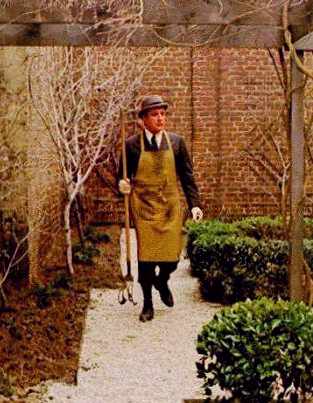
Bottom line, don't we all just want to know what we don't know? When we see glimpses of insight into areas of knowledge we don't understand, I'm afraid we sometimes grant those persons credibility and standing far beyond what they deserve. Certainly, there are savants, people who stand at the precipice of both genius and insanity, but sometimes movies like these remind me of Peter Sellers' amazing character Chauncey Gardener in "Being There."
Sometimes crazy is just crazy.
And sometimes we may just have to surrender to the notion that there are some things we are never going to understand - and make some sort of peace with that.
Either that, or go crazy ourselves.
PrintShare it! — Rate it: up down flag this hub
Comments
Thanks for the comment, redpony - yes, I suppose that makes sense. I do have to say a large number of artists and writers also seem to be crazy in some way (witness the high degree of alcoholism/substance abuse!) Interestingly, and supporting your premise, I found one dictionary definition of "genius" suporting the artistic: "extraordinary intellectual power especially as manifested in creative activity", while another simply states: "a single strongly marked capacity or aptitude."
Perhaps it just comes down to the supposition we're all just a little nuts . . .
Thanks Gerg. A great resource for this subject is www.talentdevelop.com. They cover this topic openly and creatively. Keep writing!
Interesting site - I'll check it out further. Thanks Jenna!
An interesting hub, a nice topic.
Thanks for checking in, hilltrekker!
Nice post. I was a rather gifted mathematician in high school, and I'm *only* above average in college mathematics (however, my degree still says mathematics), and I guarantee the crazyness of mathematicians; all the professional mathematicians are at least a bit nuts.
But then again, so are the physicists. Strangely enough, my Computer Science teachers seem to be among the most grounded.
More importantly, I would like to thank you for responding to the comments that people leave you. All too often it seems like people write an article just to pontificate, and totally neglect their readers (many of whom have interesting points of view). Good job!
Roliel - thanks for commenting! To be honest, it's more likely that because we esteem gifted mathemeticians, etc., we're more likely to notice when another side of them seems less developed. It's the contrast that catches our attention.
I love comments - not only is it validating, it's interesting to see perspectives of others.
Carpe diem!
I was zero in math but a whiz in algebra..go figure! I was gifted with a memory..I could memorize a poem in few minutes and then recite it my eyes closed without a mistake. I could read 5 300 pages (books) and then have you ask me any question, tell you the page the paragraph and if you tried to trick me by quoting from another book..I would tell you.
I also had a solution to any problem..no matter what it was..I found an answer to it..still do. I compose songs, write poems as easy as saying boo..but am I a genius..heck no..little crazy maybe..but then we all are..:)
DRF - it's weird what we can recall. I, for example, remember the phone numbers of all my friends when I was 10 years old. If we're lucky, what we recall and use has some value to us. I hope yours does!
It may be, since we see "crazy" behavior in people of both extremes of right or left brain, that it is that process of "working outside the box" that forces or frees us to appear just a bit nuts even in other aspects of life. If we push the extremes of our abilities it becomes a kind of continuous theme.
Darren - of course, I wrote all of this in fun, but crazy is certainly relative. I find Einstein particularly interesting because he used both right and left brained thinking: mathematics vs. philosophy, etc. Relativity takes a creative mind to think past the numbers into the foundation of modern science. Fascinating stuff!
I feel like this post wasn't really based on any evidence. Many artists and scientists are known "crazies," Newton, Van Gogh, Roger Waters, ect. There are many. When you think extremely deep, you question the reasons behind everything, so continuing in a world that will eventually turn to dust can getunbearably hopeless. You also may compare your achievemants to those of others, and so are constantly driven to be better, but are also often depressed that you will never be best at everything. Also, high understanding from something derives from heavy indulgence in the field, often a result of extreme obsession. Further, like DancingRedFeather said above, and like your example of savant, some people's minds remember things to exactness. And finally, "crazy" is usually just behaving differently than socially normal, so people that are very structured by reasons, would tend not to understand the hypocritacal and unreasoning majority, and so behave differently, and so be called "crazy." I don't think that crazy geniuses were a creation of romantic writers, and i don't think that it's a strict role. Most people probably have some form of autism, depression, and rebelious tendancies, as well as thier own mental accomplishments.
Zorro - probably the reason you feel this wasn't based on evidence is that this article was done tongue-in-cheek (I thought that was obvious!) I do like your statement "high understanding from something derives from heavy indulgence in the field, often a result of extreme obsession." Voila - that is likely the heart of the issue and the point of the entire piece. I appreciate your comments!
A few interesting people to consider. Nikola Tesla, who practically invented the mad scientist and in his later years worked on a no joke death ray. Isaac Newton, who spent more time looking for secret messages in the Bible than doing physics but pretty much invented it anyway. And Edward Witten, the most brilliant string theorist in the world, who is not only decidedly un-crazy but can probably write better than you too (no offense, but he started out as a political journalist). Not trying to make a point, just think these people are cool.
;-) No offense taken, Iceman. I'm a father and an Executive; writing is just what I do for fun (see http://hubpages.com/hub/Write-Therapy). Though I wrote this two years ago, a notable addition is The Soloist - a terrific book and movie about a Julliard cello prodigy who ends up on the streets; now a paranoid schizophrenic - nobly played by Jamie Foxx.


redpony says:
15 months ago
I have M.S. in Math, Gerg :)
The high school "gifted" level is very different from the Math genius level. All outstanding mathematicians-scientists I know are crazy in some way. When I say "crazy" I don't mean psychosis or paranoid schizophrenia. I mean "seriously out of touch with reality and very much idiosyncratic". Imagine ridiculous clothes, strange behaviour, uncommon views on the world, and peculiar grooming habits. It's a fact. But geniuses-mathematicians are not one-sided. They are often very gifted in arts.