- HubPages»
- Education and Science»
- Life Sciences»
- Entomology»
- Insects & Bugs
The Asian Tiger Mosquito - America's Most Unwanted

Distinctive Markings
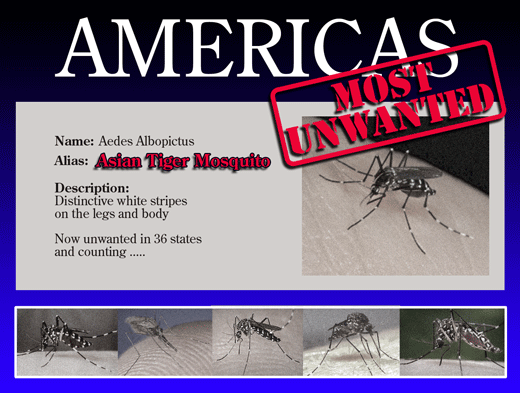
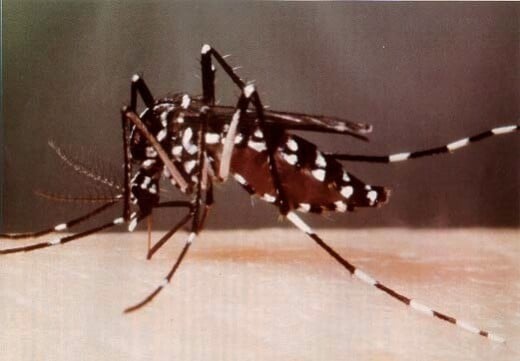
Named for its distinctive white striped legs and body, Asian tiger (Aedes albopictus) mosquitoes are very aggressive daytime biters and feed on a number of hosts, including man, domestic and wild animals, and birds. More aggressive than its cousin the Yellow Fever mosquito (Aedes aegypti) the Asian tiger has a bite that results in considerably more irritation.
The Asian tiger can be found in shady areas where it rests in shrubs near the ground. However it is an opportunistic biter that will bite as often during broad daylight as it will at dusk. With a preference for humans over animals, this mosquito species typically approaches at ankle level, working its way up the body.

The Asian Tiger is native to Asia and it's believed the species spread to the Western Hemisphere as a result of the international tire trade. The U.S. imports millions of tires from Asia for re-manufacturing purposes, and it's likely that tires imported to Houston, Texas from Japan in 1985 brought this mosquito species to the United States where it has thrived.
Since first being reported in Texas, the Asian tiger has steadily invaded southern and southeastern states with officials now reporting its presence in more than 36 states, including Maryland and Virginia, as well as the District.
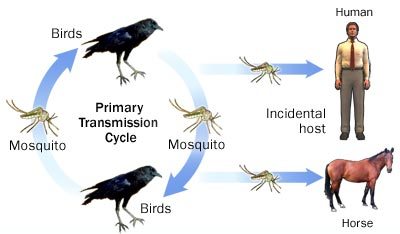
West Nile Virus Transmission Cycle
The Asian tiger is an efficient disease bearer, or 'vector' of over 30 arboviruses including Dengue fever, West Nile virus, Encephalitis, and Chikungunya. However, if one disease gave the Asian tiger its 'most unwanted' status in the U.S, it would be West Nile virus (WNV).
This serious, life-altering and even fatal disease is carried by birds and spread by infected mosquitoes. West Nile has killed hundreds of millions of birds and more than a thousand people in North America, with new outbreaks occurring each year. The first reported U.S. outbreak was in New York City in 1999, where an average of 2.6% of the population were infected. According to the CDC, 284 people died in 2002, making it the worst year for the virus. Ten years on, 2012 became the second worst year on record with a total number of 4,725 infections and 219 deaths.
Unfortunately there is no way to protect against West Nile virus - there is no vaccine as yet. However Qiang Chen, a plant biologist at Arizona State University is currently researching ways of producing antibodies in lettuce and tobacco-related plants as a way of combating the virus.
The Centers for Disease Control (CDC) advise that preventing the bite is the best known protection, as this is typically how the virus is transmitted.


Protect Against The Bite
The Asian Tiger uses visual cues to select its target and is attracted to dark colors, especially black. Bite protection include the following precautions:
- Wear light colored clothing, long pants and shirts if possible and spray all over with an effective insect repellent before leaving the house.
- Use screens and mosquito netting to provide skeeter-free zones in and around the home
- Keep bushes trimmed, grass mown and gutters clear.
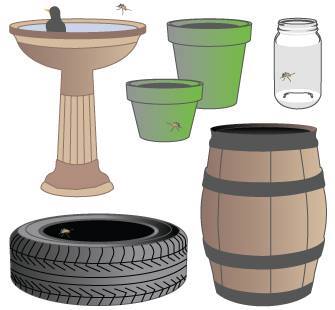
Eliminate Mosquito Breeding Sites
Deprive mosquitoes of their favorite places like standing water, which can become potential mosquito nurseries.
It doesn’t take much, an inch or two that has collected in a child’s toy, a tarp, flowerpot, or an old tire. Stagnant pools, birdbaths and fountains are another mosquito favorite.
Females lay their eggs every three days in standing water and they’re not particular where.
Chikungunya the next West Nile Virus
Chikungunya, a painful and debilitating mosquito-borne virus which has spread rapidly through the Caribbean is tipped to be the next West Nile Virus. The disease is transmitted by Aedes mosquitoes – specifically Aedes albopictus or the Asian tiger mosquito. Experts who have been tracking the Caribbean outbreak say with increased travel, especially during the cruise season, it’s not a matter of if, but when the disease will hit the American mainland.
In the summer of 2007 the Asian tiger was responsible for the first Chikungunya fever outbreak in Italy.
Taming the Tiger
Health authorities have worked out that nighttime adulticiding has had little or no effect on the Asian tiger, because being daytime biters, by then they are hiding under leaves and bushes when the trucks go by. The most effective way of taming the tiger, is to stop them breeding; and this can be done by removing all their most popular breeding sites and daily trapping during the season which will interrupt breeding cycles, dramatically reducing mosquito populations and even the number of eggs hatching the following season.

Catching the Tiger
A good mosquito trap is a pretty effective weapon for use in an open space like a back yard. Because, despite the fact that these machines can't kill every mosquito, there are reports of them killing thousands in a single night.
Mega-Catch™ traps were developed after an extensive worldwide testing program, and one of the primary objectives was to develop a trap that would attract and capture the Asian tiger mosquito, which are aggressive, often attack in packs and unlike most mosquitoes, bite during the day.
In 2000, tests were carried out in a reserve forest at Minden Campus, University Sains Malaysia in the Penang Island. They concluded that the Mega-Catch™ trap was effective against the Asian Tiger mosquito in outdoor conditions in tropical environments; because unlike conventional mosquito traps which rely on various chemicals to attract mosquitoes, these traps employ a range of visual stimuli to attract mosquitoes. This is particularly important in the case of daytime biters like the Asian Tiger mosquito which are attracted by visual cues (movement/the color black) as well as CO2 and sweat to find their targets.
Trap location is also crucial according to published study in PLOS One. It reported that trap placement significantly affected the number of Asian Tiger mosquitoes captured with catch rates in shade or partial shade over three times higher than those in areas exposed to the sun.
Climate Change and the Asian Tiger
In 2012, a group of researchers in Texas decided it would be interesting to look at different climate change emissions scenarios from the IPCC and see what the effect climate change might have on the Asian Tiger mosquito. The researchers used three of the world’s best and most detailed climate models; the CM3 model from the UK’s Hadley Center, the National Center for Atmospheric Research model in Colorado, and the National Oceanic and Atmospheric Administration’s CM2.1 model.
What they found was very interesting, and not what they had originally expected - it might get too hot in Texas that even the mosquitoes die from the mid-summer heat.
However other parts of the globe might not be so lucky with experts predicting that as a result of global warming all of Europe will eventually become ideal habitat for the species.
The Only Good Asian Tiger is a Dead Asian Tiger
There are no half measures when it comes to this particular species - the only good Asian Tiger mosquito is a dead Asian Tiger mosquito!
If you don't want to end up with blood on your hands, find out now and find out how.
Related
Combating, Controlling, and Repelling the Asian Tiger Mosquito
Sandflies, Gnats and the B That Bit Me - Flies that Bite and Cause an Allergic Reaction

The National Air & Space Museum’s De Havilland Mosquito
Growing Citrosa Geranium ~~ Is It Really a Mosquito Repellent Plant ?

How to Make Homemade Organic Mosquito Yard Spray