Banking system in India. Why banks in India are facing difficulty in getting deposits?

87Further insight into banking systems around the world

|
Banking and Financial Systems
Price: $18.67
List Price: $51.95 |
|
International Banking Systems Journal
Price: $869.52
|
|
Banking Systems
Price: $16.38
List Price: $61.95 |
A short video on Indian Banking Industry
Do you agree that banks in India are facing difficulty in getting deposits?
See results without votingMake online bank deposits
| No Photo |
Dynamics of Bank Deposits: The Developing States in Ind
Current Bid: $4.66
|
| No Photo |
Dynamics of Bank Deposits: The Developing States in Ind
Current Bid: $4.66
|
|
|
For Deposit Only Endorsement Stamp Bank Deposits Stamps
Current Bid: $11.95
|
|
|
For Deposit Only Endorsement Stamp Bank Deposits Stamps
Current Bid: $13.95
|
|
|
For Deposit Only Endorsement Stamp Bank Deposits Stamps
Current Bid: $13.95
|
|
|
For Deposit Only Endorsement Stamp Bank Deposits Stamps
Current Bid: $11.95
|
Current Indian Banking System Scenario
It is true that banks in India are facing difficulty in getting deposits. There are many reasons behind this problem.
Two points for what was happening in banking and investment sector in the last 5 years
- Increased consumerism: If we look at the consumption pattern in last 5 years, people were moving from being savers to consumers, i.e., more emphasis on benefits gained today rather than gains received through savings in future, this changing attitude is one of the reasons for higher growth in lending compared to deposits.
- Alternatives and risks: People were looking for more alternatives like mutual funds, different insurance schemes, stock market, etc. People were moving to these products with higher return expectations. These instruments also have higher risk and increased income level people who deposit high amounts of money into banks were ready to take these high-risk alternatives.
But now the situation will be slightly better for banking system in India because investors are losing a lot of wealth in stock markets and mutual funds. People will realize the importance of safer investment vehicle and will start diversifying their portfolio with increased exposure to safer instruments like bank deposits.
The banks in India generate their funds from two types of sources:
Long-Term Sources:
- Tier one and Tier two Capital in the form of equity/subordinate debts/debentures/preference shares.
- Internal accrual generated out of profits.
- Long-term fixed deposits generated from public and corporate clients, financial institutions, and mutual funds, etc.
- Long-term borrowings from financial institutions like NABARD/SIDBI.
Short-Term Sources:
- Call money market, i.e., funds generated among interbanking transactions where there is online trading of money between bankers.
- Fixed deposits generated from public and corporate clients, FIs, and MFs, etc.
- Market-linked borrowings from RBI.
- Sale of liquid certificate deposits in the open market.
- Borrowing from RBI under Repo (Repurchase option).
- Short and medium-term fixed deposits generated from public and corporate clients, mutual funds, and financial institutions, etc.
- Floating in current and saving accounts.
- Short-term borrowings from FIs by way of rated papers placed, etc.
RBI plays a role of regulator apart from money provider in specific cases.
Right now this seems to be a short-term crisis unless the production figures of the next month also shows negative trend like it has shown in the month of August @ 1.30% (very low compared to the previous figures of between a band of 5 to 9%).
If IIP figure goes down continuously for the next 2 to 3 months, we have to assume, there is a recession in the country. As the service industry may not grow at the volumes shown previously. The industrial growth is a big hope for the future sustenance of the growth in India.
Now let us analyze the situation of all these sources in the present scenario for the banks:
A) This is not the right time to generate the funds from long-term sources due to the bad market scenario, so let us focus on the short-term sources.
B) Call money market is very tight. RBI borrowings and placing short term papers is not the best way to generate funds as the mutual funds and FIs are facing acute pressure due to withdrawals from the foreign investors including NRIs.
Hence pressure is on retail deposits and now every bank wants to concentrate on these as a source. The rates are increasing. This is a very good time to keep money in a 2- to 3‑year lock deposit with nationalized banks. You may be offered 10.50 to 10.75%. It would be 0.25-0.50% higher in case of the private/foreign and co-operative banks.
I would like to give all credit to the regulatory system in India, which has withstood to the acute pressure on banking sector. You would remember the co-operative bank fiasco 3 years back and now foreign and private banks are under scanner. Thanks to the mature regulatory system, we are relatively safe as far as banking in India is concerned.
Banking system in India. Why banks in India are facing difficulty in getting deposits? in the News
- (AFX UK Focus) 2009-11-20 04:45 Indian shares fall 0.4 pct, banks dropInteractive Investor26 hours ago
MUMBAI, Nov 20 (Reuters) - Indian shares fell 0.4 percent early on Friday, led by losses in banks, in line with the weakness in global equities. At 9:55 a.m. (0425 GMT), the 30-share BSE index was down 0.44 percent at 16,711.49 points, with 25 components declining. State Bank of India and ICICI Bank were down 1 percent each. The 50-share NSE index was down 0.4 percent at 4,968.95.
- (AFX UK Focus) 2009-11-19 03:56 Indian shares seen flat to lower; banks watchedInteractive Investor2 days ago
MUMBAI, Nov 19 (Reuters) - Indian shares may open flat to lower on Thursday after Asian markets were hit by worries about the pace of economic recovery, although the recent strength of inflows from foreign funds is expected to offer support. Banks and financial stocks will be in focus as the government has set reform of the insurance sector as a priority for the parliament session that begins on ...
- Indian banks raise Rs 2,695 cr via CDsThe Economic Times4 days ago
Indian banks raise Rs 2,695 cr via CDsIndian banks raise Rs 2,695 cr via CDs
- Short-covering Lifts Indian MarketINO News20 hours ago
(RTTNews) - After struggling in negative territory till mid-session, the Indian market reversed its direction to close sharply higher on Friday, buoyed by positive opening of the European markets and comments by Planning Commission deputy chairman Montek Singh Ahluwalia that the government is unlikely to impose a tax on capital inflows.
- Indian terrorist probe turns eyes on BollywoodMalaysiaNews.net22 hours ago
Indian investigators say David Headley, an American accused of plotting to kill a Danish editor and cartoonist, had met with several Bollywood personalities between 2006 and 2009.
- Sensex Off To Another Weak Start As Banks DropFox News26 hours ago
Sensex Off To Another Weak Start As Banks Drop
- Sensex Off To Another Weak Start As Banks DropMalaysiaNews.net24 hours ago
HONG KONG -- Indian stocks opened to a weak start early Friday, with banking and technology shares pacing the decline after an overnight drop on Wall Street and as regional markets broadly declined. ...
- (AFX UK Focus) 2009-11-16 07:20 Indian shares rise 1 pct; banks, Sterlite upInteractive Investor5 days ago
MUMBAI, Nov 16 (Reuters) - Indian shares rose more than 1 percent on Monday morning to their highest in more than three weeks, led by gains in banks and supported by strength in Asian markets.
Research Papers from Bank of International Settlements on Financial stability, prudential regulation, and banking system
- 14Aug/Contagion and risk premia in the amplification of crisis: Evidence from Asian names in the CDS market
by Mico Loretan (BIS), Don Kim (Yonsei University Business School) and Eli Remolona (BIS), forthcoming
- 14Aug/Motivations for Swap-covered Currency Borrowing
by Anella Munro (BIS) and Philip Wooldridge (BIS), BIS Papers, forthcoming
- 01Jun/Commercial property prices and bank performance
by E Philip Davis and Haibin Zhu, Quarterly Review of Economics and Finance
- 10May/Household debt, monetary policy and financial stability: a unifying model
by Andrew Filardo, BIS Papers no 46
- 10May/Global Shocks and Economic Stability in Asia and the Pacific
by Már Gudmundsson and Philip Wooldridge, SEACEN Occasional Paper, no 48
- 10Apr/A Framework for Assessing the Systemic Risk of Major Financial Institutions
by Xin Huang, Hao Zhou and Haibin Zhu, BIS Working papers no 281; also in Journal of Banking and Finance
- 01Dec/Capital regulation, risk-taking and monetary policy: a missing link in the transmission mechanism?
by Claudio Borio and Haibin Zhu, BIS Working Papers, no 268
- 01Oct/Determinants of house prices in nine Asia-Pacific economies
by Eloisa T Glindro, Tientip Subhanij, Jessica Szeto and Haibin Zhu, BIS Working Papers, no 263
All about Indian banking system on the net
- Indian Banking System: All Geared Up!
Banking services in India is on an all-time high these days. The banking system has been resurrected and has gone through a positive facelift with the advancement in the financial and economic trends of the country. No doubt, the people of India are - Business Portal of India : Growing a Business : Financial Support : Public deposits
- Business Portal of India : Growing a Business : Financial Support : Public deposits
- http://www.google.co.in/url?q=http://economictimes.indiatimes.com/Interview/VA_Joseph_Chairman__CEO_
- http://www.livemint.com/2008/12/21214546/An-American-perspective-on-how.html
- Banking in India: Banking on Retail
Article examines the Indian banking system and where the Indian banking sector is headed in the future. - History Of Banking In India
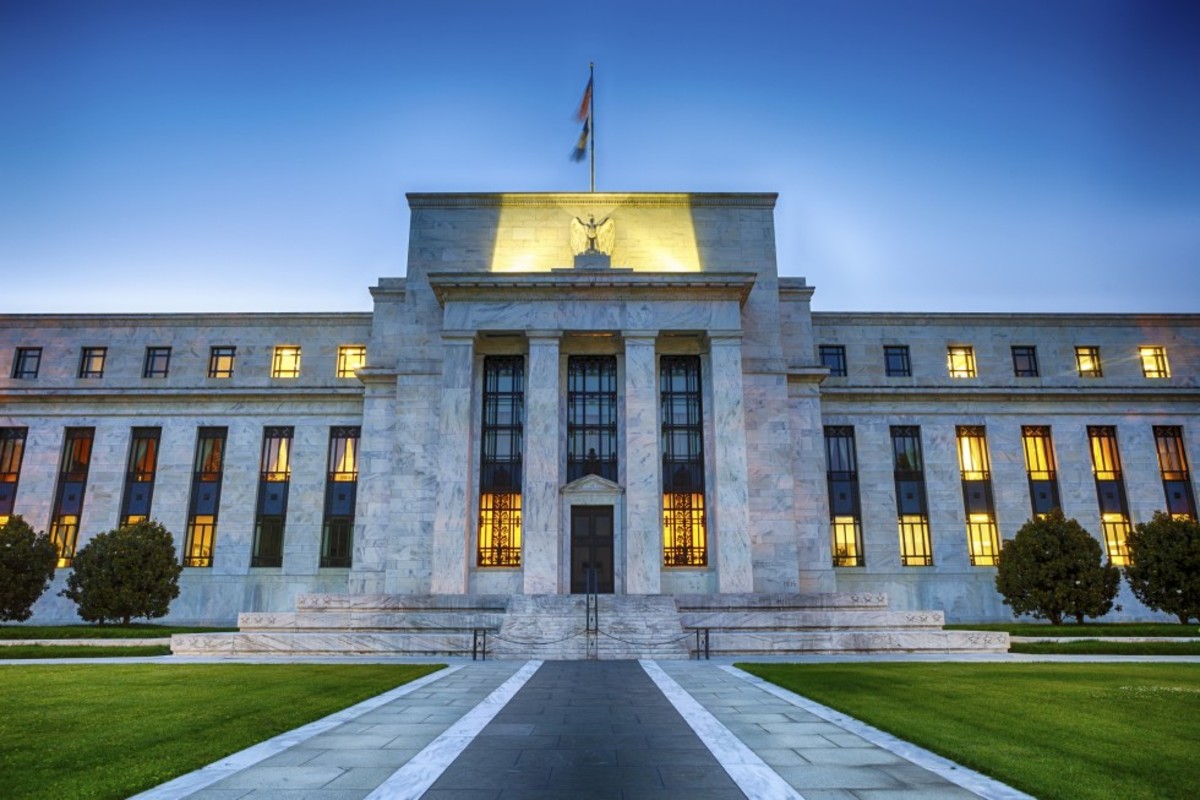
History Of Banking In India - Indian Banking System, Private Sector Banks, Indian Central Bank, Indian Banking Sector, Commercial
Indian Banking Guide Presents Uptodate Information On Indian Banking System, Development Banks Of India, Reserve Bank Of India, India's Central Bank, Indian Private & Foreign Banks, Scheduled & Non-Scheduled Banks, NBFCs, Banking Regulations, - Directory of official web sites of Government of India
Comments
I agree with you a loyal customer can give them long-term benefits as banking is a field in which trust comes in the first place. TPAs or third party products carry a lot of risk but banks sell these products easily because of their high expectations. Everyone wants to gain or earn money in a short-term period or as quickly as possible as the price for everything is increasing, lifestyle is getting more expensive. Just go ahead and talk with the old people out there who are government servants and others. Those people are always interested in nationalized banks and savings and fixed deposit accounts whereas young professionals are moving towards mutual funds and stock and shares.
Yes I agree with both of you (Anamika and soni) that banks should think for fixed deposit schemes and savings accounts before moving towards mutual funds and other schemes. Great hub.
Thanks for agreeing with my ideology on this subject.
SIR.
BANKS ARE FUNCTIONING ON PUBLIC / CUSTOMER MONEY/DEPOSITS,
DEPOSITORS HAVE KEPT TRUST IN BANKS AND WHEN BANKS ARE EARNING PROFIT, PART AMOUNT SHOULD BE KEPT FOR DEPOSITORS ALSO SO TO EXTEND BETTER CUSTOMER SERVICE
BANKS SHOULS CONCENTRATE ON ASSET QUALITY, REDUCTION OF NPAs RATHER THEN THIRD PARTY PRODUCTS
Nice advice Mr. Vaishnav.
Nice topic, enjoyed reading it.
Thanks netsurfer. I also enjoy your hubs.
You choose very nice topics and you wrote very well on the various topics ....Great Post!!!
Thanks for being regular user of my hubs vrajput. Your hubs are also outstanding.
AS RETIRED BANK OFFICER I AM COMPORMISE WITH THE VIEWS OF YOUNGER GENERATION FOR VENTURING INTO OTHER SECTOR OF BANKS LIKE MUTUAL FUNDS AND SHARE MARKET , HOWEVER I SUGGEST THAT BE CAUTIOUS IN INVESTMENTS AS THE BANK DEPOSITS MAKE GIVE LESS IT WILL BE SECURE AND SAFE IN LONG RUN AND FUNDS WILL BE AT YOUR RISK,SHARE MARKET POSITION NOW BETTER WHEN COMPARED TO PREVIOUS MONTHS AND IT WILL REQUIRE CAUTIOUS APPROACH SO DO ACCORDING THE NEEDS COME TO RISK.
We are really benefited by the nice advice from such an experienced bank officer like you Sir. We will follow you advice regarding investments and move along cautiously.
Previously Credit Management was an aftermath of deposit management because interest rates on credits as well as deposits of individual banks were regulated.Now it is reverse.Each Bank is free to mobilise deposit from the market and each Bank has to decide at what rate to lift the deposit so as to maintain a healthy margin in credit. Deposits are plentily available but Banks are reluctant to lift them for 2 reasons-
1) There is enough liquidity in the Banks and unless same
are deployed profitably, it is silly to add more deposit.
2) Banks are emphasizing on low cost Savings and Current
deposits and in this segment there is pressure of mobili
sation.
Thank you very much Bijan for your insightful details you have provided via this comment. I did not know that there was enough liquidity with the banks before you told me but when I related it with decrease in home loan and other interest rates today, then I came to the point that you are actually right. The banks or RBI has decreased the prime lending rate and thereby influencing other interest rates like mortgage loans and others because the banks have enough liquidity available and they are not looking much towards deposits because they have plenty of deposits and now they are looking towards lending money in different forms via home loans, car loans, and personal loans.
Thanks to the decreased home loan interest rates as because of that, the real estate market is rising up again and there are a lot of people who are buying properties in India including Delhi and NCR as evidenced by the real estate and property market news.


Anamika S says:
11 months ago
As a Banker myself I do not like the Policy of the Banks to concentrate more on other peoples products like insurance and Mutual Funds than concentrating on building loyal current accounts, savings account and fixed deposit customers. If something goes wrong with the Third Party products you would lose your Customer too.