Bearded Dragon Care

85
rate this page

By Whitney05


Pogona vitticeps

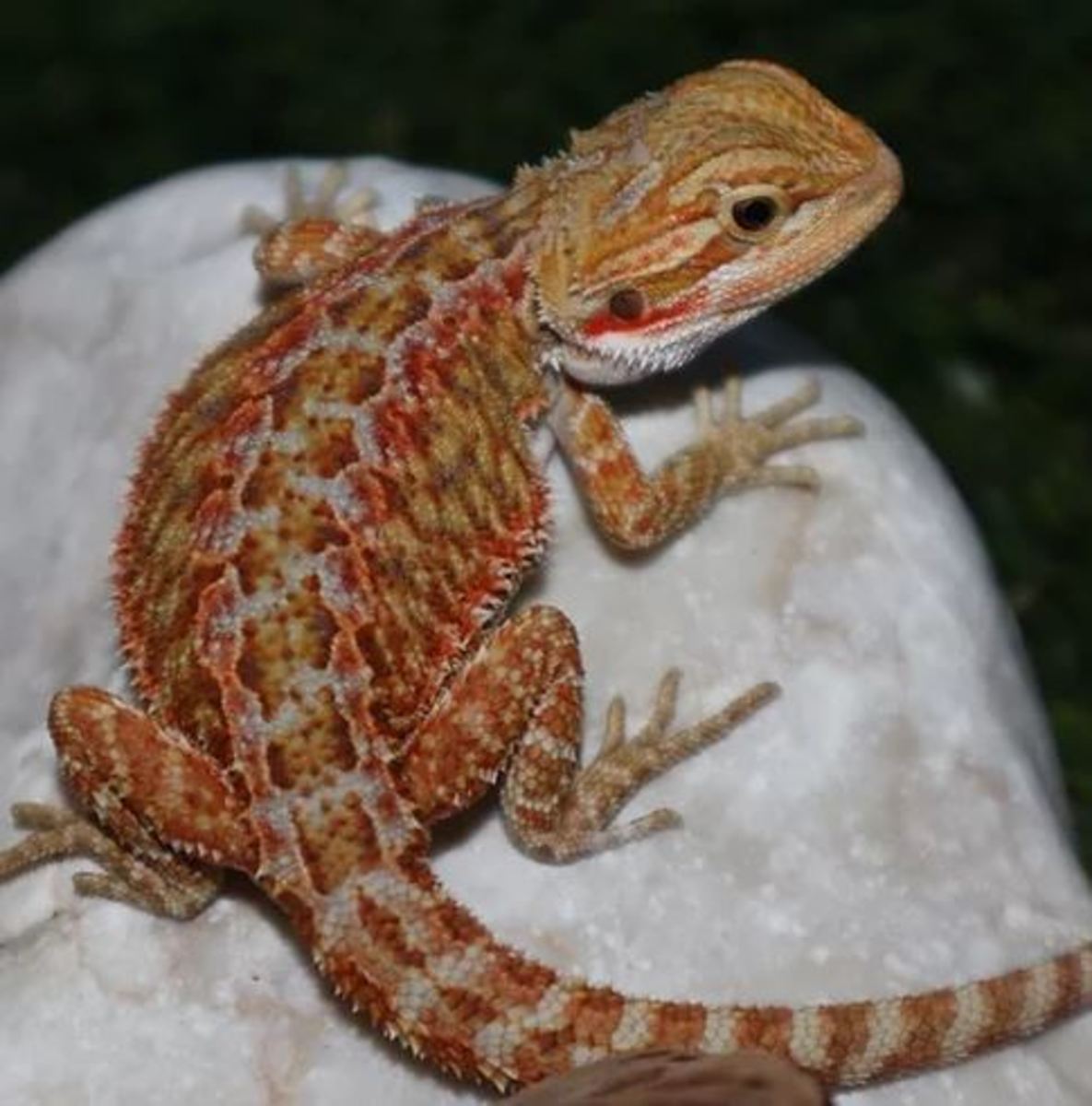
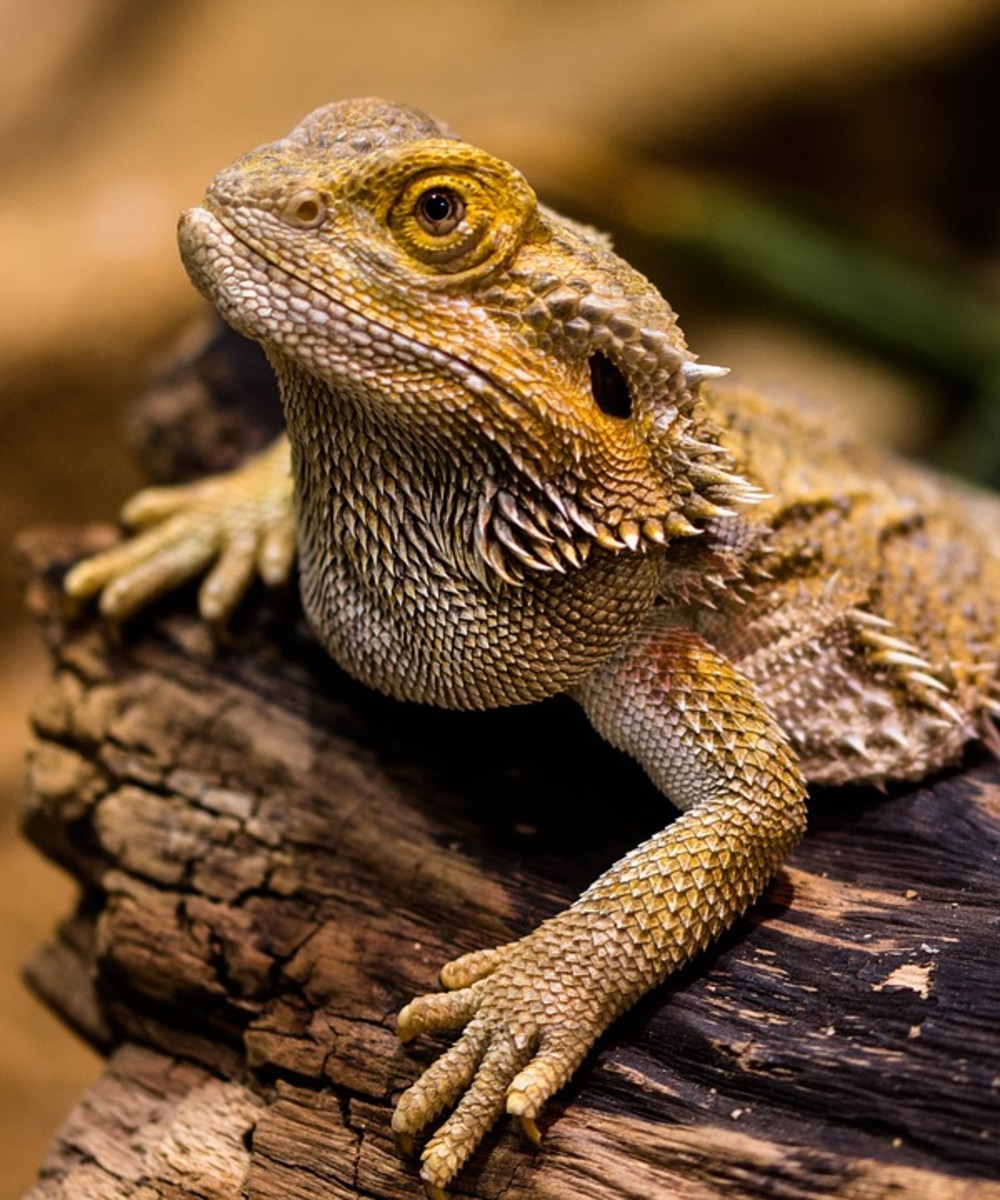
Bearded dragons are originally from Australia. They are found mostly in arid, rocky, semi-desert regions, but they are, also, found in arid open woodlands.

Bearded dragons are good climbers, sometimes seen on branches, bushes, and fence posts, but they are mostly terrestrial reptiles.

They are diurnal lizards, spending most of the day basking on rocks and in open areas. During the night and during the hottest parts of the day, they can be found in underground burrows.


Bearded Dragons as Pets

Bearded dragons are one of the best known 'beginner reptiles.' In general, they rarely bite their owners. But, should never be left to the hands of children. An adult should always help supervise handling and caretaking of the animal.

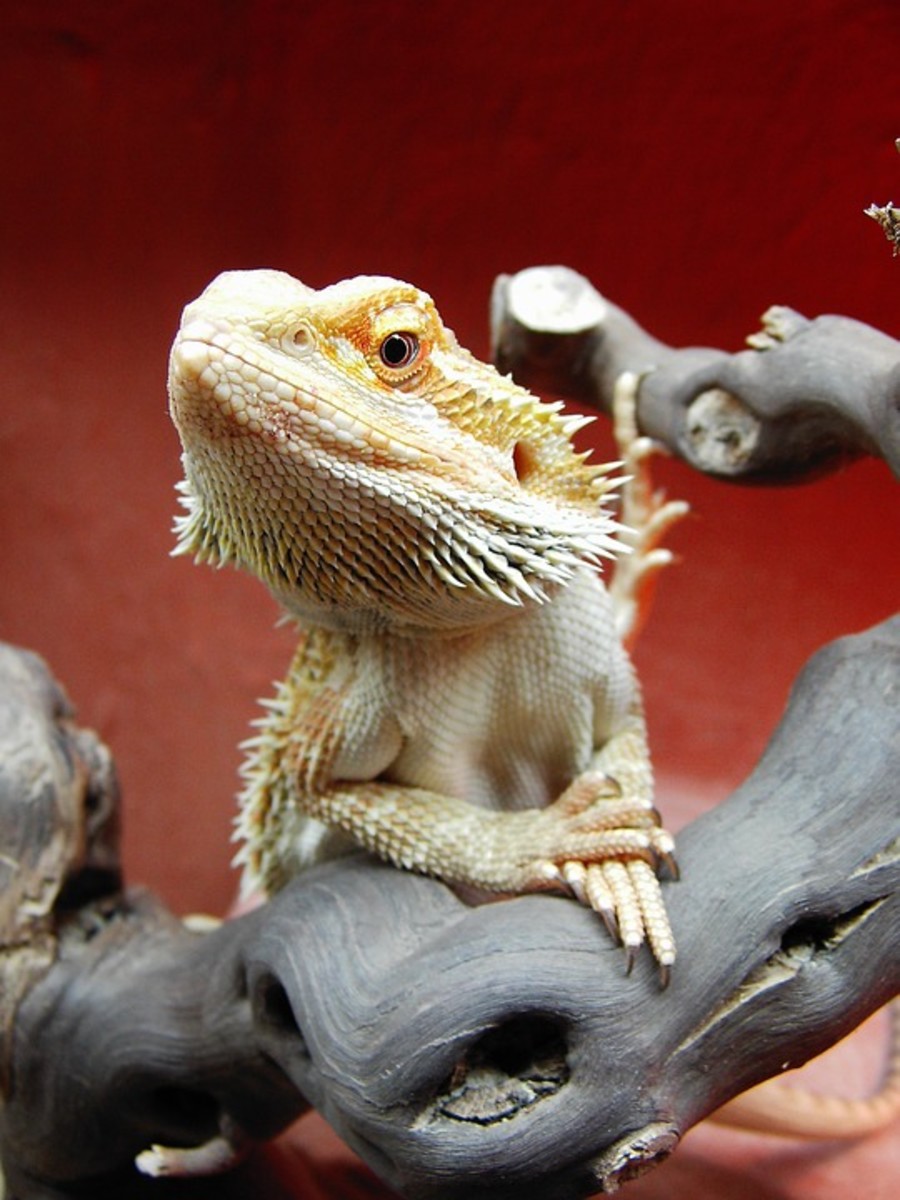
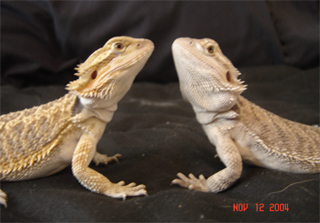
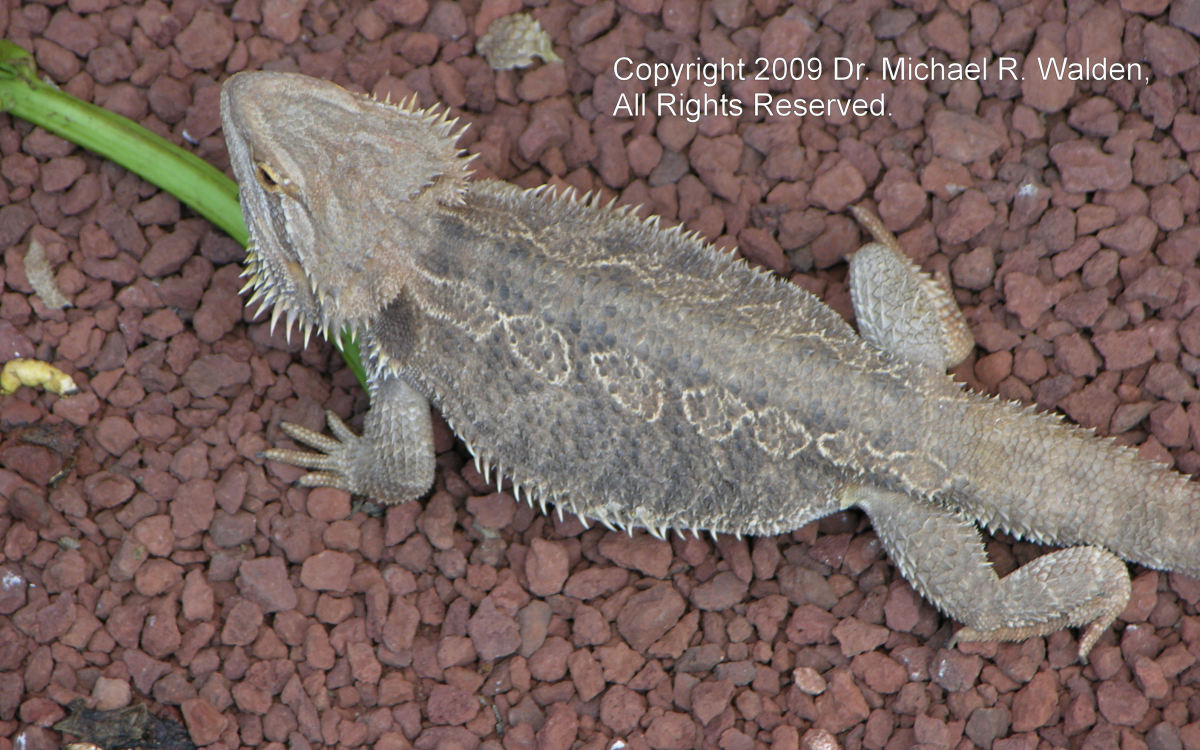
When they become angry, bearded dragons tend to "blow" up. They will flatten out and their beard will darken. This creates an illusion of a larger animal. When you see your bearded dragon do this, that means you should probably leave it alone. But, for the most part, they are very docile reptiles.

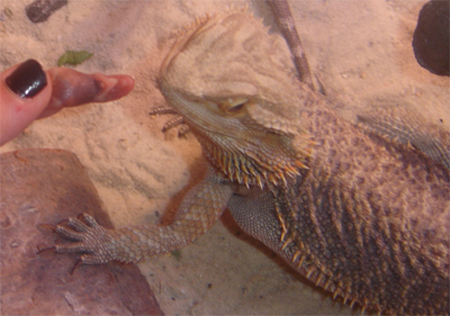
When handling a bearded dragon, try not to frighten it because it will bite, but if you handle it every day, it will become comfortable in your presence. You should pick up a Bearded Dragon very carefully, gently scooping it up your with your hand under its belly and behind its front legs. Be sure to keep your hand open so that the Dragon can step onto you with its back feet. Dragons do not grip as well as other lizards, so you should support them but do not hold on too firmly.

Remember to never pick up a bearded dragon by the tail. Their tails are very delicate and Dragons do not regenerate their tails as other lizards do.

Bearded Dragon Behavior

Bearded Dragon Lifespan

With proper care and husbandry, bearded dragons can live an average of 5 to 15 years.

Bearded Dragon Size

Bearded dragons are medium sized reptiles. They can reach up to 2 feet long to include the length of the tail.

Females tend to range about 16 to 20 inches long, whereas males tend to be slightly larger.


Bearded Dragon Enclosure Size

When housing one bearded dragon, a 40-70 gallon tank is recommended because they do like to run and climb. The tank should be both long and high; the optimum size should be around 65" long and 16" wide.

You may be able to get away with a smaller enclosure, such as a 40 gallon breeder, which is 36" long, 18" wide, and 18" tall.

You can buy some tanks at low prices, or you can be creative and design one of your own by using glass and/or wood.

Do not place young bearded dragons in enclosures that are too large. They can become stressed and feel lost. It is best to house baby dragons in 10- 20 gallon aquariums, and upgrade as they grow.

Do not purchase the screen aquariums to house bearded dragons, as they do not allow the proper temperatures. The airflow with a screen enclosure minimizes the temperatures.


Bearded Dragon Cage

Bearded Dragon Set Up

Filling the Enclosure

Substrate:

The enclosure should have some sort of substrate. Where many people disagree with loose substrate, playsand, paper substrates, potting soil (without perlite), and alfalfa pellets, can be used, but not recommended. If you choice to go with a loose substrate, Never use cedar. Regardless the type of substrate that you choose to use, daily cleaning is necessary to provide a healthy environment.

For smaller and younger Dragons, paper towels or turf should be used because they will try to eat sand and small rocks, which could lead to a trip to the vet. As dragons become six months and older, their eating habits become better, meaning they do not eat as many small rocks when hunting. This is the perfect time to switch substrates from paper to a turf substance. When changing to a turf substrate, sand is a better choice because when the dragon goes to the bathroom, its mess can be cleaned using a kitty litter scooper, and then thrown away.

Personally, I disagree with loose substrates, ESPECIALLY, calcium-based sands. I recommend using paper towels, reptile carpet, or a tile base such as slate.

The reason behind not using loose substrates is that, they can cause impaction when injested. Impaction can result in death.

Décor:

Bearded dragons are best kept separately. However, for multiple bearded dragons, you must increase the size of the aquarium, so that there is a proper number of shelter places and basking spots.

For shelter, you should have rocks, wood/ branches, and possibly plants.

Also recommended for the bearded dragon's tank, are plants. Although many dragon keepers say that fake plants are dangerous to bearded dragons because they may eat it, both real and fake plants can be safe it just depends on your dragon. If live plants are placed in the tank make sure that the soil does not contain perlite (the small white balls) because Dragons like eating them, although it makes them sick. Snake plants, small palms, and jade, are a few recommended live plants. You must make sure that the plants won't be eaten or ripped up very fast, and that they will be able to survive in the temperatures inside the tank.

In the wild, bearded dragons love to climb, so as a pet, they must be given items to climb on, such as drift wood. Drift wood can be expensive if bought at pet stores, and it can be infested with different types of bugs and mites. If you get your drift wood from outside, make sure that you cleanse it with bleach and water, so that when it goes into the tank, it is bug-free.

You can try reptile hammocks, but because bearded dragons become a little heavy weighted, they can weight the hammock down until the suction cups fall from the walls.


Reptile Outdoor Enclosure

Bearded Dragon Aquarium

Lighting

The lighting in a bearded dragon enclosure should include an incandescent spot light and a full-spectrum light. The ultraviolet light is very important to a bearded dragon's life as it provides the vitamin D3, and if a bearded dragon does not receive enough of vitamin D3, he may die (along with the lights, put a vitamin supplement in their food).

Using UV-B and UV-A bulbs has a positive physiological effect on the animal. It can stimulate activities, such as the appetite, activity level, general health, and they may play a role in the reproductive behaviors. Theses bulbs are a little costly, and must be replaced once every six months. Just like heating bulbs, they should be set on timer, about 8-10 hours daily.

* Remember: full-spectrum tubes should not be placed too close where the beardy can touch the tube, but at the same time the UV from the tubes only reach about 6-8". Have a perch or log that is near the top, but too close where the beardy can reach up and get burned.

Proper UV lighting is essential! It can help to prevent metabollic bone disease.


Heating

The daytime temperature for a bearded dragon should be between 75ºand 85ºF, with a basking site of 110º to 120º. The nighttime temperature should be between 60º and 75ºF. It is very important to make sure that basking temperatures are correct, as well as the overall enclosure temperatures. Proper heating is necessary for digestion.

The overall humidity should stay the same at 35%.

To get the correct temperature, you should use an incandescent bulb or spotlight, but do not use a regular light bulb. The bulb should be placed in a reflector type fixture, make sure that the fixture can handle the heat. Make sure to place the light fixture above the basking spot, located at one end of the tank.

The bulb wattage should create a temperature of 90º to 105º F in the section that is closest to the light. In a 25 gallon tank use a 30-40 watt bulb; in a 55 gallon tank, use a 60 watt bulb; in a 75 gallon tank use a 100 watt bulb. These are estimated wattages. You should NEVER estimate the temperature.

To measure the temperature, buy a digital thermometer. Again, NEVER estimate the temperatures within the enclosure. Temperatures that are both too low or too high can cause health problems. Too low temperatures can hinder digestion, a increase the risk of impaction.

Be sure to place the light and heat bulb fixtures on the screen top far enough away from the bearded dragon so that it will not get burned.

DONOT used heat pads or heat rocks INSIDE the tank because they may burn the bearded dragon!


Pinkie Mice for Bearded Dragons
Bearded Dragon Diet

Baby and juvenile bearded dragons should receive more feeder insects versus fruits and vegetables, but you should always provide fresh produce in the enclosure every day. This will help familiarize the bearded dragon with them. Slice the fruits and vegetables as fine, or small, as you can, making sure that it is size appropriate to the baby bearded dragon. Provide as many other feeder insects to the youngster that it will eat within a 15-20 minute period. Try to do this at least twice a day.

Adult bearded dragons should receive more fruits and vegetables than feeder insects. You should always provide fruits and vegetables. You can provide feeder insects twice a week.

Because bearded dragons are omnivorous, meaning they eat insects as well as fruits and vegetables, it is important to provide the proper nutrition!
Feeding Baby Bearded Dragons

Feeding Bearded Dragons

Comments

RSS for comments on this Hub Small RSS Icon

Krista 07 profile image

Krista 07  says:
9 months ago

Great hub!

Zsuzsy Bee profile image

Zsuzsy Bee  says:
9 months ago

Our Beardies mainly seem to like the bright colored fruit and veggies, red peppers, grated carrots, cantaloupe and grapes (naturally without seeds). I alternate Martha and Georges protein in-take. Kingworms, crickets and pinkies(mice) are their faves, every other day. They came in the house about 5 years age only 1.5 inches long and now are almost 20 inches long...they have been a sweet addition to what seemed to be our private zoo, only mine now because my baby is off at College

I really enjoy your HUBs

regards Zsuzsy

JazLive profile image

JazLive  says:
9 months ago

Interesting. How long do healthy bearded dragons live?

Whitney05 profile image

Whitney05  says:
9 months ago

They can live from 5 to 15 years. I have in it the hub under the 1st video. It kind of blends in.

Khavong Pha  says:
5 months ago

I was just wondering how do you guys counter cold weathers and rain when it comes to housing beardies outside. I need help setting up my enclosures for my guys. I hate to see them suffer.

Whitney05 profile image

Whitney05  says:
5 months ago

I don't house outside. I don't agree with it, really... You could consider an heater. and a fully covered roof. But, I don't know how the outside enclosures work in weather extremes. You still ahve to consider extreme heat, as well, not jsut cold and rain.

someone  says:
3 months ago

if a bearded dragon blows up what should you do?

Whitney05 profile image

Whitney05  says:
3 months ago

What do you mean by blows up? Do you mean puffs out and turns black? If so then you odn't have to do anything besides leave the BD alone. If it's out of the cage, find a way to put it back in and then leave it alone for a little while

Jason  says:
2 months ago

Can a beardies nail's be trimmed? mine has huge nails and it seems to be hindering his climbing abilities

Whitney05 profile image

Whitney05  says:
2 months ago

You can trim their nails. Just do so carefully and avoid clipping the quick.

Jason  says:
2 months ago

Thank you for answering my question. Just to make sure I do it correctly, I'm assuming the quick is the part of the nail nearest the toe that is a slightly different colour. Is that correct?

Whitney05 profile image

Whitney05  says:
2 months ago

Yep. The quick is the vein.

Bearded Dragon Care  says:
2 months ago

How many years you are playing with bearded dragons?

You seems to know alots about them.

Whitney05 profile image

Whitney05  says:
2 months ago

I've been researching reptiles in general for about 8 years, and I've had them for about 5.

ashley  says:
6 weeks ago

what kind of sand do you think i should use?

Whitney05 profile image

Whitney05  says:
6 weeks ago

None. Sand increases the risk of impaction, which is fatal. You want to use a solid surface, such as tile, reptile carpet, shelf liner, or paper towels.

Concerned Beardie Owner.  says:
6 weeks ago

We've had a beardie since the 15th of April 2008 - making him about 4 months old considering the fact he wasn't a tiny baby when purchased. We've had him on calc sand because that is what the reptile store gave us.

Recently - over the last few days - he hasn't been his normal self and appears to not be as keen on eating (before he would wolf down his food). He is however pooing normally. We searched the Internet to see if there was any advise we could find and became slightly worried when we read a site that discouraged the use of calc sand. (when we had researched beardie care before we never found anything against sand substrate)

We would like to ask - "Just how bad is calc sand? Is it infamous for killing beardies? And what easily available substrate would you suggest we use instead?" Also we would like to know "what are the symptoms of impactation are and if there is a chance that our beardie has it...? And if so is there anything we can do?"

Whitney05 profile image

Whitney05  says:
6 weeks ago

Calci-sand is the worst thing that you can house a reptile on. I would suggest changing to paper towels, reptile carpet, tile, or shelf liner. Anything except loose substrates. Calci-sand and other loose substrates increase risks of impaction, which is fatal.

Most pet store employees don't really know what they're talking about, which is why many of them recommend calci-sand. They see that on the bag it says digesetable and good for pets, but it's really not. It clumps when wet, so when the reptile ingests it, it clumps in the body, which blocks up digestion and normal bodily functions. What makes calci-sand worse than anything else is that it is calcium based, which intices the repitle to lick at it, even eat it.

Check this out about impaction:

http://hubpages.com/_reptiles/hub/Impaction

Anthony  says:
6 weeks ago

Can i ask why sand is bad? do they not naturally live on sand?

Im planning on using playpit sand as it is non-toxic...

Whitney05 profile image

Whitney05  says:
6 weeks ago

No they are not naturally on sand in the wild. Sand can raise impaction risks wich is fatal.

http://hubpages.com/_reptiles/hub/Impaction

Anthony  says:
6 weeks ago

So what else do you get in a desert?

I know it sounds rude,I do not mean to be !

I just dont get how sand is bad when thats what is in the desert..?

Whitney05 profile image

Whitney05  says:
6 weeks ago

the majority of deserts across the globe are composed of compressed rock and dirt, which make for a mostly solid surface.

Torry  says:
5 weeks ago

A 50 gallon tank I was using for my BD fell over and the bottom of the tank is pretty much gone. I saw an ad in the phonebook for aquarium repairs but I'm not sure if I should have that done or just buy a new tank, what would you recommend Whitney?

Whitney05 profile image

Whitney05  says:
5 weeks ago

It's proably going to be better to just purchase another aquarium, as it may take a bit of time to remodel the tank completely.

Ryan  says:
4 weeks ago

My buddy is giving me a baby citrus bearded dragon today. He has been keeping it in play sand since he got it. Is it just a roll of the dice using sand and what's the chances. Ive read both that say they have used sand and never had problems or sites like this that forbit it. This green carpet is so ugly, but i guess i will use it until i can use sand. What is it like until he gets 10 inches or something, then is it safe to use sand

Whitney05 profile image

Whitney05  says:
4 weeks ago

Other options to sand can include slate tile and roll out shelf liner (not the grip stuff). I wouldn't use sand. The tile is much more natural looking, and you can get it in a number of colors and patterns. I would wait until the bearded dragon is full grown before using sand, not 10 inches. You may think the reptile carpet is ugly and want something more aesthetically pleasing, but remember that you are taking care of a life, and you want to make sure that it is healthy. Impaction is a very serious and deadly concern.

Ryan  says:
4 weeks ago

the tank i am holding her in is 12 inches high. I am using a 150 watt red heat lamp. I have a log stick that gradualy goes up towards the light and she usually stays about 8 or 7 inches a little diagonal from hit. I set a thermometer about 2 inches high on her hot side were the lamp is at and it reads 110 degrees. I figure that its got to be about 10-15 degrees hotter and hotter, the higher you get. Is that to hot? I figure it might be so i tried another blue lamp that i have and the gauge reads 91 degrees. Which is better? or neither ?

Whitney05 profile image

Whitney05  says:
3 weeks ago

Sounds like you need UVB as well. You should purchase a digital thermometer with a probe to beter read the temperatures. You never want to estimate the temperatures which sounds like what you're doing, but I could be wrong.Red or blue it doesn't matter. Typically red is used for night and blue during the day. You can save yourself money and purchase regular light bulbs from the grocery store. Again you need a uvb light.

kevin  says:
3 weeks ago

i have a quiestion about breeding BD.

How old do they have to be?

how do you sex them? is the female bigger than the male, ior is it the other way around???

how long does the female hold the eggs b for she lays them???

the dig a hole and lay there eggs in sand??or other substrate, what should i mix togather to make the "perfect" nesting area and about how deep will there hole be??

claire  says:
3 weeks ago

hi i just bought a 3-4mth old bd and he has pigged out on mealworms and dead grass hoppers cut in half (over4days)but i cant get any friut or vegies in him should i stop the insecks untill he eats his greens oh and today after his grass hoppers he was in the sun but going dark round neck and belly what does this mean (is he anouyd at me)

Whitney05 profile image

Whitney05  says:
3 weeks ago

kevin, I'd say at least 1 and a half yeards old. You can't sex by size or weight or head size. You have to eck the hemipines and the pores. TYpically males have darler pores and hemipenes. Also, if you breed, you need to be aware that one clutch of babies can eat well over 1000 crickets a week. You need to remove any sand in your adult's tank for paction risks, and put in a laybox so that the eggs won't dehydrate.

Claire, typically they get dark outside to catch the rays, so to speak. sometimes when outside so bd's will get aggressive. My girls run off when they're outside, so they have to be confined when they go outside. As for the greens, just make sure that you provide them daily for him. He was probably not used to seeing them. I would leave the greens in the tank all day then after work, school, or whatever, feed him the mealworms or feeder insec. also make sure not to get any insects outside; i assum you're talking about canned grasshopers though.

kevin  says:
3 weeks ago

thank you!!!

and i know there not both males because they have been with each other for about a year. and one of the them that i a suspecting is the male lays on top of

the other one with his mouth open and his beared black. what is he doing???

kevin  says:
3 weeks ago

you said "You have to eck the hemipines and the pores."

what does that mean and how do i do thaT???

please and thank you!

Whitney05 profile image

Whitney05  says:
3 weeks ago

Just becuase the one is laying on top of the other it doesn't mean it's a male. I have 2 females in a rather large cage and you'll commonly find on on top of the other. The one could be trying to get closer to the heat source.

 The other one is probably pissed because the other is ontop of him, which is why it will show the black beard. When they darken, it can mean that they're upset or are trying to get more heat. IE dark cars typically get hotter faster, and it's basially the same concept. Make sure your temps are good.

If they're a year old an you haven't had eggs, they're probably both females. the hemipenes and pores are at the base of the tail on the underbelly of the BD.

kevin  says:
3 weeks ago

thank you!!!

kevin  says:
3 weeks ago

and also what is the season for them to breed???

Whitney05 profile image

Whitney05  says:
3 weeks ago

reptiles can generally breed year round in captivity, which is why if you have had them together for a year, you would have already seen a clutch or two of eggs, if not more.

Although, I'm not well versed in breeding BD's I'd guess the spring/summer, as that is when most reptiles experience "breeding season."

claire  says:
3 weeks ago

thanks for that and yes its canned grasshoppers and i will never have bd out side out of reach(im with all time)thats y i thought he/she was anouyed at me,

anyway thanks again im reading all your tips etc

kevin  says:
3 weeks ago

THANK YOU!!!

and also do you know BD morphs?? cause 1 of mine is really dark the other one is bright yellow with brown if i sent you a picture could you help me identify them??

Whitney05 profile image

Whitney05  says:
3 weeks ago

claire if you have any questions let me know

kevin there are a number BD morphs. Many breeders will name their BD's differently. IE Georgia Bearded Dragons tend to name their morphs with GA related names, whereas other breeders will have different names for their color morphs that look exactly the same. I have noticed that with BD's the morphs aren't quite as uniform as that of some gecko species. But sometimes you will find a basic list that breeders will go off of to rename theirs, which I hate and have never worried about BD morphs with my guys- 1 is normal and the other some GA BD morph- I think GA Peach or something. If the one is dark with more grays, it's probably a standard. But I can try to ID them if I can see pictures.

kevin  says:
2 weeks ago

how many times should i feed my BD's a week and how much and they are full grown. and i feed them crikets and meal worms as treats eevry now and then

Whitney05 profile image

Whitney05  says:
2 weeks ago

fruits and veggies daily. Insects at least once or twice a week.

kevin  says:
2 weeks ago

i give them collard greens daily, what types of fruit can they eat??? and how many crikets per feeding???

Whitney05 profile image

Whitney05  says:
2 weeks ago

Check out this link with fresh fruits and vegetables that are safe for your BD and those that aren't.

http://hubpages.com/_reptiles/hub/Bearded_Dragon_D

claire  says:
2 weeks ago

hi its me again my young bd ate a fake silk leave off of one of the plants in its tank(i have removed all plants now)that was two days ago,it has done poos but no leave,should i still be worred he is still running around oh and now he eats vegies every morning, his tank looks pritty boring is there any safe real plant i can put in his tank

Whitney05 profile image

Whitney05  says:
2 weeks ago

I would jsut wait it out for now. Fake plants really aren't recommended for reptiles that eat vegetation. There are but I don't know them off hand. If you use live plants, you want to keep them in the pot.

Submit a Comment

Members and Guests

Sign in or sign up and post using a hubpages account.


optional


working