Better Cars for Better Times

Fuel Cell Cars
Combustion is a relatively uncontrollable transfer of electrons from what is being burned to the oxygen in the air. This produces heat, which causes the mixture to expand and push pistons in your car.
Notice I said it's a transfer of electrons? That's right. You can make a system that still transfers the electrons without the fire element. Fuel Cells. In essence it's a non-rechargable battery that can be refilled. Since the fuel will probably be a fluid of some sort, the electronics and catalysts involved would be small and easy to make.
The downside to fuel cell cars is that for an engine the same size, it would produce far less power. In the long run it would be more efficient, but you wouldn't be able to speed up very quickly. Another is that fuels for fuel cell cars are not readily available. Gasoline would defeat the purpose, and it's hard to make a fuel cell using gas.
My recommendation for something like this would be to use either compressed or liquified hydrogen as your fuel cell fuel, and have it be a hybrid using similar electrical storage systems to those you find in regular hybrids. You would have to use electricity to electrolysize the hydrogen, and that electricity would probably come from burning fossil fuels. The benefit to this is that all the pollution from burning fossil fuels would be localized and could be cleaned up a hundred times easier. It would also mean that we could get off our dependency of foreign oil and start using domestic coal to power everything from cars to airplanes.
I have solved world hunger. Now making it a reality would mean simply just convincing Ford and GM to make the cars available, or an act of congress. Will either happen soon? Probably not.
Better Car Design
Another way to decrease our dependency on foreign oil is to make engines that burn less fuel. I've got a design of my own, but I'm not going to publish it for just anyone to take.
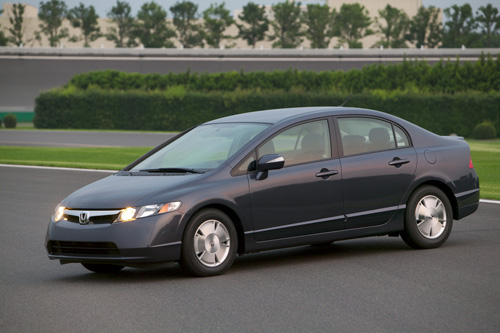
The concept of the hybrid is a brilliant idea. Pretty much what it does is converts the energy lost in braking to electrical energy and stores it. Then when you accelerate, it draws on that energy and recycles it, using less gas in a stop and go situation. Most hybrids I see on the road also have great streamlining and are small cars, which maximizes fuel efficiency.
One catch about the hybrid is that they are on incredible demand right now. The major auto makers in the world are cranking them out at full speed and they are immediately sold off the lots at dealerships. They are already converting assembly plants to crank out hybrids. And since hybrids are expensive, that means the car companies are making bank on these babes. Problem is, the car companies are losing more money elsewhere. But that doesn't affect you much.
Alternative Fuels in Alternative Places
I worked loosely with a dude at my university who was trying to engineer an enzymatic pathway to start with coal and end with gasoline. It's a brilliant concept, you know why? Because if we could convert coal into gas, gas prices would probably drop to below a dollar a gallon again and stay there for decades. I was once told (I don't know how accurate this is) that if we could convert all the coal in Colorado into gasoline, that coal would power all the automobiles in the US for two hundred years. Slick, eh? Worth investigating, eh?
I mentioned hydrogen as a fuel. I personally love it. People are afraid that if you liquify it or compress it that it will still be an explosion hazard. I don't know if they noticed or not, but gasoline can explode too. I'll admit, there is a bit more of a hazard when it comes to hydrogen. If you compress it to the point where it's economical, a pinprick could rupture your tank and blow the shit out of it. If you liquify hydrogen and let it sit in your tank until it evaporates, the pressure will either rupture your tank or will be bled off, wasting fuel. If you're a regular driver, you don't need to worry about this as much. The problem comes in keeping your fuel refrigerated. And the explosive nature of hydrogen is different than gas. If you have a hole in your hydrogen tank, it will probably be blowing out a considerable amount of hydrogen that will burn incredibly hot. A gasoline fire would bake everything around it while a hydrogen fire would probably weld everything together. I don't want either, but the difference does not make me more afraid of hydrogen.
And the nice thing about hydrogen is that it burns ecologically friendly, and it can be created anywhere that there's water and electricity. It doesn't matter where that electricity comes from. Thus you can make fuel from solar power, wind, hydroelectric, or nuclear power. If you're a little backwards then I guess you could burn gas to make the electricity. But we have plenty of coal and plenty of water (depending on where you live). Now if we were to convert all automobiles to hydrogen, we would literally have to multiply the electricity generated in the States by ten times to keep up with the demand. Does that sound likely to you? It will take time. Shit.