Need Better SEO Results? - 10 Key Tips to Improve Your Articles


Pick a Topic
What to write, what to write...
I'm sure, every single person who has taken pen to paper, typed a comment, or even labeled a picture for a photo album has, at one time or another, looked at the page in front of them and thought... "...now what do I write?" Having been newly inducted into the writing community, I found myself asking that same question, so I decided to find the answer.
The popular consensus is to write about something you know; dogs, cats, cooking, entertaining, music, etc. On the surface, this looks easy enough, but it isn't until you are faced with that blank slate that you begin to question what it is you truly know.

Choosing a Title
The first thing you need is to find a title for your work.
You want the reader to see at a glance exactly what you want to convey, meaning you don't have a title like "The Pro's and Con's of Being a Pet Owner" and then write about keeping bees. The experts agree that the catchier and more unique your headline is, the more people are going to want to read it.
You also need to keep in mind that search engines also like titles and headlines. By finding a niche title, (using keyword searches,) you stand a better chance of having more people find your article.

Research Your Topic
Research relevant information
In order to write a good article, you have to do some digging. Once you decide on the subject matter, it doesn't hurt to do a little research. See how many books have been written about it, check online for websites pertaining to your 'specialty', find out how you can utilize the information...much like you would a thesaurus. Most times you will find some relevant piece of knowledge that you knew and had forgotten until seeing it in print.
I'm not saying here that you should plagiarize their work, so no copying and pasting! Take notes, if there are facts that you didn't know, you can use them so long as you include your source. With that step done, you are ready to begin writing.

Keywords
One of the most important steps!
This section ties into researching your topic. Keywords play a big role in how many people see your published works. By utilizing keywords, you give the search engines a reason to land on your articles. This in turn lends more weight to your information and can translate into a larger viewing audience (which everyone loves,) thereby improving your click-through rate for those of you who are also utilizing AdSense with their writing.
Using keyworks is also a great way to organise your thoughts to keep the article flowing. By incorporating this tool in your writing, you have less chance of your article jumping around from pillar-to-post, and the end result will be a more polished, professional hub.
For an example, I'll use cats as a subject. After you have done your 'digging', make a list of everything pertaining to cats...like types of food, breeds, long hair, short hair, grooming, personalities, etc. Find relevant keywords for each subject and list them, then you can take each mini topic and broaden that...types of food...wet,dry, treats...you get the idea.
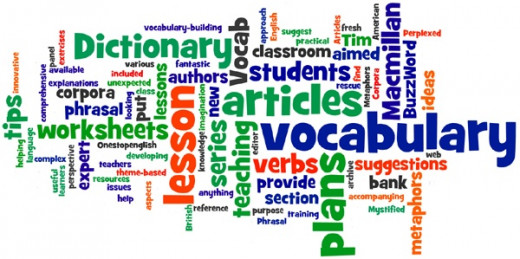
Don't Be Afraid to Use Your Vocabulary!
Keep a thesaurus handy.
One of the traps writers fall into is repeating the same words or phrases over and over. Not only does it make the piece repetitious, it's boring to read. Here's an example..."Dick and Jane went hiking and fishing, and then they sat down and ate."
Let's see if we can make that sentence more interesting without so many 'and's'. "Dick, together with Jane, spent the day hiking and fishing, after which, they sat down to a good, outdoor style dinner." Now I'm not saying that is perfect by any means, but you can see how much better that reads than the first sentence, with the use of only one 'and' for a conjunction. The bonus of restructuring that sentence can be seen by the image it brings to mind of cooking over a fire after spending an enjoyable day in the outdoors.

Keep Them Reading!
You want to keep the reader's attention.
A writer's objective is to keep their reader's attention, not only for the facts, but for the enjoyment of reading. Don't be afraid to add some humor to your pages as well.
Unless you are writing a medical journal, or relaying accounting details, the addition of humor or related personal views is important. The last thing you want is to sound like your grade 10 science teacher explaining the properties of quantum physics. (I don't know about you, but after listening to him drone on about chemicals for half an hour I was falling asleep.) And that is the point I am making here. 'Nuff said.
Stay away from adding the printed version of 'laugh tracks'...let me explain. As most people are aware, laugh tracks were added to television sit-coms when the stations switched from live shows to taped ones. The tracks were added where the viewers would normally have laughed at the jokes, giving the illusion of a live audience.
Written 'laugh tracks' consist of things like CAPITALIZED WORDS, extra question marks?? and exclamation points!! to convey a feeling, whether it be fear, surprise, anger, and yes, laughter. However, it's best to let the reader put their own connotation to the piece. If you feel the need to stress anything, use italics or bold script to indicate the differences.
A Big No-No
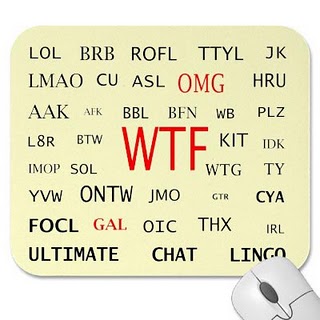
'Chat' Terminology
Using 'chat' vernacular is also something to stay away from if you want to be taken seriously. Abbreviations like 'lol', '*wink*', '*silly grin*', 'lmao', or using smiley faces, are great when you are chatting with your friends online, but are not really applicable when writing an article for publication. You can still get your point across without distracting the reader.
If you are going to use abbreviations, you should first spell out the words, then switch to the shortened version, or at least have the full rendition immediately next to the abridged text. This prevents your readers from becoming confused or losing interest.
The format of your piece should be easy to follow; one thought leading into the next, rather like a chronological date line. Too much jumping around tends to be very confusing, and the reader loses interest quickly. That's not to say you have to start actually writing at the beginning of your story..."Au contraire"...you can begin in the middle, or the end...whatever works for you, just so long as you organise the various sections so that each segment leads into the next.

Information is Key
Now we come to the 'information' section.
Ideally, you want to share a lot of interesting news with your readers. This is a key point in all articles. People are searching for ideas, tips, how-to information and the like. The more good information you can stuff into your article the better.
I know when I am searching for topics, such as how to optimize my hubs, AdSense tips or simply how to change a washer for a leaky tap, the more relevant information or step by step instructions, the more likely I am to read the article.
Don't worry that the data isn't necessarily original, after all, somewhere, at sometime, someone, has made a record of it. Again, I'm not suggesting plagiarism here, Search engines don't like duplicate content. What you can do is breathe new life into the previous account by adding your own thoughts and viewpoint - not withstanding the fact that you probably have a few new things to add as well.
Try and keep your information in small chunks. Most readers get tired if they have to slog through too much information to find what they are searching for. Break your article up into smaller segments and the reader will stay longer. (After all, we can be lazy gits!)

Put Your Own Spin on Your Article
This can be done as 'ideas' or 'tips' that enhance the overall feel of your story.
People are always looking for new ideas - rather like reinventing the wheel. Everyone is on the lookout for better ideas or a different approach to an old subject. Sometime thinking outside the box, or taking an unusual look is all it takes to make a tired article new and interesting again.
The addition of pictures that relate to your story is also an excellent idea. This gives your audience a great visual to enhance the written explanations. Pictures can also grab the interest of a 'prospective' reader. Many times I've been browsing through websites or books and had my attention piqued by an intriguing photograph.

Check Your Spelling
Editing - a critical step
After you have finally put all your information together the way you want and it's ready to publish, make sure you remember to chekc your spleling! and your punctuation. (Notice the italics and bolding.)
This has to be one of the most important and overlooked step in writing, and you rarely, if ever, hear anyone mention it. (I hope I have taken my own advise and found all my spelling errors!)
When writing an article for a magazine, or submitting a manuscript, it is vital that you make sure there are no punctuation errors, or spelling mistakes. Sometimes it's worth your while to have your writing checked by a professional editor (if submitting manuscripts,) as it increases your chances of publishing.
Lastly, proof read it one final time to make sure the article states everything exactly the way you want. Most online publishers allow for corrections, but few are as lenient or accommodating as Hub-Pages!
Let's recap:
- Pick a topic you know something about
- Take the time to research your subject
- Pick a relevant title for your work
- Organize your thoughts by using keywords
- Utilize a thesaurus
- Add interest by using humor
- Stay away from 'chat room' vernacular
- Keep the information in bite size chunks
- Put your own spin on the content by using 'ideas' and 'tips'
- Proof read before publishing
Above all, enjoy yourself! Believe it or not, enjoyment for what you are doing will show through your work regardless of what your subject material is. Writing isn't always easy, but it should always be fun!
Copyright Enelle Lamb 2008 - Please do not copy and paste this article, but feel free to post a link using this url: http://hubpages.com/hub/Bitten-By-The-Writing-Bug
Published works by Enelle
Haron deZyne Originals
- http://www.harondezyne.webs.com
original one-of-a-kind jewellery
Related
How Do I Get Started On HubPages? Guidelines To Get Noticed by Writing and Publishing Evergreen SEO Hub Page Articles

How to use Search Engines keywords to increase traffic on Hubpages

How to Write a Great Newspaper Article

How to Write a Healthy Hub

After 17 Years of Hubbing I Have Good Advice for Hubbers