Caloric Restriction Doesn't Extend Lifespans


Don't bother starving yourself. You're not a rat.
It all began with two Cornell University scientists and their research in 1934, that showed that underfed rats lived twice as long as those with ample diets. Subsequent research over the following decades supported the same conclusion: rats, mice, insects, spiders and other animals were able to extend their lifespans by 30% or more through severe reduction of calories. Since rats and mice are, genetically and physiologically speaking, remarkably similar to humans (a scary thought in itself), the next logical conclusion was that caloric restriction would do the same for people. Several books, like The Longevity Diet and Beyond the 120 Year Diet, sought to apply these findings to people with the will to live long lives, and the willpower to drastically reduce their ingestion of food.
Recent research, however, performed at UCLA, seems to reject the connection between rodents and humans: what's good for the rat is not necessarily good for man. UCLA evolutionary biologist John Phelan, along with Michael Rose, at UC-Irvine, developed a mathematical model for humans describing the relationship between caloric intake and lifespan, and populated the model with data from published studies on human longevity, and figures from related research on the connection of rat longevity and caloric restriction, which, incidentally, Phelan researched for his dissertation at Harvard ten years ago. While rats will live longer the more food they're denied (to the point, of course, that they starve to death), humans can only expect a very modest increase in longevity-about 3%--by engaging in a dietary regimen that less than 1% of the population has the psychological stamina for.
Why does it work for rats, and not us?
If humans and rats are on the same branch of the evolutionary tree, what exactly accounts for this huge difference?
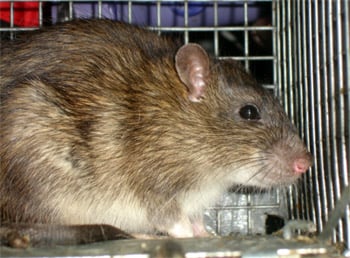
There are a few possible explanations. Dr. Phelan offers one: when rats are underfed, one primary biological process that the starving rat shuts down is the reproductive one. Reproduction is enormously taxing on the rat's body: it reaches sexual maturity at one month of age, and produces a litter equal to its own weight every six weeks. Humans, by contrast, endure far less trauma to their bodies by reproducing.
Another possible explanation: when rats are underfed, rats can signficantly lower their body temperatures to reduce the metabolic burden while they're looking for food. At lower body temperatures, the body produces far fewer free radicals, which damage tissues and lead to aging (according to the free radical theory of aging). However, human beings do not have this temperature-lowering mechanism. While less fuel will undoubtedly slow metabolism in humans, it will not do so to the same extent as in rats. Rajindar Singh Sohal, a researcher in aging currently with USC, supports this conclusion.
What can we learn from this?
What kind of useful learnings can we draw from this recent finding?
First, although severe caloric restriction might not be worth the trouble, avoiding overweight and obesity is still a strong guarantor of a longer life.
Second, supplements like resveratrol still might be worth taking, as a caloric restriction-mimetic.
Third, starving yourself will deny you the subtle pleasure of having to pop open the top button on your jeans after a really big Thanksgiving dinner... (a good sense of humor is a key to longevity, don't forget that!)