Types of Different Cajun And Zydeco Music - An Introduction

Describing the Cajun music heard both today and in the past to the world, the nuances and differences between true Cajun music and its close cultural cousin, Zydeco -- is a gigantic undertaking. You often hear it called many things, and by many names. You'll hear cajun music, zydeco music, Louisiana music, New Orleans music, Creole music, French music, and even Coon-ass music.
In reality I am trying to explain the voice of generations of a people few know beyond stereotypes. Mention Cajun music to most people, and you'll find they are usually limited to only knowing Hank Williams' popular song, Jambalaya. As a Cajun American, to me it is so much more than that song, any one song, or songs. Our music is the mirror of the lives, strengths, sorrows, and happiness family tree's that stretch back generations -- all connected.
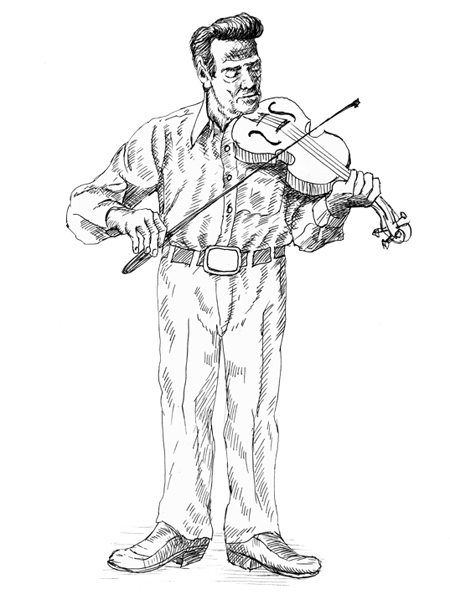
Those who are familiar with Cajun music, know that the music means dissimilar things to each listener. For some it is the plaintive wail of diatonic accordions, or for others it is the solitary ballad singer on stage weeping out ancient accounts of our French and Acadian ancestors. Others disagree -- they know Cajun music as lively, fun, with an electric band that includes an accordion, steel guitar, and at least one fiddle. The person next to them will disagree further -- and will claim Cajun music is all about with at least two fiddles, a lead fiddle and a second fiddle echoing the beat.
In my Grandpere Emile's day, Cajun music was alive. His was the era of being able to hear Cajun music constantly on the radio and in the many dance-halls and barns of rural Louisiana. The music was a part of his generation's daily life, intricately entwined with living, loving, farming, cattle ranching, eating, and leisure. It was not an endangered species, as the Cajun language and people have become.
In my Pepere Vernon's day, Cajun music was a release from hard physical labor by day, and equally hard play by night. It was a reminder of all that was lost, as his Cajun people became assimilated into a wholly English speaking culture. He loved it, but didn't always admit that fact to outsiders, who sometimes judged the music and Cajuns as lower class.Our family had migrated to Arizona after losing everything in two separate hurricanes. It's hard to be Cajun, when no one else around you speaks your language.
By my mother's generation, Cajun music moved aside for country music or at least grudgingly Cajun country music, rock and roll, and jazz. She knew traditional Cajun music with the musical disdain that all young have as, "the stuff her parents and grandparents still listened to." It simply wasn't for her or her children. She listened to what was popular today.
Blessed by living with all three generations as I grew up, blessed by my own musical talent -- Cajun music for me is still alive and a major influence on who I am, and what I became in my lifetime. Still, the music has changed as my world (and yours) has changed. Twenty-first century Cajun music, is now copied and claimed by outsiders (non-Cajuns) and modern youth. Therefore, it‘s essence is still the same, but perhaps the cayenne of it‘s flavor is lost. Then, again, maybe it's just morphing and evolving as all musical genres do, to fit the tastes of the people listening to it in the here and now.
Time will tell if it will disappear, as the Cajun French language (Cadien) has in modern Louisiana. I hope not, Cajun music has the old time warmth and pureness that is sometimes lacking in today's music. For those of you who aren't familiar with the music of my people, here is a beginning introduction and overview of Cajun music:
(Just in case, you've never heard the song, "Jambalaya" here are a couple of introductory links).
If You'd Like to Know More About Hank Williams!
What is Traditional Cajun Music Today?
Cajun music is like me, a descendant of French families who came to the New World. Many of the songs can be traced to medieval France. Additionally, like the Cajun people, Cajun music was highly influenced by the Germans, Irish, and other later immigrants who lived among us, both in French Acadia and in Louisiana.
What you'll find inside traditional Cajun music found today is:
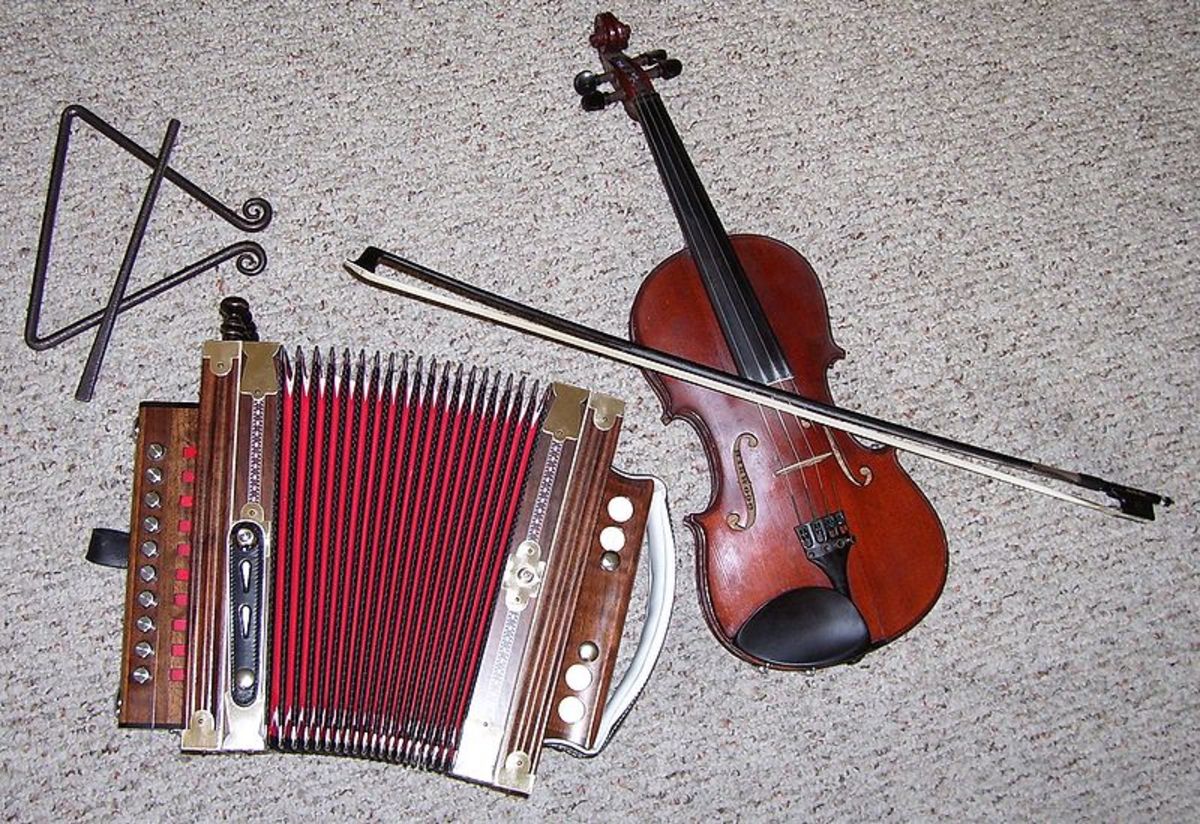
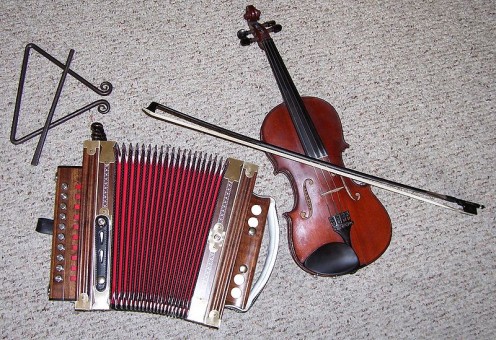
- One or more fiddles that give the music it's robust, hot-blooded voice.
- Traditional Cajun music is dance music. Most Cajun dances are one steps, two steps, or waltzes.
- Chord changes are an important part of traditional Cajun music.
- Generally, traditional Cajun music is also played with a diatonic accordion.
- Another component, is a guitar for rhythm.
- A triangle, called a ti-ferin Cadien, for percussion.
- One or more singers, performing the songs in Cajun French, sometimes mixing English with the Cadien.
- Freedom to improvise.
The instruments and vocals of the above combined, create inviting and enticing dance music, that can take away all of the listener's troubles -- if only for the duration of the song. That's what makes traditional Cajun music, a genre that should not be lost in our modern world. That's the true gumbo of traditional Cajun music.
What is the Difference Between Cajun Music and Zydeco Music?
Zydeco differs from Cajun music in that it has an individual persistent recurring rhythm. It is African in origin. What you'll find inside of Zydeco music is:
- A single chord dominates the song.
- Unlike Cajun music, the accordion is not diatonic, it's a piano accordion.
- Zydeco music may include wind instruments.
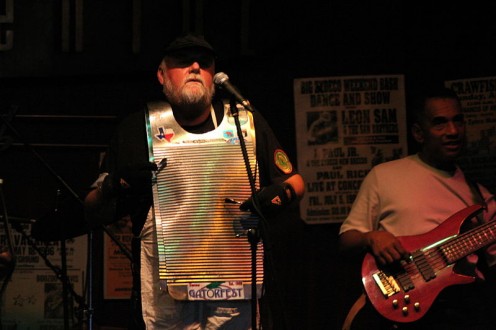
- Zydeco music may also include a frottoir (washboard).
- Similar to Cajun music, a Zydeco song may have chord changes.
- Cajun music is influenced more by country music.
- Zydeco music is influence more by Creole music and jazz
Just like creole food and Cajun food are often confused because they incorporate the same ingredients -- Zydeco and Cajun music are often confused because we culturally borrow from each other. We also appreciate each other.
Don't Mess With My Toot Toot!
What is the Basic Structure of A Cajun Song?
In Cajun music, often rehearsal is not necessary, it's the ultimate jam session. The musicians play well together, because they already understand the nature of Cajun music. It's more than the rhythm and chord changes in Cajun music, it's also:
- Usually, Cajun songs have eight or nine measures and a turn of eight or nine measures. A turn, for those not familiar with the musical term, is an extended bridge giving a contrast for the tune.
- The turn is normally not sung, and is played faster.
- The accordion generally leads all of the other instruments, playing before the lead vocalist sings the tune. However, this is not a rigid rule, just the accepted method.
- Then, the other instruments in the band, each take the lead for two turns, or two leads.
- There is a pattern to playing the songs and everyone knows them, with each band having their own preferred method.
- Basically, the rule is -- there are no rules as long as you remember the tune.
- Additionally, the vocalist also improvises, sometimes changing the words to the songs musically and in harmony.
- Probably, the only real unspoken rule, is that during the accordion's lead, all of the other instruments join in. You have too, it has the loudest voice!
Different Styles of Cajun Music
There are several schools of thought as to the different types of Cajun music.
Normally, there are six variations of Cajun music:
- Cajun Renaissance
- Contemporary Cajun Music
- Country Texas Swing Cajun
- Dancehall or Fais Do Do Cajun
- Traditional Cajun
If You'd Like To Know More!
- A Brief History of Cajun, Creole, and Zydeco Music
A Brief History of Cajun, Creole, and Zydeco Music. - Cajun Music: Alive and Well in Louisiana
One of French Louisiana's most vital attractions is its music. There are many fine musicians in this state, musicians of all kinds who demonstrate the great variety of styles and influences within Cajun music. They can be heard throughout the year on - Cajun music - Wikipedia, the free encyclopedia
- Floyd's Record Shop
- KBON 101.1 FM Radio :: Louisiana Proud
Louisiana Proud Radio is a locally owned 25K Watt Louisiana music radio station situated in the heart of Cajun County, Eunice Louisiana. Programming a unique blend of Cajun, Zydeco, Blues, Oldies, and Swamp Pop. KBON is dedicated to Louisiana Musicia - Most Useful Cajun Zydeco Music and Dance Site - ZydE-Magic WEB page