Candlemas – The End of the Christmas Season

Christmas is Not Just a Holiday but a Holiday Season
Christmas began as a Christian religious holiday. Christmas is still a religious holiday or holy day but it has also evolved into secular holiday as well. Many people, Christian and non-Christian as well as many non-religious people around the world celebrate Christmas as a purely secular holiday.
Even though Christmas began and remains an important Christian holiday we should remember that for most of its history, Christmas has had a secular component even for Christians.

Further, while Christmas itself is celebrated on December 25 (Eastern Orthodox Churches generally observe at least the religious portion of the holiday on January 7th which is the date of Christmas in the old Julian Calendar), both the secular and religious aspects of Christmas are spread over a longer period for most people.
For Roman Catholics, many Anglicans and some other major Protestant denominations the recognized religious Christmas season begins with Advent a four week period before Christmas that begins four Sundays before Christmas. For these denominations the religious Christmas season continues to a religious holiday known as Candlemas which falls forty days after Christmas Day.
Christmas Day (December 25th) remains the focal point of religious observance while observance of the other various holy days that fall between the beginning of Advent and Candlemas varies among members of the above denominations. Some of the holy days that fall during the long religious Christmas Season, are actively observed by a number of people while others pass unnoticed among the majority of people. A few of these religious holidays, such as St. Nicholas Day and Epiphany have some secular aspects to their observance.
Candlemas Holiday falls 40 Days after Christmas
Forty days after Christmas, on February 2nd, is Candlemas, final celebration of the Christmas and Epiphany holiday seasons. While not a secular holiday in the United States and Canada (outside of Quebec) it is observed as a feast day in the Catholic and Anglican, churches. In Latin America and some European countries there is a more public holiday type celebration. Outside of the Church, the closest Candlemas comes to being celebrated as a holiday in the United States and Canada is Groundhog Day which also falls on February 2nd.
Candlemas is the celebration of the Presentation of Jesus in the Temple and the name is a shortened version of Candle Mass which is how many people referred to the Mass celebrated on this feast day.
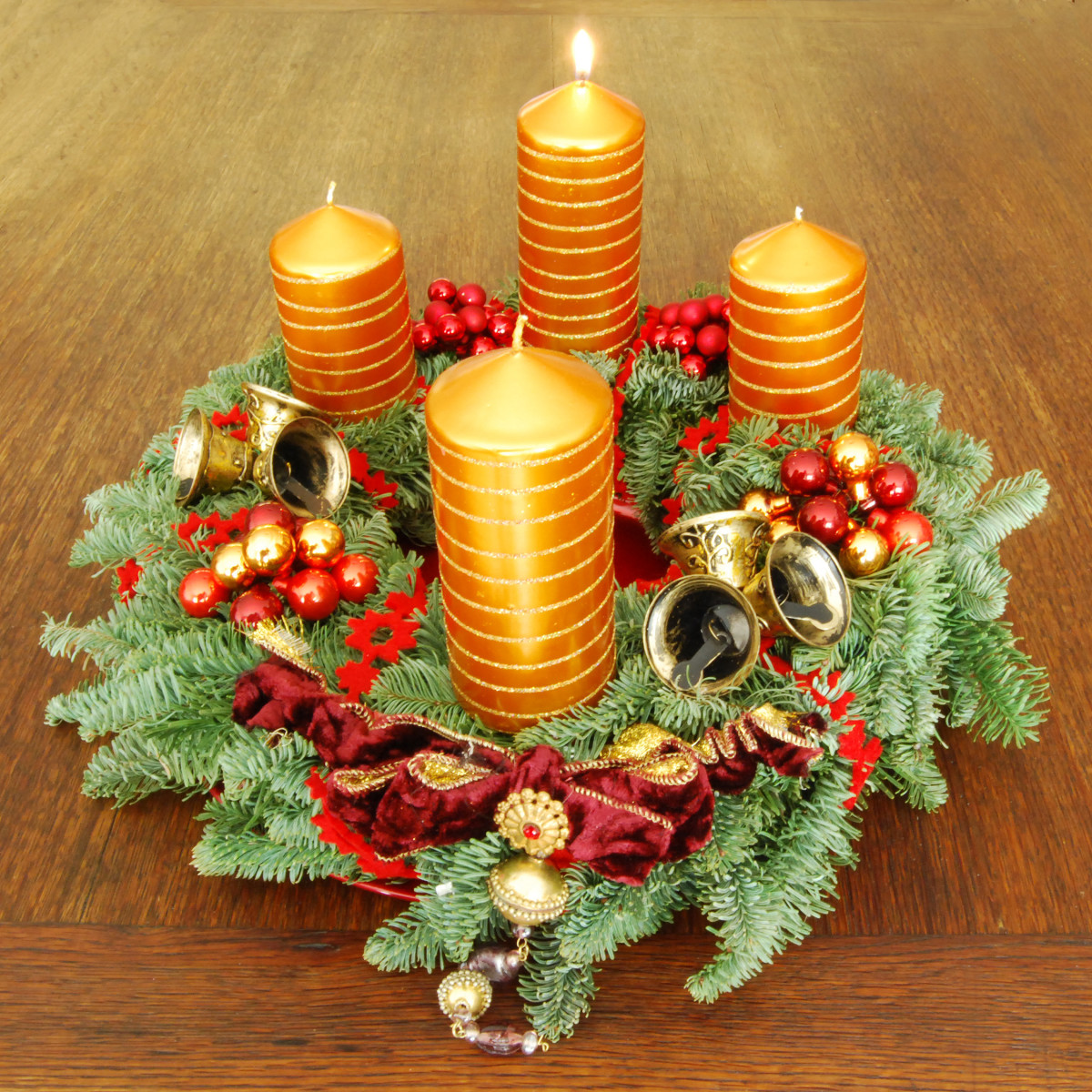
The name comes from the practice in the Western Church of the priest leading a procession into the church as those in the procession and congregation hold lighted candles and sing the Nunc Dimittis. In medieval times people brought their candles to the Church to be blessed. Following Vatican II local churches were instructed to do the blessing of the candles outside of the Mass itself.
Presentation in the Temple
The Nunc Dimittis, which is also known as the Canticle of Simon, is the text of the words uttered by Simeon, a devout Jew who lived in Jerusalem and had been told by the Holy Spirit that he would not die until he had seen the Anointed of the Lord. When Jesus was brought into the Temple by his parents, Simeon immediately recognized who he was and proceeded to take the baby Jesus in his arms and uttered the following blessing to God:
Now, Master, you can dismiss
your servant in peace;
you have fulfilled your word.
For my eyes have witnessed your
saving deed,
displayed for all the peoples to see.
A revealing light to the Gentiles,
the glory of your people, Israel.
(Luke 2:29-32 – The New American Bible, Thomas Nelson Publishers, 1983)

This is the Canticle of Simon and when these or other variations of the Canticle are put to music and sung the song is known as the Nunc Dimittis.
As Jewish parents, Mary and Joseph took Jesus to the Temple where, according to Mosaic law, a woman who gave birth to a male child had to present him to the temple and then had to undergo ritual purification in the temple forty days after the birth (in the case of a female child, the period was eighty days). The Gospel of St. Luke describes the event as follows:
Presentation in the Temple. When the day came to purify them, according to the law of Moses, the couple brought him up to Jerusalem so that he could be presented to the Lord, for it is written in the law of the Lord, "Every first-born male shall be consecrated to the Lord." They came to offer in sacrifice "a pair of turtledoves or two young pigeons," in accord with the dictate in the law of the Lord. (Source: Luke 2:22-24. The New American Bible, Thomas Nelson Publishers, 1983)
Holiday Began with the Church in Jerusalem in Early Days of Christianity
The tradition of celebrating Candlemas appears to have begun with the Church in Jerusalem and from there it gradually spread to churches throughout the Christian World.
One of our earliest references to the celebration is found in a letter written some time around 380 A.D. by a woman named Egeria to some female friends back home which was probably in Gaul (France).
While often identified to as a nun on a pilgrimage to the Holy Land, Egeria could also have been a wealthy woman who undertook to make a pilgrimage. This was during the period known as the Pax Romana or Roman Peace when the Western world was ruled by Rome and was at peace internally, so it would not be unusual for a wealthy woman to make such a trip.
Egeria's letter indicates that the Feast of the Presentation was celebrated on February 14th which meant that Jesus' birth was celebrated on the Feast of the Epiphany by the Church in Jerusalem, a date that is still observed by some Eastern Churches down to this day.
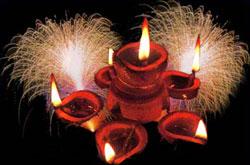
While the observance of Candlemas in the U.S. and Canada has separated into the secular Groundhog Day and a Catholic (including Orthodox) and Anglican religious observance, it continues south of the border in Mexico as a holiday, like Christmas, in which the religious and secular aspects are intertwined. Known as Dia de la Candelaria.
Dia de la Candelaria is the day that families put away their Christmas nativity scenes and celebrate with a party and dinner which includes tamales as a main course. Tamales are also a popular food for the entire Christmas season in Mexico and the southwestern United States.
© 2007 Chuck Nugent
Related
Tips to Reduce Stress and Exhaustion During the Christmas Season

De-stress Your Holiday Celebration: 15 Simple Ways to Celebrate
Christmas: Through the Eyes of Mary
A List of 50 Non-religious Christmas Songs

Choosing the Best Christmas Tree—5 Things To Look for When Picking a Tree This Holiday Season