Chernobyl (Ukraine - Chornobyl) Nuclear Power Station Disaster

Chernobyl (Ukraine – Chornobyl) Nuclear Power Station Disaster
CHERNOBYL (UKRAINE – CHORNOBYL) Nuclear Power Station Disaster
Introduction
The Chernobyl power station is situated, very close to the Belarus border, 16km northwest of the township of Chernobyl and 104km north of Kiev. The station consisted of 4 reactors, each capable of producing 100 mega watts of electric power each, the station came on line in 1977-83.
April 1986 disaster struck at the Chernobyl Nuclear Power Plant. It was the result of a flawed Soviet reactor design that was operated with inadequately trained staff. It was a direct consequence of Cold War isolation and the lack of proper safety culture and indicative of a Soviet Union weary, broke and looking for a shortcut to save on the already over taxed economy
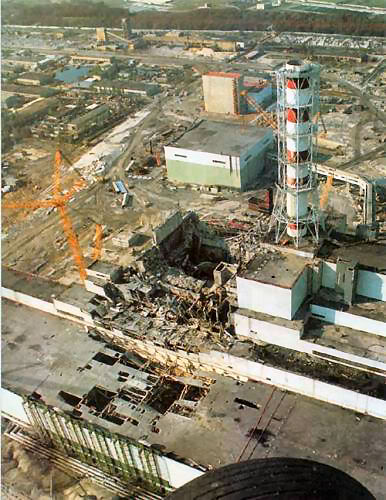
The accident destroyed Chernobyl reactor 4 and killed 30 people including 28 from radiation exposure, there were also 134 confirmed cases of acute radiation poisoning (all of whom recovered) and large areas of Belarus, Ukraine, Russia and beyond were contaminated in varying degrees
The accident is unique in that in the history of commercial nuclear power it is the only incident to have fatalities (there have been fatalities in military and research facilities)

Chernobyl (Ukraine – Chornobyl) Nuclear Power Station Disaster
The Accident
On April 25th, prior to a routine shutdown, the crew at reactor 4 prepared for the test to see how long the turbines would spin and supply power following a loss to the main electrical power supply.
Similar tests had already been carried out at Chernobyl despite the fact that these reactors were known to be very unstable under very low power settings
On April 26th a series of operator actions including the disabling of automatic shutdown mechanisms. As the coolant was diminished and the power input increased, a peculiarity of the reactor design caused a dramatic power surge resulting in a very unstable condition
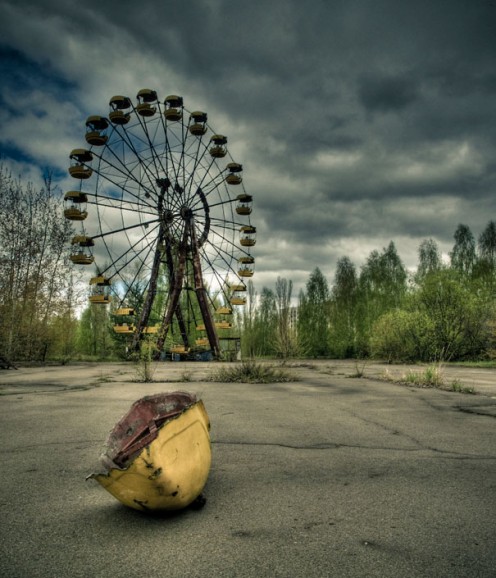
The fuel elements ruptured and a explosive force of steam lifted the cover plate off the reactor allowing fission products to be released into the atmosphere
A second explosion threw out fragments of burning fuel and graphite from the core allowing air to rush in causing the graphite moderator to burst into flames. The graphite burned for about 9 days all the time spewing toxic fission into the environment.
5000 tonnes of borite, dolomite, sand, clay and lead were dropped on the burning core by helicopter to try and extinguish the core blaze and limit the release of radioactive particles
Chernobyl (Ukraine – Chornobyl) Nuclear Power Station Disaster
Immediate Impact
A cover-up was attempted but on April 28th the Swedes were monitoring the situation and alerted the world to what was going on. They recorded abnormally high levels of wind-transported radioactivity and pressed for an explanation. The Soviets finally came clean and there was an international outcry over the dangers caused by the radioactive emissions
In the accident it is estimated that all the xenon gas, about half the iodine and caesium and at least 5% of the radioactive material was released in the accident, most of it was deposited close in the settling dust and debris but the lighter material was carried by the wind over Ukraine 40% of Belarus, Russia and to some extent over Scandinavia and Europe. There were millions of acres of contaminated land, forest and farmland as far as France and Italy
Between 50 and 185 million curies of radio nuclides escaped into the atmosphere – several times more radiation created than the bomb blasts at Hiroshima and Nagasaki
The main casualties were among the fire fighters who attended the small fires on the roof near the explosion
The next task was the cleaning up radioactivity at the site so that the remaining 3 reactors could be restarted and the damaged reactor could be shielded permanently. Initially about 200,000 people, known as liquidators, from all over the USSR were involved in the recovery and clean up of the site, many of which received high doses of radiation. Later that number swelled to around 600,000 liquidators most of those receiving low amounts of radiation
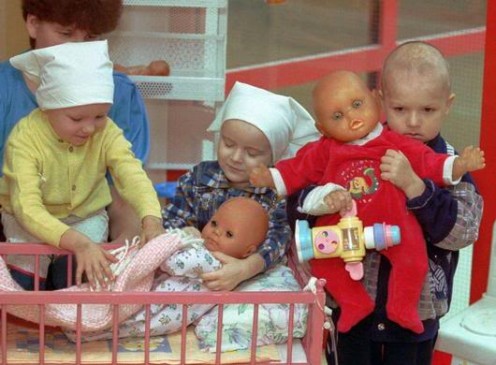
Many children in the surrounding areas were exposed to radiation and many developed thyroid cancers as a result which are usually not fatal if detected early.
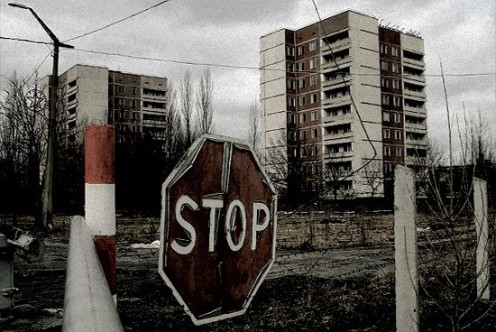
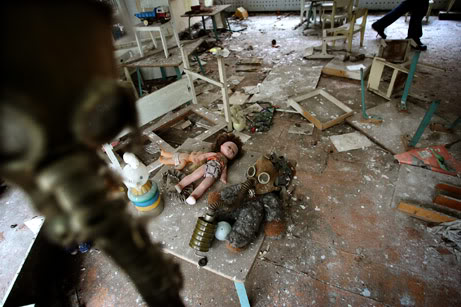
On the 2nd and 3rd of May 45,000 residents were evacuated from within a 10km radius of the plant, especially from the plant operators town of Pripyat. On the 4th of May everybody within a 30km radius were evacuated from the contaminated zone which was 116,000 people
In years following the initial 30km radius contamination zone was doubled resulting in a further 210,000 people having to be resettled into less contaminated areas.
Since then about 1000 people have returned unofficially to their homes with great personal disregard for their safety and farm animals have given birth to various severities of deformities
Chernobyl (Ukraine – Chornobyl) Nuclear Power Station Disaster
Environmental and Health Affects
Several organizations have since been to the site to evaluate the human and environmental damage, but all have problems assessing it because of the lack of recorded information before 1986
In 1995 it was found that in Belarus, Russia and the Ukraine that approximately 1,000,000 were affected by radiation and that the most disturbing was the rise in thyroid cancer especially among those who were children and adolesants in 1986, around 700 confirmed cases.
It is thought that in future years that we may see an increase in the number of leukemia cases as a result of the incident but generally the reports of human medical damage are overstated. In fact the World Health Organization have not seen an increase of cancer, birth abnormalities or any other signs that the population was affected by the explosion and the radioactivity it released into the environment. What they are thinking is that all these health issues may be a problem in years to come
The current major problem is psycho-social affects from the accident and are similar to those arising from other major disasters such as earthquakes, floods and fires
The most recent and authoritive UN report says that there is no scientific evidence of any radiation related health affects to most people in the Chernobyl-4 disaster, apart from 1800 cases of thyroid cancer, 14 years after the event. However those that involved in the clean up operation are at risk in the long term to leukemia and cancer in the future.
Chernobyl (Ukraine – Chornobyl) Nuclear Power Station Disaster
Chernobyl Today
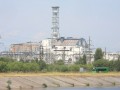
Chernobyl unit 4 is now enclosed in a large concrete shelter, which was erected quickly to allow the other three reactors to come back into operation, however the structure is neither strong nor durable and there are plans for its reconstruction. This will cost US$715 million for the reconstruction of the shelter and the removal of the remaining radioactive materials
There are also plans to take units 1, 2, and 3 that are already offline and clean out the waste inside them as well
Ukraine still depends on Russia for its energy needs particularly in oil and gas, they produce their own domestic nuclear power meeting 45% of their own energy needs and plan to build more nuclear power stations to increase its independence
What has been gained from Chernobyl’s Disaster?
Firstly the safety and design of all former soviet nuclear reactors has improved dramatically, this is mainly due to the improvement of a safety culture that grew out of increased collaboration between east and west and investment from the west in improving reactors.
Since 1989 over 1000 former soviet nuclear engineers have visited western power plants and there have been many reciprocal visits. There have been over 50 twinning arrangements between nuclear power plants from east and west.
Also an agency called International Atomic Energy Agency (IAEA) that brings together operators and engineers from all over the world to focus on safety improvements.
My name is Robee Kann, for four years I was a tour guide throughout Europe. I loved my job and I would love to hear from you. You are most welcome to message me to say hello or request a hub about a European subject. Please look at my other hubs and leave a comment for me.