- HubPages»
- Pets and Animals»
- Tropical Fish & Aquariums»
- Marine Aquarium Animals
Clown Fish : Facts On Marine Clown Fish

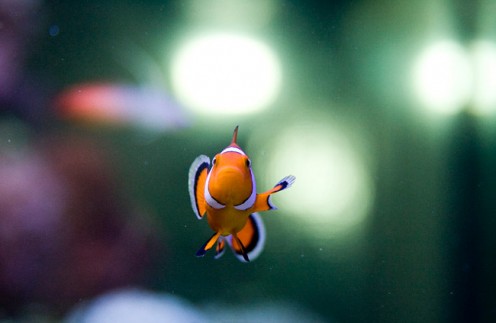
Ocellaris Clown Fish
Clown Fish Facts
Family : Pomacentridae
Genus : Amphiprion, Premnas
The clownfish are the most popular group of marine fishes in the saltwater aquarium hobby today. Two of them, the very similar Ocellaris clownfish (Amphiprion Ocellaris) and the Percula clownfish (Amphiprion Percula) are perhaps the most recognized marine fish in the world. Their fame increased after the release of the movie Finding Nemo.
Clownfishes are part of the family Pomacentridae and they make up the genus Amphiprion and Premnas. They are represented by 29 known species with only one member in the genus Premnas, the giant Maroon Clownfish.
Percula Clownfish
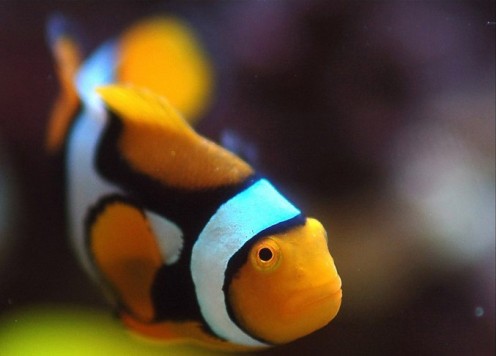
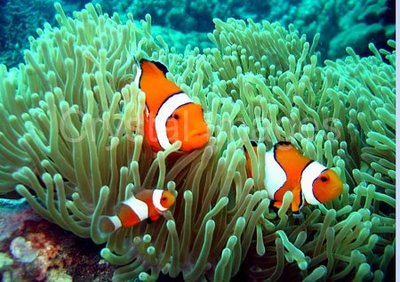
They are also known as Anemone fish because they share a symbiotic relationship with anemones in the wild. Nature has given them a way to live within anemones without getting stung. Clownfish protect themselves from the anemones sting by covering their bodies in a type of mucus. In the wild, clownfish will spend their entire lives near their preferred anemone, they eat, sleep and breed around it.
In
the marine aquarium hobby, they are great fish for beginners as most of
them adapt, cost very little and are very hardy. The clownfish is the
most heavily traded marine fish along with damsels (Also a member of
Pomacentridae) and most species are commonly available. Walk into the
marine section of any pet store and you'll always find at least a few
clownfish and damsels.
The most popular of the clownfishes are of course the ocellaris and percula clownfish, which are differentiated by the number of spines on their dorsal fins.Ocellaris clownfish have 11 spines while Percula's have 10. Other popular members of the family include the maroon clownfish, tomato clownfish and the clarkii clownfish.
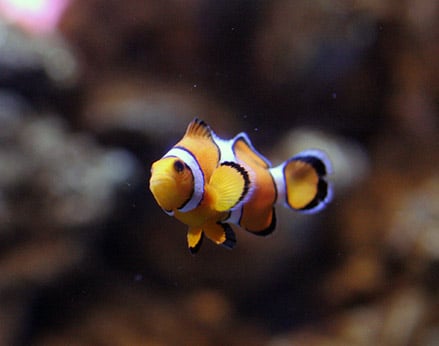
Amphiprion Ocellaris
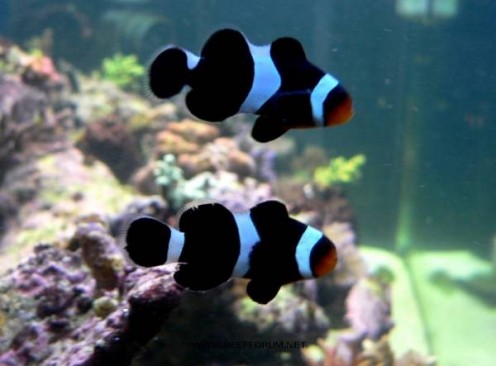
Black Ocellaris
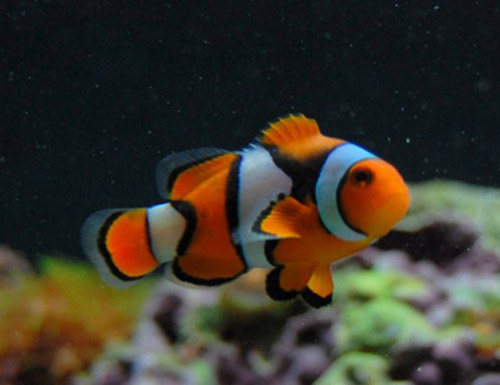
Amphiprion Percula
Black Percula
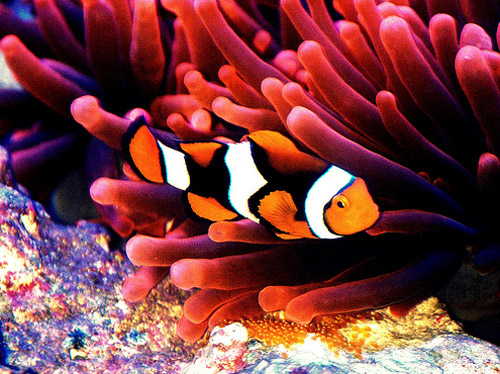
3. Premnas Biaculeatus
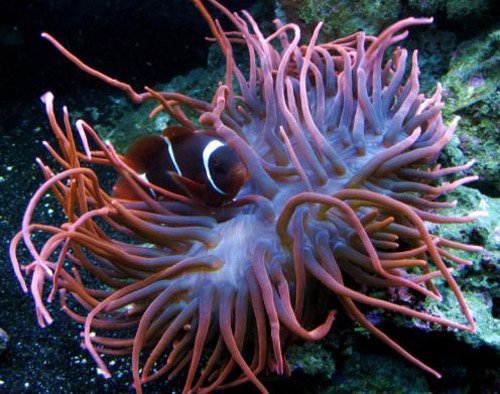
4. Amphiprion Frenatus
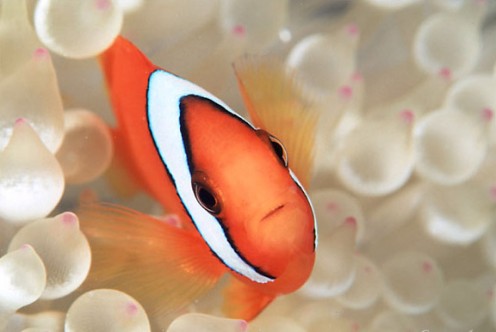
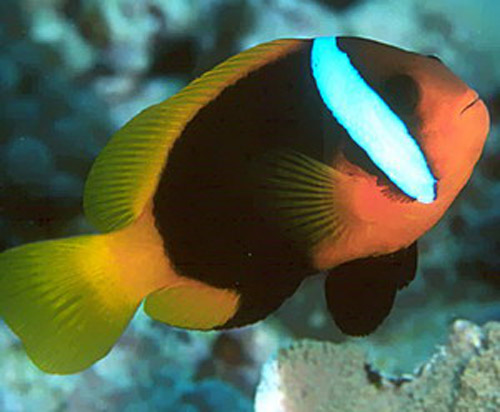
5. Amphiprion clarkii
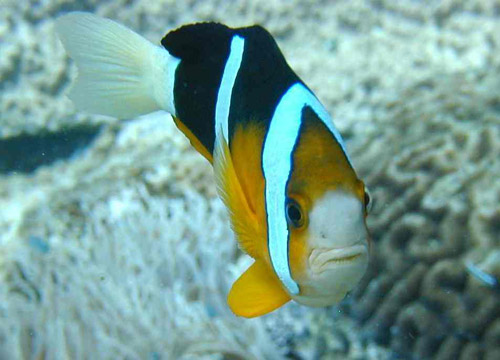
Amphiprion Melanopus
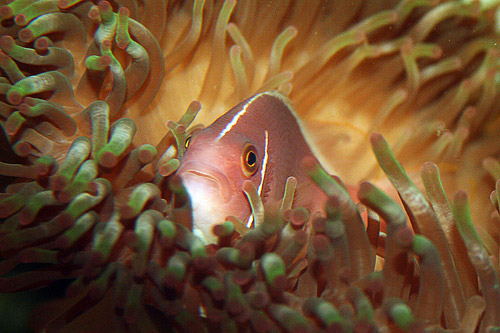
Amphiprion Perideraion
Popular Clown Fish
Ocellaris Clownfish (Amphiprion Ocellaris). The mainstay of the hobby, everyone in the hobby either has one or has had one in the past. Cheap, plentiful and great for beginners.
Black Ocellaris Clownfish. A black variant that is uncommon and expensive. Care and requirements for both the regular and black variants are exactly the same.
Complete Amphiprion Ocellaris Guide.
Amphiprion Percula (Percula Clownfish). Just as popular as the Ocellaris Clownfish, but more expensive, not as common but just as hardy.
Black Percula. Exactly the same as A.Percula except for more black on its body. Uncommon and expensive. Care for both A.Percula and the black percula is exactly the same.
Complete Amphiprion Percula Guide.
Picasso Clownfish. The new craze. Percula clowns with odd patterns. You either love them or you hate them. Rare. Very expensive depending on the design. Care for this fish is exactly the same as A.Percula.
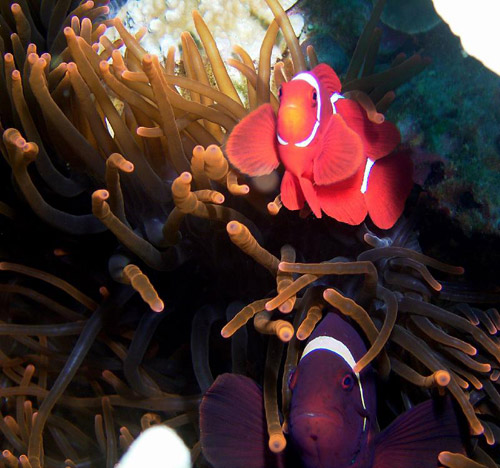
Maroon Clownfish (Premnas Biaculeatus). A beautiful and endearing clownfish when small, turns big and nasty in the end.
Complete Maroon Clownfish Guide
Tomato Clownfish (Amphiprion Frenatus). Another common clownfish that is heavily traded. Somewhat cheap.
Complete Tomato Clownfish Guide
Clarkii Clownfish (Amphiprion Clarkii). Not as common as the rest of the top 5, the most expensive clownfish in this group.
Cinnamon Clownfish (Amphiprion Melanopus). Looks very similar to the Tomato Clownfish, care and requirements are the same.
Pink Skunk Clownfish (Amphiprion Perideraion). An unusual looking clown. Pink and orange throughout its body with a single qhite stripe on its head and cheek.
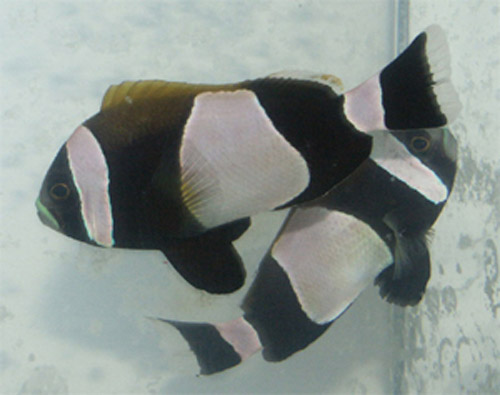
Amphiprion Latezonatus
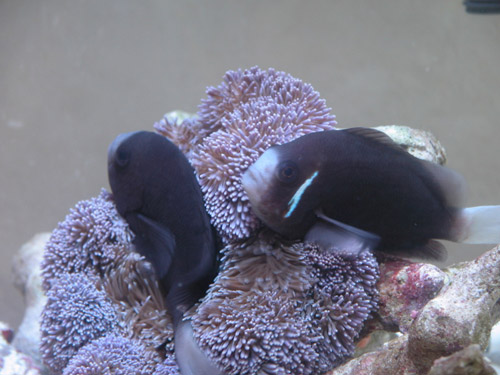
Amphiprion Mccullochi
Rare Clown Fish
Pictured are some very rare species of clownfish that come into the trade only rarely and with very high prices.
Amphiprion Latezonatus. Commonly known as the blue-lip clownfish and the wide-band clownfish. Hails from Australia where collection is restricted. Expect to pay a few hundred USD for one, if you can find one for sale.
Amphiprion Mccullochi. Commonly known as the whitesnout clownfish. The rarest, most expensive clownfish on the market. Endemic to a few places in Australia. You will almost never find this clownfish for sale, and when you do, expect to pay well in the thousands. Liveaquaria had a pair some months back that were going for a whopping $6000 USD!
Ocellaris clownfish group
Maroon Clownfish Pair
Clown Fish : Social hierarchy and gender
All clownfishes are protandrous hermaphrodites, which means they are all initially male and if social conditions are right, they become females. Females cannot revert back into males.
Male ----> Strongest in the pack ----> Female
The determinant of gender change is directly correlated to an individuals rank in its social group. If you house a group of young males together, only the most dominant male will become a female. If she dies, the strongest male will begin transforming into a female and take her place.
Dwarf angelfish (centropyge) Also live by the same rules. In this genus, a female remains a female when dominated by a male or a higher ranking female. Without the presence of another higher ranked angelfish in the harem, she will begin changing into a male.
Ocellaris clownfish laying eggs
Ocellaris clownfish babies
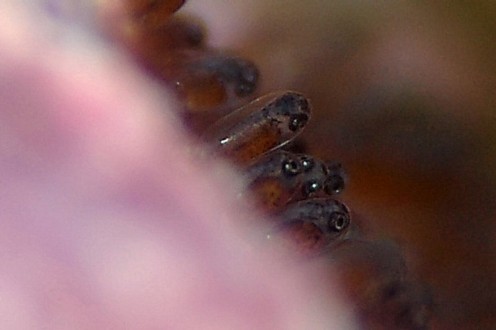
Percula Clownfish eggs ready to hatch
Clown Fish Breeding
As the most popular marine fish in the hobby, it should stand to reason that it is also the most popular home bred fish in the hobby. Just about every species in the Amphiprion and Premnas genus have been bred at one time or another.
Some are harder to breed and raise, some are easier, but on the whole clownfishes are easiest marine fish to breed. Which is great news because that means eventually, we can stop harvesting them from the wild. The only things that are stopping said scenario from happening are the prices of tank-raised clownfish and the availability of said clowns. There aren't enough tank-bred clowns for the entire market.
As mentioned above, breeding clownfishes is pretty easy as far as breeding marine fishes go. A pair will readily breed in something as small as 10 gallons, however something larger like a 20 gallon is preffered.
The reason they manage to bred in such tight spaces is because they are a site attached fish. Recall how they rarely leave their anemone for any reason in the wild, their entire lives are spent in a small location, their anemone. The same goes for them in captivity. An anemone is not needed, a simple clay pot would suffice as housing.