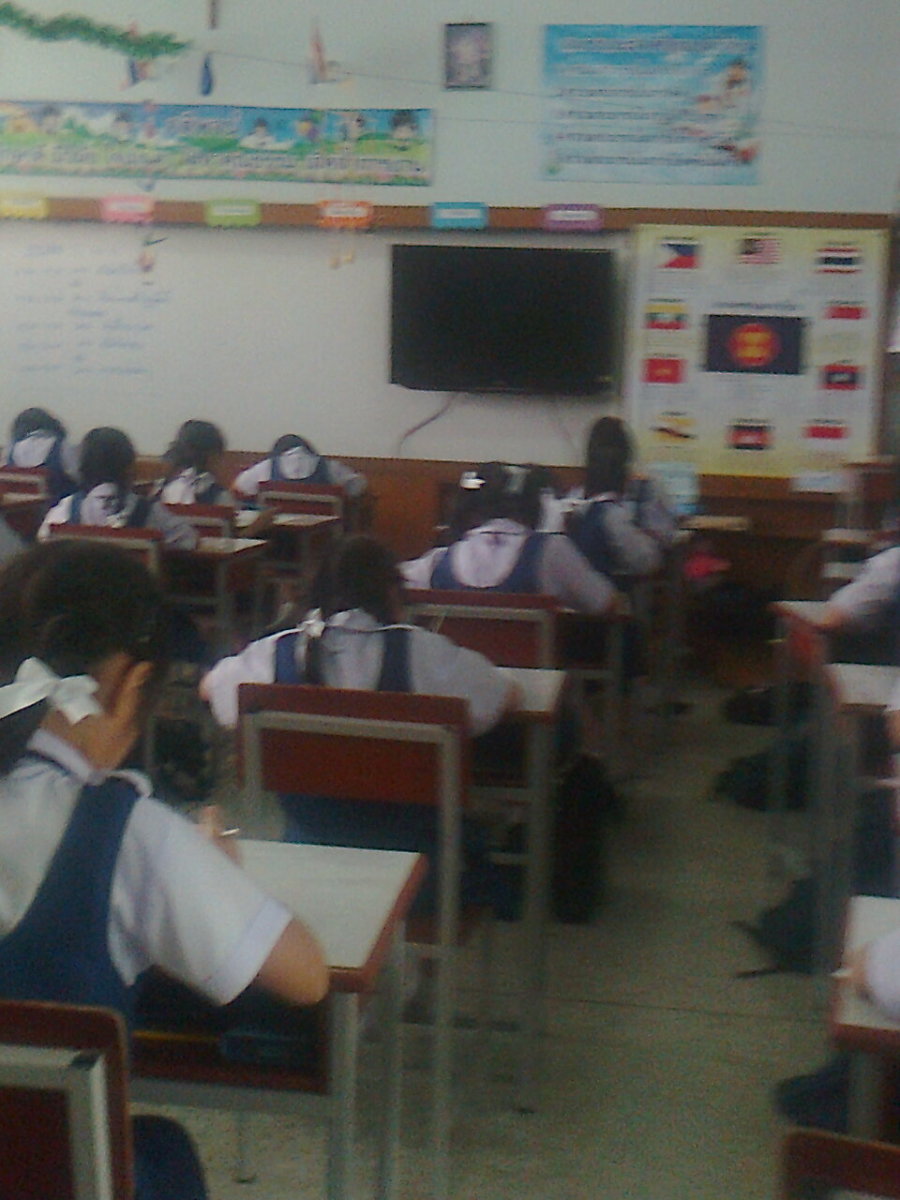
Don't Test; Teach!
67
|
|
TRIUMPH DECK WITH TEACHING DVD CARD MAGIC
Current Bid: $13.95
|
|
|
Methods for Effective Teaching by David M. Byrd, Pau...
Current Bid: $14.99
|
|
|
HAWAIIAN UKULELE SONG BOOK & TEACHING BOOK COMBO W CD
Current Bid: $34.95
|
|
|
Catholic Social Teaching
Current Bid: $28.39
|
|
Teaching Outside the Box: How to Grab Your Students By Their Brains
Price: $13.86
List Price: $24.95 |
|
Awesome Hands-on Activities For Teaching Grammar
Price: $7.71
List Price: $12.99 |
|
The Teaching Gap: Best Ideas from the World's Teachers for Improving Education in the Classroom
Price: $9.99
List Price: $17.99 |
|
Teaching With Love and Logic: Taking Control of the Classroom
Price: $11.58
List Price: $17.95 |
I don't remember taking any tests in kindergarten, but in eight years of grammar school, four years of high school and six years (part time) of college it seems I did little else.
Sometimes I think all those tests I was subjected to -- so called quizzes, mid-terms, finals, SATs, aptitude, psychological, intelligence tests -- took up too much valuable time. Maybe taking those tests were not a complete waste of time, but I think I'd be a better educated citizen if those hours were spent accumulating knowledge rather than showing others how much I had learned.
Nevertheless, I'm not categorically opposed to tests. I just think much of the testing we do is unnecessary. It can be too tempting to learn something, take a test proving you've become conversant with the material, and convince yourself that's all there is to it.
So, when I read these days about the Connecticut Mastery Tests, and whether pupils should take them in the fall or the spring, the great debate, in my case, falls on deaf ears.
Told that 105,000 pupils in fourth, fifth and sixth grades take the reading, writing and math tests, my reaction is: That's 105,000 hours that are being wasted (assuming a one-hour test.) Did anyone learn anything in those 105,000 hours?
I would much rather see teachers spend their time teaching reading, writing and arithmetic, history, languages and all the classic studies, including reading of the world's great books.
But, as important as those basics are, there are myriad other things we need to know to be well rounded and "educated."
A good idea would be to create learning centers where teachers could hold forth on the basics for a portion of the day while proctors, hired for the purpose, show students how to pursue their interests in other subjects -- whatever suits their fancy. People learn better when they have a direct interest in what they study. This world doesn't need automatons who are cloned and educated in the same way.
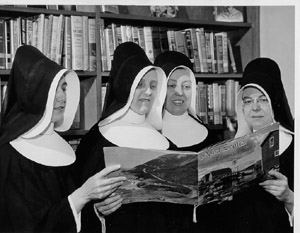
In grammar school, I learned a great deal by rote. Sisters of Charity taught me the multiplication tables, who discovered America, who invented the cotton gin, and who was the first explorer to navigate the Cape of Good Hope.
It wasn't until I read about various periods of history in what we used to call "dime novels" that I developed a true appreciation for the historical periods I knew by rote. I needed the information I learned by rote, but I also needed a basic knowledge of the flow of history. Ultimately, for me, it was through biographies, nonfiction and historical fiction that these subjects came to life.
Some tests may be useful, and even necessary, but educators should make our children's education their first priority.
It's OK to establish curriculum to achieve some worthy goal, but teaching children only what is necessary to score well on a test -- any test -- shortchanges them.
We should be certain our children have a good grasp of the basics, but at the same time allow them to explore subjects of particular, personal interest -- no matter what those subjects may be. Show them where -- and how -- to find the knowledge they're looking for, whether it be in a textbook, in the reference section of the library or filed on a computer.
If we do this, we won't need so many tests to measure our children's worth.
I wrote this column as a "My View" for The Hour newspaper of Norwalk, Conn., on May 18, 1996. I now write my views on a wide variety of topics on HubPages. You can, too. It's easy, and free! Get paid for writing about what you love, or whatever interests you!. HubPages makes the technical part easy. Make friends and get help on its active forum. Take a quick tour to see how easy it is to get started today Click Here -- To view my HubPages Profile Click Here
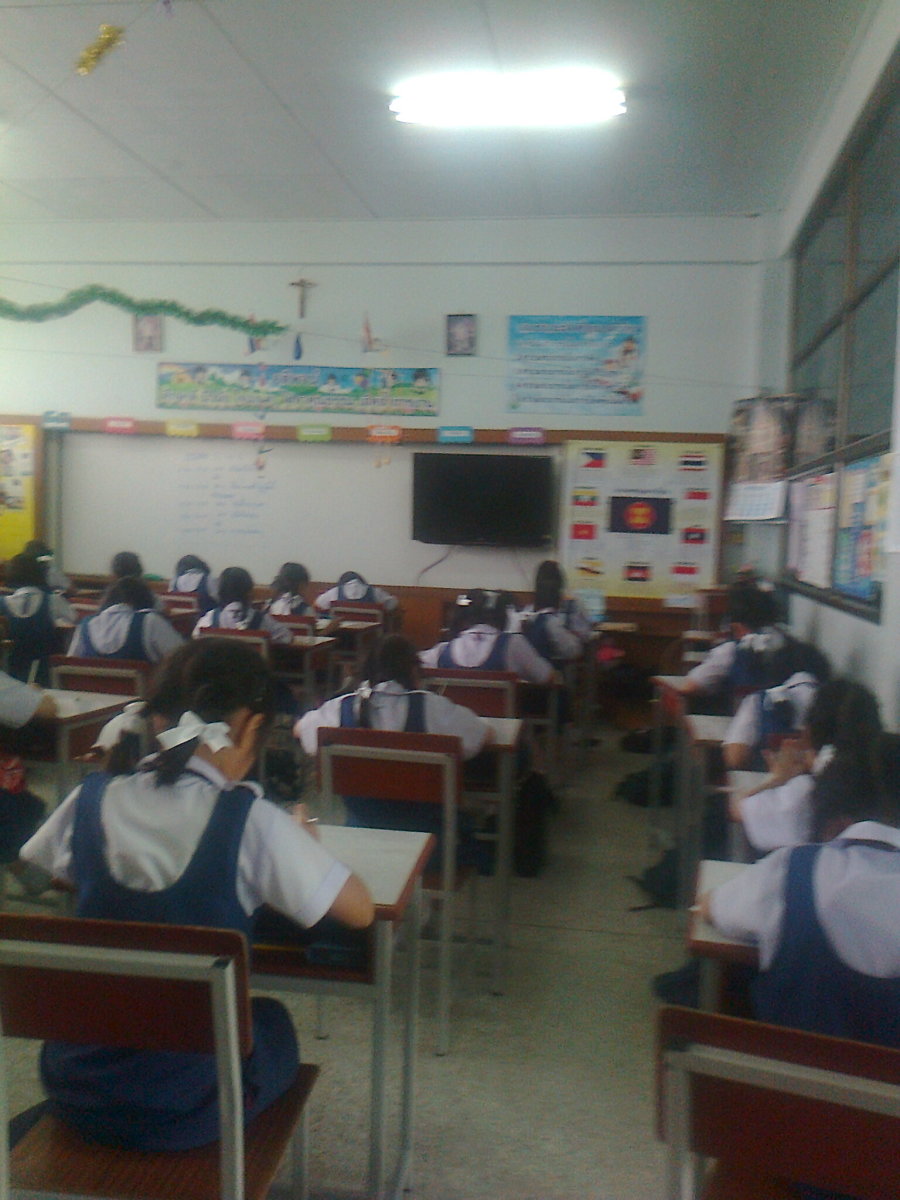
Do Our Schools Waste Too Much Time Administering Tests?
See results without votingShare it! — Rate it: up down [flag this hub]
Comments
I believe the nuns in my grammar school were told to teach so that pupils would get high scores on the New York State Regent exams back in the 1940s. Nevertheless, I learned a great deal. In high school and college. It seemed to be an individual decision by each teacher. I agree about standardized tests. I am very much opposed to the testing required by the "No Child Left Behind" mandate.
The No Child left Behind is killing our American schools. It should be eliminated, ask any teacher.
Thanks, Linda, for commenting. I agree 100 percent. On top of beiing a bad program, the Bush Administration has been holding back funding of the program, making it another of the many "unfunded mandates."
Such true words, William. I'm a university lecturer in the UK and we're slavishly following the US model with tests. We see such things as stifling the individual's quest for knowledge; we're spoon-feeding them with proscribed material instead of letting them have a little initiative! And all these tests place undeserved pressure on weak students...
Thanks, pjdscott. I'm sorry the UK is following our lead on this. Maybe the situation will turn around in the coming decades. Hope springs eternal!
Bill.. They have to do both. First they have to teach and I mean teach so kids learn something . Then they have to test to see if the "little darlings" have learned anything. If the kids are dumb , leave them back a year till they learn . Unfortunately some of the products that we hire for teavhers these days aren't the brightest bulbs in the pack either. Seems like when we went to school and all the grade school teachers had their hair in a bun and graduated from the State Normal school ( remember that's what they called the schools teachers went to then ) that these teachers were more worrried about teaching rather than their next union contract.
"Some" testing is required, Bob, but it surely is overdone. Many teachers have their hands tied by school administrators, as well as "No Child Left Behind," and other funding problems. I agree we had well-qualified teachers when we were kids, but the lowering of standards over the years was not caused by the teachers, or the teachers unions.
Quite right, Torpley. I couldn't agree more. I've always been baffled by "what" is tested. Not that reading, writing, and arithmatic aren't important, but our society has seemed to determine that there is this specific body of information that one must learn to be considered smart. I think we limit our own potential.
Your comment, Peter, brings to my mind some scenes from the 1950 movie "Kim," from author Rudyard Kipling, starring Errol Flynn. Dean Stockwell, who plays Kim, is taught how to be a spy and is tested in unique ways. I often thought how nice it would be if school teachers had the freedom to teach and test in their own individual ways. I had one algebra teacher in high school who somehow was able to teach in a unique way, but he was one of only a few teachers in my experience who were able to do so. By the way, "Kim" is one of my favorite movies.
Thanks for writing this. I just retired from teaching at the college level, and I'm soooooooo tired of seeing teachers have all their creativity stifled, and students have all their initiative stifled.
It must be difficult,Teresa, for good teachers to have to live with the shortcomings imposed upon them by administrators, and society, on a day-by-day basis. We may be voices crying in the wilderness, but just maybe someone someday will hear our plea. Thank you for commenting.
- The Tories call for more rigorous testing in primary schools (BBC News)
The Tories are calling for more rigorous testing in primary schools amid concern over literacy and numeracy levels. 3 days ago
- Mentors help new teachers make the grade (Richmond Times-Dispatch)
Two weeks into teaching, Erin McCoy, a first-year fifth-grade teacher at Hopkins Elementary School in Chesterfield, was ready to quit. It seemed like students weren’t listening, and some students were testing the boundaries because they knew their teacher was new. “I thought, this is not for me,“ she said recently. “I was really upset because this is something that I love to do, but either I’m ... 2 days ago
- Valley Briefs: West teachers earn certification (The Beacon News)
Four West Aurora School District teachers recently completed the requirements for national certification set by the National Board for Professional Teaching Standards. 19 hours ago


In The Doghouse says:
11 months ago
William
Having been somewhat exposed to the field of education, I have mixed feelings about the value of testing. One thing that I feel testing does is try to measure the value or worth of the teacher. I think this is terrible. I have known many a great teacher that would refuse to "teach toward the test" and had a class that scored low test wise, and conversly I have seen many a poor teacher that "taught toward the test" and left little of value to their students to learn. I know that some standard of measured learning must be kept but these standardized testing methods are not really the answer in my opinion. Thanks for the thought provoking HUB.