- HubPages»
- Education and Science»
- Life Sciences»
- Entomology»
- Insects & Bugs
Garden Tiger and Magpie Moths were once common

What is happening to British moths?
When I was a boy, and indeed later in life, I used to enjoy finding caterpillars and discovering what species of moth or butterfly they would eventually produce. I remember as a child and as a teenager, the common types that I could come upon in the garden or on my father or grandad's allotments. I used to find caterpillars on the railway bank too.
Garden Tiger and Magpie Moth
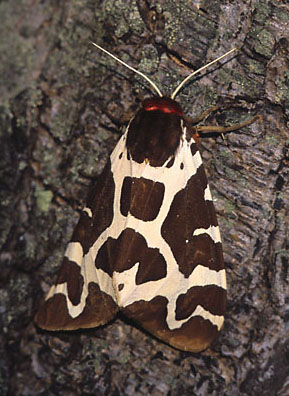
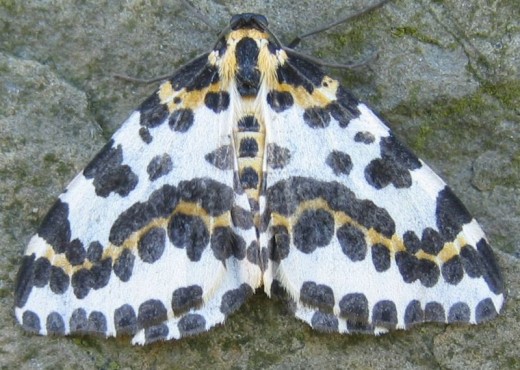
Magpie Moth
Garden Tiger Moth
One species I have always loved is the Garden Tiger Moth (Arctia caja) with its large, very furry caterpillars that are known as woolly bears. The adult moths are spectacular too with boldly patterned forewings of chocolate brown and white and with hindwings of a bright orange dotted with blue black. It is one of the largest and most colourful of all British moths.
I remember finding the caterpillars on my dad's rhubarb and often you could see the holes they had eaten in the leaves. Other times you might see one running across a path or in the lanein the summer sunshine.
They were easy to feed if kept because they eat a very wide range of plants. Nettles, weeds like Dandelions and Dock, Brambles and cultivated vegetables such as Cabbage.
In Ely, where I lived until several years back, the moth and its caterpillars were again commonly found in my garden and in the neighbourhood.
Recently though, I have read many reports that say that this beautiful moth has gone into a rapid decline in the UK and is vanishing from many places.Wikipedia says: "Its numbers in the UK have declined by 89% over the past 30 years."
How could this be? It eats a wide range of food `plants and the caterpillars are protected from predators by their long fur whilst the adults are poisonous and put of enemies with their bright warning colours.
Something else is killing them off. Maybe it is the widespread use of pesticides and the practice of tidy gardening with everything pruned just-so and neatly manicured lawns? But perhaps it has to do with climate change? The Garden Tiger is a species that has a caterpillar that hibernates in winter and a mild one would not cause the young insect to stay dormant so well.
It is not just the Garden Tiger. Many other once very common species are disappearing. The Magpie Moth (Abraxas grossulariata) is another example. Something is killing off the once large numbers of this pretty moth too.
This pretty moth is colourful in all stages of its lifecycle. As a caterpillar, which is of the "looper" or "inchworm" variety, it is mostly black and white and pinkish-red underneath, the pupa is black banded with dark yellow and the adult moth has creamy white wings speckled with black dots and marked with yellow-orange bands. The body of the moth is black and orange.
Like with the Garden Tiger Moth, these are warning colours to tell would-be predators that the insect is poisonous. Like the Garden Tiger Moth the Magpie Moth caterpillar hibernates while still small and completes its growth in spring.
I used to find loads of them on a Flowering Currant (Ribes sanguineum) bush in my grandparents garden but they also eat other types of currant and Gooseberry (Ribes uva-crispa) bushes too. In the countryside they are, or were, common in hedges where they ate Blackthorn (Prunus spinosa) and Spindle (Euonymous europaeus).
In the countryside it can also live on moorland and hillsides feeding on the Heather (Calluna vulgaris).
These catepillars can spin a thread that they can hang from and can climb back up if they are dislodged from where they were hiding in the leaves. They also move along by using the front legs to pull the rest of the body in a loop up to the front rather than crawling like most other types of caterpillar.
It seems very sad and strange to hear that these colourful and once common moths are having a struggle to survive in the UK as it is now.
Some species are being maintained in captivity by insect enthusiasts and the businesses that breed and sell eggs, caterpillars and pupae. It seems a great shame that it has come to this; that instead of being able to go out into your garden to find moths and their caterpillars, now you have to order them online from a company that will sell you them.
Copyright © 2010 Steve Andrews. All Rights Reserved.
Garden Tiger Moth warming up for flight
Moth links
- Lepidoptera Breeders Association - Supporting Moth and Butterfly captive breeding programmes
The Lepidoptera Breeders association aims to encourage the study of Moths and Butterflys via interaction. Through hands on practical experience by breeding larvae, ova, pupae, cocoons we aim to promote Natural History study and field Entomology. - Abraxas grossulariata - Wikipedia, the free encyclopedia
- http://ukmoths.org.uk/show.php?bf=2057
- Garden tiger moth - Wikipedia, the free encyclopedia