How Green is My Valley?


Not as green as I'd like it
Just how green is my valley? Or yours, for that matter? We all like to think we are living in a world of utter greeness, but are we? Keep on reading to see how much better we can all do and help preserve the earth at the same time. I'll be looking at some green myths and what we can do about it.
These of course are my personal views. Many in the green movement say we need to become economists. Therefore we need to add up the total energy and greenhouses gases used by factories, our use of transportation, and so forth. If for example you have to drive an hour and a half each way to dispose of a compact bulb, or worse still have absolutely no way to dispose of one safely, does the environment really win?
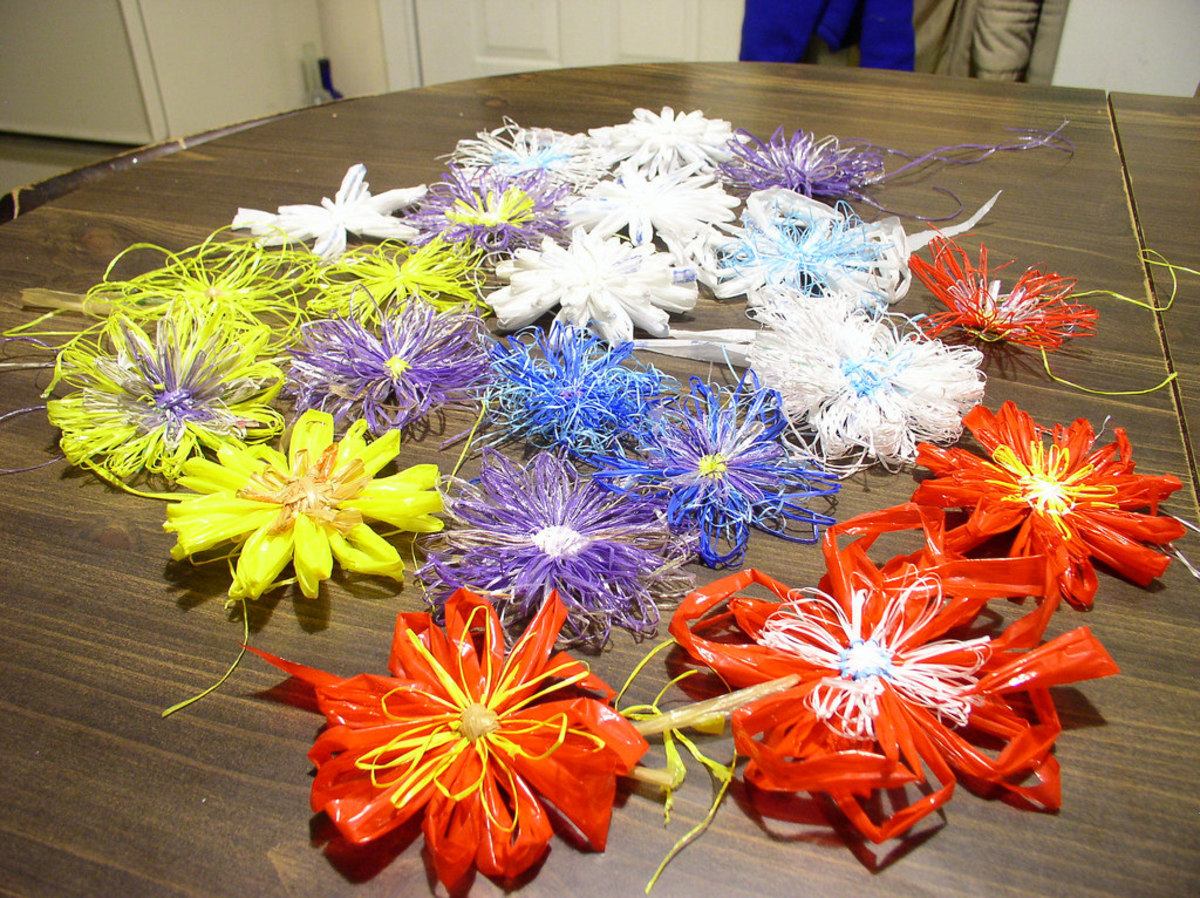
Intro art provided by artbymichelle
NOSTALGIA: This lens was featured on the Earth Day 2012 Monsterboard , Blessed by Skiesgreen 2012 and on Earth Day and What is Wrong with our Planet Earth?
This hub placed second in the Earth Day Challenge! Everyone who did a charity lens and entered is a winner in my book.
Myth #1 Biodegradable Grocery Bags
No the myth isn't that they degrade, they do. Just not in a landfill. You see there is just too much compression in your average dump for them. Put even the fastest dissolving bag in a tightly compacted garbage heap and nothing happens.They are going to need exposure to air, sun and rain. In other words, put them in a compost heap.
The problem comes in that millions of Americans don't have access to a compost heap or other greener source of disposal. So they end up inside larger plastic garbage bags. In case you are wondering those green garbage bags have the same problem. Things need to breathe in order to degrade.
I'll admit my fair share of these green bags has gone to the garbage dump. It just isn't practical to try to compost the trash bags. Also do be aware that some of these bags don't degrade as fast as you might like to think. Yes they degrade, but in the meantime they can end up in dumps or that nice continent of trash we have off the US coast.
Solution: Use a canvas or any other type of shopping bag. Reuse bags you have. Compost green bags when possible. Do without trash bags so long as your waste management provider doen't object.
Learn more about these bags HERE
Leaf art provided by artbymichelle
How to Make a Cloth Grocery Bag
The Myths of "Green" Energy
I don't doubt the premise of the book for a second. We only have to turn on the TV or radio to hear coal companies and other fossil fuel providers going on about how great the service they provide is for the environment. Sure there are greener energy sources but they aren't meeting the US and worldwide power demands.

Myth #2 All trash is handled in a green manner
Then where, pray tell, did the continent of trash in the sea come from? Yes trash is supposed to be taken to a sanitary landfill, but often to cut corners it can end up in other places. The best way to find out where your trash is going is to either contact the company directly, or better yet Google them. If they have violations you won't hear about it from them.
The other problem is landfills themselves. What do we do with these sites when they are filled? Some areas build parks on top or what not. But in the long term what does all that compacted trash do to the environment? It isn't going to degrade and it will still leach any toxic chemicals it contains into the soil.
Solution: Find out where your trash goes. Compost whatever you can. Cut down on using products that don't biodegrade such as plastics whenever possible.
Lovely sea art courtesty of artbymichelle
the Great Pacific plastic trash island
The problem continues to grow. If we don't know where our trash is going, here is where it may end up.
Myth of Green Marketing
Very thought-provoking reading. The truth is a lot of green marketing is going on that would have you think we are living in a green wonderland. Truth is not many of these products are truly green, and many need extra care in disposal to be so. Akso as the book points out many products and companies aren't even needed but we are taught by the media that they are.

Myth #3 Green bulbs are saving the planet
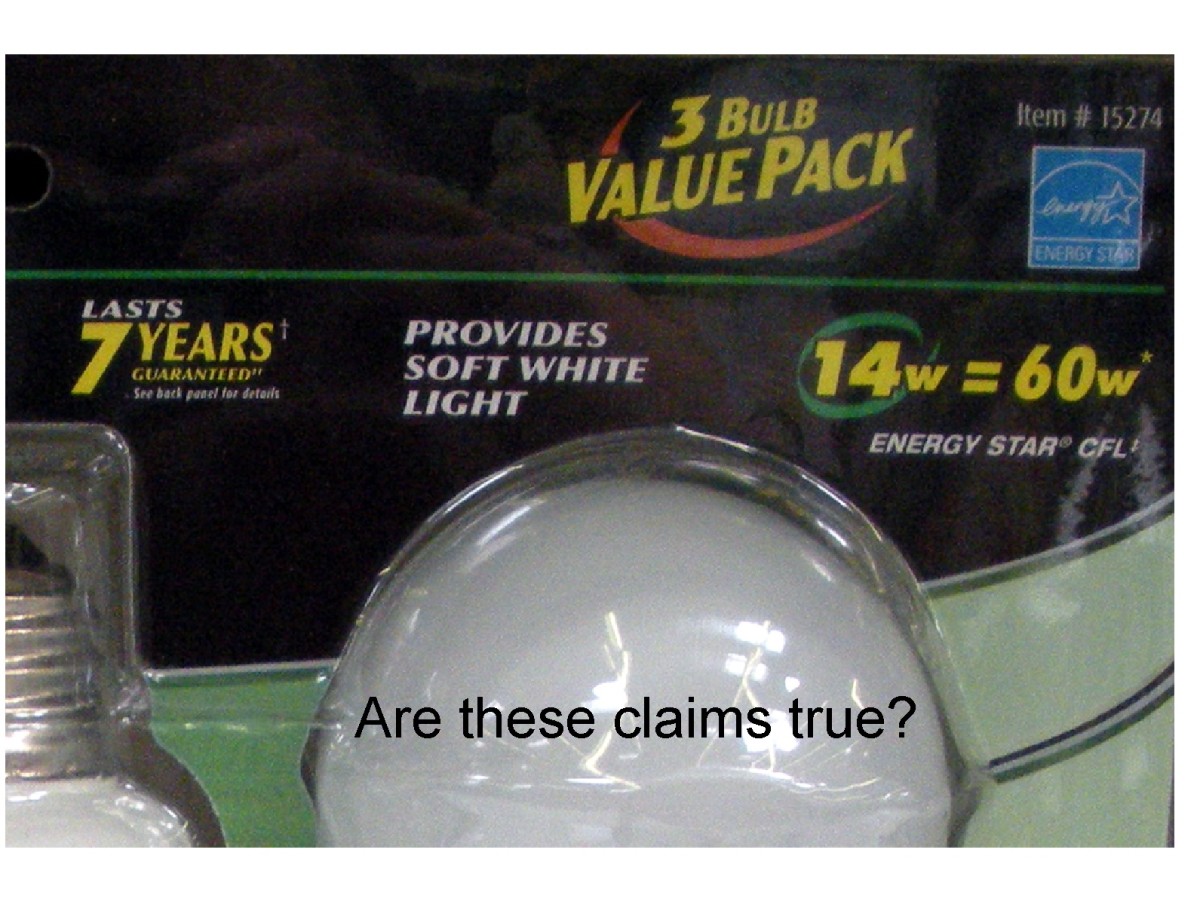
Yes and no.The problem with green bulbs is this; they contain mercury. Yes they use less energy, and in the long run burn far longer, but an awful lot end up in garbage dumps since folks don't know any better or can't find a disposal center for them. The mercury then contaminates the soil, ground water, and ends up in our waterways.
There is also the issue of bulb production itself. You make a product with mercury in it and you don't have a safe plant no matter how many percautions you take. Some folks in the green movement compare them to other green-washed products. Things that sound very good for the environment if you don't look that hard.
Sure you and I may save money, but what about the health of the workers in the plants? Also a lot of people are pointing out that the electric bill does not drop all that much with these bulbs. It can even go up if you are leaving the lights on far longer than you did in the first place. For more information, look HERE
I'm not saying that green bulbs don't help reduce greenhouse gas emissions, they do. But if in all honesty you know the mercury containing bulbs will end up in the trash the point to me at least, is moot. Right now as it stands a lot of people are simply unable to dispose of these bulbs properly.
Solution: Dispose of bulbs in recommended manner. Use lights only when needed. Do things in the daylight outdoors if possible, or make sure enough natural light is reaching you indoors. Mother nature is still the greenest solution.
Waterfall image courtesy of artmymichelle
The False Promise of Green Energy
Takes a truthful look at what is more likely to happen with all our wonderful green energy devices. Let's face it, folks are lazy. I am including myself here. Doesn't take a rocket scientist to figure out how much will just end up in the trash, warning labels and all.
Compact Florescent Light Bulbs: The Truth
You see if we honestly don't intend to dispose of these bulbs in the right manner, or simply can't for whatever reason, all that mercury goes right into the environment we are trying to save. So it is a toss up. Save greenhouse gases now and dump mercury into the earth later, or use more energy now?

Quick Green Tips
Reuse your shopping bags. Almost everywhere you go now, you get plastic bags. You can reuse these bags at least once, think cleaning the cat litter, or lining a small trash can. They also make instant gloves for messy jobs.
Get cloth shopping bags. You can also purchase cloth shopping bags at almost any grocery store. Kept clean they make a great green way to get your groceries home. Use them around the house for instant storage. Some stores offer money back on your bill if you use your own bags.
Power strips are your friend. Find a power strip with an on off strip for non-vital electronics. You can switch of TVs, computers, and other devices instead of constantly pulling out plugs. Consider switching off appliances, lights, and other devices in rooms you don't use daily. You also see savings on your energy bill too.