Hawaii and Tsunamis

Tsunami Described in James A. Michener's Epic Novel "Hawaii"
I first encountered the term tsunami as a teenager while reading James A. Michener's epic novel, Hawaii.
In one part of that book he describes an off shore earthquake in a remote area of the Pacific which led to the creation of a tsunami headed in the direction of the Hawaiian Islands. Michener mentioned a ship at sea encountering the slight ocean swell that was the tsunami without even noticing it.
In fact this tsunami, like most tsunamis, went undetected until it reached and flooded a coastal area of the Hawaiian Islands. As is frequently the case with tsunamis, this one resulted in the loss of life and property.
I read this years ago and don't recall which tsunami and which island or islands in Hawaii Michener was describing but, being a historical novel, it would have been one of the many tsunamis that have hit the Hawaiian Islands since Captain Cook first landed there and brought news of the island's existence back to the rest of the world.
What is a Tsunami?
While the destruction wrought by a tsunami gives the impression of a huge wall of water smashing ashore, they are actually considerably less violent. Instead of a massive wave or wall of water hitting shore with great force, a tsunami is more like a rapidly rising tide that quickly flows over a low coastal area. While it may not be particularly violent, a huge amount of moving water suddenly submerging what had moments earlier been dry land will usually leave behind death and destruction in its wake.
A tsunami is more like a tide than a crashing wave in the way in which it acts. However, tsunamis, despite their having been referred to as tidal waves in the past, are totally unrelated to tides. The similarity here is that tsunamis, like tides, cause the water level along a shore to rise, temporarily submerging part of the shoreline.
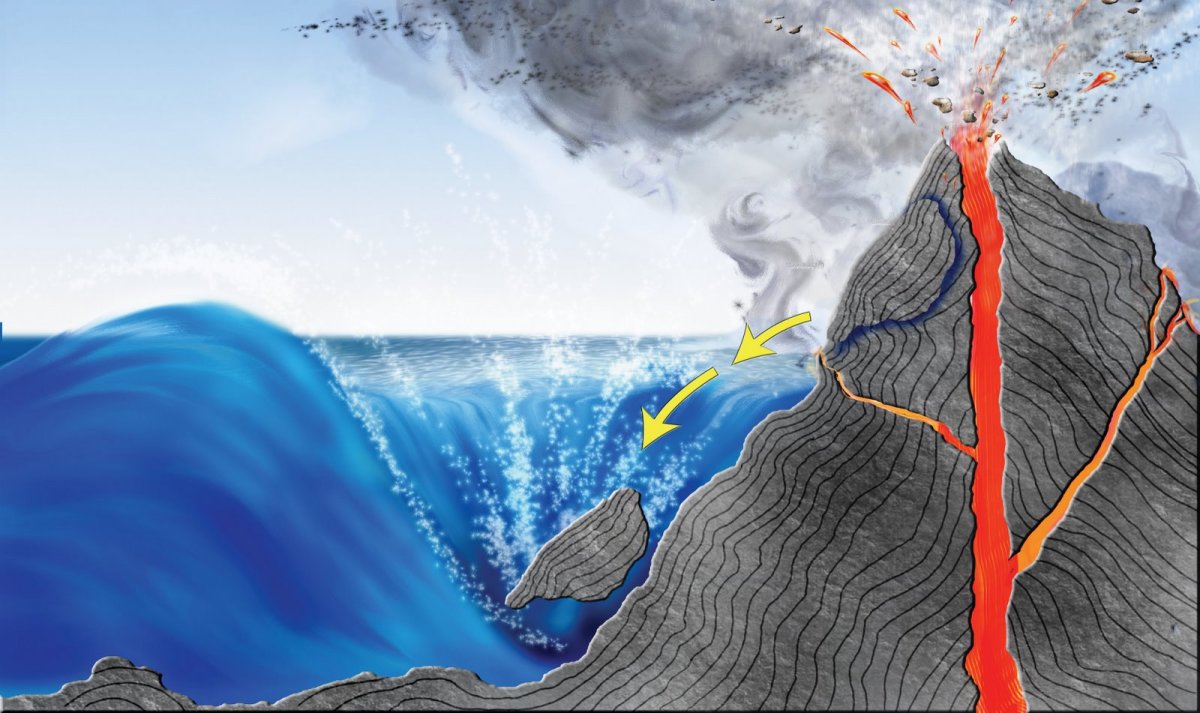
Tsunamis result in a rising water level and temporary submerging of land. However, they differ from tides in that tides are regular in their timing, the area submerged is the same with each high tide and the water level rises over a period of hours. Tsunamis, on the other hand, are neither regular nor predictable, they flood the area well beyond the high tide point of the beach and a tsunami takes minutes rather than hours to flood the land with water. The other major difference is that tides are caused by the gravitational pull of the moon on the oceans while tsunamis are caused by major undersea disturbances - usually earthquakes but also undersea volcanoes and landslides.
"Tsunami" is a Japanese Word - But Tsunamis Occur All Over the World
While the word Tsunami is a Japanese word which has come to be the commonly used word to describe the ocean wave that causes massive destruction to coastal areas, tsunamis themselves are not unique to the Pacific Ocean in general or Japan in particular. However, given its huge size and unstable geology, tsunamis tend to be more frequent in the areas in and around the Pacific ocean than in other parts of the world.
According to WikiPedia, the ancient Greek historian, Thucydides, in his book A History of the Peloponnesian War written in 426 B.C., was the first to link tsunamis with underwater earthquakes. While it wasn't until recent times that we began using the word tsunami to describe these destructive waves and until scientists confirmed that underwater earthquakes were the main cause of tsunamis, the inclusion of a passage in Thucydides' book shows that tsunamis have been sufficiently common in other parts of the world for an ancient European historian to both feel the need to mention them and speculate on their probable cause in his famous history of the Peloponnesian War.
As Our Cities Get Bigger and We Become Richer, the Cost of Natural Disasters Increase
Located in the Pacific Ocean, the Big Island of Hawaii, along with the other islands that make up America's 50th state, sits right in the path of tsunamis. Like other major natural disasters, tsunamis seem worse now days than in the past. Of course these disasters are no worse today than in the past and both recorded history and geologic history contain many instances where the force and size of areas hit were many times greater than anything in that has occurred in the past century.
While Mother Nature may have been pulling her punches with natural disasters in recent decades, they seem more destructive today compared to the past. Of course, in the past only those directly affected knew about disasters as they happened and it was months or even years, if at all, that people in other parts of the world learned learned of them.
Today, television and the Internet allow us to view disasters in real time as they occur. Also, in times past communities were generally smaller and people had fewer things to lose, while today communities are larger and populations are more concentrated. People today also have bigger homes and other buildings with greater amounts of physical goods so that the dollar value of property damage is much greater.
The Big Island of Hawaii's Recent Experience with Tsunamis
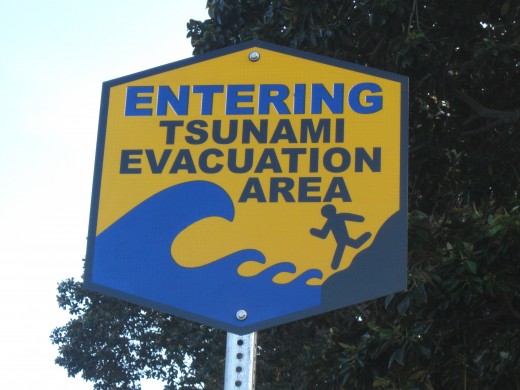
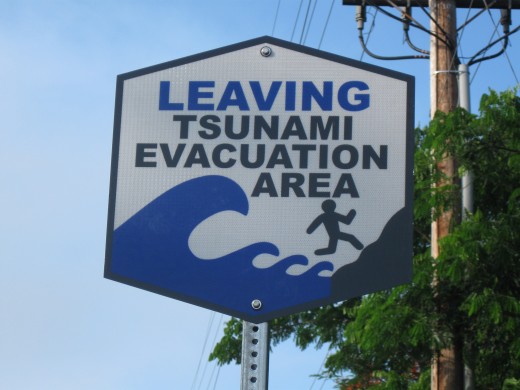
Visiting the Big Island of Hawaii, one is reminded daily of the potential danger of tsunamis as tsunami evacuation route signs are a common site in towns and other populated areas along the islands' coast.
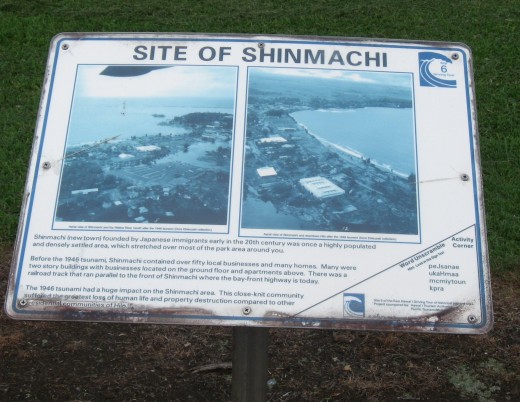
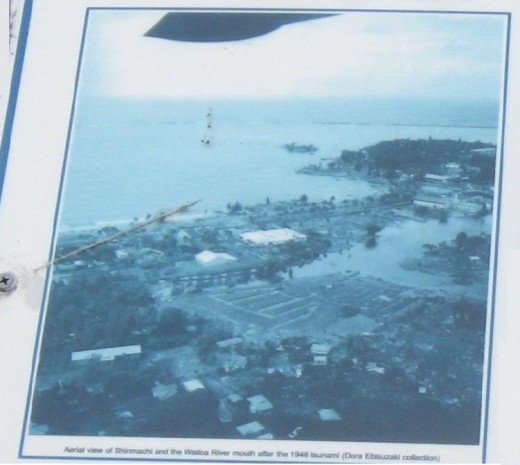
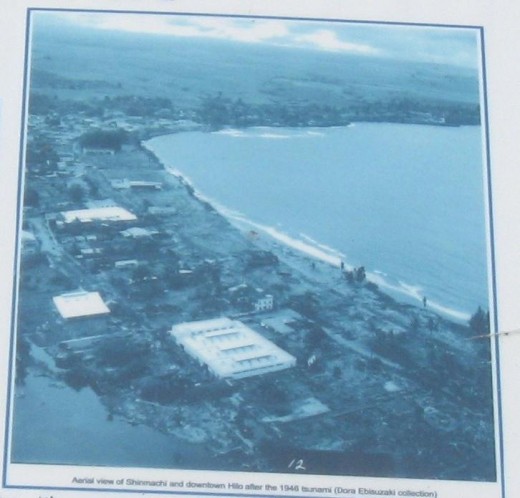
Hilo, the main city on the island, suffered the worst tsunami in its history when hit in April 1946 by a tsunami that originated in the vicinity of Alaska's Aleutian Island chain. That tsunami caused $26 million dollars worth of property damage and left 159 people dead.
An earthquake off the coast of Chile in 1960 resulted in a tsunami that hit Hilo, Hawaii on May 23rd of that year. That tsunami resulted in 61 deaths and $23 million in property damage.
On November 29, 1975 two earthquakes, which have come to be known as the Kalapana Earthquakes of 1975, occurred off the coast of the Big Island of Hawaii causing a little damage themselves in the Hilo area but gave rise to a tsunami that hit along the southern end of the island.
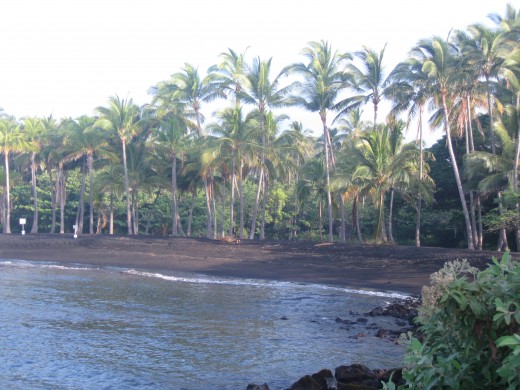
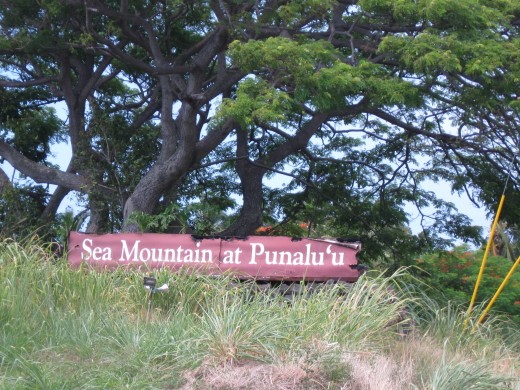
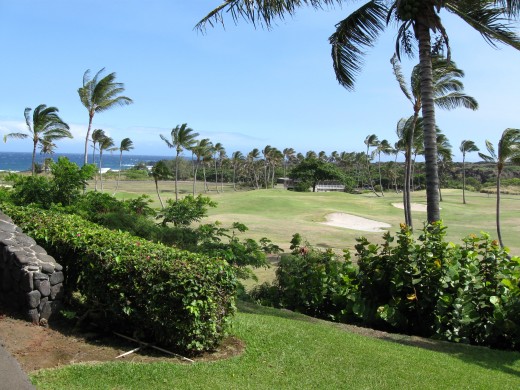
The 1975 Kalapana Earthquake and tsunami together caused massive havoc along the southern end of the island with the earthquake causing portions of the coastline by the ancient village of Panalu'u to drop by ten feet or more along with massive damage to the Sea Mountain Resort located there. The tsunami that quickly followed the earthquakes resulted in parts of the resort being suddenly and temporarily submerged under twenty feet or more of water.
At a campsite a little way up the coast in the vicinity of the Hawaii Volcanoes National Park, a group of people camped along a beach by Halape were quickly pushed inland to the base of a cliff by the rapidly rising water. Two of the campers died while the others suffered injuries.
Since the major impact of both the earthquake and tsunami was in the sparsely populated and lightly developed southern part of the island, the cost of the 1975 earthquake and tsunami was not great as they caused only two deaths, twenty-eight injured people and $4.1 million in property damage.
The tsunami was responsible for the two deaths, the twenty-eight injured people and about one-third of the value of the property damage. The earthquake was responsible for the remaining two-thirds of the property damage. Of course, since the earthquake caused the tsunami, one could lay all of the blame for the deaths, injuries and damage on the earthquake.
Despite the Presence of Five Live Volcanoes On The Island, Tsunamis Still Present the Biggest Natural Disaster Threat to the Big Island of Hawaii
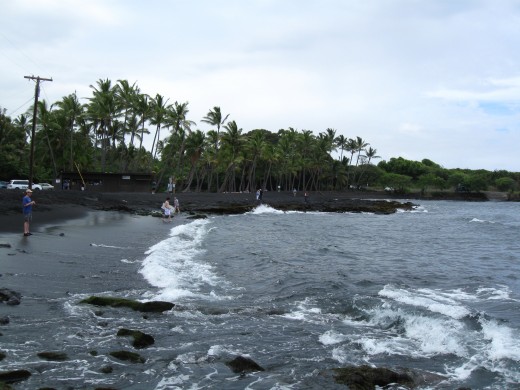
Today, there is no village of Panalu'u other than as a reference point on maps and the use of the name for address purposes. A few people still live next to the beautiful Panalu'u Black Sand Beach and they and others are actively working to preserve both the beauty and rich historic and cultural heritage associated with Panalu'u.
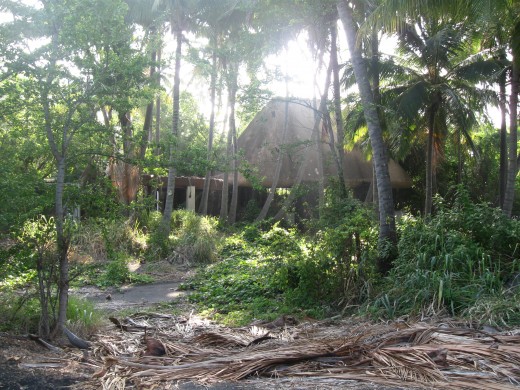
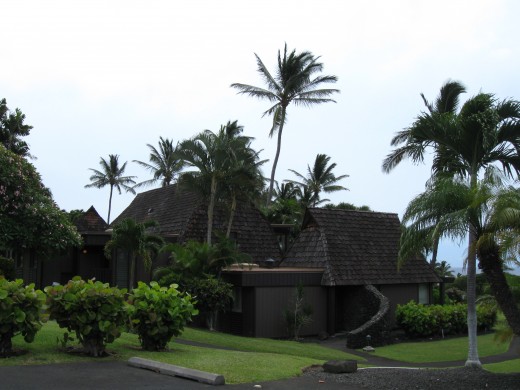
A new Sea Mountain Resort has been built and, if one ventures a few feet into the jungle-like growth next to the road leading to the beach they will encounter a fence and No Trespassing signs, both of which are hidden by the dense tropical vegetation. Peering beyond the fence they can glimpse the remains of the old Sea Mountain Resort dining room and a couple of other structures.
Signs along the highway, as it dips down toward the resort and beach, warn people that they are in a tsunami evacuation zone and when they leave the area of the beach and resort area and reach the point where the highway begins to climb up and away from shore level, a second sign informs them that they have exited the evacuation zone area - and should be safe from a tsunami.
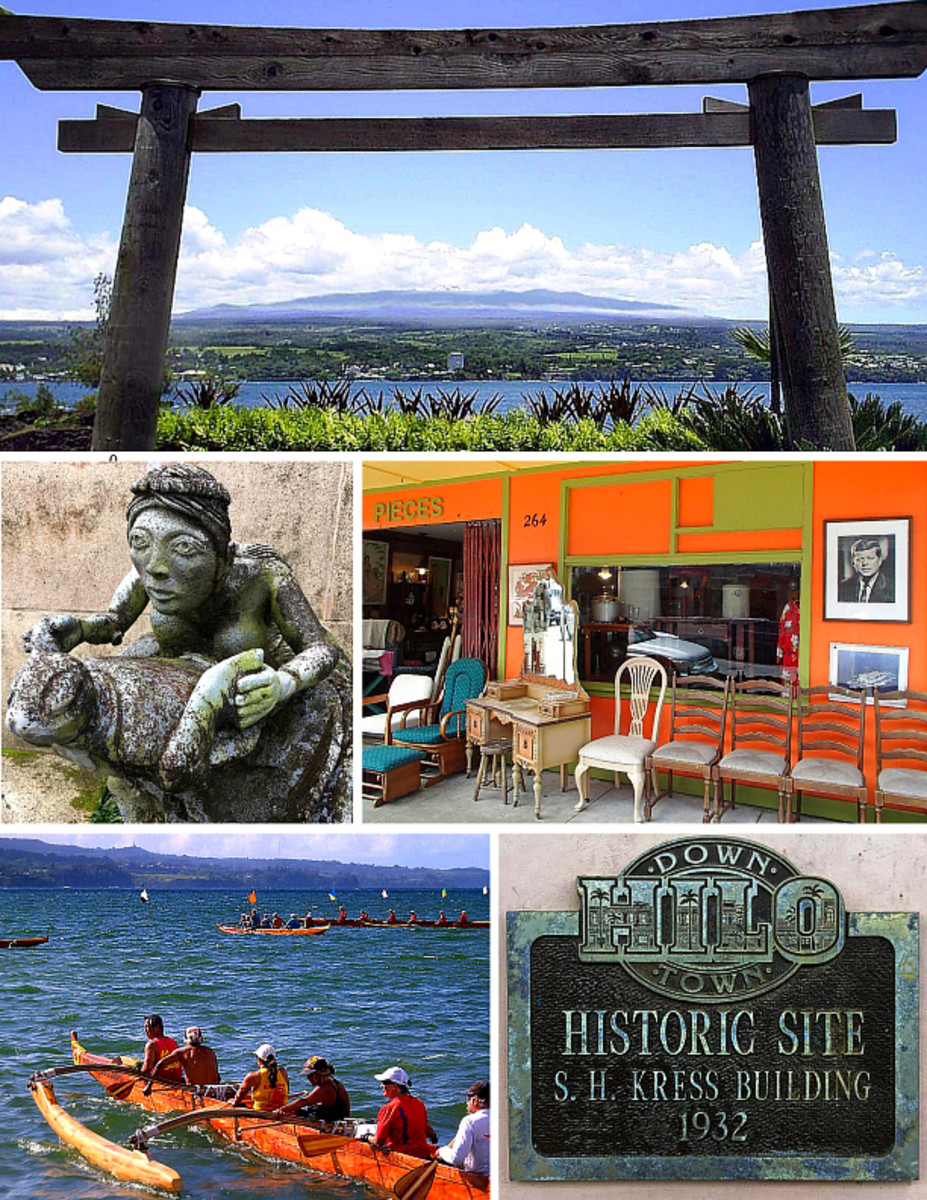
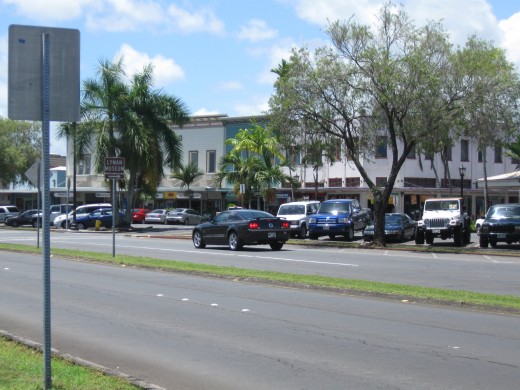
As for Hilo, the major city on the island, it, like most of the other populated areas on the island, hugs the shoreline and lives on despite the double threat of being engulfed, as it has been a number of times in the past half century, by a tsunami from the sea or a Pompeii like burial under lava from one of the five active volcanoes on the land behind it. The city itself is built on ancient lava flows and the volcanoes that produced that lava are still active. In 1984, residents were almost forced to flee as hot lava flowing from the erupting Mauna Loa volcano was rapidly advancing toward the city. The lava flow stopped short of the city but kept the residents on edge for a few weeks.
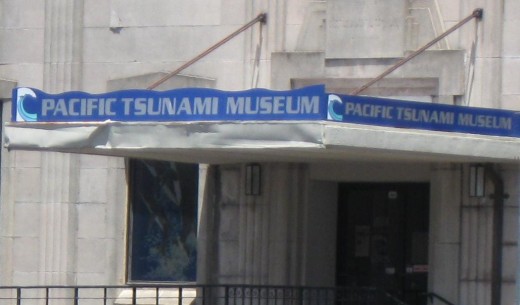
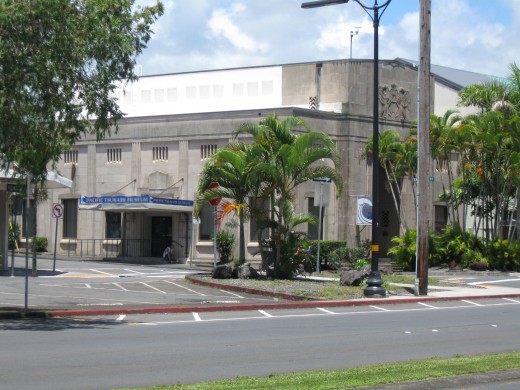
While Mauna Loa and the other four volcanoes are still young, in geologic terms, and capable of exploding at any time, the real threat to Hilo's existence remains tsunamis. In addition to the usual evacuation signs and on going tsunami education efforts, the city also hosts the Pacific Tsunami Museum which sits on the city's main highway and in view of the ocean from where past and future tsunamis come from. The museum's exhibits serve as both a reminder of the damage caused to the city in the past as well as educating its visitors on how to survive a tsunami.


Links for Additional Information
- Mystery of Deadly 1946 Tsunami Deepens | LiveScience
The search for an expected smoking gun comes up dry. - The November 29, 1975 Earthquake and Tsunami in the Hawaiian Islands
- The Kalapana Earthquake of 1975
Information about the Kalapana Earthquake of 1975 on U.S. Geological Survey site - Remembering Mauna Loa\'s last eruption: 25 years ago today by Derek Paiva | Hawaii® Magazine: Discov
HAWAII Magazine is for readers who love the Islands -- but don't necessarily live there. Produced in Hawaii, the magazine brings the beauty, culture, music, food, people and places to your home every issue. If you're planning a trip, or simply relivi - Save Punaluu
Web site of group seeking to preserve historic and cultural significance of Panalu'u