Hispanic American Diversity

This essay was written for an Axia College / University of Phoenix Cultural Ethics class.
Overview
According to the United States Census Bureau's reports, (2006) roughly 15% of the population of the United States identified as Hispanic at about 43 million people. The casual observer may believe this nationality to be the same throughout, but just as Caucasian Americans are different, so are Hispanic people. Explored within are the Mexican-Americans, Puerto Ricans, Cuban-Americans and Brazilian-Americans.
Mexican-American
Mexican-Americans may speak Spanish as well as English, to varying degrees of success. In recent years, companies nationwide have shifted to a more language friendly method of doing business, incorporating the option to read/hear functions in Spanish at machines such as ATMs and checkout counters. While the language barrier is not so vast now as it was a few decades ago, it still exists. Organizations such as the National Association for Bilingual Education work to break the gap between English and Spanish.
As the largest "subculture" within the Hispanic header, Mexican-Americans "comprise almost two-thirds of Hispanic Americans," statistics show (MexicanAmericans, 2007). Within these numbers are found people of all skill types and education levels, giving Mexican-Americans, like other Hispanic groups, the ability to locate employment within any area of expertise, even in local, state and federal government positions.
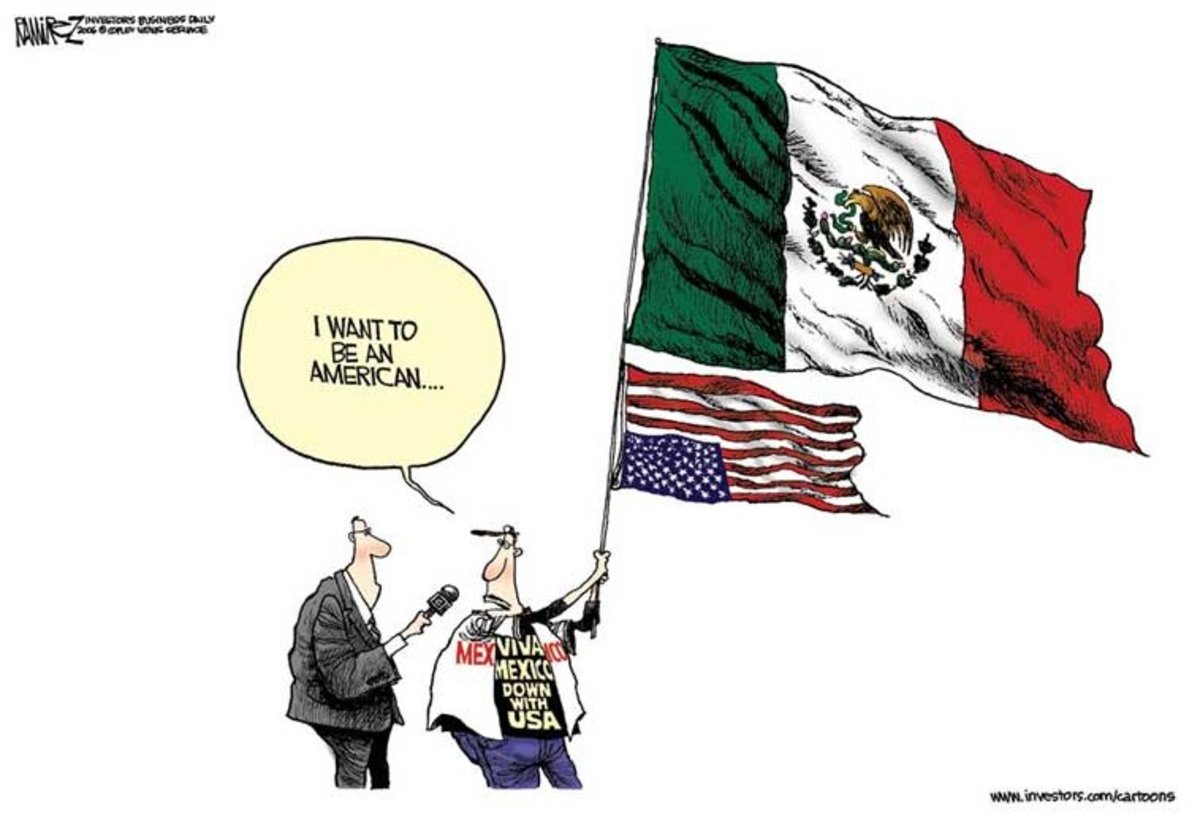
Home life for a Mexican-American person is likely to be family oriented, though more prone to poverty the number of mental illnesses is reportedly lower (Mexicanamericans, 2007), and politically speaking only one issue directly affects the Mexican-American population is the debate regarding the Mexican-American borders and the efforts which should be made to further secure them against illegal immigration.

Brazilian Americans
Unlike other Hispanic Americans, Brazilian Americans speak Portuguese, a romance language similar to Spanish. Brazilian Portuguese is different from Portuguese spoken in Portugal, with more words in its retinue and a softer method of speaking. Portuguese is similar to Spanish in some forms, making it easier for a Brazilian American to carry a conversation with a Spanish person than an English speaking person when considering a single-language education. Bilingualism touches the Brazilian American community, and more Brazilian Americans are learning English as well as holding to speaking Portuguese.
Brazilian Americans are not technically Hispanic, in that they do not speak Spanish as a native language. They share similarities, however, in that they form close family ties, experience a degree of poverty, and must overcome language issues upon arrival to the United States. Brazilian Americans thrive on the continuation of their rich culture and their prescription to the Roman Catholic faith. Jefferson (2007) describes the social environment in a Brazilian American family and neighborhood to be very focused on the family itself, both direct and extended. Future immigrants are likely invited by their relatives in the United States, and tend to live close to one another.
Interestingly, Brazilian American women are encouraged not to work outside the home, though it often becomes a financial requirement for everyone to work dependent upon the needs of the household. Like their attitude toward family, Brazilian Americans tend toward a keen attention to the political situation in their country of origin, and their involvement in American politics is a relative unknown (Jefferson, 2007).
Funny Cheech & Chong Video
Cuban Americans
Linguistically, Cuban Americans speak Spanish, though a majority of them speak English as well. Steady migration and thorough assimilation into American society has provided Cuban Americans with certain cultural shifts – such as language. Coming from a harsh economic climate to live in America, many Cuban Americans have a much better financial life than they would have had in their home country. Of the groups previously described, Cuban Americans are the most proficient in English, and therefore stand alone in that respect.
Cuban Americans are divided in terms of religion, with many Cuban Americans worshipping as Catholics, yet many more in Cuba itself claiming no religious affiliation as an aftereffect of governmental bias there. Immigrants from Cuba fled extreme poverty and other factors, but find themselves employed, for the most part. Unlike other Hispanic groups, a Cuban American family is likely to be matriarchal, and focused closely on the immediate family rather than including the extended family on both mother and father's sides. As well, Buffington (2007) claims that Cuban-born Cuban Americans are less likely to marry outside the Cuban community, whereas American born Cuban Americans are more likely to marry into Caucasian families. Unemployment rates for Cuban Americans are lower than any other Hispanic group, says Buffington (2007).
Puerto Ricans
A population that is 3.2 million strong in the mainland of the United States (Schaefer, 2006), Puerto Ricans are a somewhat unique group within the Hispanic American culture as they originate from a Spanish background in a commonwealth governed by the United States. Puerto Ricans living within the United States are subject to many of the same stereotypes regarding economic factors much like Mexican-Americans and other Hispanic groups, though the island of Puerto Rico has seen a great deal of aid and experiences a large benefit in terms of tax relief for companies operating out of Puerto Rico.
Puerto Ricans are taught English from an early age, though the proficiency in such is varied for a variety of reasons. Socially, Puerto Ricans are open and friendly, which helps to bridge the language gap. Divorce rates amongst the Puerto Rican community are very low, at about four per 1000 couples. This means that of the estimated 3.2 million people in the United States who are Puerto Rican, only 14,300 of them will go through a divorce.
Most Puerto Ricans prescribe to the Catholic faith, which may be another cause for the low rate of divorce. In regard to politics, Puerto Rico hopes to one-day rule itself, though currently governed by the United States.
Summary
The Hispanic community shares a few very clear qualities in their social and religious statuses. One theme present within each culture is a strong adherence to native traditions and language. Family life appears to be a common focus amongst each of the subcultures researched, and the dominant religious affiliation is Catholic. Each different group is affected by poverty on some level, and each has deviated from the concept of a woman working in the home based on the financial situations the family faces. Beyond the country of origin, these four Hispanic cultures deviate from one another in their cause for immigrating to the United States. Each country that Hispanic Americans can trace their roots to has its own rich history, trials and tribulations. Despite the overall level of economic depression experienced by Hispanic citizens in the United States, for those who have immigrated here and their families, their conditions have improved in comparison.
References
Buffington, S. (2007). Multicultural America. Cuban Americans. Retrieved July 6, 2008 from http://www.everyculture.com
Jefferson, A. (2007). Multicultural America. Brazilian Americans. Retrieved July 6, 2008 from http://www.everyculture.com
Mexican Americans. (2007). Mexican Americans. Statistics. Retrieved July 6, 2008 from http://www.mexicanamericans.com
Rivera, M. (2008). Welcome to Puerto Rico. Puerto Rico People. Retrieved July 6, 2008 from http://welcome.topuertorico.org
Shaeffer, R. (2006). Racial and Ethnic Groups. Upper Saddle River, NJ: Prentice-Hall.