What is a Site Waste Management Plan?

2023 Update on SWMPs Today
Site Waste Management Plans (SWMPs) were introduced in the UK in 2008 as a requirement under the Environmental Protection Act 1990. The aim of SWMPs was to improve the management of construction waste and increase recycling rates in the construction industry. SWMPs required construction projects to have a written plan outlining how they would manage the waste generated during the project.
Initially, the requirement to have an SWMP was limited to construction projects over a certain size, but the threshold was lowered over time. The regulations also required that the SWMP be reviewed and updated throughout the project to ensure that waste management practices remained effective.
In 2013, the UK government announced that it would be repealing the regulations requiring SWMPs. The reason given for the repeal was that the regulations were seen as overly bureaucratic and did not lead to significant improvements in waste management practices.
Since the repeal of the regulations, the use of SWMPs has been voluntary in the UK. However, some construction companies still choose to use them as a tool for improving their waste management practices and meeting sustainability goals.
In recent years, there has been a renewed focus on improving waste management practices in the construction industry, with initiatives such as the Construction Waste and Resources Action Plan (WRAP) aiming to reduce waste and increase recycling rates. Some local authorities and clients also require construction projects to have an SWMP as part of their procurement process.
In summary, SWMPs were introduced in the UK in 2008 to improve waste management practices in the construction industry, but were later repealed in 2013 due to concerns about their effectiveness. Since then, their use has been voluntary, but some construction companies still use them as a tool for improving their waste management practices.
So, SWMPs are still in use today and remain essentially as they were originally conceived, meaning that you can read on and THIS ARTICLE IS STILL RELEVANT. Just remember that they are now PURELY VOLUNTARY!
Site Waste Management Plans Made Easy
What are SITE WASTE Management Plans (SWMPs)?
They are voluntary plans drawn up by construction site contractors to plan the implementation of good practice in site waste management, for each project.
Although now voluntary, they were originally required by law to be for all (UK - England) construction sites where the value of the construction work will exceed £300,000.
(Please note that the legal SWMP requirements for England, which were originally made a requirement in 2008, were repealed in 2013.)
Note: The repeal should not be seen as a failure. Quite the reverse. They were quickly taken on-board because they save contractors money. While also improving sustainability and being a form of recycling, they avoid the need for new materials. In particular implementing SWMPs reduces the need for quarrying large quantities of building materials.
Now, 90% of UK construction waste is recycled. That is a massive success story, and is a considerably higher recycling rate than achieved in most EU countries.
What is the Purpose of a SWMP?
The idea is that when a project is planned there shall be detailed thought given to applying the waste hierarchy:
- Avoid waste - in building this could be achieved by carrying out a renovation rather than a complete demolition and rebuild.
- Minimize waste - avoid creating the waste (such as crush and recycle concrete on site and use it as an aggregate in the concrete for the new building on the site). That way no waste is created, and the aim of minimizing waste is met.
- Recycle - that is find another use for materials (for example collect materials such as glass and return them to a central processing point where the glass may be melted and used to make new bottles).
More About SITE WASTE Management Plans
Who will find SITE WASTE Management Plans (SWMPs) useful:-
-
anyone who is planning a construction project costing more than £300,000, and in many cases considerably less
-
any construction project clients or architects that:
-
produce, manage or dispose of waste
-
suppliers to the construction industry
-
environmental regulators, ie local authorities and the Environment Agency.
The aim is to:
- maintain the construction industry's generally conscientious attitude to waste by raising the profile of waste planning
- reduce the amount of waste produced on construction sites
- prevent fly-tipping
- improve environmental performance
- meet regulatory controls
- reduce the rising costs of managing waste.
Historic Note: The UK's Department for Environment Food and Rural Affairs (Defra) launched a consultation in April 2007. A summary of responses was published subsequently indicating support for the proposal of statutory SWMPs. Respondents favoured the suggestion that a threshold of £250,000 was too high, and that SWMPs would be of benefit in terms of improving resource efficiency.
What are the Levels of SWMP According to Project Size?
Standard SWMP - for projects costing between £300,000 and £500,000.
Detailed SWMP - for projects costing more than £500,000 and requiring more detailed reporting. If the project has a higher estimated value (over £500, 000), the SWMP must be further updated to include the identity of the waste required by section 34 of the EPA 1 990, Duty of Care.
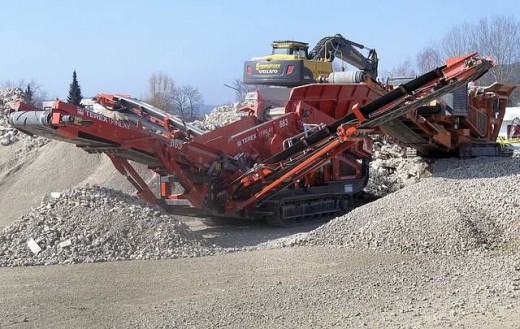
A Construction Site Showing A Demolition Waste Crusher
UK Legal Aspects - Duty of Care Explained
THE DUTY of Care is a law which requires every business in the UK to take "all reasonable steps" to keep their wastes safe. It was introduced through Section 34 of the Environmental Protection Act 1990 and covers any businesses that produce, import, carry, keep, treat, dispose or broker controlled waste.
The objective of the Duty of Care is to protect people and the environment from illegally managed waste. It does this through creating an "audit trail" of responsibility for the waste. The environment agencies and local authorities can follow the audit trail back through all parties that have been responsible for it. They may prosecute if any party has failed to observe its responsibilities for the waste.
The Duty of Care transfer note should include a description of all non-hazardous or hazardous properties associated with the waste. This is to ensure that subsequent waste treatment or disposal does not cause adverse chemical reactions.
The Duty of Care regulations are currently may have been being revised since the above was written.
A Highways Construction Waste Reduction Success
Resurfacing Technique Saves the Planet
Insitu recycling of a damaged road surface near Peterborough provided a perfect solution for the local environmentally friendly council.
This is part of a report published in the Highways magazine June 2008. I won't publish it all here for copyright reasons. (It may be available at www.highways-mag.co.uk)
Cambridgeshire County Council is believed to be the country's leading county for recycling waste materials and recently demonstrated and reinforced its commitment to the policy. The county's highways service, in conjunction with its Term Maintenance Services partner Atkins, which forms Cambridgeshire Highways, has opted to recycle in-situ a 2km stretch of the B1040 road, which runs parallel to and directly alongside the River Nene at Ramsey St Mary's, about 20km south west of Peterborough. The road mainly takes agricultural vehicles and is the only means of access to several residential and agricultural properties.
Cambridgeshire Highways considered three reconstruction options for this particular site. These were traditional reconstruction, where the existing material is excavated and replaced by new, ex-situ or off site recycling, where the existing material is removed to a mobile mixing plant for blending prior to returning to site, and in-situ recycling, where the existing material is recycled in place.
In-situ recycling was used and the author states that it was found to be much faster, cheaper, much less disruptive to traffic and far more environmentally acceptable with a carbon footprint considerably less than off site recycling or normal reconstruction methods. Off site or ex-situ recycling and traditional reconstruction techniques require vastly more lorry movements to transport materials to and from the site. Also in-situ recycling, unlike conventional repairs, does not generally require the disposal of surplus material or the importation of large quantities of new materials.
9 Easy Steps to a Compliant SWMP
Recycling is popular on Construction Sites
Some People Think SWMPs are simply more RED TAPE and a Waste of Time. What Do You Think? Vote Here!
Are You in Favour of Site Waste Management Plans?
Find Out More at these Useful SWMP Sites
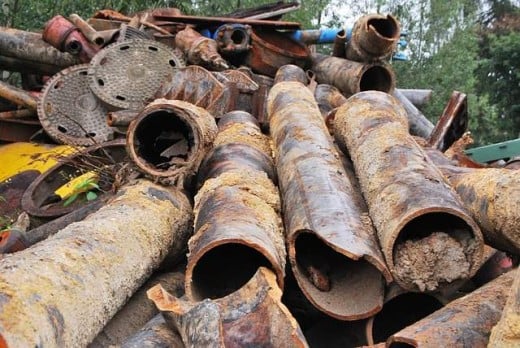
Construction Waste Recycling - A Story of Progress Since SWMPs were Introduced in 2008
The UK Construction Industry uses a huge amount of raw materials.
Until SWMPs were introduced much of it was ending up as waste.
These plans are cited as being extremely beneficial in formalizing a comprehensive recycling and waste management strategy for each project.
With around 30% of the construction industry's output being for the public sector, Government quite rightly wants to set the example for other construction clients, particularly by procuring more sustainable public buildings.
The SWMP regulations did a great job in encouraging contractors to get into the habit of recycle suitable spoil, demolition materials, and surplus construction material arising from the works on site to avoid the need to transport materials to landfill. Plus, reducing the cost of building projects significantly.
The decision to scrap the regulations appears to have been made easier by the fact that responders to the DEFRA consultation said that they would continue to use SWMPs post deregulation in any event.
Skips remain the original and most versatile construction site waste disposal option, alongside on-site crushing machines which grade the crushed stone ready for re-use on-site.
Skips are most commonly used for segregation and removal of demolition and construction waste, the variety of sizes makes them versatile solutions for many different waste streams.
And, by using these methods over 90% of UK demolition waste will be recycled in 2019.
Other Hubs on this Subject
- 5 Ways to Reduce Construction Site Waste
Helpful tips for construction professionals.
This content is accurate and true to the best of the author’s knowledge and is not meant to substitute for formal and individualized advice from a qualified professional.
© 2008 stevelast
Related
ZERO WASTE MANAGEMENT: A Module for SCHOOLS

Adam and His Kin: The Lost History of Their Lives and Times (book review by a homeschooling mother)
Engaging Children in Creative Activities: How to Make Beautiful fun items from Waste Materials
Transect walk (A case study)

Driftwood Folk Art: How to Make a Driftwood Birdhouse