Hygiene in the ancient world

This hub was inspired by Hawkesdream's fabulous article, titled Spring Cleaning. Pleasure or Work?, which evoked pleasant memories of days long past when we used to do this activity together with my mother. His article in and of itself is a thoughtful and elaborate work telling you everything you need to know to do a good job on house cleaning. What I want to address now is something different, although, related to the topic of cleanliness. It is our false belief that hygiene is an invention of the modern man.

Why do I say this?
Have you ever seen a movie depicting the lives of our forefathers form the days before Christianity where the characters were portrayed as actually well-groomed, neat people. I haven't. Our prehistoric and medieval ancestors always tend to be filthy barbarians, face smeared with mud, teeth rotted out, clothes tattered and torn. In turn, why is it that French royals and their kind in the XVIIth and XVIIIth century, who are well known today for washing only once a year and covering their stench with exclusive perfumes, are portrayed as impeccable and perfectly clean ladies and gentlemen? There was a time when the Church even claimed washing and good hygiene was a sin and banned it. (Since I know there are a lot of religious people here at Hubpages, I'd hurry to add that this is a proven fact and it is no sacrilege to say, because I'm not talking about God, but his earthly representatives.)
Historians uncovered evidence that disclosed Scandinavian Pagan men in the Viking Age were very popular with women of Christian Europe not only because they were fairer and healthier, but also because they actually washed regularly (at least once a week). The custom of washing carefully is clearly evidenced by the names of the weekdays in Scandinavia.
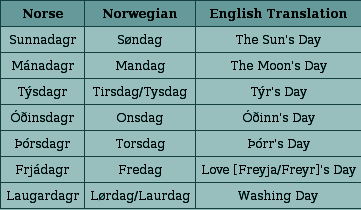

Washing in the pagan era was actually a kind of religious rite, which comes as no surprise if we know that religion and respect for the Gods transcended every aspect of people's lives. When they held a ritual to gain access to the divine powers they washed themselves thoroughly beforehand so as not to bring anything impure into the sphere of the Gods. They lived in accordance with the natural cycles. Whenever they entered a new cycle they washed and cleaned everything thoroughly in order to not bring anything impure into it. As Sunday was regarded as the beginning of the new week, pagan people called Saturday the Washing Day and cleaned themselves and their homes on Saturdays. It was associated with the White God, Heimdallr. It is important to understand that people did not think of their Gods as living beings with willpower or intentions to regulate their lives. Gods were for them like values and principles are for us. One God could become the embodiment, the symbol of a variety of associated values. Heimdallr, for example, among others stood for the principle of "you harvest what you sow". So if you begin a new cycle improperly, how do you expect it to turn out? This concept is also in direct correlation with the practice of washing the initiate in virtually every pagan ritual. (S)he who enters the realm of the Gods must be clean of past sins and the debris of life.
It has been proven that a high level of hygiene was a reality in Antiquity not only in Scandinavia, but in the whole of Europe. We know of the Romans' elaborate plumbing and baths systems, just to name the most popular example. When these ancient and antique cultures were destroyed or degraded the cult of hygiene also disappeared. There was no longer a valid basis upon which a claim that washing ourselves and our surroundings is important could safely stand. It took centuries of night before modern science and our beliefs rooted in common sense could eventually prevail. As the ancient proverb goes, "before we can enjoy the wonderful light of a new day we always have to endure the darkness of the night for some time".