I Could Have Danced All Night???

It is not possible to say when dance became part of human culture. Yet, dance has certainly been an important part of ceremony, rituals, celebration and entertainment. It has certainly been very entertaining to most of my ---seventy-seven years.
• Dance Marathons:
The earliest memory that I have is my wild parents, taking me to a (Dance Marathon,) at all hours of the day or night. For those of you that have never heard of these events they went something like the following:
Dance marathons, also called walkathons, were popular but not fully respectable entertainment during the 1920s and 1930s. The fad began as one of many crazy, jazz-age diversions such as flagpole sitting, goldfish swallowing.
Dance marathon contestants were required to remain in motion 24 hours per day, with 15 minutes rest time per hour. These marathons were human endurance contest in which couples danced or shuffled almost non-stop for many hundred hours, competing for prize money. These marathons attracted large audiences. Everyone that followed these marathons had their favorite couples to cheer on. To keep up you would have to go there at different times of the day or night to see if you favorite couple was still in the competition. A few radio stations would inform you only at noon time. Finally these marathons were outlawed when several participants died.
• Dance Bands:
"Dance Bands" originated in America. All the "big bands" of the 1930s and 40s were really just dance bands. There was some sort of music at every venue, folks would leave their tables and --- dance, not because they had to---but because dancing around the floor in the arms of a partner that you admired was nice and more socially accepted.
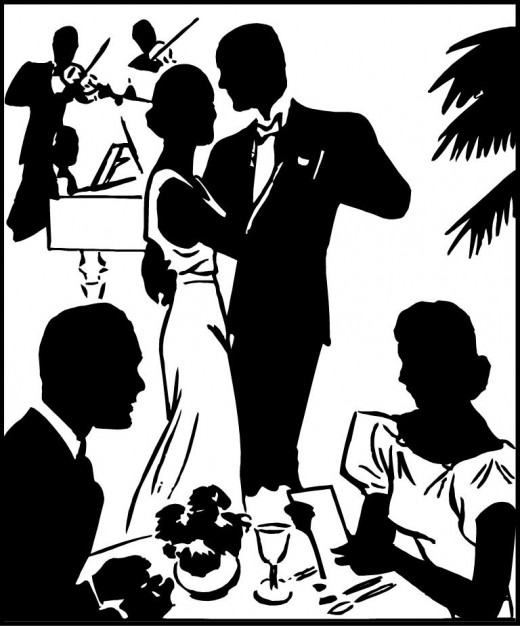
Some bands were "Sweet" and some were "Hot." Benny Goodman was called the King of Swing, and leaned more toward the "Hot" then the "Sweet." Other bands, such as Guy Lomardo, leaned heavily toward the "Sweet" music.
• 1950s---Santa Monica Calif:
Saturday nights everyone headed for their favorite dance hall. Ours was the Santa Monica Pier. for the dance halls were all lined up in a row. You could start out dancing with Spade Cooley, "country western," then go next door and dance to a band playing "swing,"
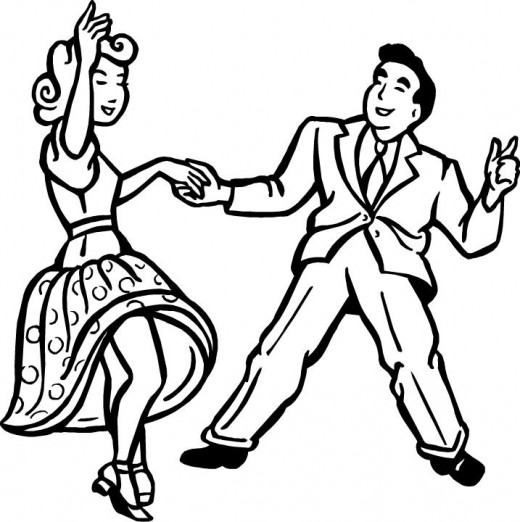
The most popular at that time was Lawrence Welk. Although there were strict dance floor rules. It was waltz, ball-room and polkas. You were at all times required to be in contact with your partner, as holding on to both hands---no complete separation. So this made jitterbug dancing very difficult. (yes, I admit I was asked to leave the famous Lawrence Welk dance floor after my third warning.)
• Square Dancing:
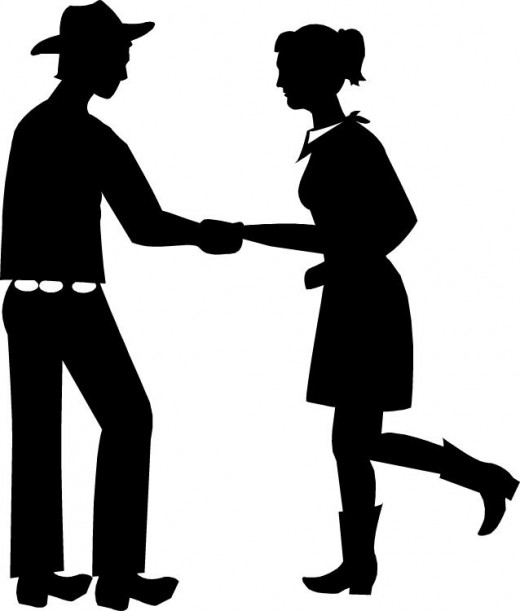
Well, it was time to try something else and the the fad was square dancing. They start out by telling you the rules--here too. Yes, everything has rules? The first thing that the tell you is that square dancing and liquor are not compatible dance partners. You then get all dressed up in your western attire and you listen to the caller and try and do atwo-step with three other couples. You get twirled around and around the square with all the others in your square. On a hot summer night you can really work up a sweat. (yes, they were right about a couple cold-ones and all that twirling they don't mix-well.)
Yes, I recommend dancing of all kinds. It makes us happy and if you control yourself and follow the rules it is a healthy exercise.
Although I now have a slight problem---my feet still know what to do---but my body doesn't seem to be listening, maybe that is and AGE-RULE?