Is It Safe to Invest in Stocks?

65
rate this page

By William F. Torpey


Is a bull market in the cards?

When the Dow Jones Industrial average ticked above 8,000 recently the talk of the town was: Will it soar above 10,000?

Even The Hour (newspaper) broached the subject in one of its weekend polls, and most respondents thought the optimistic barrier would be reached. But instead of rising, the Dow Jones made a hasty retreat toward 7,600 before returning to the wide swings that have characterized stocks lately.

The volatility, however, should not be surprising. The stock market, by design, is enigmatic at best.

That's why there's a segment of market players called "contrarians." Whenever any market opinion becomes popular, the theory goes, the wise thing to do is to take the opposite, or contrary, position.

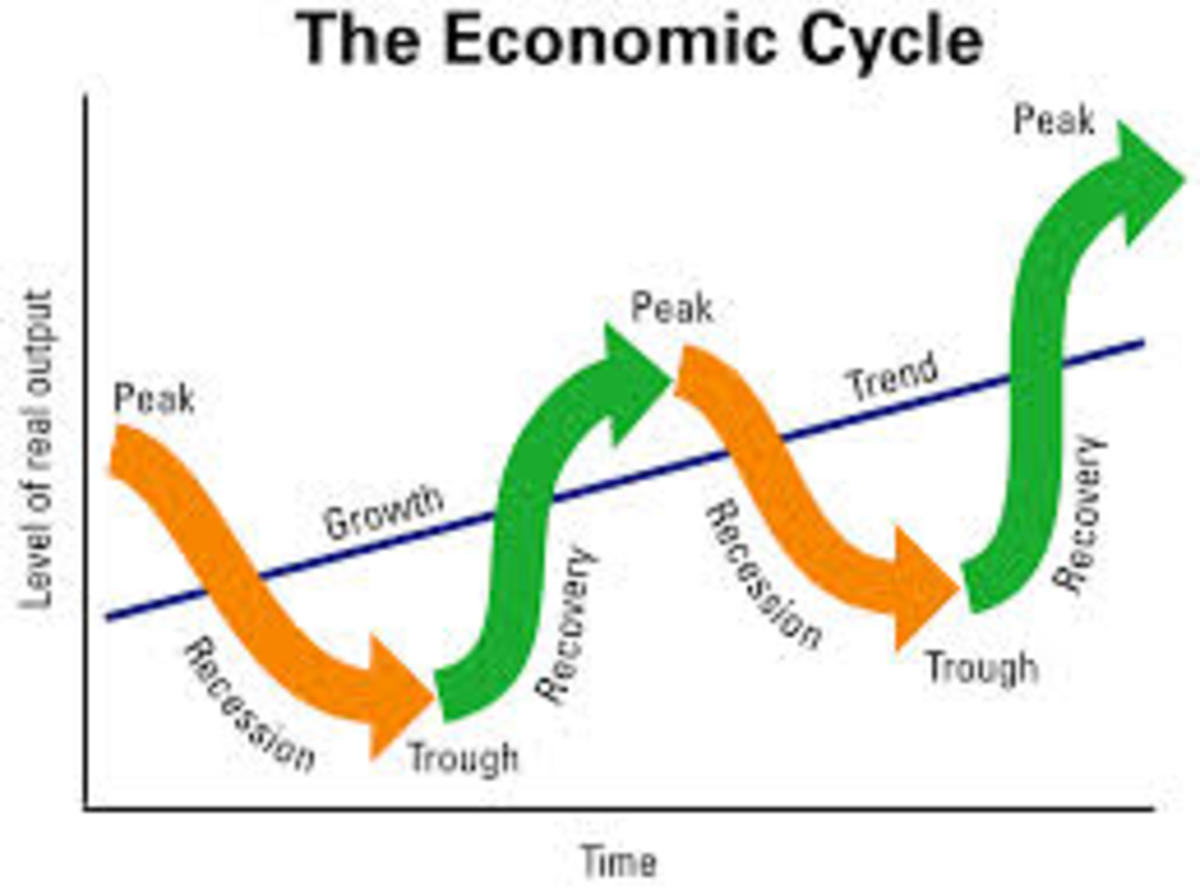
Because the market goes up and down in a never ending cycle, contrarians always end up looking like geniuses.

Financial pundits can tick off dozens of strategies for winning in the market. Such advice ranges from the astrological alignment of the stars to environmentally correct stocks or mutual funds.

When the man on the street (Main Street, nor Wall Street) begins touting the stock market as a good place to make a buck, most professional investors become extraordinarily wary. It reminds me of the story about the big time investor who was given a stock tip by a man who was shining his shoes; he wasted no time in dumping his substantial stock holdings on the market. To him, that was a clear sell signal.

Like the discount brokerage house that advises "buy low" in its advertising, so-called momentum investors advise: Never buy a stock that's going down; never sell a stock that's going up.

Probably the most common advice offered to the average investor, however, is: Don't put all your eggs in one basket. Depending on one's financial position and investment goals, advisers often recommend balanced mutual funds that include U.S. bonds, corporate bonds, U.S. stocks, a mix of large and small caps, and a small percentage of an international fund.

But, after all is said and done, is it safe to invest in stocks.

That's the question in the minds of many people today, people who have seen a meteoric rise in the Dow Jones average. They're not wealthy people, and they're not market followers. But, perhaps they have a few dollars tucked away in a bank or have some loose change in a 401-K or Individual Retirement Account (IRA.)

The short answer to the question posed above is "No." But, there's another, longer, answer: Who can afford to be concerned about safety when the stock market is where the money is? And, unless you want to settle for generally lower fixed-income instruments like bonds, CDs or money markets, where else can you put your money to work and hope to see significant long-term growth?

Everyone knows that, on average, the stock market performs better than the "safer" bond market -- as well as most other places the average investor can tuck away his meager savings.

If I were a qualified financial consultant, which I'm not, I'd say: If you have a few bucks left over after you've paid all your bills, covered yourself with adequate insurance and put away a little for a rainy day fund, take the plunge into the market and, if you're thinking long-term, take your chances!

I wrote this column as a "My View" for The Hour newspaper of Norwalk, Conn., on Sept. 27, 1997. The stock market isn't looking too good today, but often that's exactly the time to take the plunge.


Comments

RSS for comments on this Hub Small RSS Icon

Ralph Deeds profile image

Ralph Deeds  says:
3 months ago

One might better ask, is it safe not to invest in stocks, if by that stock mutual funds are included. That's because investments in common stock mutual funds or ETFs are the best way to protect yourself against inflation in retirement. Wages and salaries tend to go up more or less in line with inflation or a bit better, but once you have retired your pension, if you're lucky enough to have one, does not increase. Of course that means that its purchasing power goes down every year at approximately the rate of inflation. That means that your only means (aside from Social Security) of maintaining your purchasing power is by investing your savings in common stocks and a portion as well in bonds. The best way for most people to invest in stocks is in three or four no-load, low cost index mutual funds such as those offered by Vanguard. A well balanced portfolio might include the following funds:

Vanguard Index 500 Fund (Large companies)

Vanguard Small Cap Index Fund (Small companies)

Vanguard Total International Index Fund (International funds including European companies, Asian Companies and Developing Market Companies)

Vanguard Intermediate Term Bond Fund (20-40% of portfolio)

Vanguard Money Market Fund (enough to meet your needs for a year or so)

and possibly the

Vanguard REIT Fund.

[Young people can skip the government bond fund.]


That's what Yale's highly successful investment guru, David Swenson recommends in his book entitled "Unconventional Success." Charlie Elliss's "Winning the Loser's Game" recommends a similar approach. They are the two best books I've read recently for do-it-yourself investors.

William F. Torpey profile image

William F. Torpey  says:
3 months ago

Thanks for the comments, Ralph, and for the good advice.

Personally, I've dabbled in individual stocks for several years. I had a lot of fun doing it. But I wasn't really expecting to make a fortune -- and I didn't. I played very defensively because I didn't want to get killed while I was awaiting big profits.

Personally, I'm not very interested in making lots of money. Most of mine already has gone to my two daughters. It's my plan to die broke. I don't like the idea of investing all your assets, living on the income and dying with all your money sitting in the market, or in mutual funds, or bonds, or whatnot. So far, I'm very successful in that regard.

Ralph Deeds profile image

Ralph Deeds  says:
3 months ago

We;;, it can be hard to ensure that you and your money run out simultaneously, especially if your mental acuity and physical health decline on the one hand, or on the other, if you happen to die suddenly.

William F. Torpey profile image

William F. Torpey  says:
3 months ago

I don't worry about running out of money, Ralph, because I know a bridge I can live under -- all I need is a couple issues of the New York Times to keep me warm and my Social Security check to keep me in "coffee and..." I'm already on the back nine, so I'm hoping to live long enough to see the troops come home from Iraq.

donnaleemason profile image

donnaleemason  says:
3 months ago

Great hub William, once again, you have to have money to make money. You have a sensible way of looking at topics and life. Look forward to your next hub.

Donna

William F. Torpey profile image

William F. Torpey  says:
3 months ago

Thank you very much, Donna. I'm looking forward to reading more of your hubs as well.

Gadzooks profile image

Gadzooks  says:
3 months ago

Interesting article, but I think the short answer is the right one... dont invest in stocks at the moment

Bob  says:
3 months ago

Bill... Nothing wrong with investing in the stock market if A. You know what you are doing abd B you do it wisely. To me flashy stocks are a "crap shoot" , but the old reliables though they may go down , they will rebound. Look at IBM and AT&T.

Forex Trader profile image

Forex Trader  says:
3 months ago

Great article keep up the good work. We need all the further education that we can get.

William F. Torpey profile image

William F. Torpey  says:
3 months ago

Thanks, Gadzooks. Timing the market is always dangerous. It goes up when your sure it's heading downward, and it goes down when you think it's a sure bet. At the moment the economy is tanking, the national debt is skyrocketing, the war goes on forever and the elections are a big question mark. For the cautious, I think, Ralph has the right formula.

Bob, few casual investors really know what they're doing when it comes to the stock market. IBM has been pretty steady, but AT&T has gone through a tough transition, although it's been doing fairly well lately. You can make a lot of money on the glamor stocks, however, if you get in and out at the right time.

I appreciate your comment and encouragement, Forex Trader. It's been a lot of fun watching the market over the years, but if you ever figure it out let me know.

crystal.cunning  says:
2 months ago

i think if you don't know if its safe to invest in stock then you should talk to a financial consultant. they can always help you with something like that.

http://jacksfinancialconsultantlist.com

William F. Torpey profile image

William F. Torpey  says:
2 months ago

It's not as much fun, crystal.cunning, but it's not a bad idea providing you trust your consultant -- and keep an eye on what he's doing.

wannabwestern profile image

wannabwestern  says:
2 months ago

Two reasons I think the average person isn't investing in the market:

1) Inflation is eating up the "extra" they would have invested.

2) Decreased confidence in the market as a money-making tool.

I personally think that if the market is going to fail big time, my money is already lost. But if the market is going to peform and recover as it did following the Great Depression, I want to get my stocks on sale. I like individual stocks, but I have a few index funds as well. Life is risk. You never know if it's your last day.

William F. Torpey profile image

William F. Torpey  says:
2 months ago

I share your interest in individual stocks, wannabwestern. The stock market is full of perplexities. I've written three columns (hubs) on contradictions that define the behavior of stocks. They go up when you expect them to go down, and vice versa. But there are many maniipulators that you must be aware of if you want to avoid all the pitfalls. The wealthy have lots of little tricks they use to outsmart the little guy. Puts and calls, short sales and leveraging in various forms are part of the mix that allows the wealthy to outsmart the average investor. There's one investing philosophy that dictates doing the opposite of whatever the little guy does -- that's how much respect the little guy gets!

ColdWarBaby profile image

ColdWarBaby  says:
2 months ago

A better question would be, “Is it Moral to Invest in Stocks?”

It is my personal opinion that corporations should not be publicly traded.  They should, in fact, be not for profit by law.  If anyone at all were to be allowed to own shares in a business it should be the employees.

But that’s just my opinion.

William F. Torpey profile image

William F. Torpey  says:
2 months ago

The profit system, which is at the core of capitalism, fundamentally conflicts with morality. If corporations were required to behave morally, the profit motive would all but disappear. Even collecting interest, especially exorbitant interest, used to be called usury; now it's just "business as usual." As long as we operate under the capitalist system (or sorts) we'll also have the profit system. In my opinion, the more immediate and bigger problem right now is the legal acceptance of corporations as "persons." While corporations are "persons" under the law, they are "persons" with far more power than real people -- and they can live forever (accumulating more wealth and power over decades, even centuries, that can be used to keep human persons under their thumbs.)

ColdWarBaby profile image

ColdWarBaby  says:
2 months ago

You are absolutely correct.
1886 Supreme Court case called Santa Clara County v. Southern Pacific.

http://www.ratical.org/corporations/SCvSPR1886.htm

William F. Torpey profile image

William F. Torpey  says:
2 months ago

Thanks for the citation, ColdWarBaby. I hope everyone reads it.

budwood profile image

budwood  says:
2 months ago

It is not safe to "invest in stocks", but it is very safe to invest in good businesses.  By investing, a person will help an enterprise get a few extra dollars of capital for (generally) valid activities and he or she will get a return for the use of that money.

That said, markets have become somewhat like casinos and sometimes money invested goes to pay for excesses.  I suppose that the key is to be sure that you invest in companies that provide goods and services which are wanted rather than speculating as to which "hot" stock will run fastest and furthest.

William F. Torpey profile image

William F. Torpey  says:
2 months ago

Investing in "good businesses" helps to reduce risk, budwood, but does not eliminate risk. Even Procter and Gamble, which I think is the best conservative bet in the market, has hit some really big bumps at times. Good management is the real key in my opinion. For the small investor who is "playing the market" the trick is to protect against catastrophic loss by keeping an eye on your investments. The days of "buy and hold" are long gone.

Submit a Comment

Members and Guests

Sign in or sign up and post using a hubpages account.


optional


working