Playing Cards, Inflation and the Loss of France's North American Empire

Inflation and The Loss of a North American Empire
Inflation causes prices of all goods in an economy to increase. The most common cause of inflation is when governments print too much paper money. While the printing of money may solve a government's short term financial problems.
Once started, it is often difficult for governments to stop the printing of ever increasing amounts of paper money. This fuels the inflation which, if left unchecked, results in serious damage to the economy as well as damaging the government and society itself.
What follows is a story about how a unique form of paper money led to an inflationary situation that helped to weaken the political and social structure of France's colonial empire in North America. This, in turn, contributed to France ultimately losing most of her North American territory to Great Britain.
A North American Empire Lost
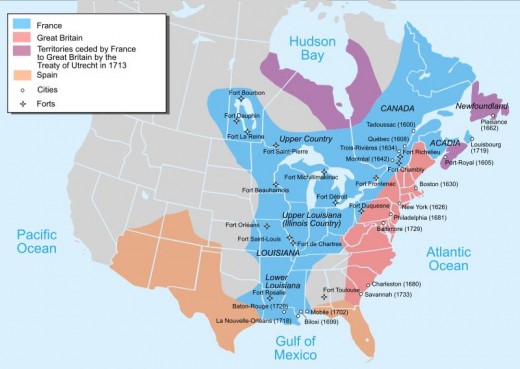
In the map below the dark purple areas depict territory lost by France to Great Britain by the 1713 Treaty of Utrecht which ended the War of the Spanish Succession, which is known in North America as the Second French and Indian War or Queen Anne's War.
The blue areas are the North American territories that the French gave up in the 1763 Treaty of Paris which ended the Seven Years War (known in North America as the French and Indian War).
The story of how common playing cards ended up being used to create the inflation, which helped to weaken France's hold on her North American territory and eventually lose it, continues below the map.
Map Showing French North American Territory Prior to French and Indian War
Playing Cards
Card games have been popular throughout history and, more often than not, money is frequently included when playing in order to make the games more exciting.
Much of the attraction and popularity of Playing Cards is due to the fact that they can be used to play an almost infinite number of games, while their relatively small size, light weight and durability make them easy to transport.
An added attraction of card games is that some, like Solitaire, can be played alone while others, like Poker, can be played by groups of varying sizes.


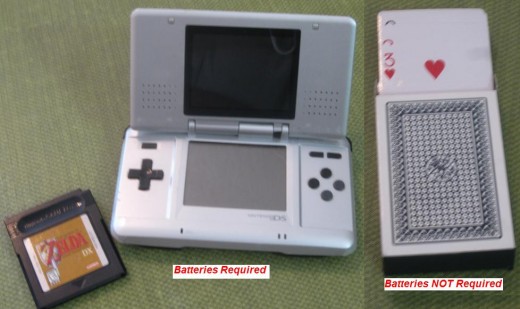
Despite the recent rise of small, portable electronic game systems with multi-player capability, playing cards can still be said to have the edge in terms of convenience and practicality.
Despite rapidly advancing technology and fierce competition both of which serve to drive down prices of electronic gadgets on a daily basis, there is still a sizable cost differential between a pack of playing cards and a portable electronic game system.
Of course, there is also the fact that playing cards don't require batteries or other outside power source, the loss of either of which can quickly render an electronic game system useless.
But I digress as this Hub is about the use of Playing Cards themselves as money.
It is about a time in Canadian & American history when the cards were used to both play a game of chance as well as used for the pot or pool of money being gambled.
And no, the time of which I am describing is a time in which the cards themselves were real money and not substitute like match sticks which some people use in place of money in the game today.
Over Regulation Weakens New France
The time in question is 1684 and the place is the French North American colony of New France.
At that time New France comprised most of what is now eastern Canada and the United States east of the Mississippi River.
All of this belonged to France except for parts of the Hudson's Bay area in which the British had established some military and trading outposts and the British North American colonies which stretched from present day Maine to Georgia along the Atlantic Coast.
New France also did not include Florida which, at that time, was ruled by Spain.
The Gulf of Mexico was the southern border of New France. However, as a result of the disastrous economic policies of the French government, of which the playing card money was a part (as well as a symptom of), all of this territory was eventually lost by the French.
In American history school children are usually taught that the English colonies in North America thrived because people moved to the colonies from England and other parts of Europe while the French did not care to leave France to colonize French North America.

This is not entirely true as it was the French government which placed severe restrictions on immigration to their North American colony.
The French people were willing to move as evidenced in part by the masses of French Huguenots who migrated to the British colonies in North America but were forbidden by law to settle in New France.
Once in New France, the colonists were forced to exist under a crushing burden of government regulation that stifled economic growth and prosperity.
The government of New France consisted of three rulers, all appointed by the King of France and sent to the colony from France.
The rulers were the Royal Governor, the Bishop and the Intendant.
The Intendant shared executive power with the Royal Governor and presided over the Council.
In addition to sharing power with the Governor, the Intendant was directly responsible for the administration of justice, finances and economic development of the colony.
Colony Has Money Shortage as Jacques de Meulles is Appointed Intendant
In 1682 Jacques de Meulles was appointed Intendant and dispatched to New France.
De Meulles first order of business upon his arrival was to try to end the bitter infighting within the civil administration that had begun under the previous governor and intendant.
He also faced a problem with the Iroquois Nation which was attempting to gain control of the western fur trade.
If the objective of the Iroquois was to re-direct the trade toward the British post at Albany (the capital of the present state of New York) rather than to the French in Montreal.
Since the government of France saw the colony as basically a large fur producing enterprise intended to enrich France, this was unthinkable.
In 1684 the Iroquois attacked Fort Saint-Louis, a French fort built by the explorer La Salle along the Illinois River near where the city of Chicago now stands.
In retaliation the French launched an expedition, led by the Governor of New France, against the Iroquois.
This military expedition resulted in some success for the French.
Unfortunately, while on the campaign, the soldiers came in contact with a strain of Spanish Influenza which quickly spread through the ranks forcing the governor to halt the venture before achieving a clear victory.
Upon returning, the soldiers brought the flu back to the settled areas of the colony in the St. Lawrence Valley where it quickly spread through the civilian population.
While the expedition against the Iroquois had been halted short of a victory, the French forces did have sufficient success to enable the government of New France to arrange peace, for the time being, with the Iroquois.
Key Points in French Governor's War with the Iroquois Nation

Montreal, capital of New France and port from which furs were shipped to France.
Albany, New York in late seventeenth and early eighteenth centuries a British frontier outpost in North America.
Site of Fort St. Louis near present day Chicago is located.
This peace enabled de Meulles to shove the problems on the frontier to the back burner and turn his attention to the problem of getting the crops harvested.
With a large portion of the already small civilian workforce incapacitated or dead from the flu, labor to complete the harvest was scarce.
There was also the problem of feeding and paying both the troops already in the colony as well as four companies of troops newly arrived from France.
In a classic case of military mis-management, the new troops not only arrived after the fighting had ceased but had been sent without weapons or sufficient supplies to feed and clothe them.
The government in France also failed to send any cash to pay either the new or existing troops in the colony.
De Meulles proved a skilled administrator and temporarily solved the financial problem by first raising whatever funds he could and used them to pay part of the wages due the troops.
Still short of funds to pay the soldiers in full, he attempted to solve the twin problems of lack of pay for the soldiers and lack of workers for the harvest by placing the troops on temporary leave and allowing them to hire out to the local farmers to earn money by helping with the harvest.
De Meulles' action of placing the troops on leave and allowing them to earn money by working for local farmers to harvest that year's crops brought him a month or two worth of time.
Yet, as soon as harvesting was finished, he was again faced with the problem taking care of an army which he lacked the money to pay or supply.
The money problem was more than simply having funds to pay for the troops as, thanks to the mercantilistic policies of the French the economy of New France was based almost entirely on harvesting of fur which could only be sold to merchants in France.
With the exception of food and some handcrafted goods made by individuals, almost everything used in New France had to be purchased from merchants and manufacturers in France.
The result of this mercantile system, was that money and production resided mostly in France leaving the colony with the fur trade as its economic base.
This left the economy of New France fragile and undeveloped.
With most currency remaining in France, there was little cash available in the colony to circulate for daily transactions.
New injections of currency came but once a year from France in the form of pay for the troops.
Thus, when the pay didn't arrive in 1684, not only the troops but everyone in the colony suffered as the shortage of currency became even more severe.

Playing Cards to the Rescue
With no hope of help from France that year (the St. Lawrence freezes in winter preventing ships from reaching Montreal and Quebec), de Meulles hit upon a solution that was both brilliant and lethal.
Brilliant in that it was a very creative short term solution to a critical economic problem.
Lethal in that giving the government access to potentially unlimited spending power is as irresponsible as giving your credit card to a teenageer in lieu of a fixed allowance.
De Meulles' solution was to gather up a number of packs of playing cards, of which there was a good supply in the colony.
He assigned a value to each card by writing a number on the back and signing his signature below it.

After issuing a decree that the cards were to be accepted as cash, De Meulles released the cards to be used as money in the colony.
What de Meulles did was to create what has been accepted by historians as the first paper money used in North America.
He was not the first to issue paper money itself as the Chinese government had done that in the tenth century.
Governments have a long history of producing money by making coins out of gold, silver or other precious metals.
Throughout history, paper depository receipts showing ownership of coins or precious metals, have been carried and circulated in lieu of using the coins themselves for transactions.

Fiat Money
However, in each of these cases the government's ability to mint coins has been limited by the available supply of the precious metal used.
The issuance of depository receipts has also usually been limited by the value of the coins or metal on deposit (although there have been exceptions which, if unrestricted, have proved disastrous).
However, the card money issued by de Meulles was not backed by anything but his promise, as the Intendant, on behalf of the government, to replace the cards with real (i.e., gold or silver coin) money when it arrived in the colony.
This type of money, which is backed by nothing more than a promise by a government, is known as fiat money.
The value of fiat money comes from two sources. The first, and most important, is the people's faith that the government will keep its promise and, the second, the fact that the government has decreed that the money so issued MUST be accepted for financial transactions.
The current paper currency of the United States and most other nations is fiat money which has nothing of value behind it but faith in the government.
Unlike the old U.S. one dollar bills issued prior to June 4, 1963 which could be turned in at any bank or the U.S. Treasury for a silver dollar, or the old gold certificates which could be turned in to the U.S. Treasury for an equivalent amount of gold, today's U.S. currency is backed by faith and law alone.
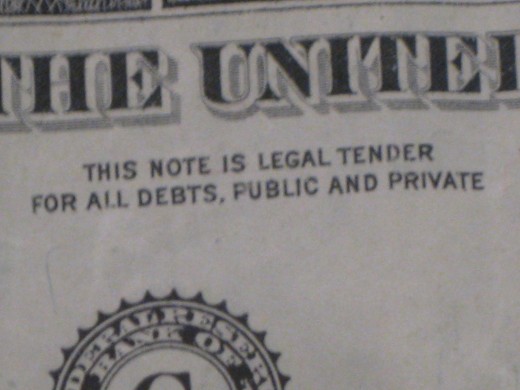
If you take a look at one of today's Federal Reserve Notes which are the legal currency of the United States you will find on the upper front to the left of the picture of a President the words THIS NOTE IS LEGAL TENDER FOR ALL DEBTS PUBLIC AND PRIVATE.
This means that in any transaction involving money owed, the one entitled to the money must accept these notes as payment.
The tiny islands of Saint-Pierre et Miquelon, Two little islands that are all that is left of France's North American possessions.
The Inevitable Inflation
De Meulles issued his playing card money in good faith and had the integrity to limit the amount he issued to the amount the French government was supposed to send him. However, de Meulles was a political appointee who served at the pleasure of the King and when his enemies got the ear of the King's advisors, de Meulles' tenure as Intendant came to an end.
In the Fall of 1685 de Meulles was forced to return to France having been fired as Intendant by King Louis XIV. Upon his return to France Jacques de Meulles moved to Orléans where he appears to have purchased a position as chief magistrate, a post which he seems to have held until his death in 1703.
True to his word, de Meulles and the government of New France did redeem the original playing cards as promised with real money. However, the money problems of New France did not end with this and de Meulles' successors found themselves again resorting to issuing playing card money.
However, rather than being a temporary expedient to cover a short term shortage of hard currency, successor Intendant's also began issuing additional playing card money, over and above the amount of the hard currency they expected would soon arrive from France, to finance other schemes as well.
Giving politicians of any nation or era access to easy money or credit almost always results in irresponsible spending and inflation and this is exactly what happened when de Meulles successors began indiscriminately flooding the market with new issues of playing card money.
While the resulting inflation did not directly result in the loss of New France to England a century later it was one of the many economic straws that finally broke the camel's back.
The result, in the words of Quebec editor Martin Masse, was that, with the exception of Quebec, some parts of Louisiana and the tiny French territory of Saint-Pierre et Miquelon, the vast territory in North America that was once New France ended up with the culture and language of France's historical rival, Great Britain.



Related
David Thompson, Almost Forgotten Explorer of Canada and North America

North America Animals Top 10 Endangered Species List

The Opossum: How Did This Marsupial Ended Up In North American

King Solomon's Mines, The Egyptian, Hebrew and Phoenician Exploration of North and South America

The Presidency of Jimmy Carter