Less Labels, More Grace

Are You A Writer?
If you are interested in making money online while writing? Hubpages is a great community to write in!
Legalism
In the prior article, I talked about how the type of judgments we make are pretty instantaneous and are subject to our immediate circumstance, or perspective. However, there is something in this part of the definition of the word “condition,” that helps us find the answer for the spirit of judging.
Its found in the words “limit” and “restrict.” We all have preconceived notions about how “things” should be, based upon the span of our “restrictive knowledge.” What I’m actually referring to is the spirit of legalism. That spirit contains restrictive knowledge.
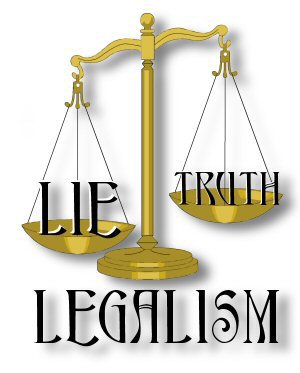
Legalism is strict adherence or the principle of strict adherence, to law or prescription, esp. to the letter rather than the spirit.
This philosophy originated in China. According to Wikipedia, "All people under the ruler were equal before the law. Laws should reward those who obey them and punish accordingly those who dare to break them. Thus it is guaranteed that actions taken are systematically predictable. In addition, the system of law ran the state, not the ruler, a statement of rule of law."
As a theology, legalism is the doctrine that salvation is gained through good works. It is the judging of conduct in terms of adherence to precise laws. These laws set
It is legalism that sets limits. What’s so funny about this, is that many people think that they can work their way into heaven, and they say the bible is restrictive, but actually the opposite is true.
When people think that they can determine what is being a “good” person, the question arises, “By what standard?” Remember that we all have the ground view. If our perspective on what’s “good” is based on our limited perspective from the ground, we’ve just put an enormous restriction upon ourselves.
What we have created is a limited ethic that we have to “work” towards. We have actually started the creation of a list. The problem with that is, the list keeps growing, because our limited understanding and interpretation of what’s “good” without God’s standard is subjective and therefore, ever changing.
What if you and your significant other kept lists of your expectations on each other, and you checked things off, much like a daily to do list? A to do list is subjective and changes daily, so how could your mate ever meet the standards?
If your relating to each other was based upon how “good” your mate was, you’d have to have a certain number of items checked off according to your individual, personal expectations, before that qualified them as “good.” Each of you would be constantly working overtime just to meet the requirements of the list. You wouldn’t be relating-just working with resentment.
That is the problem with legalism-it’s a work based salvation, versus a grace based salvation, wherein you are blessed with the salvation of God that you don’t deserve, simply because you believe in and accept the gift He gave of His Son.
It's Your Walk, Not Your Talk That Matters
Now, I’m not saying that “the church” is not restrictive or legalistic, because it is. That is a major problem, and that problem is what breeds a judgmental spirit in the body of Christ. We, of all people, as children of God are supposed to walk in Christ’s freedom, but many of us are caught up in the flesh, and walking in legalism instead of love and grace.
For example, when we are driving down a street, at given intervals, there is a sign that reminds us of what the speed limit is. That sign is there as a reminder of the limits of the law. The sign itself is not the law, nor can the sign enact the power of the law. As a matter of fact, the law has no authority in and of itself. It is the “governing body” that enforces the law, and gives it authority by their enforcement of it.
If no law was present, it would be harder to enforce the speed limit, because people would have no idea of the limit set for the purposes of guarding the safety of all.
The sign serves no other purpose than to remind us, or make us aware of the limits that keep us safe. The bible is like the sign. It is a reference point that tells us the limitations that keep us in safety and under the provision of God.
Its one thing to point out the sign that indicates the limit of the law, but for any unauthorized person, not part of the governing body, to attempt to enforce it upon another is stepping outside our individual boundaries. A large part of the problems people have is in their failure to recognize their personal boundaries.
What Dr. Tony Evans pointed out, is that when a person dies, and the funeral procession is driving to the cemetery, no signs, lights or speed limits are enforced. There are no boundaries. Why? Because when you are dead, you are free from the limitations of the law.
When we become free in Christ, the limitations of the law dies, and we walk in grace. We follow God’s word because of love, not duty. That love is the same grace that was instituted in the beginning, which is the subject of my upcoming book, “In His Image,” and that is how we are supposed to walk in relationship one to another. The church is not supposed to teach us duty, but love. It’s unfortunate that they are so “obedience” oriented that they fail to recognize they are imposing duty, and by so doing, are inadvertently teaching people to despise grace.
It irritates me to no end how the church takes apostolic letters intended for specific groups of people; which speak to specific situations and problems within those groups; and mandates them across the board. They use them out of context for the purpose of control to enforce old testament law and edits on the body that happened as a result of the fall; all the while trying to convince them at the same time that they are “free in Christ.”
They preach an ideology of legalism, and then are astounded at the problems of judgmentalism, and lack of love that is shown by the church as a whole. We were free in Christ before the fall, as well as after the resurrection, but no one seems to recognize our condition prior to the fall was one of complete unity in Him.
If we would go back to the beginning and understand ourselves more from the perspective of what God actually created and intended, we might realize that there was no law, and we walked in perfect unity and freedom in Christ because we were walking in our kingship or lordship as equals, one to another, with mutual respect, consideration and submission one to another-perfect unity of purpose.
This is the pattern of God, and it was created in the beginning. Only when we stop judging, positioning, and relegating by labels of > and < (greater than and less than), will we move back towards the true grace, freedom and unity in Christ that God intended us to have from day one.