Lighting Technology
Lamp Efficacy
How much light do you get for the power used? This is an important concept when selecting types of lamps (lightbulbs.) A high efficacy lamp produces a lot of light per watt of power consumed.
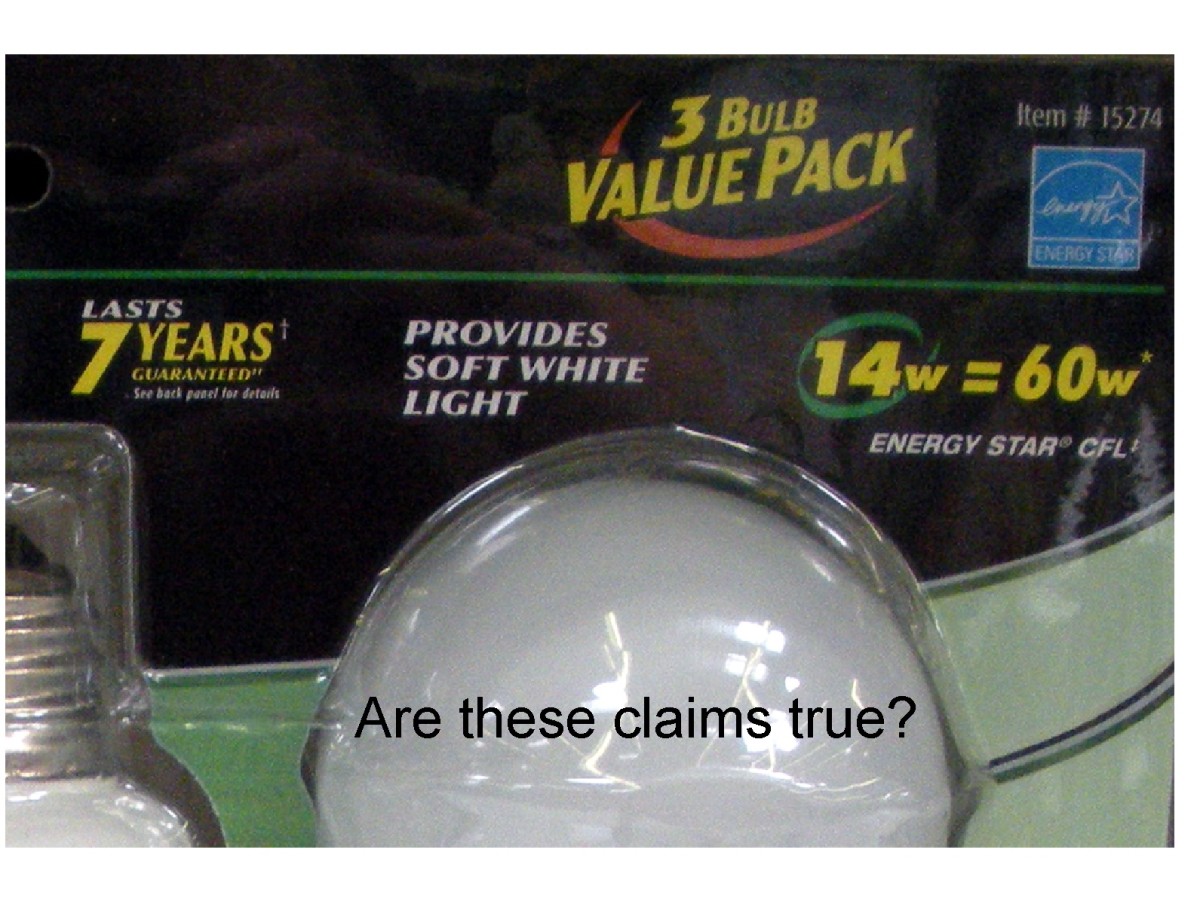
Example: Incandescent vs Fluorescent: To use a standard that most people are familiar with, a standard 60 watt incandescent lamp is rated at 890 lumens (14.8 Lumens/Watt.) A typical 13 watt CFL is also rated at about 890 lumens(68 Lumens/Watt.) This means that the CFL has more than 4 times the luminous efficacy.
Another important measurement accounts for the advantages of spotlights, floods, and other directional or reflectorized lamps. Illuminance is a measurement of the amount of light that reaches the surface that you are trying to light. A particular lamp can't be rated for illuminance since the distance and characteristics of the surface are also factors. These types of lamps come with Center of Beam Candle Power and Beam Angle ratings to offer means for comparison. Although reflector lamps may have lower luminous efficacies than non-directional sources, they tend to be more effective at putting the light where it is needed without wasting much light elsewhere. This can result in energy savings. LRC's article on MR16s includes some good examples of this comparison.
Distance to the surface and the reflectance of the various surfaces in the room also contribute to the efficacy of the lighting solution. For example, if you paint your room a dark color, light will be absorbed by the surfaces and wasted in terms of useful illumination.
Lighting Facts
Look for the voluntary Lighting Facts Label on your lighting products. These labels provide useful information and easy comparison between different lighting products. Here is a breakdown of the label information:
Brand:
Model Number:
Type:
Watts: Measure of the energy input required to light the lamp
Light Output/ Lumens: The higher the number the more light emitted (total integrated flux, lumens)
Efficacy (Lumens/Watt): higher numbers mean greater efficiency
Color Rendering Index (CRI): measures the ability of a lightsource to reproduce the colors of various objects correctly in comparison with a natural light source (sunlight).
Correlated Color Temperature (CCT): Measures light color. "Cool" colors have higher Kelvin temperatures (3600–5500 K). "Warm" colors have lower color temperatures (2700–3500 K).
The extra ratings for directional lamps are not included in this labeling system, nor is longevity. Since some of the latest LED products are rated to last for 50,000 hours; which is about 17 years if used 8 hours/ day, 365 days a year; you should put your warranty information in a safe place.
Here is the Lighting Facts website. They have a great tool for looking up the product ratings.
Color Temperature
The Correlated Color Temperature scale ranges from 2700 to 5500 Kelvin. Warm white is 2700K-3500K, and cool white is 3600K-5500K. Sunrise and sunset light and candle flame light are very warm, around 1850K. This is often very nice light for photographs of people. Incandescent bulbs are typically in the 2700-3300K range. CFLs that are sold as "Daylight" bulbs are around 5000K and considered to mimic daylight at midday. Beware, this is a cooler light and might not be desirable for many spaces despite the fact that daylight does sound pleasant.
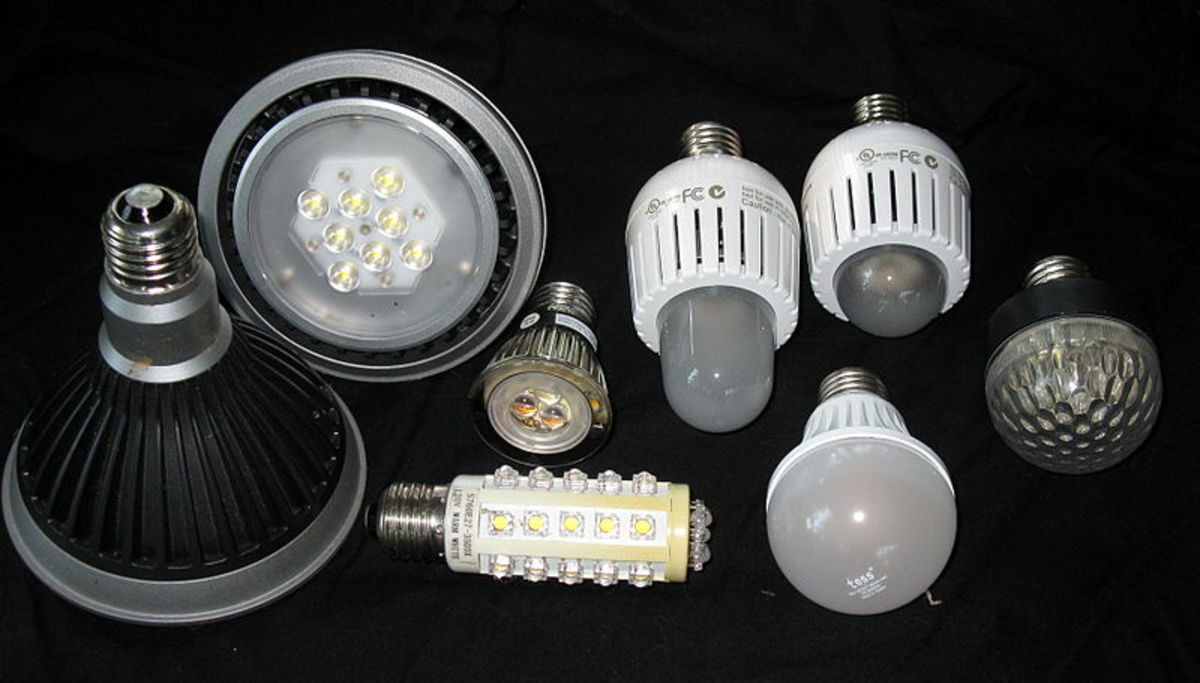
LED lamps designed to screw into traditional sockets
The EcoLEDs 3-watt LED light is billed as equivalent to a 40 Watt incandescent bulb using only 3 watts, and lasting 50,000 hours.
I bought one in the spring of 2007 (almost 4 years ago) for $45 with shipping. It is not as bright as the 50 watt halogen bulbs in the same track fixture, but it is still going strong and Ive had to replace all of the halogens.
My brother gave me a Phillips EnduraLED 12.5 watt dimmable LED bulb for christmas this year. I am very happy with the warm light quality, the dimming. If it last for the 25,000 hour rated lifetime it will be a sweet deal for the less than $40 price tag.
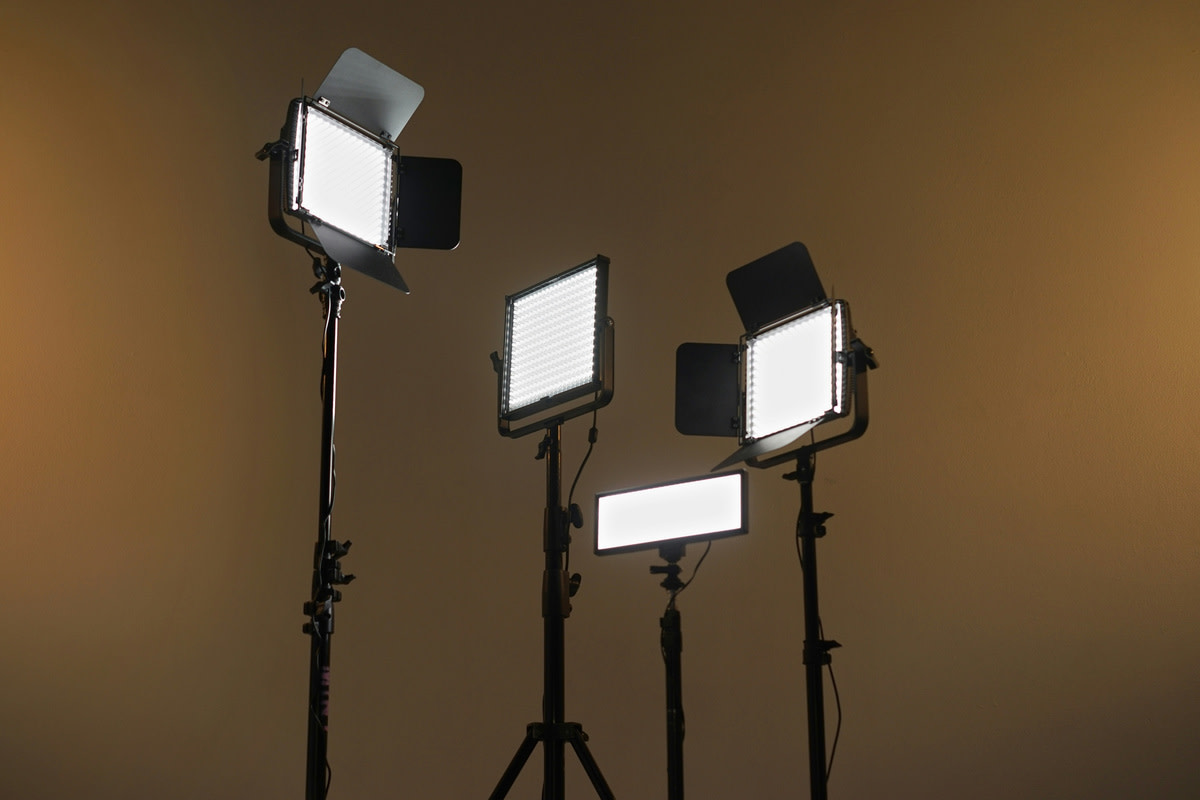
LED Fixtures
I have installed two new LED fixtures in my house in the last few years. I like both of them. The first was a Cree LR6 recessed downlight. (10.5 watts, 65 lumens per watt) The second was a Diode LED Fluid View Waterproof Striplight that I installed over an exterior door. This six foot strip consumes 1.44 watts per foot and emits 70 lumens per foot for the warm white. Cool white is slightly brighter, and the other colors are less bright because the colors are achieved with colored filters that block some of the light.
Lifespan of Different Lamps
When selecting a type of lightbulb or fixture, it is also important to consider how long the bulb will last.
Lighting Resources
- LightingFacts.com
- California Energy Commission: Consumer Energy Center
- Lighting Research Center
- National Lighting Product Information Program
- Energy Star: Frequently asked questions about CFLs
- California Title 24 Residential Lighting Energy Efficiency Standards
- Diode LED | Eco-Friendly LED Lighting
- Don Klipstein's LED Main Page
- Socket Lockit Bulb Converter
A device that allows you to permanently convert and incandescent fixture to GU24 based compact fluorescent - Information on CFLs and Mercury
- Metrolighting
Manufacturer of elegant, handcrafted lights using the latest in Fluorescent lamp technology (Their factory and showroom is also powered by solar electric) - LUX - Foot Candle Conversion