Livestock Guardian Animals
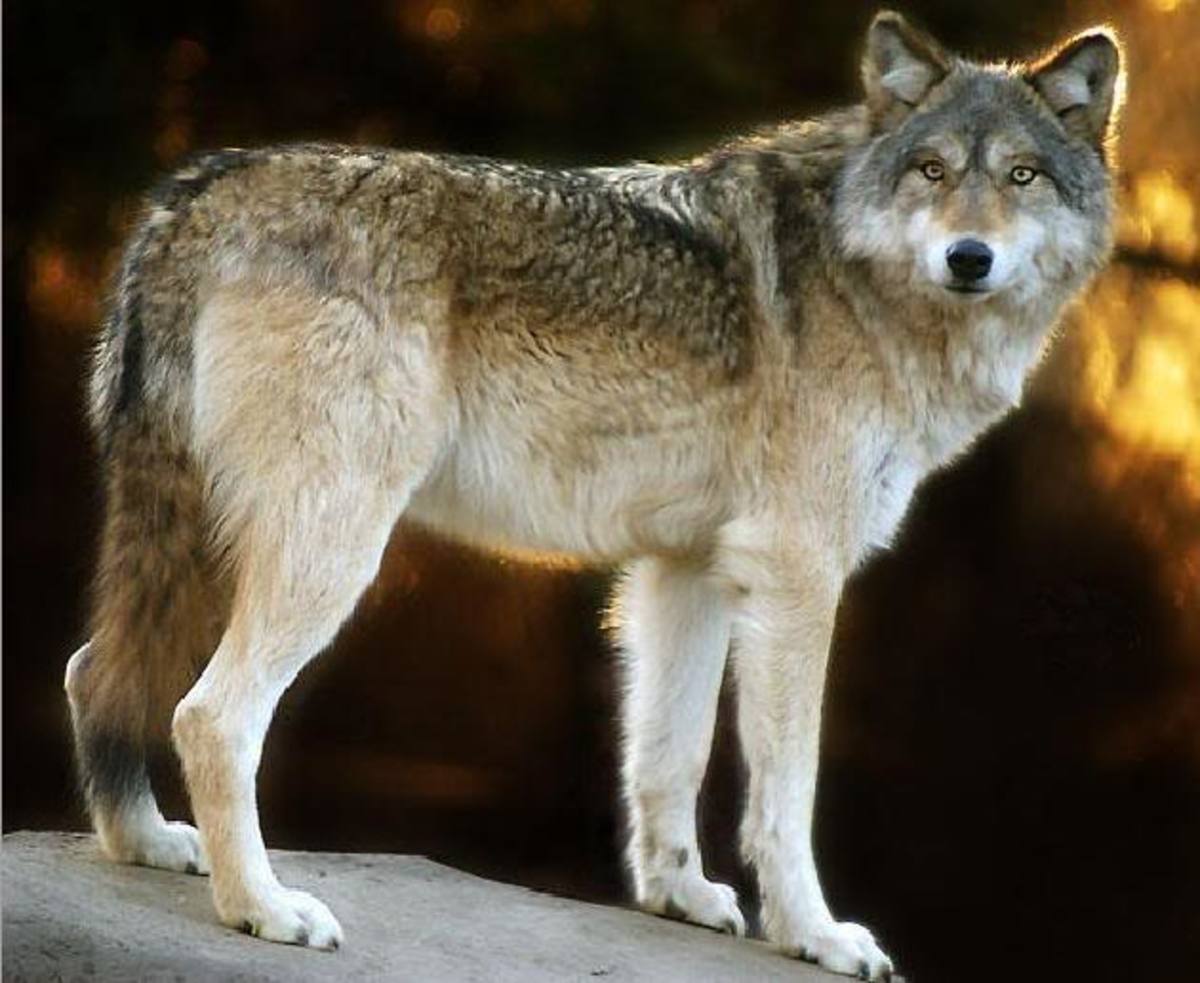
Large predators such as wolves, bears, and cougars are one sign of a healthy ecosystem and their presence in a region has the potential to bring millions of dollars of revenue from tourism and other activities. One study found, for example, that nearly 4% of visitors to Yellowstone in 2005 came to the park specifically to view wolves, and that those visitors (about 94,000 of them) pumped more than $34 million into the local economy through lodging, food, and other expenses during their visit.
In contrast, the cost of stock losses to wolves in the surrounding areas averaged $63,818 in 2004 and 2005. However, ranchers throughout the West remain one of the primary barriers to the reintroduction or recovery of large predator populations.
Fortunately, although it is impossible to eliminate stock losses entirely, it is relatively easy to reduce them. One technique many farmers and ranchers have had great success with is guard animals, including llamas, donkeys, and dogs.
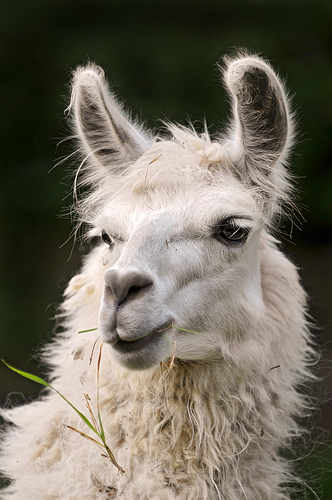
More on Guard Llamas
Guard Llamas
Llamas have a growing reputation as excellent guard animals for herds troubled by canine predators. They are naturally alert, inquisitive, and aggressive toward dogs and other canines, and will chase, kick, and paw at intruders. One study found that 85% of farmers and ranchers using guard llamas would recommend them to others, and that about half of guard llamas prevented stock losses completely, though the average reduction in losses was about two-thirds.
Llamas have very similar nutritional needs as sheep and cattle and are very low maintenance. Some individuals may require shearing and all will need vaccination, worming, and periodic toenail clipping. In some regions, they should be provided some protection from winter wind.
Geldings and non-breeding females make the best guard llamas, as males can be overly aggressive and have been known to injure smaller livestock by attempting to mate with them.
Multiple guard llamas are not as effective as single llamas, because they are more likely to bond with each other than the flock. However, llamas are relatively intelligent and easy to train, and studies have found that most single guard llamas bond with their flock within a few days. Personality is important for guard llamas, as some individuals are too timid to be effective against predators. An animal with a strongly developed territorial instinct is best.
Llamas are not effective against bears and cougars. Despite their powerful kick, they are also largely defenseless against packs of dogs or other canines.
A Guard Llama in Action
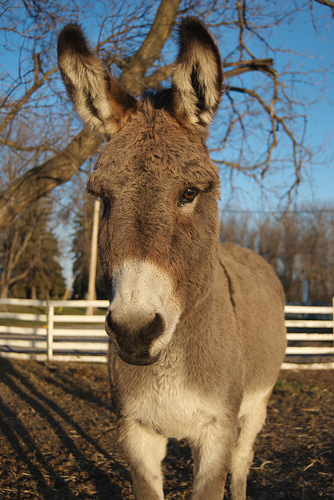
More on Guard Donkeys
Guard Donkeys
Guard donkeys have many of the same advantages and disadvantages as llamas. However, they have stronger natural defenses and are more effective against unusually aggressive dogs or packs. Although donkeys have been known to fight off cougars, they are not advised for protection against either cougars or bears.
Like llamas, geldings or females make the best guard donkeys. Females with foals make the best of all, but otherwise, multiple animals should not be used as guardian animals because it will inhibit their bonding with the flock. Miniature donkeys are not appropriate as guard donkeys.
Also like llamas, donkeys have very similar nutritional needs to their flock and are relatively low maintenance, with hoof care being their primary need other than basic vaccinations and worming.
Overprotectiveness is an occasional problem with donkeys. They may act aggressively towards breeding rams or even newborn lambs, viewing them as intruders. For this reason, new guard donkeys should be watched carefully when new animals are introduced to a flock.
Some farmers and ranchers have also had success with guard mules.
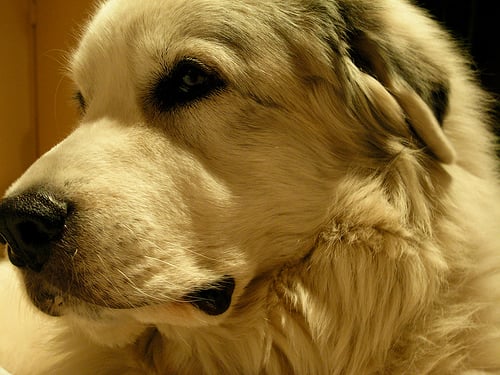
More on Guardian Dogs
Livestock Guardian Dogs
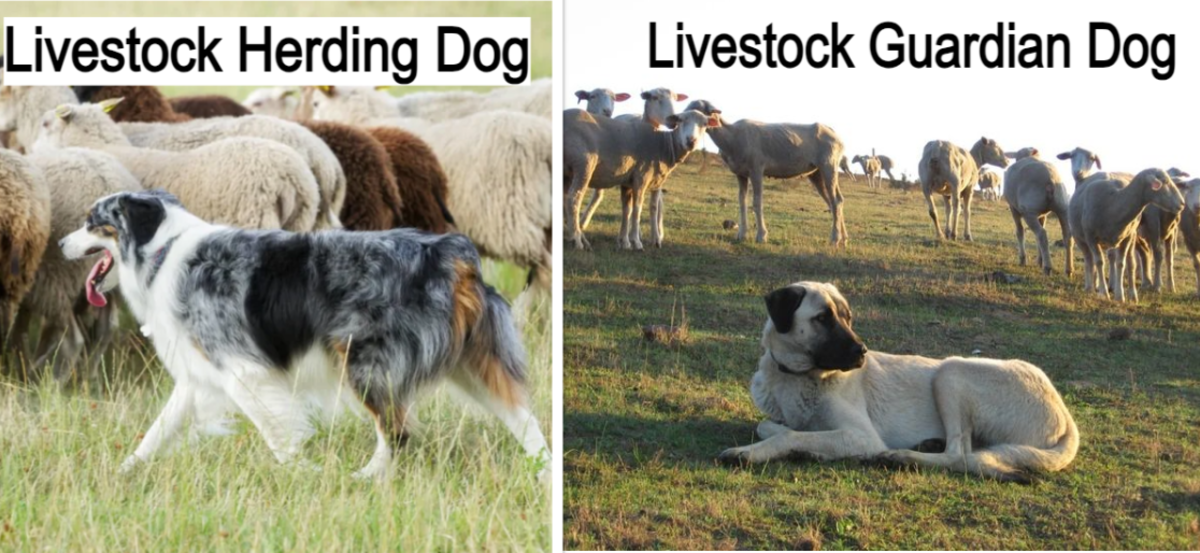
Humans have used livestock guardian dogs (LGD) to help protect livestock for thousands of years and have developed many breeds that specialize in guarding livestock. (Livestock guardian dogs should not be confused with livestock herding dogs such as Border Collies and Australian Shepherds.)
Breeds include:
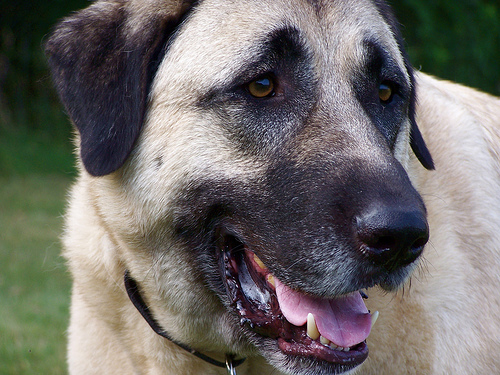
- Anatolian Shepherd (sometimes separated into Anatolian, Akbash, and Karabash/Kangal)
- Great Pyrenees
- Komondor
- Kuvasz
- Maremma
- Polish Tatra Sheepdog
- Tibetan Mastiff
as well as many others.
Livestock guardian dogs tend to make poor family pets for the very reasons they make excellent guard dogs. They are typically intelligent, independent, stubborn, assertive, and aloof. Though most breeds are calm and gentle dogs, rarely aggressive towards humans, proper socialization and training is extremely important to prevent them asserting dominance on humans.
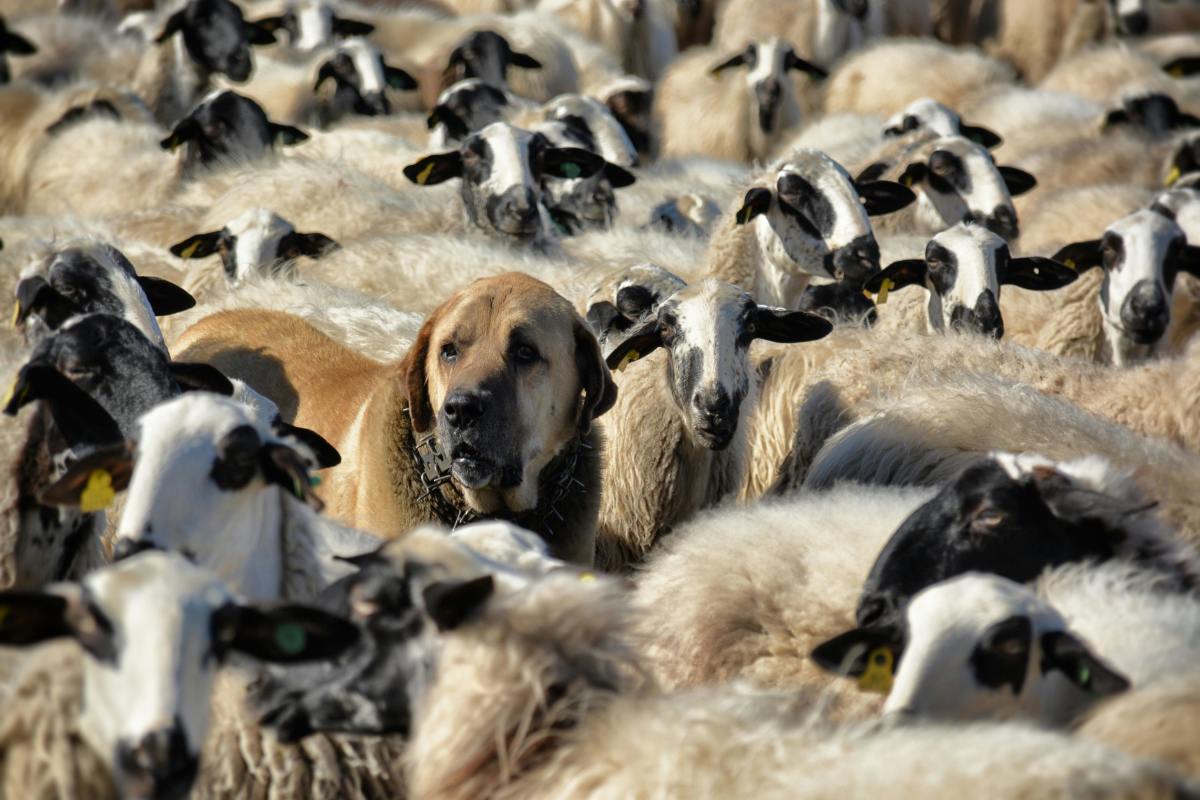
LGDs have both advantages and disadvantages over llamas and donkeys. Livestock guardian dogs provide the best protection against all canines, bears, and cougars. With proper training, livestock guardian dogs can even be relied upon to guard poultry. However, they require the most training and management to bond properly with their flock, and poorly trained or aggressive LGDs can kill or stress the very animals they are supposed to guard.
Bonding should start early for LGDs. They should be raised with the flock and receive minimal contact with humans beyond basic handling and commands, especially during the important socialization period between 4 and 14 weeks of age. Puppies should never be allowed to romp with the livestock and any chasing behavior should be punished or redirected. Puppies should not be used as working livestock guardian dogs until they are at least one year of age. For more on training LGDs, visit the links to the right.
Once trained and bonded, most LGDs live with their charges 24/7. Unlike llamas and donkeys, however, dogs cannot live on grass, so they must be provided with appropriate food, which can make them more expensive to keep. For most farmers and ranchers, however, the extra time and expense is well worth it.
A Great Pyrenees Guardian Dog With Her Flock
More Humane Predator Control Information
- Predator Control for Sustainable and Organic Livestock Production
This publication examines how to identify and control livestock predators, focusing on the control of coyotes and dogs through management practices such as fencing and secure areas, and the use of guard animals, such as dogs, donkeys, and llamas. - Predator Friendly® Certification
Our certified farms and ranches use humane practices to keep livestock safe and wildlife alive.