create your own

Local Honey Helps Kids With Allergies

81
rate or flag this page

By Lela Davidson


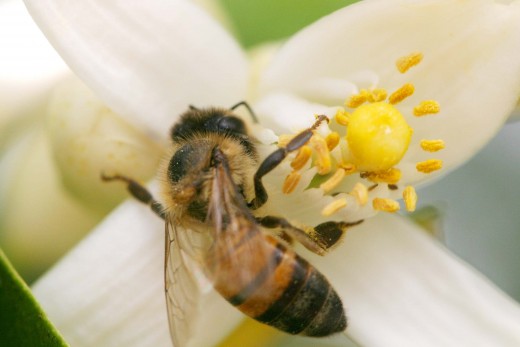
Did you know a little honey on your child's cereal in the morning may help prevent some allergies? Turns out those little bees are making some of nature's best antidote to the effects of pollen that irritate kids' eyes and noses.

Why Local Honey?

Local honey is produced closest to where you live. This honey contains tiny bits of the pollen specific to your geographical area. This minimal exposure helps your child's immune system develop defenses against the particular irritants she is likely to be exposed to.

You can find local honey at your local farmer's market or health food store.


How Allergies Work

Allergies develop from continuous exposure to the same allergens. Over time, repeated exposure to the same plants builds up in your system until one day you have an allergic reaction.

It seems strange that adding more exposure to pollen through honey will help allergies, but it does. It's the same reason people take allergy shots. The amount of pollen you get from the honey (or the shot) is so small that your body is able to ‘fight it off' easier than when you get hit by a full onslaught of spring pollen. This immunity then continues into pollen season protecting the child from allergic reaction - or at least making them less severe. While it's the same principle behind taking allergy shots, honey all-natural, less costly, and tasty!

Science Proves Honey Helps!

It's not all hippie nonsense. The positive effects of honey on allergies have been studied by the National Institutes of Health, Office of Alternative Medicine, where they found it was an effective substitute for expensive and potentially dangerous allergy shots. However, like all natural remedies, honey is subtle and it takes a commitment to use it over time to reap the benefits.

Remember, honey isn't safe for infants under one year of age.
Common Sense Medical Disclaimer:

Just in case you wonder, I'm not a doctor or any other kind of medical expert. I am just an experienced mother. Information contained in this article is intended as an educational aid only. It is not intended as medical advice for individual conditions or treatment. It is not a substitute for a medical exam, nor does it replace the need for services provided by medical professionals. Talk to your doctor or pharmacist before taking any prescription or over the counter drugs (including any herbal medicines or supplements) or following any treatment or regimen. Only your doctor or pharmacist can provide you with advice on what is safe and effective for you.

Comments

RSS for comments on this Hub Small RSS Icon

livelonger profile image

livelonger  says:
2 years ago

Great advice, and it makes perfect sense! I also read recently that eating apples and fish while pregnant also reduces the likelihood that your child will have asthma and eczema:

http://www.emaxhealth.com/88/12251.html

Woemwood profile image

Woemwood  says:
2 years ago

Honey is the most powerful antibiotic known to man, and does not lower the immun system as antibiotic prescribed by Dr. does.

chaldaily  says:
2 years ago

gshears profile image

gshears  says:
2 years ago

Very interesting. I learned something new about natural health today.

kerryg profile image

kerryg  says:
15 months ago

Very interesting! I believe in eating local as much as possible anyway, and now I have another reason to do it.

marisuewrites profile image

marisuewrites  says:
15 months ago

reminds me of Marty Robbin's song.... ..."He took a hank of hair and a piece of bone And made a walkin', talkin' Honeycomb....honeycomb, won't ya be my baby, honeycomb be my own..." good ol' honey bees.... has anyone heard why there are disappearing? Is it getting any better? a good thing to google....thanks for the info...Marisue

Lela Davidson profile image

Lela Davidson  says:
15 months ago

It is pretty interesting. Every little creature has a big purpose!

commentonthis7 profile image

commentonthis7  says:
15 months ago

i heard also honey was good for a cough

thadd  says:
15 months ago

Please site your supposed study, since Rajan et al in Annals of Allergy, Asthma and Immunology has shown quite contradictory conclusions.

Also remember that most allergies are to pollens from trees and grass, which don't make their way into honey, and that the dose of such any pollen in honey is way to low to be comparred to actual allergy shots.

Lela Davidson profile image

Lela Davidson  says:
15 months ago

I think the idea is to eat the honey over a sustained period of time, not as a quick treatment to allergic symptoms. Here are a few sources:

http://www.pioneerthinking.com/to_honey.html
http://apitherapy.blogspot.com/2007/02/raw-local-h
http://www.reallyrawhoney.com/healthfacts.php


Crystal Hudgens  says:
9 months ago

I think the QUALITY of the honey likely has some say in whether it's helpful or not, too. Honey can be graded in varying levels of quality according to this article, for instance:

http://www.culinarymusings.com/2008/10/the-key-rel

TotalReviewGuy profile image

TotalReviewGuy  says:
4 months ago

I've read about local bees and local honey being affective for allergies before and had forgotten about it. I'm glad that i stumbled upon this article/hub. Thanks for the reminder! -TRiG

Submit a Comment

Members and Guests

Sign in or sign up and post using a hubpages account.


optional


  • No HTML is allowed in comments, but URLs will be hyperlinked
  • Comments are not for promoting your hubs or other sites

working