Making and Using Compost

Joining the "green" society.
Home style composting is not at all a new invention. Yesteryear if it didn't go into the pig bucket it went into the big pile at the farthest corner of the yard or garden. In the past everything had its uses.
Twenty-five or so years ago the "modern" composter, the black or dark green contraption made of recycled plastic, came to be fashionable. They were cheap then and are still cheap now. With a few minor changes the ones available now are still the same. They work and do exactly what they were meant to do; Compost anything organic.
Composting is natures way of recycling. When we compost we do just what Mother Nature does, only a little faster. Composting is really nothing more than accelerating the process. Bacteria and microorganisms break down organic matter and produce food for plant life.
What to compost:
Just about anything organic can be composted. Some things break down faster then others. This is where a little know-thy-composting-system comes in handy.
Lets discuss this from an average sized household's point of view. You have just bought your first composter . You've done the little assembly that is required, have found the perfect spot behind the garden shed, and loosened up the base soil. You're all set. You are planning on composting kitchen waste, leaves, grass clippings and weeds and such, from your veggy plot.
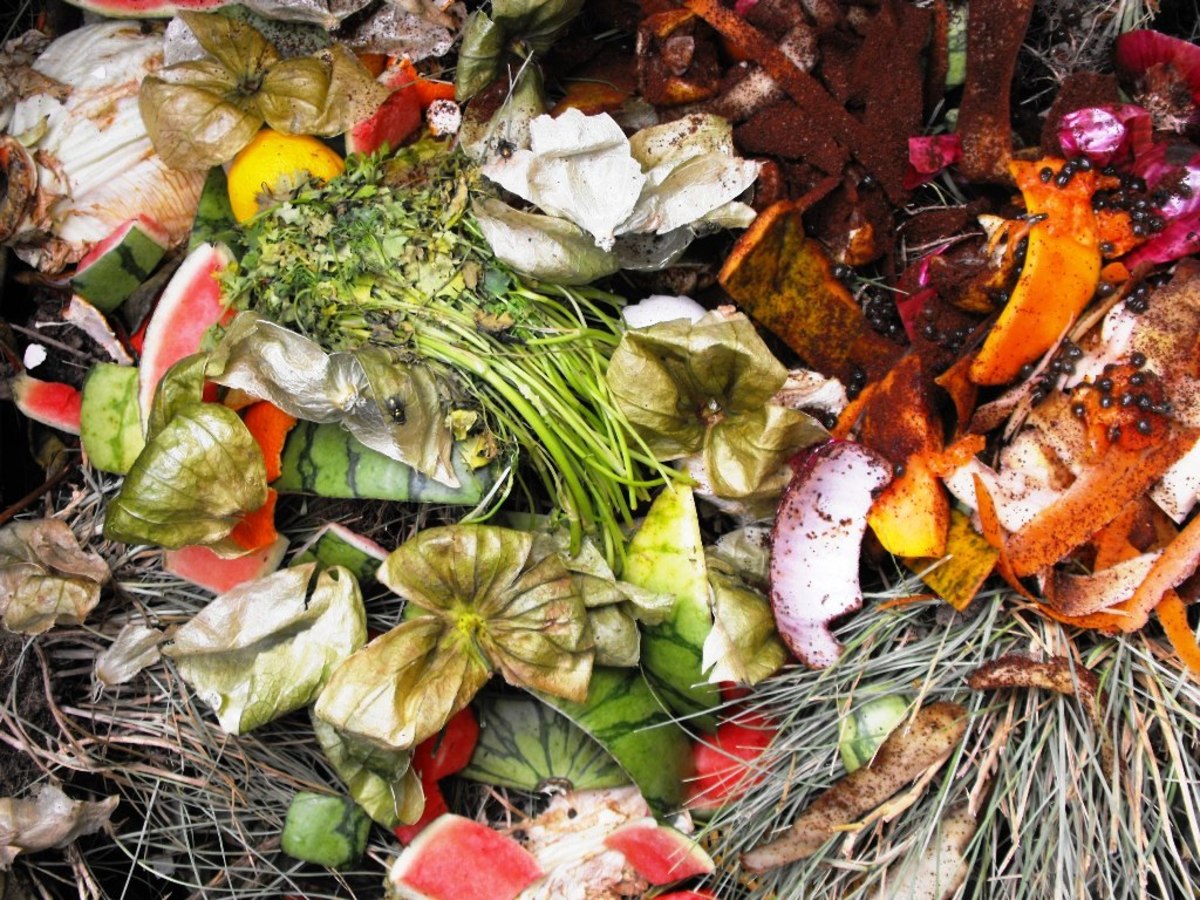
Kitchen waste is easy enough : all vegetable and fruit matter can go into the composter. Mellon rinds, banana peels, egg shells, coffee grinds, tea bags can all be included.
Yard wasteis also easy when following some common sense. For instance grass clippings, and fall leaves even if shredded will clump together and if there is no air circulation it will become a stinky moldy mess. So only sprinkle a thin layer into the composter, then add a thin layer of soil & again kitchen waste. Hose it down with a couple of gallons of water then the layering can be done again always making sure the soil is the top layer.
(In the fall, once the veggie garden is put to bed for the season a great way to dispose of the leaves is to dig a thin layer into the exposed garden soil directly. If you have access to animal manure you can do this at the same time. Most animal manures include straw which will aerate the soil also.)
My Gramps was an avid gardener. According to him everything needed balance. Everything growing is made up of many components. Carbon is one and so is nitrogen. Gramp's rule of thumb was to mix 4 buckets of carbon( stems, leaves,straw,corn leaves, bean vines, small amounts of sawdust, woodchips etc) to 1 bucket of nitrogen(kitchen matter,grass clippings, kelp, algae like pond weeds etc).
What not to include into the compost pile: Dairy, meat product, diseased or bug infested plant matter(burn those), ashes, grass clippings that are from herbicide treated lawns, weeds gone to seed.
Compost trouble shooting:
- Problem: Bad smell
-lacks air, because of over-watering / solution: add straw & mix to aerate
-lacks air, because too solidly compacted / solution: mix to aerate
-ammonia smell,too much greens / solution: add straw & mix to aerate
- Problem: Pile doesn't heat up
-nothings happening / solution: mix & turn matter
-lacks moisture / solution: poke holes into the pile & add water
-looks dark & crumbly / solution: if its earthy smelling, compost is done
- Problem: Animals wanting to get into composter
-nosey cats, dogs, skunks etc. / solution: never add dairy or meat products
- Problem: Matter in composter doesn't break down
solution: cut or chop pieces of woody composting matter
solution: remove larger chunks
- Problem: Fruit flies swarming around composter
solution: always cover kitchen scraps with a layer of soil & straw
Tools for composting: Every job is easier with the proper tools. -pitchfork, watering can or hose, long probed compost thermometer,
Using compost:It is a nice feeling being able to spread that first batch of compost that you've "cooked". You can spread all that good compost to existing plants in the garden or under the new ones of the season. Flower and vegetable gardens benefit equally from "new soil". If this is the first time you use your organic compost you will be able to tell the difference in your plants. If your sceptical about how much the plants benefit conduct an experiment. Add compost to half of your garden or flower bed and see.
Warning: remember to use only chemical free clippings. Some chemicals can leave a residue behind even in hot composted soil. Especially if the compost is used in and around a vegetable and fruit garden.
Did You know????
- The best temperature for compost ranges between 65-75 degrees Celsius or 150-170degrees Fahrenheit
- Compost increases the ability of soil to retain water.
- Compost separates soil particles therefore improves soil structure.
- Compost is the food source for the micro-organisms that live in, and are necessary for soil improvement.
- Compost regulates soil PH levels that lets plants prosper.
- Compost provides all the nutrition plants need for vigorous growth.
- Compost aerates soil which make it easier for roots to grow.
- The Breweries use their leftovers by making a good quality yet inexpensive compost.