Mind Over Matter-The Science Behind It

Sir Isaac Newton's "Philosophia Naturalis Principia Mathematica"
Many people are quite skeptical when it comes to "mind over matter" and the way thoughts can physcially influence events. "Mind over matter" sounds like wishful thinking, pie in the sky, or magical thinking to those hard-headed pragmatists. "Mind over matter" science (called Noetics, which studies the power of consciousness and thought) is counterintuitive and contradictory to Newtonian thinking and the linear, rational, cardinal reality most of us are most comfortable with.
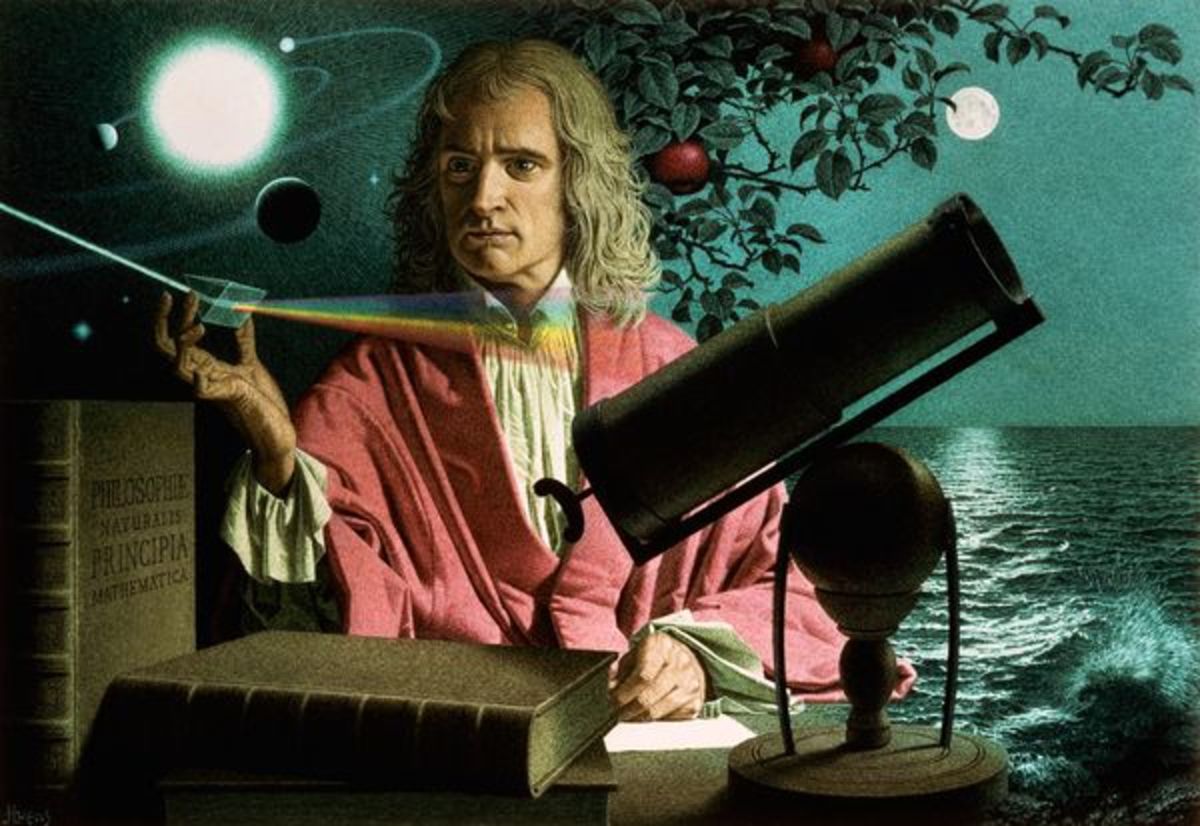
Sir Isaac Newton wrote the Philosphia Naturalis Principia Mathematica and published it in 1687.
A 2005 poll shows scientists believe Newton to more influential, today, in the world of science, than Albert Einstein.
There is no place in the Newtonian universe for "mind over matter". Such things are physically impossible, according to Newton's laws. Newton's laws regarding physical objects were an advance of science at the time. His proofs were elegant; his principles were verified by experimentation and observation for over 200 years. Newton's laws of universal gravitation and the mathematical techniques of calculus and differentiation helped to explain the movements of the planets, sun and stars. Newton was the first to posit the force of gravity. His writing and thinking made him the most influential person of all time.
Those same Newton laws of the physcial universe shaped our present-day paradigm and what we believe is possible or impossible. In other words, Newton set the limits of what we think we can do.
Noetics and the science of consciousness expands the box Newton put us in to explore the further possibilites of what we can accomplish with our minds, alone. A mind is so powerful, it can affect and influence matter in ways that were previously unforeseen, or believed to be impossible. "Mind over matter" isn't a myth.
We still perceive the world inside a Newtonian paradigm.
Here is a brief review of some of Newton's principles, used the world over in classical physics and mechanics:
- Inertia: a body in motion tends to stay in motion; a body at rest tends to stay at rest, unless it is acted upon by an outside force.
- Law of opposites: To every action there is an equal and opposite reaction
- The Law of Conservation of Matter and Energy: Matter and energy can be neither created nor destroyed; they can only change form.
- Force equals mass times acceleration.
Those principles were so firmly entrenched in the minds of scientists and lay people alike that they contribute a great deal towards forming our worldview.
They are inaccurate. None of those principles apply to the behavior of quantum particles; or at any very small scale, at very high speeds, or in very strong gravitational fields. Newtonian physics are contradicted by the behavior of light; the conduction of electricity in a semi-conductor, superconductivity, or the optical properties of most substances.
These laws were useful in studying larger objects under ordinary conditions. But when it came to the very building blocks of matter, scientists found these principles don't apply.
Quantum physicists are fascinated, precisely because most of the results are counter-intuitive to accepted science in the Newtonian paradigm.
Quantum physicists in search for the most basic building block of matter have found that the most elemental aspects of matter contradict every known principal of classical physical mechanics.
At the subatomic level:
- Matter is not solid. The smallest particles are best described by a wave,
- Some subatomic particles create themselves out of nothing and then disappear
- Matter, at it's smallest, is not discrete but universally entangled.
- Matter also exists in a state of pure potential and not a final actuality
- "Superposition"-matter can be in two places at once.
I've added some links below to substantiate these statements, and to explain more post-1987 concepts in science.
To find out more about Quantum Mechanics in general, click HERE:
To Find out more about Quantum Entanglement, click HERE:
To find out more about Quantum Superposition, click HERE:
Sir Isaac Newton's Tomb at Westminster Abbey
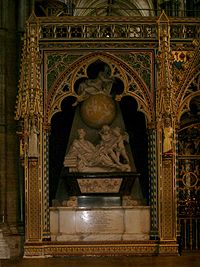
Sir Isaac Newton, who was born in 1643 and died in 1727, still shapes our world today. We view the world and the objects in it as solid, coherent entities which consistently obey the physical laws of classical mechanics, which is why most of us don't believe in "mind over matter". At its most basic, matter obeys none of these laws, and just about anything is possible, including the influence of the physicality of the world with thought. "Mind over matter" is a proven, actual fact, or a potential that exists in most physical circumstances.
The quantum world deals in the most minute aspects of matter. Matter, at it's most minute, obeys none of the physical laws we use to describe the behavior of larger objects in our universe. It makes no sense that the rule book would change once the minutia of matter has gathered itself to a specific mass. Some experiments have been made recently which show macro-particles (molecules of over 100 atoms) behaving not according to Newtonian paradigms but instead according to quantum physics; exhibiting entanglement properties and and mathematically superposed.
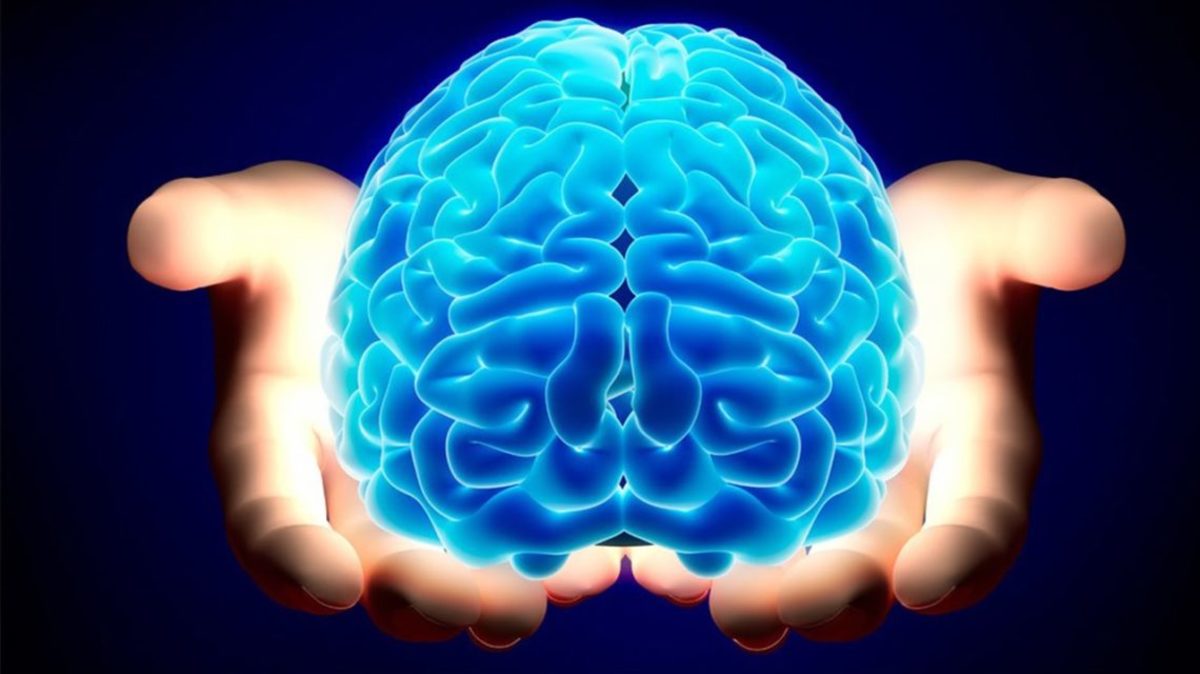
Noetics studies the human consciousness. There is much untapped potential in the human brain; there are estimates that as high as 97% of the human brain's capacity goes unused. There have been many experiments--over 2.5 million separate trials--on focusing consciousness to change physical reality under rigorous scientifically controlled conditions. The weight of data supports the fact that "intention" produces an energy potent enough to change physical reality. "Mind over matter" is a fact.
The parallel discoveries of quantum physics both explain how this is possible and re-define physical reality and the rules that we thought goverened all matter and physical bodies. Our minds have the power to shape physical reality.
These two sciences--quantum physics and Noetics, are married. Quantum physics explains why we can manipulate physical objects with our minds alone, and why "mind over" matter works.
Our basic premises need to be re-examined. What we think is possible and what we think is not possible may indeed determine what is possible for us and what is not. It may be that the potential of our minds, our consciousness and intentions, are unlimited. It may be that we have unlimited power of mind over matter, and had become too inured to the Newtonian universe to make use of it.

To find out more about NOETICS, click HERE:
- Noetics-The Science of Consciousness
Noetics and the Science of Consciousness--what is Noetics? It is mind over matter, and if you don't believe it, read on!