What is Multiple Personality Disorder/Dissociative Identity Disorder

What is multiple personality disorder?
Multiple personality disorder, which is know known as dissociative identity disorder is an extremely serious condition related to early experiences of extreme, repeated, often sadistic and/or ritualized abuse, most often by a parent or caretaker.
There are several things which often confuse people when talking about this disorder. The first is the idea of schizophrenia being the same as multiple or split personalities disorder or meaning that someone has more than 1 personality. The "schism" or "split" in Schizophrenia refers to the loss of contact with reality. It has nothing to do with multiple personality disorder. Schizophrenia is a psychotic disorder usually characterized by hallucinations, delusions, extremely odd thinking, unusual behaviors, loss of contact with reality and significant deterioration of functioning. A person suffering from schizophrenia may hear voices of other people, but often describe them as externally generated, as though someone were talking to them. They may say and do odd or bizarre things, but they are essentially the same person (albeit a very ill one).
Another misconception about multiple personality or dissociative identity disorder is the severity of this disorder. These are truly troubled people who have experienced things so horrible that the only way to psychologically survive them was to dissociate (hence the new name) or disengage with their conscious self. Some people describe going out of their body and watching themselves from outside. This is the minds most basic and most dramatic defense parallel to "let's get the hell outa here." It's important to remember that this is not a conscious process, although over time, people can train themselves to dissociate in situations of repeated trauma.
A similar phenomena has been observed in victims of domestic violence, kidnappings, significant accidents, war situations, rape and basically any other situation where people are physically or psychologically threatened with annihilation or destruction of their very soul. Leonard Shengold has written a book entitled Soul Murder, talking about the post traumatic process. His title most vividly and concisely expresses what is at the core of the dissociative response.

References and reads

So, what does dissociative identity disorder look like?
People with Dissociative Identity Disorder or DID frequently exhibit other psychological problems such as anxiety or mood disorders and may come into treatment for these problems having no idea that they dissociate. They may note and be troubled by periods of time which seem to go missing, odd reactions from people, being told things you said you have no recollection of, finding clothes you don't remember buying, finding money missing from your account etc.
Typically there is a central or core personality which is generally the one that interacts with the world. There is also often a personality which approximates the age at which the abuse began or who marks an extreme event. If the core personality is quiet and subservient as many chronically abused people have been conditioned to be, there is often an opposite alter who embodies all the qualities they either do not have or cannot access. The alter may be a brash, fearless, say it straight kinda gal/guy. Alters, or other personalities can be of the same or opposite gender, but are typically somewhat one dimensional and limited. There can be one or many alters, some may even be preverbal and only able to express through behaviors.
Alter's typically come out in times of stress and fulfill the function/s the core personality is unable/unwilling to do. If a situation requires a confrontation, the more dominant, say it straight personality takes the stage. We all do this to a certain extent, we even say that "we put on our game face", but for most of us, this is a simple, barely conscious and fluid process. What has happened in DID is that the central ego or self has been so threatened that it has, literally cracked and broken off into alters in order to save the sanity of the core personality.
These people were often very young children when these unthinkable things began to happen - and that is what happens, it is literally unthinkable, you know when sometimes you feel the bounds of your imagination stretched - like what would it be like to see $1 000 000 000 dollars, most of us struggle to actually visualize and imagine that amount of money. A similar process happens here, but for protective reasons, when the unthinkable happens, dissociation is a mechanism of survival. To complicate matters, a person may have within them both a suicidal personality and one that wants to live, a mute and a verbal personality, a wild child and a compliant overachiever. What is even more fascinating is that the different personalities not only act and see the world differently, but can actually also suffer from different medical disorders, so you can have a personality with diabetes and one without. Needless to say, this seriously complicates the treatment, let alone the person's life.
Was this information helpful?
Treatment
I hope it goes without saying that anyone suffering from DID need both skillful and multi-disciplinary intervention. You need a good psychiatrist, therapist and support team, and not just good, really skilled and knowledgeable in this particular area. This is an extremely serious disorder involving, literally someone's core self, and a core so fragile and deeply damaged that extreme care is needed in treatment. Techniques such as hypnosis, regression therapy etc are absolutely contraindicated, no, no, no. These techniques can be extremely dangerous and precipitate a psychotic break or trigger a regressive and possibly suicidal state.
A combination of medications, long term psychotherapy, crisis planning, support team structure, and a good deal of patience is what is needed. It's kind of ridiculous to expect that damage from many years of abuse could be undone in a few sessions (and stay away from anyone who says it can). A good treatment plan should be individually tailored and involve a range of supports from family to friends and community, doctors, therapists, advocates and crisis clinicians. It needs to be proactive, in other words, don't wait for a crisis to happen, figure out what you'll do & it'll be easier when it does. It should also involve regular check in's with various team members. DID is probably one of the most severe psychiatric disorders, and one that is completely due to environment and human influence. It seems our worst enemies are often ourselves.
- Dissociative disorders - MayoClinic.com
Dissociative disorders — Comprehensive overview covers symptoms, causes and treatment of these mental health conditions. - Dissociative Disorders
Information on the assessment and treatment of dissociative disorders - Psych Central: Dissociative Identity Disorder Symptoms
General symptoms of dissociative identity disorder. - NAMI | Dissociative Disorders
Dissociative disorders are so-called because they are marked by a dissociation from or interruption of a person's fundamental aspects of waking consciousness (such as one's personal identity, one's personal history, etc.). - Dissociative Identity Disorder (Multiple Personality Disorder): Signs, Symptoms, Treatment
Dissociative Identity Disorder, formerly known as Multiple Personality Disorder is an extremely complex disorder resulting from extreme and/or chronic abuse.
Related
Dissociative Identity Disorder: Breaking Free and Healing PTSD
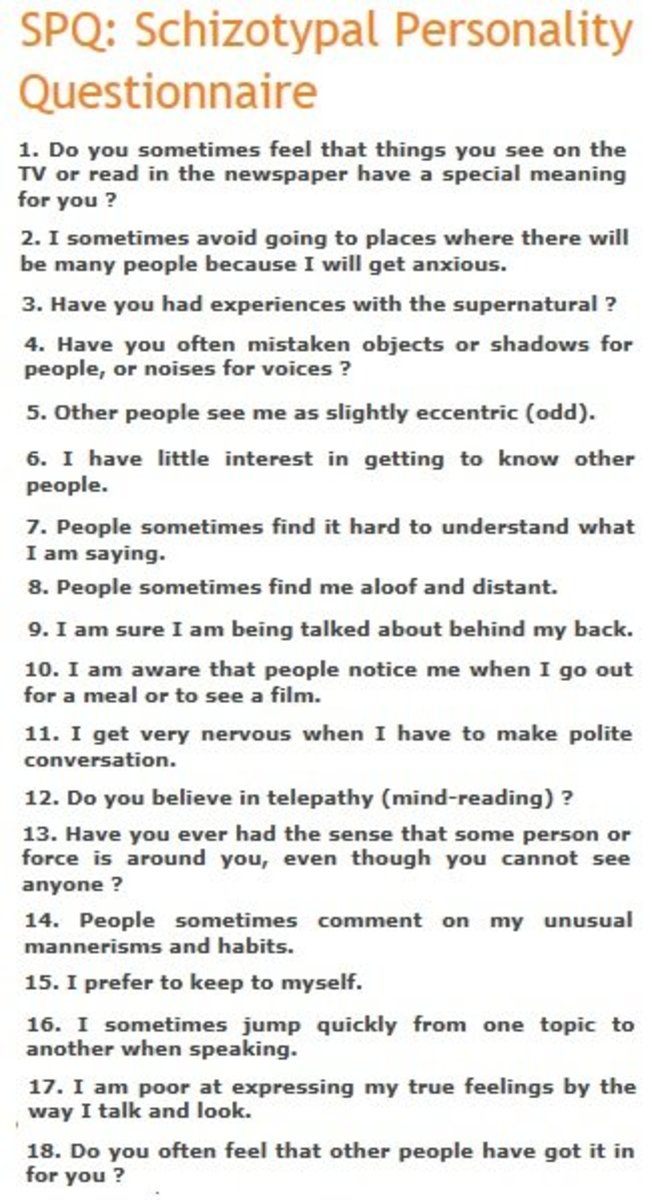
What is the Difference Between Schizophrenia and Schizotypal Personality Disorder?

Vessel vs. Vending Machine - a Spiritual Word Picture About Love, and Dissociative Identity Disorder
Living With Antisocial Personality Disorder 101: The Sociopath

Millionaires With Disassociative Identity Disorder