create your own

Nanjing's Forgotten Massacre

85
rate or flag this page

By cindyvine


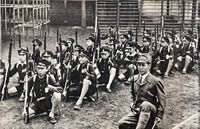
The Japanese invaded China in 1937.
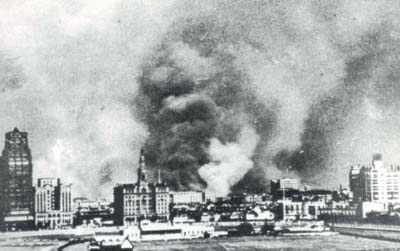
They bombed Shanghai and then marched to Nanjing.
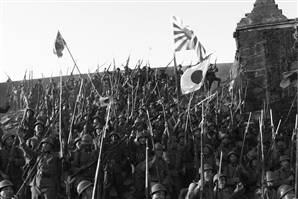
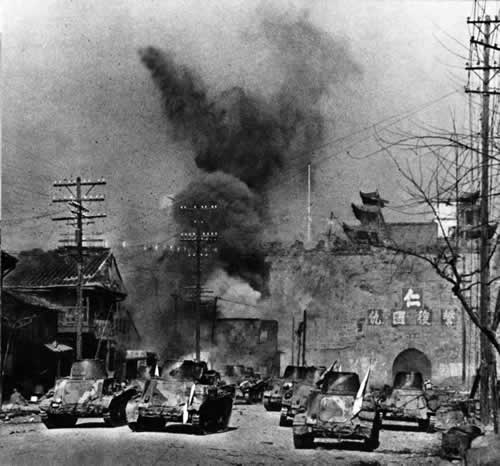
On the 13th December 1937, the Japanese took occupation of Nanjing.

Invasion

On July 7,1937,claiming to search for a missing soldier, the Japanese Army attacked the Marco Polo Bridge(Lugouqiao), which was a key access point to Beijing, China. The Double Seventh (the 7th day of the 7th month) Incident signaled the start of the Japanese invasion of northern China.

By November 1937, they had taken control of Shanghai. Although many Chinese were killed, the Japanese had their eyes on the main prize - Nanjing, 300km away and the then capital city of China.

On the December 13, 1937, Nanjing was under Japanese control. They came at the capital from three different directions and besieged the city.  What followed then was one of our most horrific pieces of history.  It was only until I came to Nanjing, that I found out about it.  It's not something you learn about in history class or read in text books.
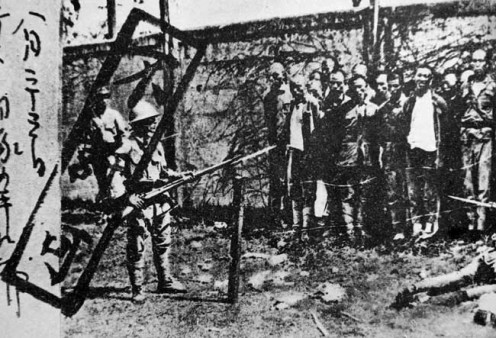

The Japanese released hundreds of large advertising balloons which said, "1 million Japanese have landed," putting fear into the hearts of the Chinese people.
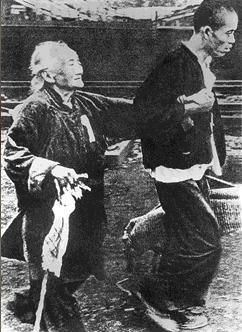
Chinese of all ages tried to escape the advancing Japanese Army and fled to Nanjing where they thought they would be safe.
There was no stopping the Japanese and Chiang Kai-Shek made a wrong decision.

Military Blunder

After Shanghai, Chiang Kai-shek leader of the Nationalist Chinese Army knew the fall of Nanjing would be simply a matter of time.  He knew that he could not risk annihilation of his elite troops in a defense of the capital as it was a lost cause.  He made a great military blunder, to withdraw his elite troops and keep them somewhere safe to use in future battles against the Japanese. Chiang Kai-shek had some German advisors as Germany had a colony in Qingdao where they had started a brewery.  The strategy they suggested, was to draw the Japanese army deep into China using China's vast territory as a defensive strength.   This did not prove to be a very successful strategy.

Chiang Kai-Shek and many of his advisors flew to Chonqing, which became China's capital for the next seven years.  He left one of his generals behind with a small force to protect Nanjing.  This general managed to round up another 100 000 untrained men to help protect the city.  He then followed Chiang-Kai-Shek's last orders, to block roads, burn boats and nearby villages to prevent the citizens of Nanjing from fleeing the city.  This was supposedly for their own protection.  This military blunder sealed the fate of the citizens locked inside their walled city, for whom there was to be no escape.
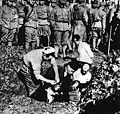
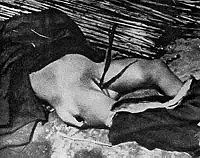
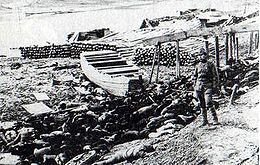
Some Chinese were buried alive.
Women were raped and then bayoneted and killed.
Bodies were lying everywhere.
The killings became a game.
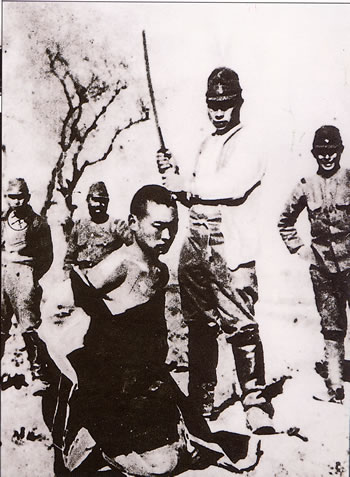
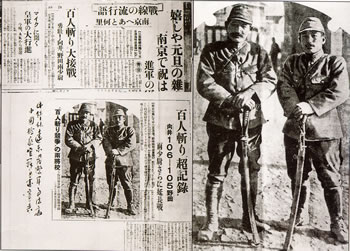
Soldiers competed with each other to see how many people they could behead in a short period of time.

6 Weeks of hell

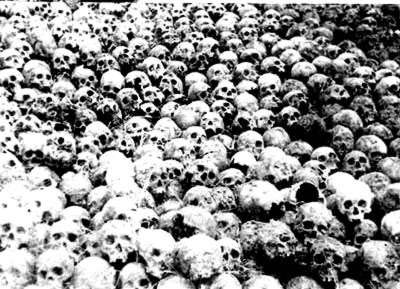
After taking control of Nanjing, the Japanese soldiers commited the most heinous of atrocities, raping women and sticking swords up their vaginas and holding competitions amongst each other to see who could behead the most people in an hour and similar macabre games.  In just 6 weeks, the Japanese massacred over 300 000 chinese people, men, women and children of all ages.  Their bodies were left to pile up and some were thrown into mass graves.  The tragedy was, was that the Japanese had many photographers who took photos of each other as they commited the atrocities.  Some of these are on display at the Nanjing Massacre Museum, along with grave markers saying how many bodies had been thrown into mass graves.  The book, The Rape of Nanking, contains many gruesome photos taken by the Japanese during this time.

It is estimated that at least 80 000 women and children were raped over the 6 week period.  It was a perk of being a soldier in the Japanese Army.  The Japanese also forced others to rape while they watched.  Under gunpoint, sons were forced to rape mothers, fathers were forced to rape daughters, and celibate monks were forced to rape women.  All while the soldiers watched and jeered.  Pregnant women were bayoneted in their swollen bellies.  Young men and boys would be tied alive to posts while Japanese soldiers practised their bayonet training.  Chinese were buried alive for fun.  The smell of death was everywhere.

General Matsui, the commander of the Japanese forces had been sick at the time of the invasion and had remained in Shanghai.  When he arrived in Nanjing four days after the occupation, he was dismayed and horrified at the atrocities his troops were commiting, and ordered them to stop the massacre immediately.  Unfortunately, General Matsui only stayed in Nanjing for a week and returned to Shanghai.  as soon as he left, the atrocities continued.  The Officers in command in Nanjing did nothing to stop their out of control troops.

6 Weeks after the fall of Nanjing and the start of the massacre, General Matsui returned to Nanjing and once again ordered all atrocities to stop.  This time the troops obeyed orders.  As word about the atrocities leaked back to Japan, they recalled many of the senior officers including general Matsui.  But, it was too late. 300 000 dead.  An additional 500 000 believed to be dead between Shanghai and Nanjing and the area surrounding Nanjing.
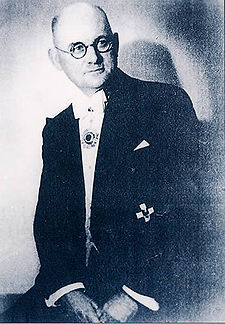
John Rabe
John Rabe

Nazi Hero

At the start of the Japanese invasion of China, most foreigners fled Nanjing.  However, of the 22 foreigners who stayed behind, one was John Rabe, a member of the Nazi Party who was working for Siemens in Nanjing.  The foreigners banded together formed the International Committee and elected John Rabe as their leader, because of his ties with Nazi Germany.  They zoned foreign businesses and embassies into a Nanjing Safety Zone.  The Japanese were not allowed to enter the Nanjing Safety Zone as the Japanese Government had agreed not to attack parts of the city that did not contain Chinese military Forces.  However, some Japanese soldiers still ventured in and would occasionally herd up a hundred or so people who were in the Nanjing Safety Zone and march them out for fun and games. 

Despite this, through the efforts of John Rabe and the International Committee, they managed to save 200 000 - 250 000 by letting them stay as refugees in the Nanjing Safety Zone.  Throughout the 6 week massacre of nanjing, John Rabe kept a diary and recorded atrocities he saw, took many photos and films.

On the 28 February 1938, John Rabe left Nanjing to return to Germany via Shanghai.  With him he had evidence in the form of documents, photos and films of the atrocities commited by the Japanese in Nanjing.  He wanted to persuade Hitler to intervene and stop the inhuman acts of violence commited by the Japanese.  He gave lectures in Berlin about the massacre and wrote Hitler a letter.

The Gestapo intercepted the letter and it never found its way to Hitler.  John Rabe, who had been a hero in China, was detained and interrogated by his own people.  Siemens intervened and managed to secure his reease on condition that he never publish anything or lecture on it again.  He was allowed to keep his diary, documents and photos, but his films were confiscated.

As if that wasn't bad enough, at the end of the war John Rabe was arrested first by the Russians, then by the British for being a Nazi.  In June 1946, this hero of Nanjing was formally declared to be de-nazified by the Allies and set free to resume his life.  However, he was released into a life of poverty and his family and him only survived through care parcels sent to him by the Chinese Government as thanks for what he'd done in Nanjing.  John Rabe died of a stroke in 1950.  His memorial stone is at the Nanjing Massacre Museum.
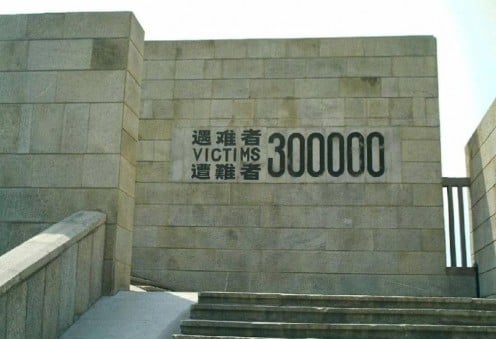

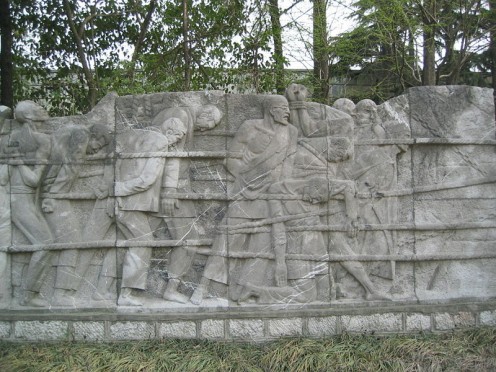
The Nanjing massacre Museum is a very somber place to visit.
The sculptures and reliefs are very moving.

Aftermath

Shortly after Japan's surrender at the end of the second world war, many of the Japanese generals and officers were indicted by the War Crimes Tribunals.  However, the real perpetrators who had commited the atrocities, all got off scot free.  General Matsui was put on the stand and gave many conflicting stories ranging from denying the atrocities to saying that he had ordered officers to find and punish the evil-doers.  General Matsui and five other officers who were held responsible for the massacre and not ensuring proper discipline of their soldiers, were sentenced to death by hanging.

Many in Japan still continue to deny that the Nanjing massacre ever happened.  Although a few informal apologies have been given orally by past Japanese leaders, the Chinese Government is still waiting for a formal written apology from the Japanese Government to the the people of Nanjing and China.  To date, that has not been forthcoming.

Print   —   Rate it:  up  down  flag this hub

Comments

RSS for comments on this Hub

Gypsy Willow profile image

Gypsy Willow  says:
6 months ago

OMG

cindyvine profile image

cindyvine  says:
6 months ago

Gypsy Willow, it was a bit horrifying, eh? I've been to the Nanjing Massacre Museum and seen some of the mass graves. This really did happen and to this day, even the young Chinese in Nanjing hate the Japanese.

Teresa McGurk profile image

Teresa McGurk  says:
6 months ago

Excellent hub.. Having lived in Japan for two years, I can testify that the majority of folk there have no idea that this happened, and the older generations, who knew about it, didn't believe it. But there is still an undying sense of Japanese supremacy and Chinese inferiority. It made me very uncomfortable. Luckily, young people are now experiencing more attempts at becoming globalized (as much as such a closed society can supply). But still. I never did fit in, in Japan!

Candie V profile image

Candie V  says:
6 months ago

Excellent hub! I had heard about this from a Chinese lady several years ago, who was a young girl at that time. Horrific doesn't describe what she described. Thank you Cindy for sharing this.

Hawkesdream profile image

Hawkesdream  says:
6 months ago

God Cindy, this made me feel sick, and so so sad, what atrocities!

cindyvine profile image

cindyvine  says:
6 months ago

Teresa, I visited Japan and I saw the attitude you describe. They definitely feel the are the chosen ones. And as you say, most Japanese don't know about it today, as their parents didn't believe the stories filtering back.

Candie, I think they brought out a movie about it last year called the Rape of Nanking. Incidentally, throughout my article I referred to the city as Nanjing. Actually, at that time it was known as Nanking, but I didn't want to confuse anybody.

Hawkesdream, war does seem a time when people forget their morals and values.

Candie V profile image

Candie V  says:
6 months ago

Nanking/Nanjing: Potaytoes/Potahtoes. It was a great hub!

cindyvine profile image

cindyvine  says:
6 months ago

Thanks Candie

Pearldiver profile image

Pearldiver  says:
6 months ago

Really good Cindy. Don't stop there though.. follow on with the human experiments that were conducted at the time & how the chinese public were used as mice for the development of chemical warfare.  You will find an irony that only someone like you can report on.  I am converted by your account.  I know the history there.  And Cindy, I have identified the location of Bumble Town .... Have a good laugh at my hub..

cindyvine profile image

cindyvine  says:
6 months ago

Will check it out Pearldiver. I intend to write a hub about that very thing and other similar stuff, but only after I leave here. Big Brother is too much in evidence if you know what I mean!

LondonGirl profile image

LondonGirl  says:
6 months ago

I've read about this before - it was utterly, surreally inhumane. Fantastic hub.

frogdropping profile image

frogdropping  says:
6 months ago

Cindy - I'm sat here feeling ... hollow. I know its over, I know the atrocities cannot be put right - I still can't help but feel incredibly numb at the horrors inflicted upon the people of Nanjing. And I know it's only one of many mass acts of depravity meted out in the name of ... what?! ... yet it is still no less horrifying to read.

Mans' inhumanity to man. Utterly inexcusable.

Despite the content being so harrowing - very well written.

cindyvine profile image

cindyvine  says:
6 months ago

LondonGirl, thanks for your comments, I always feel good when you give an encouraging comment on one of my more serious hubs.

Froggy, you are right, Man's inhumanity to man is unexcusable!

blondepoet profile image

blondepoet  says:
6 months ago

Man can be without heart totally,this sort of thing really gets to me inside, this is so tragic Cindy, you told this story really well.

cindyvine profile image

cindyvine  says:
6 months ago

Yep BP, it means quite a bit to me as I have visited the Massacre museum and seen the photos and the skulls and mass graves.

SGF profile image

SGF  says:
6 months ago

Excellent hub! Too few people know of the war crimes committed by the Japanese!

cindyvine profile image

cindyvine  says:
6 months ago

Yes, could be because the Japanese still won't admit to many of them! I might still do a hub on the Death Railway as some of the things the Japanese did then were also very bad!

LondonGirl profile image

LondonGirl  says:
6 months ago

I love your hubs.

To his dying day, my grandfather refused to buy anything Japanese, after his experience helping liberate survivors of Japanese POW camps.

There were the poor souls who were Korean "comfort women", too, AKA forced mass-rapes over years.

cindyvine profile image

cindyvine  says:
6 months ago

You know LG, when I had a Japanese girl start in my class, my teaching assistant said to me she'd have to try very hard to overcome her dislike of Japanese, and we also had to prep the Koreans before she arrived as they are quite vehement with their dislike of all things Japanese. However this little girl is so adorable, you can't help but love her!

Crystine  says:
4 months ago

Hi,thank all of you... the discussion is very inspiring...yes, history cannot be forgotten, and this is not a history yet. Some people are still suffering from this war and their stories could possibly be gone with the wind if we don't tell people of this generation and next generation. That is why a DVD “Iris Chang – the Rape of Nanking” DVD was produced with 7-language subtitles and launched as an educational tool in Toronto on June 22 this year.

The award-winning Docu-Drama “Iris Chang -the Rape of Nanking” was produced and premiered in Toronto in November 2007. Since then, it has been screened in many cities and universities in North America and around the world. In order to educate future generations about the gruesome facts of Asian WWII atrocities, the film has always been intended as an educational tool to facilitate teachers in class.

The film DVD has subtitles in 7 languages including English, French, German, Japanese, Korean, Simplified and Traditional Chinese. It has been divided into 28 chapters so that teachers can make easy references to the film when they are teaching various subjects suggested by the “DVD study guide” that was composed jointly by a group of Ontario teachers and Toronto ALPHA. Designed on theme/topics basis, this study guide can be adopted by all curricula around the world. It is free for download at www.torontoalpha.org.

Thanks to the full support from the Toronto District School Board, the largest school board in North America, the DVD will soon be distributed to every high school within the school board.

For order of the DVD or to learn more about the film and its accreditation, please visit www.torontoalpha.org.

DVD Trailer: http://www.youtube.com/watch?v=9q7bkxKTdNY

cindyvine profile image

cindyvine  says:
4 months ago

Crystine, thanks for that info! It's great that Canada are doing so much to make the Rape of Nanking known! Do you think it could be because Canada imported so many Chinese to build the railroad, that they feel they have to give them something back in return?

eyeofh profile image

eyeofh  says:
5 days ago

Wow! I honestly cannot believe I have never heard of this before. The lengths humanity will go to in order to cover its own darkness never ceases to amaze me. Thanks for the great Information!

cindyvine profile image

cindyvine  says:
5 days ago

Eyeoth, yep it is not something the Japanese really want made public, they still try and deny it happened, but I have seen the bullet holes in the Nanjing wall, and of course, China was in isolation so many years because of communism...

Submit a Comment

Members and Guests

Sign in or sign up and post using a hubpages account.


optional


  • No HTML is allowed in comments, but URLs will be hyperlinked
  • Comments are not for promoting your hubs or other sites

Other hubs by Cindy Vine

  • Freaky Flights

     Flying.  If God really wanted us to fly he would have created us with wings.  Instead he gave us legs to walk with.  Good strong legs.  Legs that can walk long distances.  But, we like to travel, go... - 7 days ago

  • Common mistakes made by men during sex

      Many men think that sex is instinctive and is something that just happens naturally.  But, leaving your woman fully satisfied takes hard work and practise.  You have to know what you are doing, or... - 2 weeks ago

  • Cris A went challenge-mad

     Cris A decided to start some kind of challenge thread on the forums.  Quite a good idea, I thought, and I enjoyed reading all the silly challenges, other hubbers were cooking up for each other.  But... - 3 weeks ago

  • Cut loose from the abuse

     Abuse.  It comes in so many forms, some are blatant and other subtle.  It can happen to us at home, at work or even in the street.  Some people go through life never being abused.  They are the lucky... - 4 weeks ago

  • Common diseases of the new millenium

    Doctor Cindy is in the house and is bringing to you, the sick and diseased, the common diseases of the new millennium. So have a gander, check them up out, and tick off the ones you are currently afflicted... - 4 weeks ago

  • 10 Ways to get over a Panic Attack

      Panic, the urge to flee or fight.  You are suddenly gripped by a sudden wave of dizziness, shortness of breath, vertigo, hyperventilating, palpitations, sweating, insomnia, hot flushes, chills,... - 2 months ago

  • Never say the ants have gone

    Hello, I am a giraffe from the Arusha National Park. Howya doing? Never say the ants have gone One would have thought that by my grand old age, I’d know how the world works. One would assume that I’d... - 2 months ago

  • Life in the slow lane

    Marangu Waterfall View of Kilimanjaro from my dining room   Life meanders along slowly.  Another day, another dollar.  A little frustration, a big frustration.  All punctuated by your interactions with... - 2 months ago

working