No Line, No Pole, No Hook Fishing

These days the closest I get to fishing is dropping my daily line into the swirling sea of hubitivity to check out what new variety of hub fish, are swimming among the schools of my favorite hubbers.
However, that wasn’t always the case. In the past, there once were endless halcyon days, spent laying belly flat on boulder, when no store bought line, no pole, and no hook were necessary to catch a trophy fish.
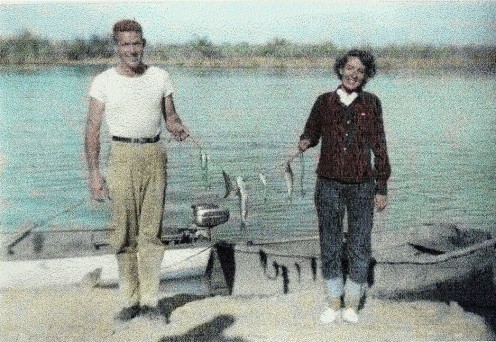
Fishing Family Legacy
If You'd Like To Know More About Pocket Knives!
- Best Pocket Knives for Camping and Every Day Use
Are you looking for an excellent pocket knife or for a multi-tool to use at camps or at home. Then check these reviews of the best five pocket knives in the market. - Fishing Line Basics
It's obvious how important fishing line is to a fisherman. It's the link between him, and that potential trophy swimming below. With fishing's incredible popularity, a wide variety of fishing lines have been... - Mumbly Peg Mumbypeg
Your Imagination and A Pocket Knife
Growing up there were a few advantages in having energetic teen-aged parents who were avid hikers, campers, rock hounds, and fishing nuts -- one of them was -- you didn't need much in the way of toys, because you had all of mother nature's available to you.
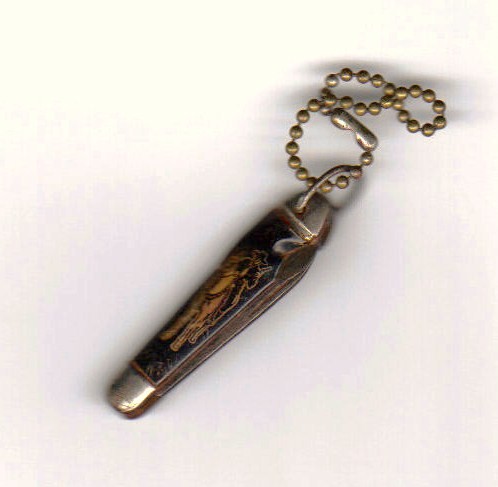
While you can't call them "toys" -- pocket knives were one thing kids of our generation were familiar with. In the “do it for the kids” decade of the 1950s, I don’t know of any boy in my school, neighborhood, or family who didn’t have their own pocket knife. A few lucky girls, and I was one of them, also had their own pocket knives. The very lucky of our generation had Swiss Army knives.
Now, there were a few mothers around the neighborhood who expressed concern that "someone might put an eye out." I think this had more to do with boyhood games of Knifesies and Mumbly Peg. Fathers taught their sons responsible uses for their knives (which in my humble opinion is also a rite of passage missing from today's father/son relationships).
Boys carried their pocket knives (jack knives) everywhere, including school. It wasn’t something they showed off at the elementary school, nor was it something to threaten someone with -- it was just part of being a boy. The most trouble I ever saw, was when Frankie, who sat in front of me in the third grade, carved his and my initials on a desk and the teacher caught him.
Today's children live in a precarious world and at times from my generation's standpoint, it seems that their parents and other authority figures, have lost something when children aren't taught responsibility and life skills that previous generations of kids and parents took for granted. When did we cross the line, to where a pocket knife became a weapon and a reason for expelling kids from school? What does it say about parenting today? Or more importantly, what does it say about kids today?
Growing up in a multi-generational family unit, I can't remember a time when we weren't told, "All you need is your imagination and maybe your pocket knife." This sage advice came from our Grandpere, who was given to such counsel, asked for or not.
Nothing was truer than on family camping and fishing trips, which were almost every weekend, school holiday, and vacation events in our household. Friday nights, my parents came home from their jobs, to a station wagon loaded up for that weekend's family excursion (by my grandmother). Within a couple of hours, we were on the road to one location or another in Southern California.
Pocket knives were not an optional item on the packing list for these trips. Neither was packing your imagination. Probably out of financial necessity in the early years, both items were required for learning while you play. The adults in the family had fishing poles, fishing gear, rods, reels and all sorts of grown up toys. We kids, were expected to use our imaginations and pocket knives to provide us all that we needed.
Kern River, California

Popular Fishing Spots
As a kid, I had no idea how the fact that my father had been a military survival instructor -- probably played an important role in why we were taught how to catch fish sans fishing poles, lines, and hooks. It wasn't until much later, when I had to go through survival training in the Air Force, that I understood why he thought it was important. As kids, all of this knowledge was just fun and not something you questioned.
We learned not only the habits of the fish and where to find them, we learned how to make our own fishing lines, and poles. We didn't need fancy store bought gear and didn't get any until we could prove ourselves. Some of my fondest memories are of those untroubled days, fishing primarily in central California.
Popular fishing spots for our family were:
- The Upper and Lower Kern Rivers-- Located about fifty miles east of Bakersfiled and below the High Sierras, (another favorite camping and fishing spot for our family on longer trips), the Kern River is known fro great Rainbow and Golden trout fishing. There is a section of it (about twenty miles long) that is open for fishing year round. What's unique about this area, is that there are many places where you can simply pull over and fish near your car right along the road.
- Lake Isabella -- Lake Isabella has always been a mixed bag when it comes to a fish fry. There are bass, crappie, blue gill, trout, carp, suckers, and perch in this lake. It’s a popular and sometimes crowded fishing and party place today at certain times of the year. You might catch more or catch sight of more, than you want at this lake.
- Lake Havasu-- Lake Havasu is a very large, man-made lake (reservoir) located behind Parker Dam on the Colorado River, smack dab on the border between California and Arizona. Some of my uncles worked on the building of the dam in the mid-1930s. What many people don’t know today is that skeletons of whole towns from that time period are beneath it’s water. In this lake, you’ll catch sunfish, both large mouth and small mouth bass, striped bass, crappie, carp, and both channel and Flathead catfish.
How to Make Fishing Lines and Fishing Hooks
This is an area where you are only limited by your imagination. Fishing lines are easily made from a large number of native plants anywhere in the country, or the world for that matter. Plant fibers and bark are quickly made by rolling them into fishing line, by twisting the fibers together.
How to make a fishing line from bark
- Secure the knotted ends of two thin strands of plant fiber to a sold object
- Hold a strand in each hand
- Twist both of them clockwise
- Simultaneously cross one above the other counter-clockwise
- Continue adding more fiber to lengthen your fishing line (whenever necessary)
- Try to maintain uniform thickness
Remember that two stands twisted in this manner, are four times as strong as one strand. Also, consider that a twenty or thirty foot line can easily be made in an hour, once you get the hang of it, provided you have selected a good plant, or easily shredded tree bark.
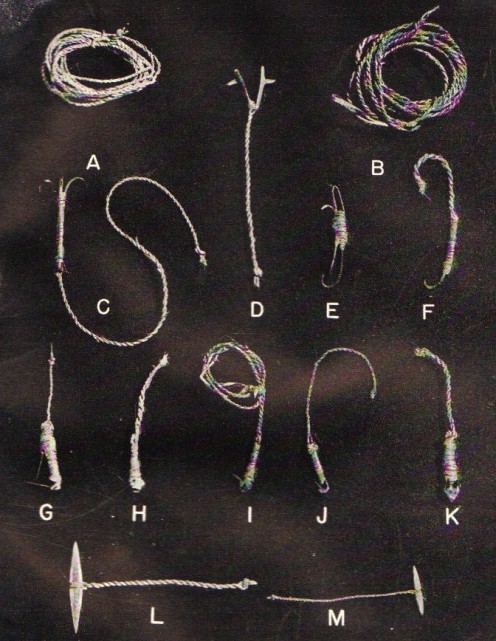
Detail of Home Made Fish Hooks
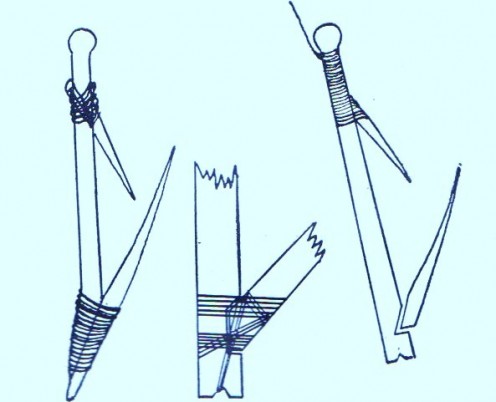
Making a Home Made Fish Hook
Fish hooks can be easily made from a variety of things in and around you. Perhaps the easiest materials to work with are sticks and pieces of boards.
Here are some simple instructions:
- Shape the bottom end with a notch near the end to set the point of the hook
- Sharpen the point piece of wood to the hardest part (following the natural grain) to make an extreme barbed tip
- They should fit into each other at about a thirty degree angle
- Lash firmly into position, using very thin strands of plant fiber or tree bark
- Tie tightly to the shaft
Note: The large thorns of the bougainvillea bush and the hawthorn make excellent natural fish hooks.
Illustrations of Hand Made Fishing Lines and Hooks From Natural Materials
In the picture above, the handmade fishing lines were made as follows:
A -- Hand twisted tree bark fishing line
B -- Hand twisted plant fiber fishing line
C -- Triple thorn hook
D -- Thorn from a vine fashioned into a hook
E -- Latch barb hook
F -- Ordinary thorn hook
G -- Ordinary thorn hook with latch
H through K -- Different types of thorn hooks made from tree limbs and small pieces of bark
L -- Large wood gorge hook (my personal favorite for teaching to kids)
M -- Large wood gorge hook (an easy hook to teach young boys to fashion)
Hooks for fishing are only limited by your imagination. They can be made from twigs, bark, thorns, shells, small animal bones, safety pins, old earrings, pine cones, etc.
Sinkers for fishing also fall into this same imagination category of effort. Probably the very best sinkers are pennies and small pebbles.
Bobbers are found anywhere man has left behind trash in Styrofoam containers and packaging.
Golden Trout Fishing - Upper Kern River - North Fork

Get Real
Get real and make your bait appear real, by acting natural and concealing your hook.
Here are some suggestions:
- Never let your bait remain still
- Move it slowly from time to time
- If the fish are scattered, or feeding near the surface -- always allow the bait to drift with the current
- If you see fish coming to the surface or breaking the water and feeding -- work your bait down to them (they will continue to feed at that spot if not disturbed)
- In clear and shallow water always approach your potential fish upstream (you will notice that they lie heading into the current)
- If the variety of fish seems to be shy or wary -- try night fishing the same spot
No Need to Buy Bait
There is little need to buy bait if you use your imagination. Here are some cardinal rules that we were taught as kids for both natural bait and unnatural bait:
Natural bait
- Use your imagination and experiment
- Look first for bait in the water, as this is nature's source of fish food. Some examples are:
- Insects
- Crayfish
- Worms
- Meat of shellfish
- Wood grubs
- Immature forms of aquatic insects
- Small minnows
- Fish eggs
- Intestines, eyes, and flesh of other fish
- Intestines, eyes, and flesh of any small animal
Next, if the fish aren't biting a lot -- another method of what tempts them to bite is to dissect the stomach and intestines of the first fish you catch to see what the fish are eating. Try to mimic or duplicate that bait. Usually the fish will be feeding on the same food.
Finding bait takes a little patience, but it's worth the effort. If it is crayfish, be sure to turn over rocks in the stream until you find one.
Unnatural bait
A lot of times fishermen find that what they brought with them, also suffices for bait. For example:
- Corn appeals to many varieties of fish
- Velveeta and other cheese can be easily formed to resemble fish eggs
- Chicken parts
- Uncooked bacon
Note: For some reason fruit does not work for bait.
You Can Catch Fish With Nothing
You can catch fish with nothing but your imagination, and the things in your environment, if you know when, where and how to fish.
When To Fish
Generally, fish feed early morning, just before a storm breaks, and late afternoon. Two of the best signs that the fish are biting is jumping minnows and rising fish.
Where To Fish in Streams and Small Rivers
Even the youngest child in the family can learn to spot fish and good fishing holes. Failure to pick a good fishing spot is wasting your time. In streams, fish like small pools and deep calm waters.
Other good sites are:
- Heads of riffles
- Small rapids
- Tail of a pool
- Eddies below rocks
- Eddies below logs
- Deep undercut banks
- In the shade of overhanging trees or bushes
- Inside submerged logs or fallen trees
- Mouths of small tributary streams where main rivers merge
- Any place rivers or streams are high or muddy
Additionally, when streams are low and the weather is exceptionally hot -- fish congregate in the deepest pools and places where cooler waters enters the mainstream. At these times, fish like to hide under rocks, tree branches, anything that gives shelter.
Other times, in cooler spring weather, fish like to keep to the shallow water, for the warmth of the sun.
Lake Isabella, California
If You'd Like to Know More About Fishing
Hand Catching
For a Cajun girl, hand catching fish, especially catfish in the Bayou Lafourche, during lengthy visits to Louisiana -- was an everyday occurrence, something you took for granted growing up.
In small streams with undercut banks, or in cut-off channels, or even sloughs (where clear shallow ponds are left by receding flood waters) -- hand grabbing or catching can not only be a very successful method of catching fish, but also a lot of fun.
The usual technique is simple, just simply reach under the bank or rocks and slowly move your hand. When you feel a fish, work your hand gently towards the head, hold on firmly behind the gills and left out. Another technique works well where fish a traversing rapid water, and can be grabbed in mid-swim by agile and quick.
Girl Catches Fish With Her Bare Hands
Shore Side Spear Fishing
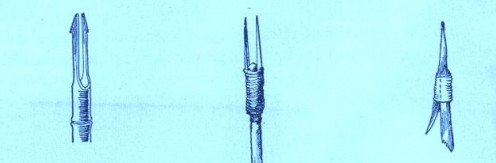
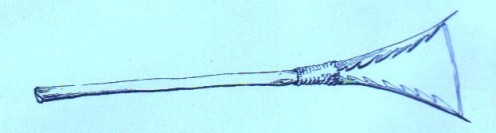
My little brother learned a lot about carving wood through his many attempts to make spear fishing tips and points. It kept him very busy and out of trouble around camp in the early evenings.
Spear fishing has it’s fans and then it has it’s critics. Most people think of spear fishing as a fishing activity in conjunction with diving. However, as kids, spear fishing was probably one of my little brother’s most favorite activities. As seen through the eyes of a young boy, it doesn’t get any better than throwing something at a moving target. I’m happy to report that he only speared a handful of fish by this fishing method.
Generally, there are people who believe today, that it’s not a good practice environmentally because the fish are often unafraid or used to divers. The chances of you spearing a fish from shore or standing in the water are minimal and because of that, it’s a sounder way of fishing than many other methods. Remember that spear fishing is not legal in some places.
Various Illustrations of Spear Points to Carve
Fish Spear Trap
Lake Havasu, California
The Challenge
By telling you about these techniques, I'm hoping to inspire some of you to try to leave behind your lines, your poles, your hooks, and all that great "stuff" that makes up today's idea of fishing -- the next time you take your kids on a fishing trip.
Maybe it's not realistic in today's world, to let them carry a pocket knife around everyday anymore, but let them have a chance (under your supervision) to learn the fine motor skills it takes to make their own fishing lines and hooks.
Let them use their imaginations in finding bait and the best spots to fish. The only thing you need to invest in, is your time in having fun with them, and maybe a box of band-aids. Even if you don't catch any fish, I'm sure it will be a fishing trip they will remember for the rest of their lives.