No Thanks Thanksgiving

85
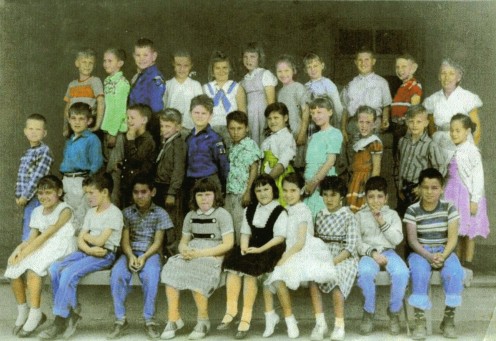
My fall from grace came a half century ago in 1958, when fresh from the high of winning our school spelling bee -- I was chosen to write and read a Thanksgiving essay at our school holiday festivities. In a household consisting of five generations, these two events momentarily lifted my familial status to that of a "princess who could do no wrong."
When you grow up in a crowd, that is an enviable position. However, my destiny on that pedestal was quite a shocking tumble, and involved a lot of fire and smoke.
While my grandmother and Grandmere concentrated on making my Indian maiden costume and my brothers turkey costume -- my mother worked on teaching my younger brother how to say the names of the ships who brought the Pilgrims. Even my Pepere Vernon was involved, as he spent hours teaching us both how to properly make a real turkey call.
Homework was done at the kitchen table. My first inkling that I was teeter tottering on the brink of destruction, should have been apparent when my Grandpere's blue eyes radiated a glow like a newly lit pilot light, when I told him of the topic -- The First Thanksgiving.
Huntington Beach, California
Thanksgiving - St. Augustine, Florida - September 8, 1565
It's a matter of recorded historical fact that six hundred Spanish settlers in St. Augustine, Florida attended a Mass of Thanksgiving. Their feast was to celebrate and give thanks for their safe delivery to the New World.
In writing the history books from a strictly English speaking perspective, one argument is -- that this didn't count as the "first Thanksgiving," as La Florida wasn't part of the original thirteen colonies.
Of course, at the time of the Pilgrims, the counter argument is that there was no concept of the original thirteen colonies anyway.
Thanksgiving - San Elizario, Texas - April 30, 1598 (El Paso)
Thirty-three years later, another first Thanksgiving, was Mass of Thanksgiving ordered by Don Juan de Oñateto commemorate the colonists he led safely to a location near El Paso, Texas (San Elizario).
At his Thanksgiving dinner, there were hundred of colonists, soldiers, priests, families, Franciscan monks, native Indians, and even Africans. They weren't reduced to feasting on "donations" from local tribes -- along with them they brought pigs, sheep, goats, and cattle, along with wheat and corn.
Fact vs. Fiction of the First Thanksgiving
Today, most adults already know that much of what American children are taught about the first Thanksgiving had a back-story, and that it is rooted in more fictional confusion than fact.
My guess is that we've lied about the Pilgrims and their first Thanksgiving in 1621 for so long, and are so attached to the holiday commercialism of it -- that it's hopeless to think that anything is going to change in terms of what's taught. Besides, most of us look forward to this break from work and excuse to get together with family and friends.
However, in 1958, my Grandpere, still firmly believed in his God given mission to correct the uncorrectable, when it came to an American history, that was taught strictly from an English speaking perspective. Our ancestry included both Cajun and native indigenous people. The idea that we were being taught that this country was first settled by the Pilgrims, after 70,000 years of Indian settlement -- was extremely offensive to him -- one he referred to in Cadien, as the "original myth" on his better days. Other days, it's probably best not to translate from Cajun French, his thoughts on "other people's history."
Only eight years old at the time, I was caught unaware of how much trouble "truth in history" can get you into. With the intensity of a lightening bolt, seemingly coming from nowhere, he forcefully put down a copy of Pratt's America's Story for America's Children for my inspection. The book had been my great Uncle Claude's grade school primer.
Grandpere's distrust of an Anglo versions of history was rooted in that book, the day his son first read it out loud in the early 1900s:
"But we are glad to know that the English were not heartless. They gave the Acadians every chance possible, and that, at least, when the time came, that the Acadians could stay no longer -- they were dealt with as fairly as it was possible in a time of sorrow and pitiful woe. . . . "
Apparently, his shock of that false tale of Acadian/Cajun expulsion at the hands of the British historical events, had been a festering ire about romanticized versions of "other peoples" realities for over fifty years by 1958.
Grandpere, born in 1863, had attended a Louisiana Catholic parish school, under the direct tutelage of a charismatic and exceptionally well-educated priest. He held teachers and teaching in high regard. However, the idea that other nationalities had permanent settlements in this country first, and weren't included in our history textbooks -- was an outrage. The priest had done is job well, as Grandpere was a "critical thinker" in a time before the term was coined.
The whole myth of the "first" Thanksgiving was about to be erased from my learning experience in a big way, as he set about to teach me everything he knew that was false about the story. I was instructed to make sure that my First Thanksgiving speech included all people. Considering that many of my classmates had already commented on the playground that "Thanksgiving isn't our holiday," his directive appeared reasonable.
Moreover, even in 1958, the playground in Southern California was filled with taunts about "how someday we'll get our land back" by my fellow Hispanic and native peoples students, whose predominantly Spanish speaking relatives lived on both sides of the border. Sensitive to this, it inspired me to take all of Grandpere's Thanksgiving lectures seriously, as I set about writing my essay.
Thanksgiving 1598 El Paso, Texas
Thanksgiving - Port Royal, Acadia - 1605 - Acadian L'Ordre du Bon Temp
The early Acadian and French settlers in Port Royal, held their first Thanksgiving in a unique round of rotating feasts, that were well documented in the journals of both Champlain and Mar Lescarbot. At one of these Thanksgiving feasts, one of the first plays in the new world was performed for the guests entertainment.
Thanksgiving - Colony of Virginia - December 4, 1619 (Berkeley Hundred)
In the Colony of Virginia, the very day they arrived from their long journey at sea, they held a Day of Thanksgiving. Still, they didn't make it into the classroom history textbooks any more than the Spaniards did.
Shot In the Heart Like An Escaping Turkey
We arrived early the night of the school Thanksgiving celebration. Lacking a school auditorium, our large classroom had been converted into a stage area in the front. While my teacher was outside talking to parents and lining up some of the smaller children who would also be participating -- I took it upon myself to rearrange the front of the room where the podium had been placed. Enlisting the help of two of the biggest boys in my class, we shoved the teachers desk back further in the corner.
After introductions, a small skit, and poetry recitals by younger classmates, it was my turn to bask in the adoring approval of my many fans (my very large family) in front of the whole assembly. With great nervousness, I began reading my proudly penned essay, almost in a whisper. Of course, the teacher stepped in and suggested to me that I speak up louder, so everyone could hear me. I began again, almost shouting this time:
"Tomorrow when some of you are having a Happy Thanksgiving feast, our family will be eating turkey, but not made the same way. We will be happy we are together, but we will be saying, 'No Thanks Thanksgiving.'"
Some of the adults who weren't related to me, were looking at each other quizzically, as if they hadn't heard me. So in my best effort to be heard over the puzzled silence, I continued:
"We don't celebrate an English speaking holiday, because it's rude to our Indian ancestors who had their land stolen from them, or our Acadian ancestors who were murdered, robbed, and sent into exile by the British. . . . "
The next thing I knew, I was being pulled aside by my teacher in a very harsh manner, as she interjected to the audience, "I'm sorry, this school program is running late, and we'll have to move on to the play the 4th graders have been working on."
Just as she snatched my essay from the podium, a scream was heard from the back of the room, "Fire! Fire!" The desk that I had directed to be moved back earlier, had been resting against the room furnace, and had burst into flames. This of course, was the end of my First Thanksgiving speech.
You could say my essay went down in flames. I was lucky I was only knocked off the family pedestal by proud parents, who had to pay for the damage to the desk, and had a lot of explaining to do.
Later that night, I ended up in a lowly dejected spot at the kitchen table -- right next to my Grandpere. I wasn't allowed to write any more essays without my father seeing the results first. Grandpere wasn't in charge of history lessons anymore, without discussing the contents of his lesson plan. This of course, prompted a lively discussion about how Grandpere wouldn't expect my father to "understand" since he was a red-headed Irishman. LOL
They Called Themselves “Saints”
It would be almost one hundred years later before it was popular to refer to them as Pilgrims. Their Thanksgiving celebration was referred to as Forefather's Day. By 1820, even Daniel Webster referred to them as the "Pilgrims." So who were they?
Most Americans have been led to believe that the Pilgrims were only a bunch of devout English, in pursuit of religious freedoms. Some among them were along, solely in pursuit of that other American god, "wealth."
Official Thanksgiving
The holiday we know today as Thanksgiving, wouldn't really exist if it weren't for the efforts of Sarah Josepha Hale (editor of Godey's Lady Book, a fashionable ladies magazine).
She spent years lobbying congress, writing letters to five different presidents, and writing editorials to get a national Day of Thanks made official. Finally, in 1863, Abraham Lincoln decided this was an opportunity to unite people in a common holiday and declared Thanksgiving official.
Gumbo The Real Thanksgiving
On the Thanksgiving Table of Syncretism
In the half century since my flaming turkey of an essay, I've had a lot of time to think about how I really stand on the subject of celebrating this holiday. Like my Grandpere, it hasn't set well with me that my own children and grandchildren are still given textbooks that haven't changed the Thanksgiving myth surrounding the Pilgrims to a more encompassing and realistic viewpoint.
Children today, more than ever, come to the classroom with multicultural challenges and differences. Respecting, promoting, and honoring "all cultures" should mean that we move Thanksgiving celebrations, back to what they originally were -- Fall Festivals and celebrations of all that is good, and right in our lives.
Let's just leave the Pilgrims, as simply a small part of the inspiration for the holiday -- unless we are willing to call the Indians involved by their real names -- the Wampanoag; concede that other peoples were already here on the shores of this land; and admit to the possibility that someone else might have also "discovered" and "settled" here successfully. It just might be more respectful to ourselves, in our richly diverse population, to celebrate a Thanksgiving that is laying on the table of syncretism.
While syncretism wasn't a word my Grandpere would have used, I'd like to think it's one word, he would have savored learning and pondering upon. One definition of "syncretism" is whenever two or more cultures come together and create something new. An example of this would be:
- When Europeans merged Arab culture ideas about navigation, that made New World explorations possible
However, another interpretation of this word, is when it is used to reconcile or merge different or differing values, customs, or peoples -- in common thought, such as in beliefs, lifestyles, or religion. Isn't that what being an American and celebrating an American holiday should be all about?
If You'd Like To Know More!
- History of Thanksgiving Around the World
Thanksgiving is a cherished tradition in the United States, but there is more to this holiday than just turkey, mashed potatoes and pumpkin pie. For thousands of years many cultures have celebrated similar... - Leftover Turkey Recipes - Recipes for Thanksgiving Turkey Leftovers
Leftover turkey recipes include casseroles, soup, and more. Recipes for Thanksgiving turkey leftovers - turkey soup, turkey casseroles, and others. - Thanksgiving Coloring Pages of Native Americans
At Thanksgiving, let's present additional high quality coloring pages for the kids that picture more about real-life American History than they may have been taught in school. We know that there were no such things as ... - Thanksgiving Leftovers - Allrecipes
When you tire of turkey sandwiches, try out these recipes. - The origins and History of Thanksgiving
Thanksgiving Day was first celebrated by the early colonists of New England, though it has some ties with various harvest festivals or feasts throughout the world. The first American Thanksgiving was in... - Traditional Thanksgiving Food
Traditional Thanksgiving Food For Everyone. Read about Traditional Thanksgiving food being prepared all across the country. If you want a real meal you have got to try some of these traditional... - Thanksgiving Traditions
Thanksgiving dinners are like family reunions, here's what some of our readers did to keep their families entertained and make their holidays more memorabl... - Thanksgiving Traditions and History | Celebrations.com
From eating turkey to the Macy’s Thanksgiving Day Parade in New York City, Thanksgiving is noted for so many traditions! Whether your looking for a history on traditions your family already has or looking for new ways to commemorate the holiday. - Viewing Plymouth Rock Objectively
You Be The Turkey!
No Thanks Thanksgiving in the News
- Snowbird Christmas: Holidays In FloridaCBS News13 hours ago
Snowbird Christmas: Holidays In Florida From Orlando To St. Augustine
- Seeing family for the holidays? Scientists discover how the stress might kill youEurekAlert!16 hours ago
( Federation of American Societies for Experimental Biology ) If you ever thought the stress of seeing your extended family over the holidays was slowly killing you -- bad news: a new research report in the December 2009 print issue of the Journal of Leukocyte Biology shows that you might be right.
- Police Act to Cut Accident Risk During Eid HolidaysKhaleej Times12 hours ago
SHARJAH — During the Eid Al Adha holidays, more than 150 minor and moderate traffic accidents were reported in the emirate of Sharjah, resulting in one death while several people sustained minor injuries.
PrintShare it! — Rate it: up down flag this hub
Comments
Hilarious - and really sad that the school was so blinkered - the fire was a nice touch!
Jerilee, great hub! What a trailblazing little orator you were!
Of course, anytime any part of the world is "discovered", it turns out that someone was already living there. How this is taught in the schools is mostly a question of perspective, rather than outright falsification of facts. Even the Anglo-centered way in which the history of the U.S. was once taught admitted that native Americans were here first, and that the French and Spanish preceded the English in many parts of the new world. The real question was always, which presence really "counted".
Thanks Patty for your comments! A little premature knowledge can be a dangerous thing was more my thought as a girl.
Lissie -- Sadly, most of our schools, still don't get a lot of things.
Aya -- Trailblazing orally and by the pen (actually keyboard) has set me on fire more than once or at least running down some new path. The truth is "all presences count" and I guess we forget that a lot.
Thanks for your hub Jerilee.
As a HS teacher in NYC, along with my colleagues we have had to undo so much incorrect history/damage. Yet, as I travel the world and live abroad - they all know the true version of our history. In this global society, it is inexcusable that we should remain so dumb!
Thanks a million!
Carolyn
Thanks BkCreative! There is no excuse for a lot of our failures in not teaching our children what we should. Sadly, I don't think any amount of money is going to solve the general ignorance so widespread in America. I think high school teachers today are among the bravest of all souls.
Excellent hub Jerilee! The more I read by you, the more I adore your honesty and writing talent :)
I loved this Hub Jerilee, well written, entertaining and honest. Who could ask for more?
I have always had low thoughts about the Thanksgiving holiday as it is celebrated: all about prescribed specialty foods (green bean things, sweet-potato pie things, pumpkin pies and pecan pie, mashed potatoes (Yankees), cornbread stuffing (Southerners), cranberry sauce (in the mold of the can). The historic meaning is lost in the lust for conformist foods.
In none of this "Thanksgiving" food obsession is there any sort of remembrance of our forefathers and foremothers, who are irrelevant to the feast; the holiday is all pretty stupid, and let's face it, it's food-ad driven at the least :-)
I still like to stand next to the piano on Thanksgiving Day and put in my voice for "We gather together to ask the Lord's Blessing; who chastens and hastens his will to make known . . ."
I'm grateful for our freedom, our country, and our heritage. We are truly blessed with the hope that we can remain free and self-determined (the future president notwithstanding).
--Ann
That was a really honest hub. My father was from the south. He had a bit of Indian blood in him and we always knew, as far back as I can remember that when the Brits came here, the slaughter began; even against tribes who were peaceful. Then the US stole the Indian lands and gave them crappy land on desert reservations.
It's amazing the crap that is taught in schools. I went to Catholic school. We were told that the "Great Crusades" happened to bring the one true God to the pagans. What about the "pagans" who were quite happy as they were? They were slaughtered in the name of God. Of course, the textbooks didn't reflect THAT truth.
When we celebrate Thanksgiving, we thank God for all of the good things and people that we have in our lives. The Pilgrims aren's so much in the picture. I do like to think that the native Americans DID help the stupid settlers from starving to death. I can't imagine a bunch of stuffy "civilized Europeans" ever sitting down to dinner with the "lowly natives." It probably never happened. But if it did, I'll bet the indians were forced to sit on the ground, not to join the settlers at the table!
Excellent! A fun story and a lot of good points! :) Suzanne
I was giggling out loud at your flaming Thanksgiving essay encouraged by your grandpere and the couch; can almost visualize the shocked expressions of the parents in the audience; you sure gave them a memory and lesson that many probably didn't forget. LOL!
This was very interesting and eye-opening. -- I had no idea these chapters in our history books existed; thus affirming your eloquent point with this hub!
Very well done! Further expansion on this topic would be excellent book material.
Thumbs way up!
One written page from 1621 exists --"saints" they called themselves (writers called them pilgrims) invited 1 Native American, Massasoit, who brought 90 people from his nation and most of the food with him. His people grew 20 acres of corn the first settlement year when the saints' crops failed and the Indigenous people shared food/agricultural instruction. On the feast day in question, most of the saints drank until drunk and waved guns and the Native Americans must have thought them very ill.
Misha and Mistyhorizon2003 -- Thanks for the compliments!
Thanks Ann Wright! -- Good points about conformist foods! I hadn't given that much thought as food around here for this feast is anything but conformist. I think that has a lot to do with the fact that we've got one German, three mostly Cajuns, one Spaniard, two Panamanians , one Thai, one Korean, and one Chinese guests -- all sitting at the table this year. Accordingly, our menu will be eclectic to say the least.
Thanks Madison Parker! -- Since about 1970, some tribes return to Plymouth to try to get the true story out about the real history. For many, Thanksgiving is a native national day of "mourning.
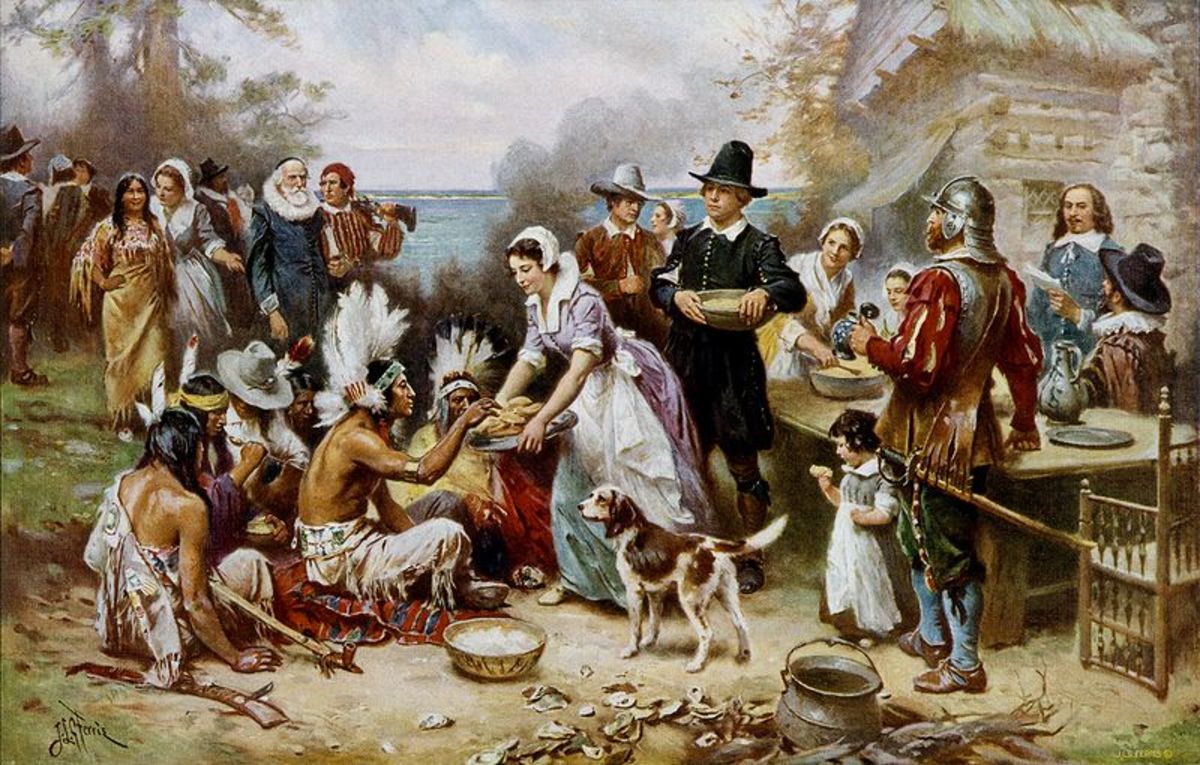
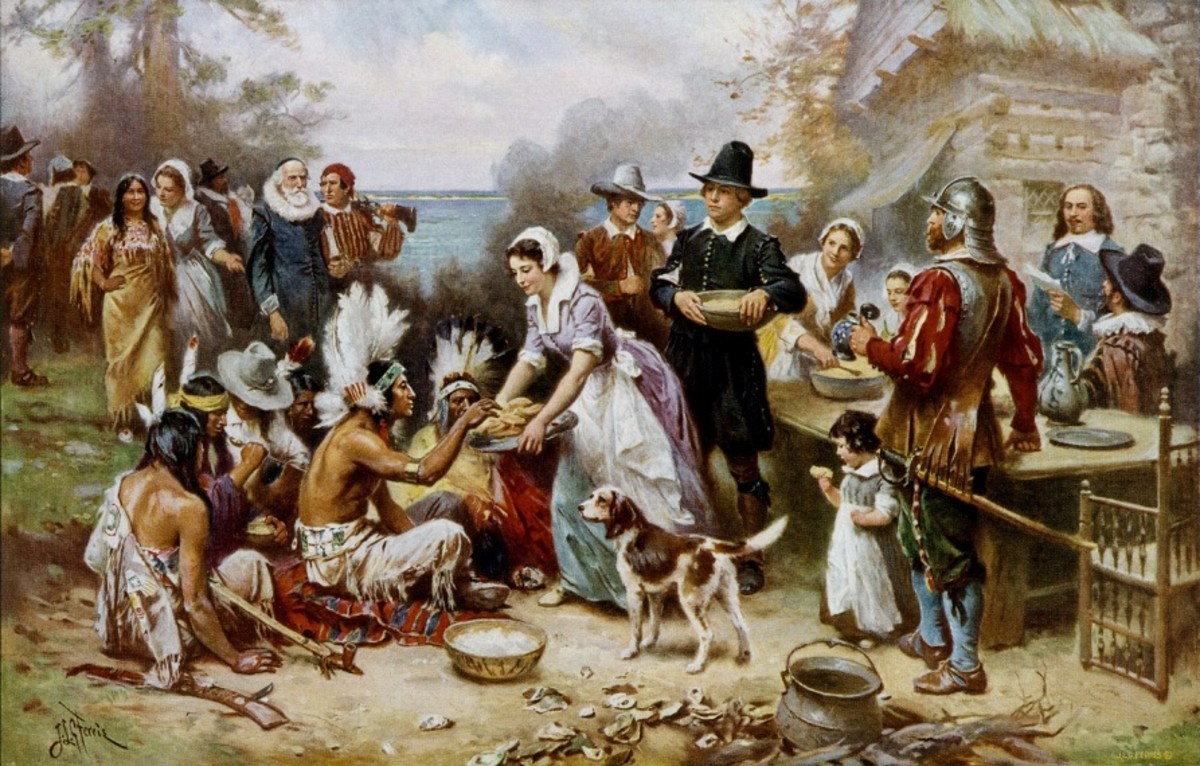
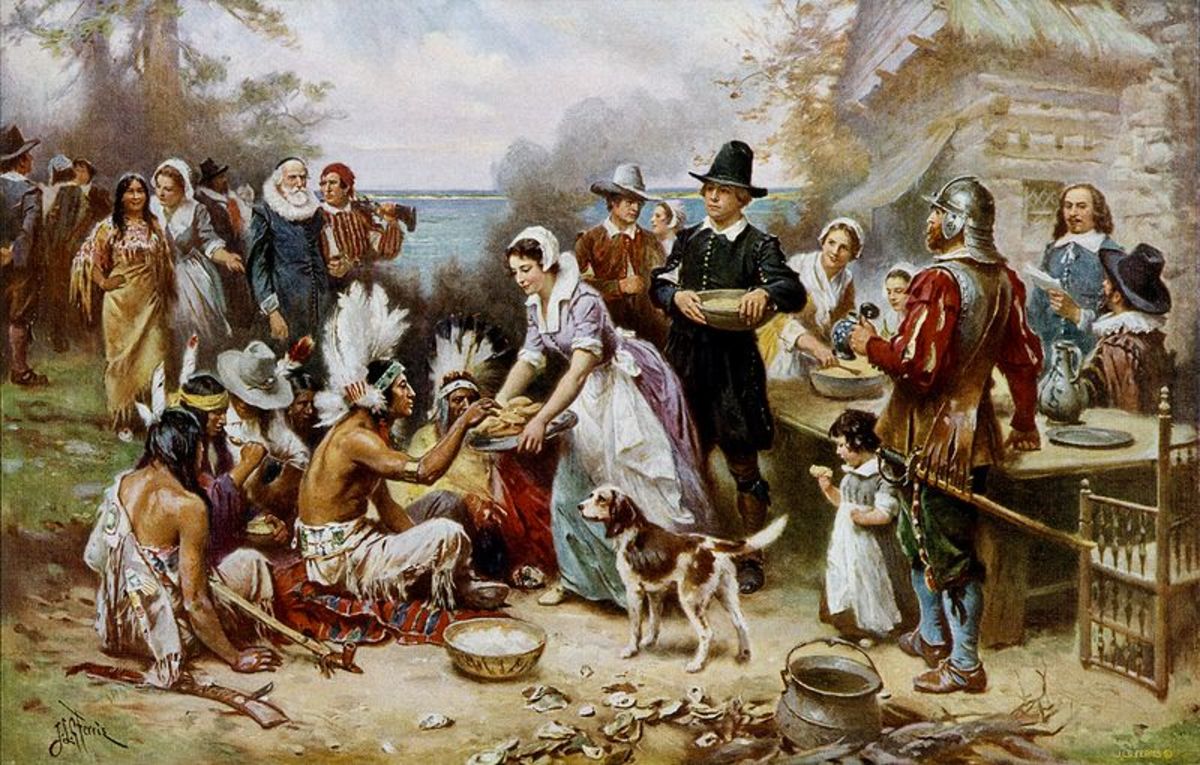
The Pilgrims and natives did not sit down to the same table in the manner depicted in our fanciful history books, pictures, and paintings.
Thanks justmesuzanne and VioletSun -- for stopping by and taking the time to comment!
Thanks Rob Jundt -- The Thanksgiving myths are just the tip of the history built on sand in this country. There have been a number of books written on the subject. Some worth reading are: Mitchel Cohen's "Why I Hate Thanksgiving" (2003); Guenter Lewy's "Were American Indians the Victims of Genocide?"; and "Everything You've Been Taught Is Wrong," by James W. Loewen.
It’s said that the manner in which we celebrate “Thanksgiving” today, is but a bitter taste of five hundred years in betrayal of trust, in exchange for the friendship that was offered.
Guenter Lewy's "Were American Indians the Victims of Genocide?"
Thanks Patty! -- This might be the right time of the year to see a factual and expanded hub on the Squanto myths too.
Seems to me I’ve read that the Wampanoag have a copy of a colonial governor’s Thanksgiving proclamation -- talking about how the militia had come back from murdering an entire village and how he was declaring it a holiday and feast in honor of the massacre. Supposedly, he encouraged other settlements to do the same after the crops were in for the year.
Amazing, Jerilee! - I did not know that part of it, but read how Myles Standish beheaded a Wampanoag or related Chief after pretending to be a trader to gain his acceptance. Then put the head on a pike at the entrance to the settlement. I am going to dig up more about Squanto.
Thanks for the additional information.
No problem Patty! Lagniappe (something extra) is my specialty.
Wonderful hub! It's always sad when our innocence falls from our eyes and we start to see things differently.
Thanks RGraf! Very profound saying.
Interesting, entertaining, funny. Great Hub!!
Great article here. Thank you for disclosing the truth about this holiday. C.S.
Thanks Great Caruso and C.S. Alexis!
Great hub! As a descendant of Vikings (a Scandinavian-American), I have always seen Thanksgiving as a sham, too. In my family, we celebrate it as a fall festival of thanks and rememberance for all that God has given us in the past year, not as an historical festival.
Thnks KT pdx! Moving away from an historical festival or feast would make sense.
It really is amazing what we have been force fed by our own teachers. Only later in life did I learn some of the truths. This article continues the learning process. Kudos for such an informative article!
Thanks stanleyreese!
Jerilee - I put a link to this Hub of yours on my history/coloring pages Hub for Native Americans & thanksgiving today. I hope everyone reads your Hub and gets the information. Thumbs Up!
Patty
Thank you Patty, I am honored!
Great hub Jerilee!
For those out there wanting to know more, I found another great read on the NY Times web-site entitled "They Held Their Noses and Ate" by James E. McWilliams.He is a professor of history at Texas State University at San Marcos.
I would have loved to have been there to see you deliver your speech! I can see it as you write. You are SOME storyteller...always leave me wanting to come back for more :)
Wonderful hub, Jerrilee. Entertaining and informative!
Thanks AppGal330!
Thanks Cindi LaMar!
Check Out The Latest!
- What Happens To All The Gold
At least once a day, my husband feels the need to inform me of the price of gold. It's part of his daily witnessing and running commentary on how much this world is going to hell-in-a-hand basket, with the... - 9 hours ago
- Let Us Show Our Kindness Now
In today's times of troubles, it is easy to forget that each and everyone of us has the capacity to be pilgrims of mercy and make a difference in the world around in both big and small ways. In thinking about... - 27 hours ago
- Never Mow Your Yard Again
Today, just about everyone is looking for ways to reduce their expenses, yet almost four hundred years ago, Francis Bacon wrote in his An Essay of Gardens (1625) one answer to a substantial savings to most... - 2 days ago
- Sir Humphry Davy's Laughter
One of the great men of science of the eighteenth century was Humphry Davy (1778-1829). By the time he was twenty, Davy had become a laboratory assistant at Dr. Beddoes' Pneumatic Institution, a sort of... - 4 days ago
- To Make A Noise - The Story of Bells
The word bell comes from an Anglo-Saxon word meaning "to bellow" or to "make a noise." Bells in war and peace, fire and flood, have long been useful because their voices could be heard far and wide.... - 5 days ago


Patty Inglish, MS says:
13 months ago
Lovely Hub, Jerilee, bringing more depth to our Indigenous ancestors' histories for truth today. I did not learn of my Native heritage until my late 20s, although I suspected. It had been hidden from me -- I totally side with your grandfather; If I'd known the truth at age 8, I'd have wrtten a blast-furnace of an essay myself.
On a lighter note - Tomahawks Up!