- HubPages»
- Travel and Places»
- Visiting North America»
- United States»
- New York
Old Fort Niagara – A Historic Tourist Attraction

A Great Place to Visit
On the south shore of the Niagara River, right at the point where the river flows into Lake Ontario, sits Old Fort Niagara.
Strategically placed to defend the entry into the interior of the North American Continent, the fort for years played a key role in maintaining France's control over her New World empire and her near-monopoly on the rich fur trade.
Today, the fort is a historic site and major tourist attraction.
However, during its 284 year history as an active military post it hosted the armies of three nations - France, Great Britain and the U.S. - and witnessed wars from the early contests between France and the Iroquois Nation down to the Cold War.
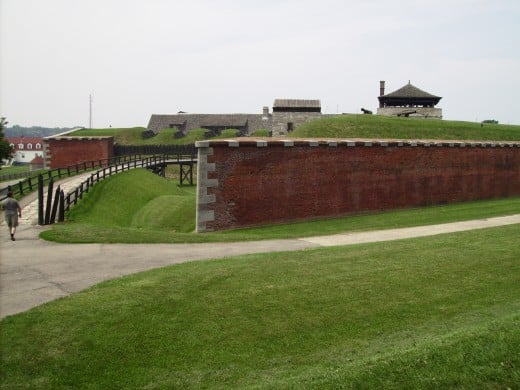
While the last real combat action involving the fort occurred during the War of 1812, it has served as a defense against feared British attacks from Canada throughout the 19th century. It also served as a supply and training base for the U.S. Army as recently as the Cold War era.
Also, during one of its periods of relative abandonment by the U.S. Army following the Civil War, it was used by the Irish American Fenians for their 1866 invasion of Canada.
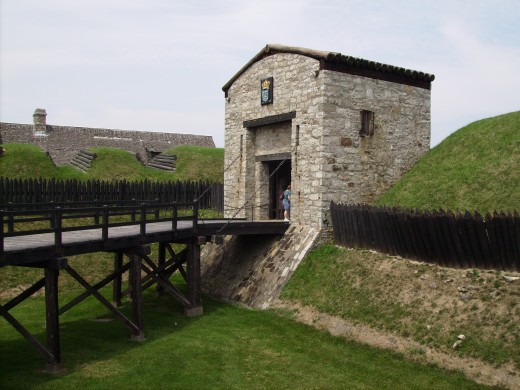
The Origins of the Fort
The famous explorer, Rene-Robert Cavelier, Sieur de La Salle, started the original fortification on the site in 1679 and named it Fort Conti. However, La Salle's mission was to push on and explore the interior of the continent, and the fort was simply a supply depot for the trade with the Indians. While La Salle went on to discover the Mississippi River and follow it down to its mouth in the Gulf of Mexico, Fort Conti was overrun by the Iroquois and destroyed.
A few years later in 1687 the Governor-General of New France, Jacques Rene de Bresay, marquis de Denonville, as part of his punitive campaign against the Iroquois Nation arrived on the site and constructed a new fort which he named after himself. Despite a successful campaign against the Iroquois that summer, the marquis de Denonville failed to crush the Iroquois and, when they rose up against the French the following year, Fort Denonville was among the French outposts that were destroyed.
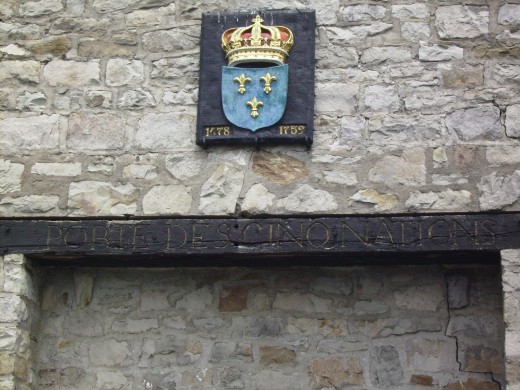
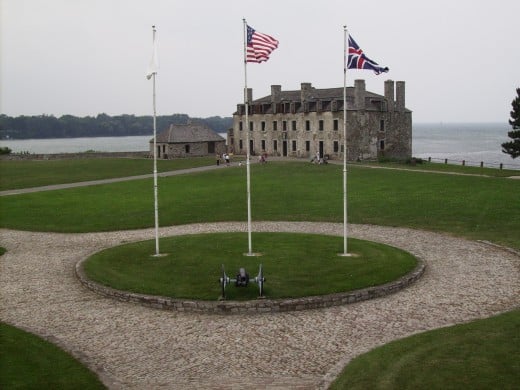
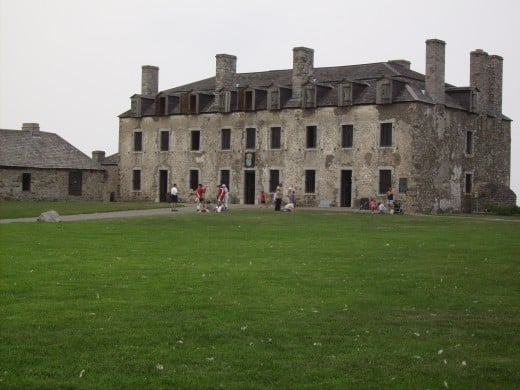
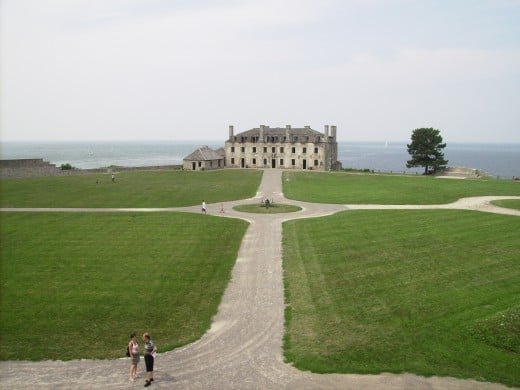
By 1725 relations between the French and Iroquois had improved to the point where the French were given permission to build a new stone fort on the site. In 1726 a large stone structure, now known as the "French Castle" was built. Other fortifications and out buildings were also constructed but the focal point of the fort was the French Castle.
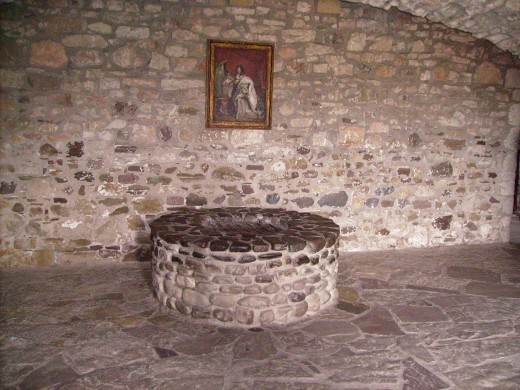
Inside the castle is a well which was constructed for use in the event of a siege. While the well probably came in handy as a source of water for the troops during the many battles that took place at the fort, it best known for its role in the legend of the headless ghost of Ft. Niagara. It seems that during the period when the fort was under French control, two young officers from the fort fell in love with a young indian maiden living in a village near the fort. The rivalry betwee the two eventually eventually led to a sword fight that ended in the death and decapitation of the loser. According to legend, the head was thrown into the river and the body dumped into the well. In the centuries that have followed many have claimed to have seen the headless body of the officer who lost the fight wandering around the fort at night looking for his missing head.


The French and Indian War
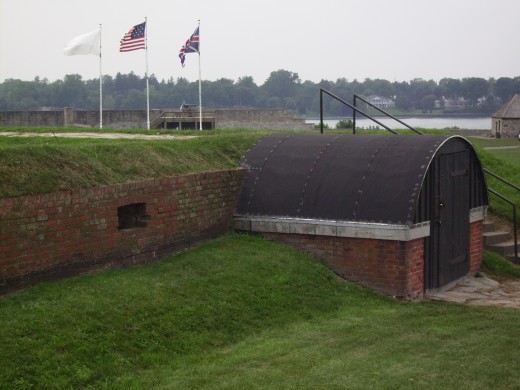
In early colonial times the Great Lakes provided the easiest and fastest route to the interior of the North American continent and, situated at the mouth of the Niagara River, Old Fort Niagara controlled a critical choke point along this route.
Any boats entering into the Niagara River from Lake Ontario had to pass under the guns of Ft. Niagara and this meant that whoever controlled the fort also controlled access to the interior of the continent.
During the first half of the eighteenth century, the British controlled the strip of land along the Atlantic coast from present day Maine to Georgia.
While the French controlled Canada and the lands on both sides of the St. Lawrence River and Great Lakes as well as the Mississippi Valley from the Great Lakes to New Orleans.
It is no wonder that, during the colonial wars, Britain was eager to capture Ft. Niagara!
In 1759 during the last of the colonial wars, known as the French and Indian War (also known in Europe as the Seven Years War) a British force, under the command of General Prideaux, laid siege to the fort for 19 days until it fell on July 25, 1759.
Unfortunately, General Prideaux was killed a few days before the surrender when he accidentally stepped in front of a mortar that was being test fired and had his head blown off.
Sir William Johnson, commander of the British Colonial Militia assumed command and when the French surrendered, he accepted the sword of surrender from Captain Pierre Pouchot, the French commander of the fort.
When the war ended Fort Niagara, along with French controlled Canada and French lands between Appalachian Mountains and the Mississippi River, came under British rule.
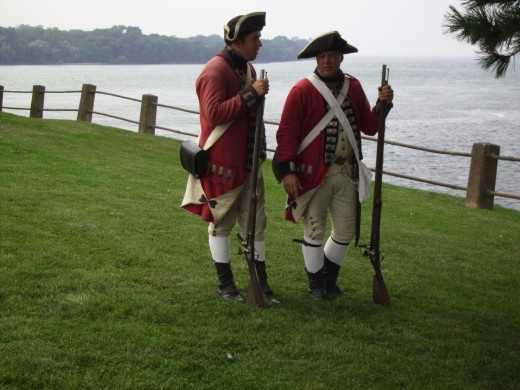
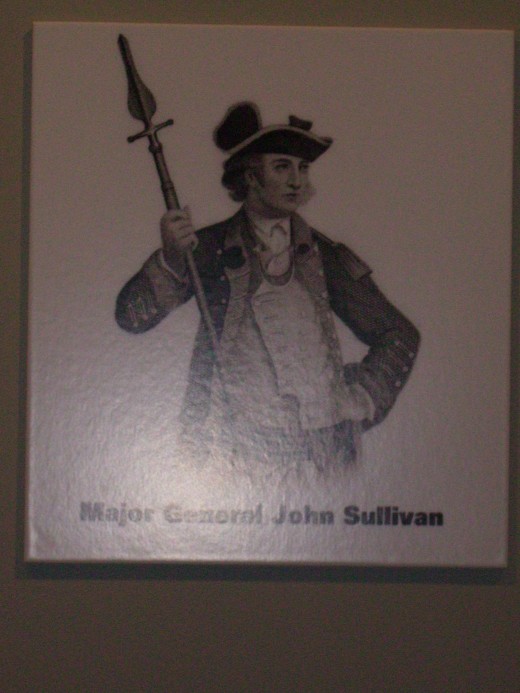
Ft. Niagara and the American Revolution
During the American Revolution, Fort Niagara remained in British hands and was used as a base of operations by the Tory militia group, known as Butler's Rangers, which attacked frontier settlements throughout the war.
Following the war, the Treaty of Paris awarded the lands south of the Great Lakes to the United States but Fort Niagara and other forts along the northern border of the United States remained in British hands until after the Jay Treaty (so called because it had been negotiated by Supreme Court Chief Justice John Jay) of 1794.
While the treaty called for the turning over of the forts during 1795, the actual transfer of the fort to the American Army did not take place until 1796.
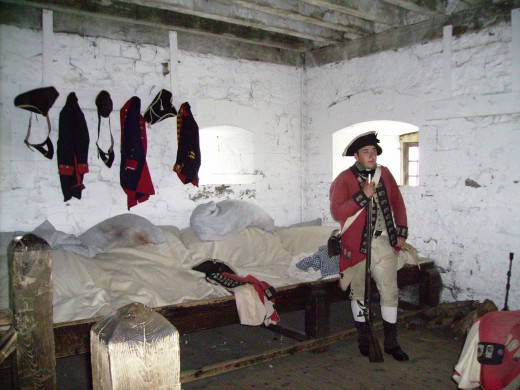
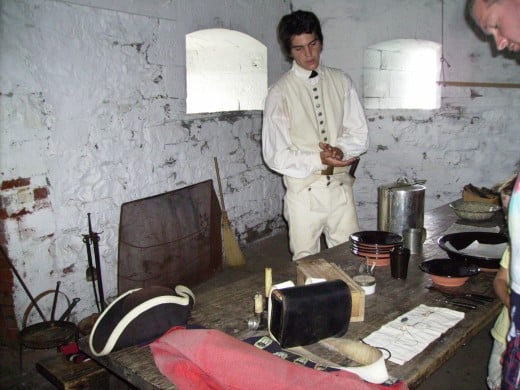

Role of Ft. Niagara in the War of 1812
After turning Fort Niagara over to the Americans, the British built Fort George on the Canadian side of the Niagara River opposite Ft. Niagara. The two forts were within canon range of each other and, with the start of the War of 1812, canon balls began flying back and forth across the river.
In the fall of 1813, American forces crossed the river and invaded Canada but were defeated at the Battle of Queenston Heights and forced to retreat back to the American side of the River.
In the spring of 1813, American forces attacked Canada and, on April 27th burned the government buildings in York (present day Toronto) the capital of Upper Canada (present day Ontario).
The American forces then continued westward and a month later, on May 27th, attacked and captured Ft. George.
However, the victory was short lived as the British soon counter attacked and pushed the Americans back to the American side of the river.
In the fall of 1813 the British forces aided, by Canadian militia, crossed the river and captured Ft. Niagara. They then went on to attack and burn Buffalo and other cities in the area in retaliation for the American burning of Canadian towns.
In the spring of 1814 British forces heavily augmented by Canadian militia attacked Washington, D.C. and burned the White House and Capitol in retaliation for the earlier burning of York (Toronto) which was the capitol of Upper Canada.
The Treaty of Ghent, which was signed on Christmas Eve 1814, ended the war and called for both sides to restore the borders that existed before the war.
This meant that Ft. Niagara would be returned to American hands. On May 22, 1815 the Fort was once again turned over to American control by the British.
From the 19th Century to the Cold War
While the Fort has not been under fire since the War of 1812 it remained a military installation until 1963.
During the 19th Century the fort assumed various support roles for the Army during periods of conflict in other areas of the continent or world and, following the conflict the fort found itself all but abandoned by the Army during the periods of peace that followed.
There were periods when the fort was basically in the hands of single caretaker. During World Wars I, II and the Cold War the fort expanded beyond its walls as a new Army post grew up around it.
The old fort itself was repaired and turned into a historic tourist site with military activity confined to the new post outside its walls. It was during this period when it became necessary to refer to the historic colonial fort as Old Fort Niagara to differentiate it from Fort Niagara which was an active Army post.

Fort Niagara State Historic Park
By 1963 the Army decided it no longer needed any part of Fort Niagara and the entire area, comprising both the Old and New Fort Niagara, now sits inside a New York State Historic Park.
The old fort, Old Fort Niagara, is operated as a historic tourist attraction by the not for profit Old Fort Niagara Association, Inc. and is supported by admission fees ($10 adults, $6 Youth ages 6 - 12 and under 6 years free) and donations.
Visitors to the park itself pay only a $3 per car parking fee. Those visiting the park can walk around the barracks and other buildings belonging to the more recent Army post but the buildings themselves are not open to the public.
The Officer's Club of the new fort is in the process of being converted into a museum and is partially open to the public on Sunday afternoons during July and August. It also appears to be used for occasional social functions.
Anyone, young or old, who travels to Niagara Falls to view that natural wonder would do well to drive up the road and spend a couple of hours strolling through Old Fort Niagara basking in its 300+ year history.

Old Ft. Niagara located on the Niagara River next to Youngstown, NY
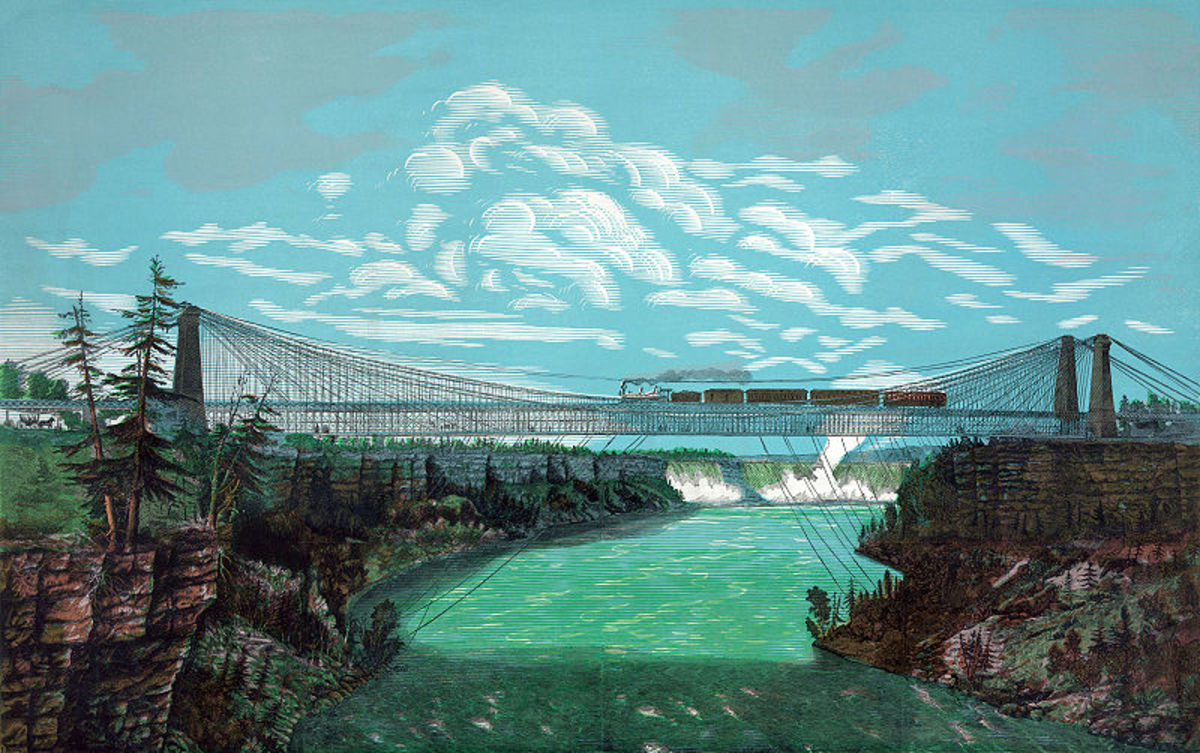
Rainbow Bridge connecting Niagara Falls, NY with Niagara Falls, Ontario
© 2007 Chuck Nugent