Pain Management Procedures - Intrathecal Pump Implant and Radiofrequency

Pain Management Procedure - Intrathecal Pump Implant
This pain management procedure is performed for relief of chronic pain. The intrathecal pump is used for patients for whom conservative methods of treatment have failed to help and surgery is not likely to help. The intrathecal pump system consists of three parts: The receiver, controller and external catheter. The pump sends small amounts of medicine directly to the intrathecal space around the spinal cord to prevent pain signals to reach the brain thereby reducing patient's experience of severe pain.
How an intrathecal pump implant is performed?
Local anesthetic is used to numb the skin. A catheter is inserted into the intrathecal space through a needle connected to a temporary pump. It is used for some days to verify the system. If the patient feels pain relief, a pump could be implanted permanently. Implantation is usually performed under general anesthesia. The temporary catheter is removed and a needle is inserted through the implanted device. Also, this pain pump is implanted under the skin in the abdomen and connected to the catheter. The pump receiver controls a part of medication to block pain. The pump battery usually lasts three to five years and after that new batteries could be implemented. The amount of medication is programmed with an external drive and the system could be activated or deactivated. The patient must visit the doctor regularly to fill the pump. Over some time period, it requires a catheter to be replaced with another because of damages caused due to friction. After implantation, the patient may feel discomfort at the incision site for several days.
Common side effects may be common in comparison to the injection side effects, ie allergic reaction, bleeding, or bacterial infection. Steroids side effects are eyes swelling and numbness, arm swelling, leg swelling, and face swelling and numbness. Some diabetics experience raise in their sugar level due to steroid use.
Pain Management Procedure - Intradiscal Thermal Therapy
This procedure is used to reduce back pain caused by diseased or herniated discs. It is usually provided on an outpatient basis. To relax the patient and reduce discomfort, analgetics, local anesthesia, and sedatives are used. When the disk is correct, the doctor uses a fluoroscope to check the position of the needle. After heating the wire, a needle is inserted through the damaged disc. The temperature of the heating wire is slowly increased to raise the temperature of the disc wall to repair tears in the disc wall. The needle and thread are removed and a small bandage is applied over the small wound.
Common side effects of intradiscal thermal therapy include bacterial infection, bleeding in seldom cases, and allergic reactions. Common steroid side effects include arm and leg swelling and face and eye swelling. Steroids can increase level of sugar in some diabetic patients.
The patient should tell in advance their doctors if they are pregnant or if they are using some blood thinners.
Pain Management Procedure - Radiofrequency rhizotomy
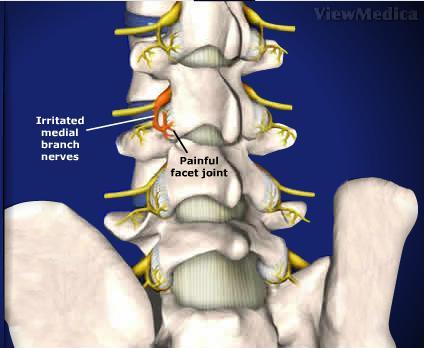
Radiofrequency rhizotomy is a pain management procedure, which is used to reduce or eliminate pain in the spine and vertebral facets. As pain signals travel through the medial nerve branches, light electric shock is used to cut the nerve that innervate painful facet joint. This short, minimally invasive procedure is performed under local anesthesia. A tube-like needle generally called a cannula is introduced with the help of appropriate fluoroscope medial nerve branch.
Pain Management Procedure - Radiofrequency Neurotomy
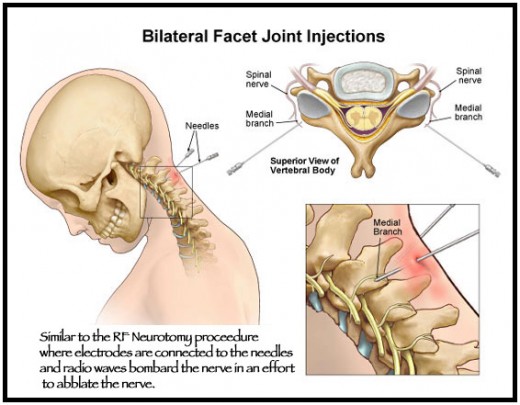
In radiofrequency neurotomy, a radiofrequency electrode is inserted through the cannula. To ensure that the electrode is correctly positioned, a small electrical signal stimulates the current site. If the stimulation causes muscle pain only without further action, then the electrode is correctly positioned. To cut the nerve with electricity is conducted through the electrode, which heats up the nerve. After it is complete, the doctor may repeat the procedure on one or more nerves. At the end of the procedure, both cannula and the electrodes are removed.
For a week after the procedure, the pain may increase, but at the end of the month, the patient will be completely pain free. The success of radiofrequency neurotomy may last longer with block of steroid injections.
Possible side effects of radiofrequency neurotomy are similar to side effects caused by steroid injections such as, the patients can experience bacterial infections and allergic reactions and sometimes in rare cases bleeding can occur.