The General Mining Law

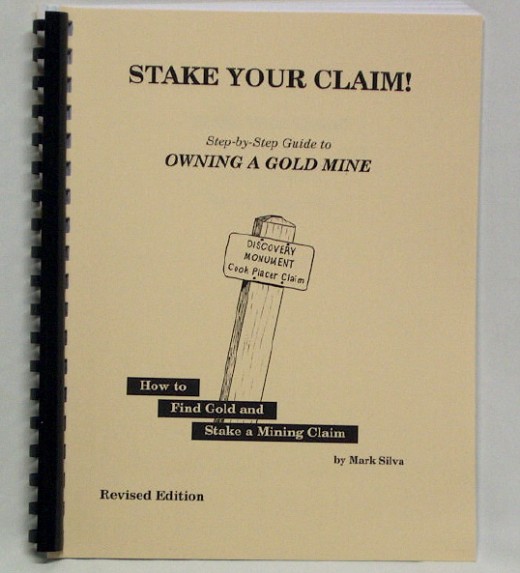
An exploration in the doctrine of Pedis Possessio using an Arizona case as the example.
In Geomet Exploration, Limited v. Lucky McUranium, (1979) 124 Ariz. 55, the Arizona Supreme Court reaffirmed the doctrine of Pedis Possessio and in the process continued a policy and practice that is both outdated and unjust. The Arizona Supreme Court’s adherence to this ancient law lacks both vision and reason and should be overruled to make mining law conform with the rules and priorities of today’s society.
Procedural History and Factual Background of the Case.
Plaintiff Lucky McUranium ("Lucky") brought suit against Defendant Geomet Exploration, Limited ("Geomet") seeking a permanent injunction, exclusive possession and damages. The case stemmed from Lucky’s detection of anomalies indicative of possible uranium deposits in federal lands using modern technology in September of 1976. By November of the same year, Lucky had drilled 10 foot holes on each of the 200 claims of land. Lucky monumented and recorded notices with the proper agencies pursuant to Arizona Mining Law. Sometime later, Geomet entered some of the areas claimed by Lucky and began drilling operations. Geomet admitted it was aware of Lucky’s claims at the time of entrance but considered them invalid because Lucky had not made a discovery and Lucky was not in actual possession of the claims Geomet now simply took as their own.
The Trial Court’s Decision
The trial court found in favor of Lucky. Even though Lucky had insufficient evidence to establish a valid discovery at that time, the trial court found that Lucky was entitled to exclusive possession and a permanent injunction against Geomet to further its mining operations on the claims it had founded. Further, the trial court found that Geomet had entered the land in bad faith because of Geomet’s knowledge of Lucky’s claims to the lands.
The Arizona Supreme Court’s Decision
The Arizona Supreme Court overruled the trial court and held in favor of Geomet. The Court stated that the issue of the case was "Should the actual occupancy requirement of Pedis Possessio be discarded in favor of constructive possession to afford a potential locator protection of contiguous, unoccupied claims as against one who enters peaceably, openly, and remains in possession searching for mineral?"
The Court defined pedis possessio as the general rule that one cannot perfect a location, under either federal or state law, without actual discovery. The Court further explained that the doctrine evolved from customs and usages of miners over the past century. The Court went on to say that regardless of compliance with statutory requirements the doctrine provides that one cannot perfect a location until there has been a discovery.
Lucky contended that the Doctrine should be relaxed in a case where, as here, the total area was reasonable in size, similar in geological formation and where an overall work program for the entire area had been developed. Essentially, Lucky argued that the doctrine should not punish a minor from not exploring the entire area when work was in process. The Court dismissed this argument and concluded that the sounder approach was to maintain the doctrine intact. The Court defended the Doctrine without addressing Lucky’s contentions. The Court rejected Lucky’s contentions for two reasons. First the Court described that the pedis possessio doctrine mandates that a diligent search actually must be ongoing for the doctrine to provide protection. The court held that to allow a large area to be constructively possessed by larger mining operations is laden with difficulties of determining how long of a time should be given to perfect discovery and how much land should be excluded from others in order to allow these operations to perfect discovery. this of course ignores the fact that the Court was taking claims away from a small operation in favor of a large mining operation.
It is here where the Court’s analysis lacks vision. It made sense a hundred years ago that actual possession was given precedence over constructive possession. When mining claims were first sought under the general mining law, there were many individual miners without the means to conduct large mining operations. To allow one miner or even one group of miners to control large tracts of land without the means to diligently perfect discovery would have been an inefficient use of the land. Further, because of the lack of recording systems and the lack of government oversight on mining claims, conflicts could arise between miners over claims if one miner is given constructive possession was allowed. The doctrine of pedis possessio was needed to keep order, stabilize the mining communities and claims on land, and to encourage these individual miners to seek discovery.
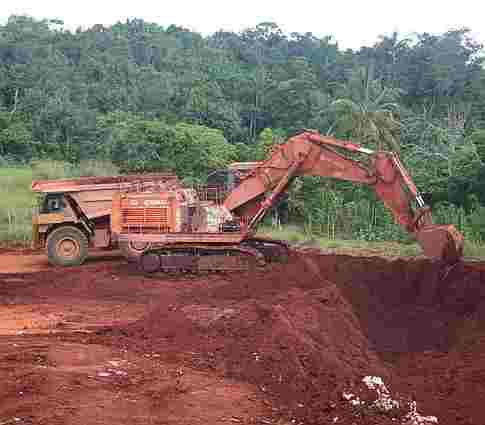
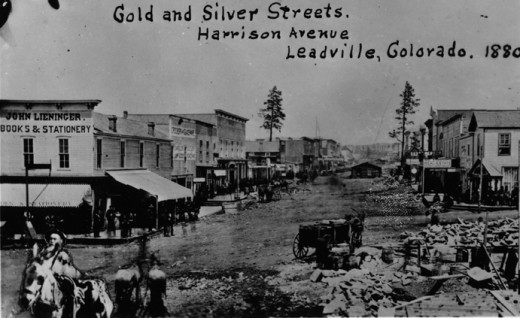
In today’s world however, with the recording systems we have and the technological advances in information, many, if not all, of these problems no longer exist. Today, miners can record mining claims to stake out where they intend to search. With the growth of government agencies in the west, governments can make these miners set out goals and deadlines for discovery and if those goals and deadlines are not met, those claims can be passed onto another miner. To simply state that it is too difficult to regulate mining claims if groups are given too much land is simply short sighted. To achieve efficiency in today’s world, the government must demand results or the claims moves onto another miner. To allow miners to decide that another miner is not being Diligent is strife with conflict and inefficiencies.
In adverse possession cases, generally the defendant must occupy the premises for a number of years before he has a right to occupy. Here, if Lucky takes a day off and Geomet enters the land is this seriously sufficient to take away the claim? This puts federal agencies in the position to face difficult questions and will only promote litigation. While this is precisely why we have agencies, it will make the claims process expensive and will only reward those large operations that have the financial means to drag matters out for years.
Here, Lucky had a plan in place for the entire area and had already been exploring the area using the latest technology. Instead of awarding a company’s diligent efforts to explore using technology, the Court holds onto a doctrine that rewards behavior from a century ago. The court also rejected Lucky’s contention that when Geomet entered upon the claims staked by Lucky, it did so in bad faith as Geomet had knowledge of Lucky’s claim and entered regardless.
The Court found that Geomet entered the property in good faith as they entered the property openly and peacefully. In short, the Court simply ignored the fact that Geomet knew about Lucky’s claims and instead of trying to buy them, stole them. It is an oddity that the Court stated the general rule that a potential locator must enter in good faith. However, the Court instead of adhering to precedents in its own Jurisdiction, the Bagg and Woosley cases, and acknowledging the rule that those cases stand for, the Court simply dismisses them as "inadvertent oversimplification of the issue of good faith" and clarify the point by changing the definition of good faith to be honesty of purpose and absence of intent to defraud. Here the Court simply lacks reason.
Geomet knew of Lucky’s claims to the property when it entered the property and began drilling operations. Geomet entered the property because Lucky had recorded notices of a possible discovery and had staked out the property to seek out a discovery. It was Lucky’s hard work, not the work of Geomet, that drew Geomet to the properties in the first place. The Court’s affirmation of this conduct does nothing but encourage similar behavior by other prospectors. It also discourages prospectors like Lucky, who use the newest technology, to take the risk to seek out new claims on federal lands because the courts through the pedis possessio doctrine do not provide real protection. Instead, any trespasser can stake a claim to the land at any time.

There is a real need for change in the mining law.
The doctrine of pedis possessio was important in 1872 when the general mining law came into effect. The doctrine was needed to encourage the exploration and discovery of minerals in the west. The doctrine was needed to encourage prospectors to only stake out claims they could diligently explore and to ensure that all prospectors and miners had access to lands for exploration. Today, the Doctrine of pedis possessio is no longer are needed to serve the purposes it had in 1872.
What the Geomet case really stands for is that the time has come for a major change in the mining laws of this country. What is needed are new laws that reflect new social priorities and the advent of technology. One proposal is instead of allowing miners decide their own claims, the government issue exploration permits to prospectors that come forward. These permits would limit the amount of land that a prospector can explore based on a proposal by the prospector of how much land can be explored and excavated in a given amount of time.
Exploration permits limited to specified acreage and time periods will give miners the protection they need to explore claims in large areas without having to risk losing claims quickly due to lack of current possession. This process would encourage prospectors to take bigger risks because they are offered more protection from trespassers like Lucky. This would also ensure that lands are not going to waste and there are reasonable time periods being place on exploration. In today’s society, laws that governed industry are almost all gone, with the exception of the mining laws. The Geomet case is a prime example of what happens when the law holds on to the past for too long.
Related
Jerome Arizona from Copper Mining to Art Colony

Congo’s Cobalt Curse and the Human Cost of Greed

Pakistan and 'Doctrine of Necessity':only Country in the World to Use This Law to Justify Military Rule

General Hospital: Lucky and Liz May Have to Get Married Before Viewers See Any Romance

How to Beat a Speeding Ticket in Washington State