- HubPages»
- Education and Science»
- Life Sciences»
- Marine Biology»
- Marine Life
Polar Bear

Scientific Name: Ursus maritimus
Polar Bear Description
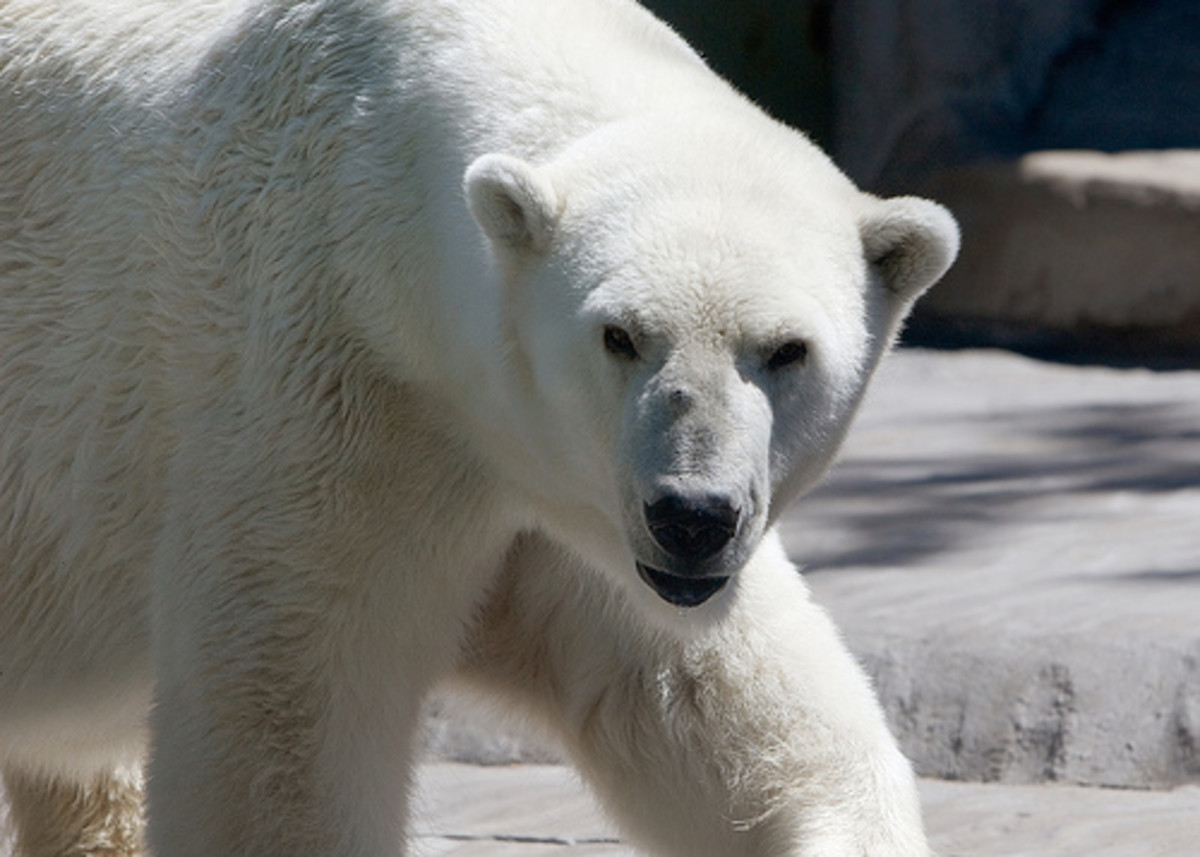
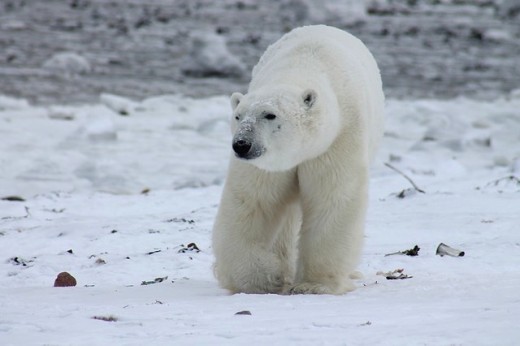
With their white and light yellow colors, there is no other bear that can be mistaken with the Polar Bear. They have long been an icon of power and strength due to their size. These very large bears usually walk on all fours but when they do stand up they can be measured close to 10 feet. They are also close to 2,000 pounds when you are considering the full grown males. The females are generally about 8 feet tall and several hundred pounds lighter.
You will notice that their bodies are designed to allow them to get around on the ice. For example they have claws that are short in spite of the fact that they are very sharp. This allows them to be able to walk on the ice without any problems. Another way that they can do so is thanks to the pads that are at the bottom of the feet. This allows them to easily grip the ice so they don’t slide around on it.
Polar Bear Facts
- Facts about Polar Bears
Polar Bear Facts and Information. Feeding, habitat, distribution, reproduction, anatomy and more. Also, the conservation efforts made to preserve Polar Bears and how humans have interacted with Polar Bears. - Arctic Facts and Information | Arctic Adventure
The Arctic is a region located at the northernmost part of the Earth. It includes the Arctic Ocean and parts of Canada, Russia, Alaska, Greenland, Norway, - Narwhal Whale - Whale Facts and Information
One type of toothed whale is the Narwhal Whale. It fits in about the mid range when it comes to sizes of whales.
Polar Bear Anatomy
The body of a Polar Bear allows them to survive both on land and in the water. Regardless of which place they happen to be, they are in very cold conditions. They have thick layers of fur that are waterproof to help prevent their body temperature from dropping. They also have lots of fat on the body called blubber. This helps to serve as a type of insulation for them from the bitter cold.
Experts believe that the Polar Bear is able to slow down the rate at which the heart is beating as well. This is a natural ability that allows them to be able to survive in this cold area where very few animals or humans are able to. The fact that they are so large often leads people to wonder how they can walk on the ice without it breaking under them. It is believed that they have the ability to shift their weight around in order to distribute it and prevent that from occurring.
Polar Bear Evolution
The fact that the Polar Bear lives in an area that is so cold and where other bears don’t gives the impression that something significant occurred that placed them there. Since they are genetically very close in profile to the Brown Bear they may have evolved at some point from them. Experts believe that this is the result of the Ice Age erupting and these bears having no choice but to evolve or to die in their new environment.
Interesting Animal Facts
- Amazing Animal Facts
Amazing Animal Facts - The Portal of Animal Diversity. Visual index of animals. Dolphins, Whales, Penguins, Sharks, Tigers, Elephants, Flamingos, Otters, Killer Whales, Seals, Sea Lions, Sea Turtles, Polar Bears, Walruses, Squids, Manatees, Snails, G - Facts about Seals
Facts and Information about Seals. Feeding, habitat, distribution, reproduction, anatomy and more. Facts about Species like the Harbor Seal, Harp Seal, Hawaiian Monk Seal, and many others. - Walrus Facts
Walrus Facts and Information. Feeding, habitat, distribution, reproduction, anatomy and more. Also, the conservation efforts made to preserve Walruses and how humans have interacted with Walruses.
Polar Bear Behavior
Polar Bears like to be where it is isolated and they have a large territory to explore. They don’t do well with humans as they feel threatened. They also don’t like for other males to go through their territory. They are more likely to accept it if it is a female that is overlapping. However, if food is hard to come by even the females will learn that they aren’t welcome.
To help identity their territory the Polar Bears mark it heavily with their urine. They also give out very loud roars that can be heard a very long distance away. For the most part these animals keep their distance from each other. You may see them in contact from time to time due to mating. However, most of the time it only occurs with females that have cubs to care for.
Polar Bear Habitat
As I have mentioned these bears live where the conditions are very difficult and the weather is extremely cold. This very "desolate" area is the Arctic. Do you think it is strange that they are found in zoos with warmer climates? The fact that they are able to live in warmer areas does indicate that evolution has come to their aid to help them survive where they had no means to warmer temperatures.
Today there seems to be more of them moving into new territories. There are more Polar Bears identified in the areas of Canada and St. James now than in the past 25 years. Part of the problem is that humans continue to move further into the natural habitat of these animals though.
- Killer Whale Facts and Information | Orcinus Orca
Facts about Killer Whales, Habitat, Feeding, Anatomy, Evolution Orca Social Structure, Communication and Orca Conservation - Facts about Sharks
Information and facts about sharks. Sharks are one of the most amazing creatures in the earth. They have lived in the ocean for more than 450 million years and they have survived succesfully during this time. - Pilot Whale - Dolphin Facts and Information
Pilot Whale (Globicephala melas and Globicephala macrorhynchus) are dark brown or black in color with a gray colored saddle located behind the dorsal fin. The
Polar Bear Feeding Habits
Polar Bears instinctively know that it can be hit or miss when it comes to feeding. Therefore they are going to take what they can get when it is readily available. They tend to spend most of their time in the water as they can move faster and with the use of less energy. That is also where they are able to get most of the seals that they consume for food.
They do hunt on the ice and on land but generally it is due to the fact that they see an opportunity too good to pass up. They have very powerful claws that they use to kill their prey with. It only takes one quick movement for them to have food to eat. The young Polar Bears eat all of the seal but the older ones will only consume the blubber. If they have young cubs they will share the kill. Otherwise they will leave the rest of the seal for scavengers to consume.
Polar Bear Reproduction
The calls of the male Polar Bears will get louder and more intense when it is time for them to mate. They will also become increasingly protective of their territories. Since males can be drawn to females a long ways from them, they often have to go through the territory of other males. These battles can become very intense and even end in the death of one of them.
It isn’t unusual for the females to end up mating with more than one male per season. This helps to increase the chance of her successfully conceiving. It is also possible that she will have cubs with different fathers. The pregnant females will find a den to hibernate in during the winter months. Other Polar Bears though don’t take part in this common bear behavior.
The females will live off the layers of fat while they are hibernating. They will also give birth without even knowing it. The small cubs will find the milk that the mothers produce for them to consume. They will start to grow fast and by the time she wakes up and takes them out of the den they are a fair size.
Once they emerge from the den though the survival rate is very low for these Polar Bear cubs. Statically, less than half of them will make it through the first year of life. The mothers do try their best and they will care for the cubs to about 2 ½ years of age if they have the opportunity.
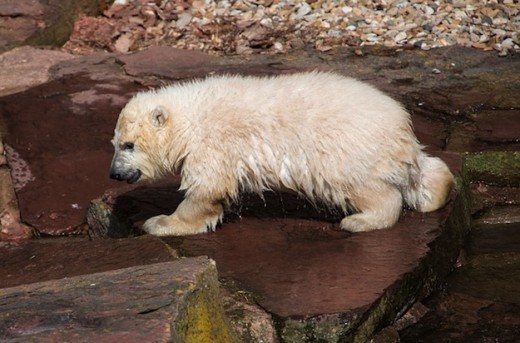
Even though Polar Bears only have a few run ins with wolves after young cubs, they don’t have a very easy life at all. In addition to the cold conditions there are times when it is hard for them to find food. Even though they can go several months without it, eventually feeding is essential to their survival.
Humans have a tendency to try to kill these animals due to their aggressive nature. Many love the thrill of hunting these animals in the wild with the harsh conditions. It makes the reward that much sweeter in their eyes. In the past many people have hunted them fro the meat. However, with experts claiming the high level of Vitamin A in their bodies isn’t good for humans this practice has declined.