Renewable Energy: Natural Sources of Energy

Introduction
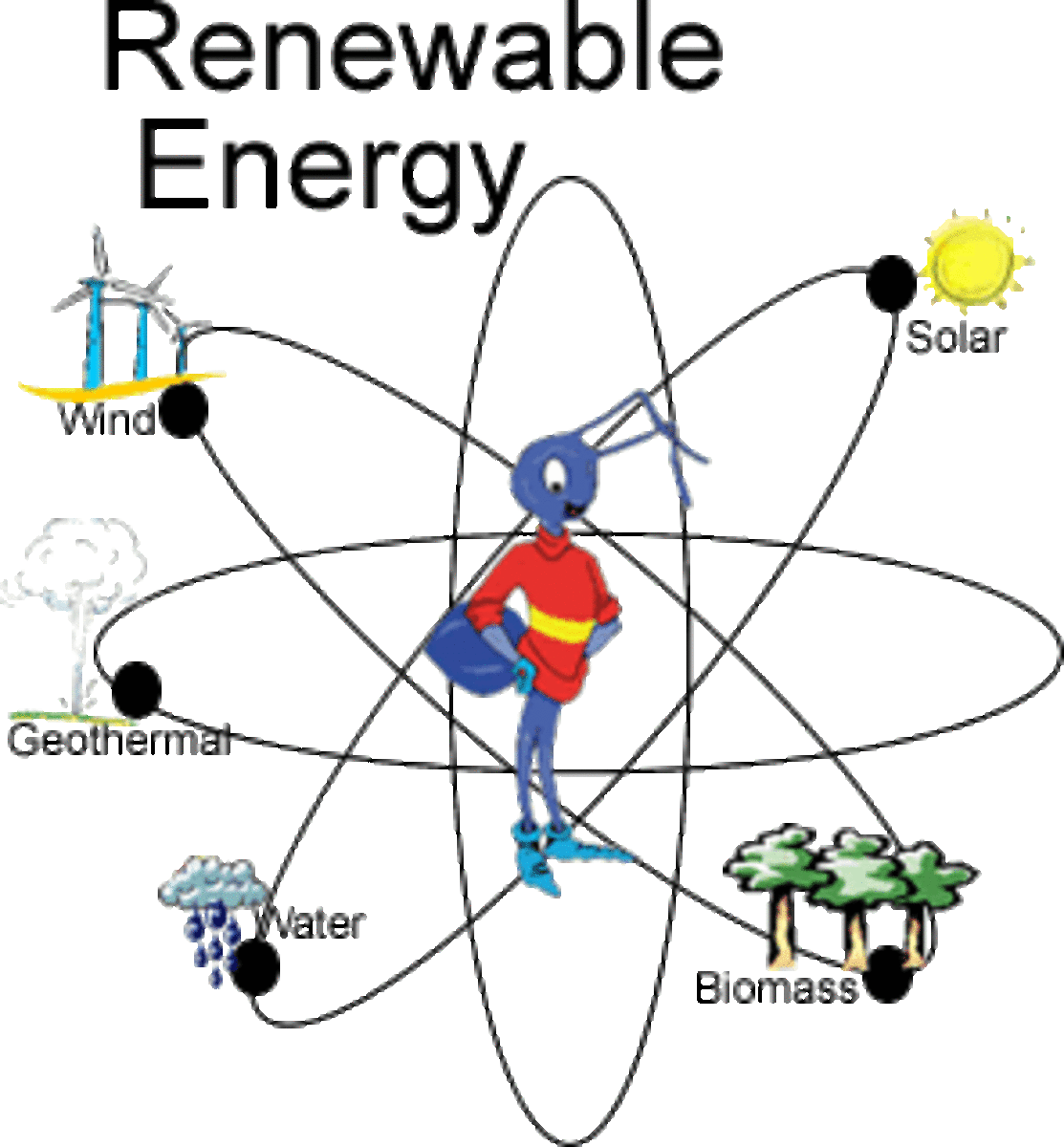
Renewable energy sources, also known as natural sources of energy, are those which it is possible to use without diminishing the resource.
This page will give a basic, relatively non-technical overview of all the major renewable energy sources, and where appropriate links for further reading on each renewable energy resource.
It is worth noting that these are virtually identical to, but not the same as, alternative energy sources.
Hydropower
Hydropower is one of most established true renewable energy source. This is the utilisation of the potential energy caused by a height different in two levels of electricty. Originally this was used in old fashioned water mills, however in the first half of the 20th century more modern devices using turbines to generate electricty were used. Generally in the more modern systems a dam is built across an existing river valley to form a reservoir, and this increases the height of the water, and therefore the potential energy. This water is then allowed to flow from the top of the dam down to it's base inside tunnels within the dam. As it flows, it will pass through a turbine. This will cause the turbine to turn and this movement of the turbine is then transferred into a generator, which in turn generates the electricty, as the video shown up and right explains. Hydropower is a useful source of electricity, as it is not only renewable but it is also possible to control when the water is released in many systems, allowing control to happen.
Famous hydropower dams are the Hoover Dam in the US, the Aswan Dam in Eqypt and the Three Gorges Dam in China. Out of all of the renewable energy technologies hydropower is probably the most economic, assuming there is a suitable resource. Whilst there is the potential for further hydropower projects to produce renewable energy, the majority of good sites in developed countries have already been used, and so out of all of the the renewable energy technologies this is probably the one with the lowest chance of serious percentage growth.
Biomass
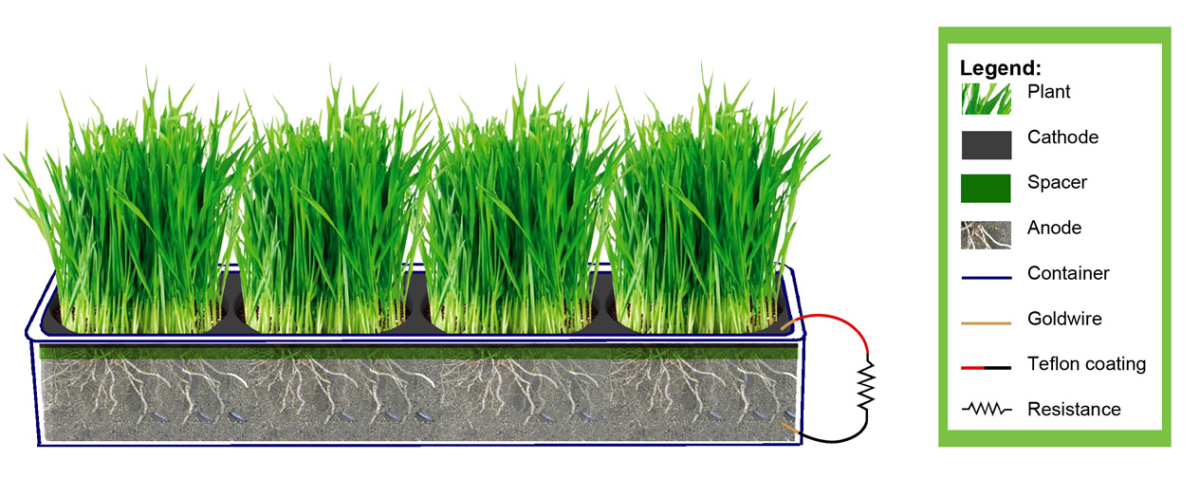
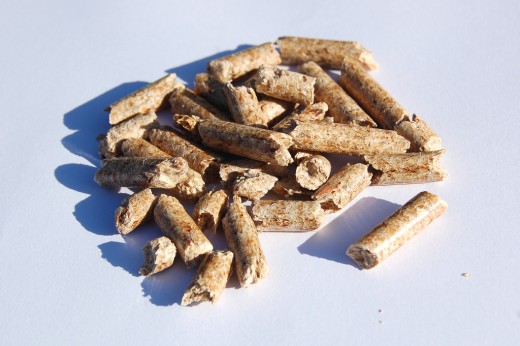
Biomass power is where organic materials are utilised to generate power. This is probably the oldest renewable energy, in fact when the earliest humans first started using fire they were using biomass.
Biomass, generally in the form of wood and charcoal for heating, was used as the major primary source for the vast majority of human history. However, in the 19th and 20th centuries fossil fuels generally started to take over so that in most developed countries, including Japan, France, Germany and the US biomass became only a very small contributor to the total energy mix. However, biomass continued to play a big role in less developed countries such as those in Africa.
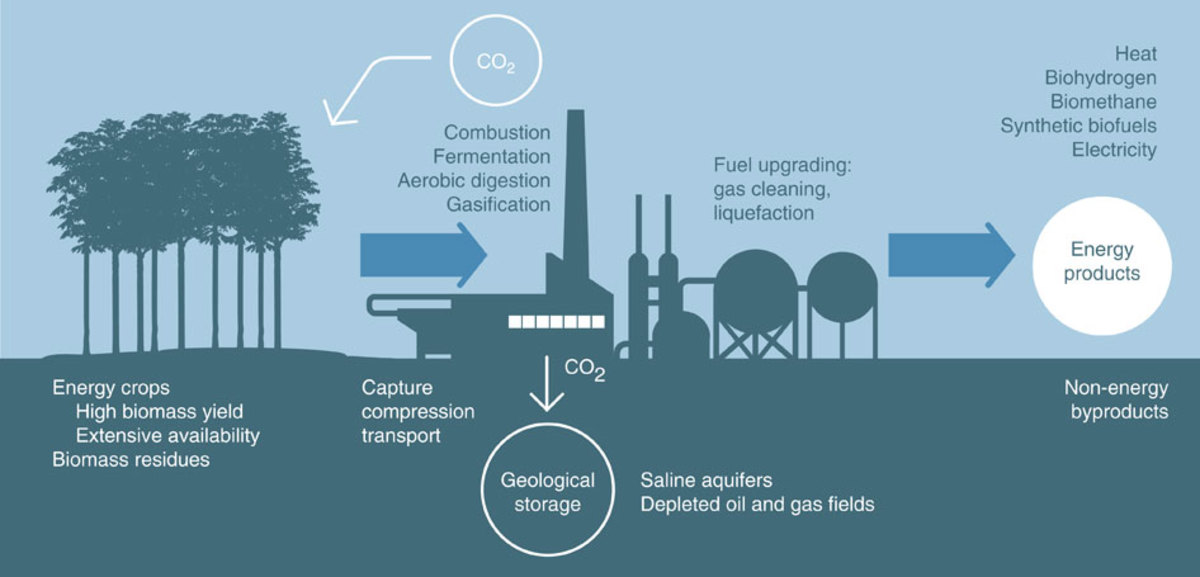
However, there has recently been increased interest in biomass as an energy source in the more developed countries for environmental reasons. Whilst it is true that the burning of biomass generates carbon dioxide, it is no more than the carbon dioxide that was absorbed when the plant grew, and so it is classed as a carbon neutral energy source, and as long as the plant is replaced this is a renewable energy source. There is a push to use more biomass for heating, electricity generation and transport fuels.
Using the fuel as a source of heat is a very simple process, the heat is burnt and the heat is used. Using biomass to generate electricity is done in a plant which is much like a coal powered station. The biomass is burnt to produce heat, this heat is used to turn water into steam which is in turn used to make a turbine spin. This turbine is connected to a generator and so the spinning of the turbine results in electricity being generated.
Biomass can also be used as a transport fuel. This can be done in one of two ways. Oil can be extracted from the fuel in a similar proces to that which is done to create vegetable cooking oil and then after a little bit of processing biodiesel is formed which can be used in diesel engines. An alternative is to use the biomass to produce alcohol in a similar way to the process which is followed to create whisky or vodka. Pure alcohol in the form of ethanol is created, and this is a highly flammable fuel which can be used in modified petrol (gasoline) engines.
However, whilst these modern uses for energy from biomass are all carbon neutral there have been some complaints. There has been some evidence, especially with regards to the biofuels for the use in transport, that food resources are being used to create renewable energy, despite the fact that millions worldwide are going hungry. There is the potential that in the future algae will be used as a feedstock for transport fuel, and this will not be grown on current farmland and so would be a better option as a renewable transport fuel.
Wind Power
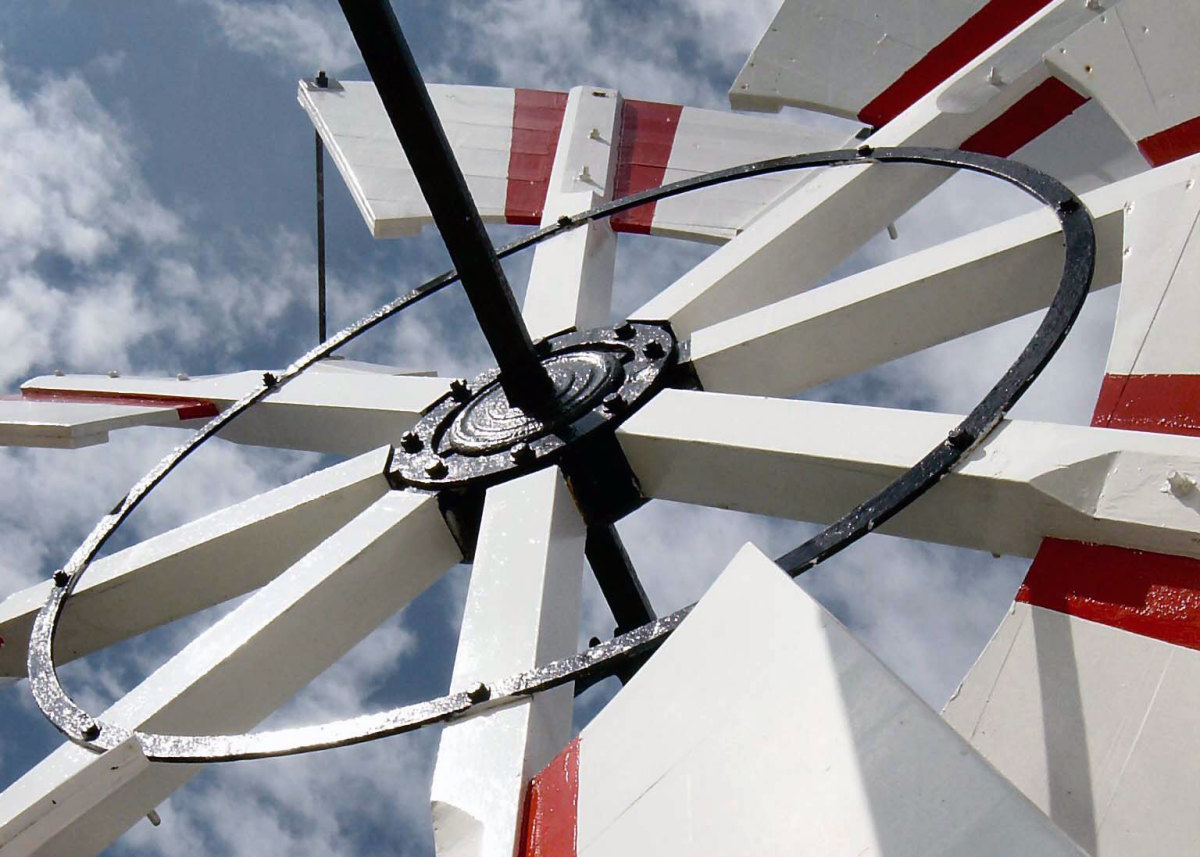
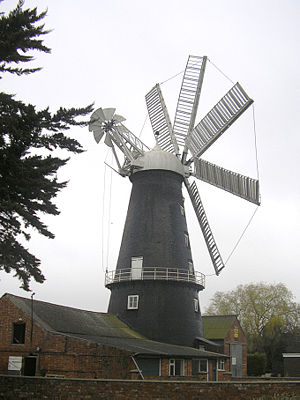
Wind power depends on utilising the wind to generate electricity or carry out some other activity (such as pumping water). As with many other renewable energy sources it has a history going back quite centuries. For example, windmills were used in medieval Britain (and famously Holland) to help grind corn, and wind power was used to pump water in the American plains.
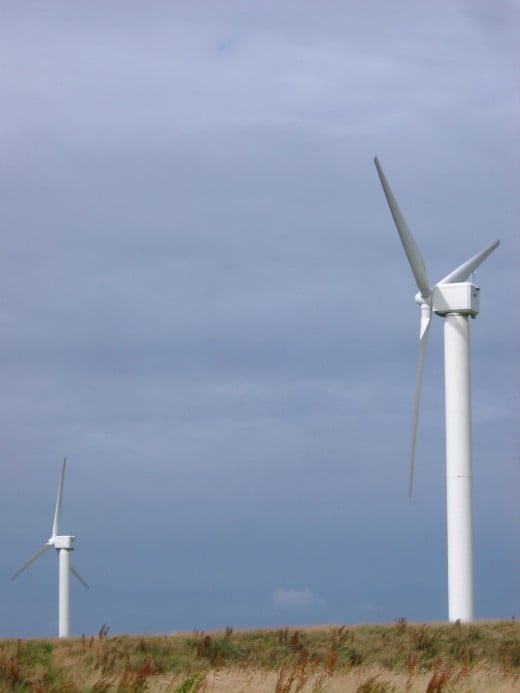
However the first modern wind power generators were investigated in the late 1970s and early 1980s when there was a large international push for renewable energy. However many prototypes failed and Denmark was the only country which continued pursuingthe idea of using the wind to generate electricity. The Danish made a way of producing electricity using the wind that was relatively economic, and with various forms of Danish government support the industry grew. In the early 1990s the Danish wind industry started to become international and along with support in other countries it grew.
The growth continued at annual rates of between 30% and 50% a year from the early nineties through to the present day, and this was accompanied by reductions in the cost of the electricity generated by the wind and an increase in the cost of electricity generated using conventional means. As such, in many areas of the world where the wind resource is very good, wind power is now able to compete with all other forms of generation even without any form of government assistance, and so this is at present the renewable energy source which is adding most capacity each year.
More recently there has been an increase in the use of using offshore wind turbines to generate electricty, particularly around the coasts of Europe, and this is another potential are for growth in the wind energy industry.
- World Wind Energy Association - Home
WWEA - World Wind Energy Association - Danish wind energy association website
This contains useful educational material for understanding renewable energy.
Tidal
Tidal energy is a natural source of energy which utilises the power of the tides. Tides are caused by the gravitational pull of the moon, and to a lesser extent the sun upon the earth's oceans. The tidal motions follow a cyclical pattern, and so unlike other forms of renewable energy such as wind and waves it is possible to predict with great accuracy the power output of a tidal energy device well in advance of it being placed within the water, which is a great bonus. There are two major ways of harnessing tidal energy. It is possible to harness both the changes in height of the water caused by the tides (so called tidal head technologies) and the movement of water as it moves around the globe (tidal stream technologies). Like many renewable technologies the energy source has been utilised for many years, in this case in the form of tidal mills to grind cereals, particularly in northern France.
Like all renewable energy sources tidal resources aren't equally distributed across all of the ocean though. Tidal head technologies rely primarily on a large difference between the maximum and minimum water levels, and in some areas of the world the local geography means that there is an especially big tidal range, and examples include the Bay of Fundy in Canada and the Severn estuary in Britain. Tidal stream technologies are similarly affected by local geography and so narrow channels between two larger bodies of water contain the greatest resource, such as off of the northern coast of Scotland.
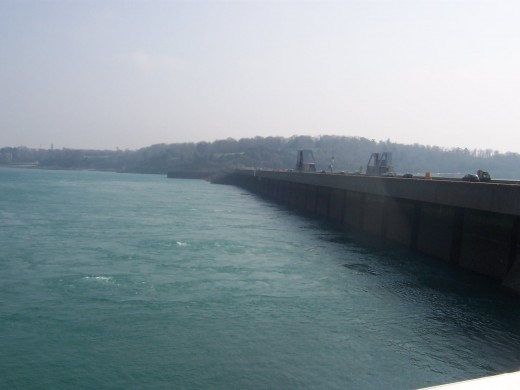
There are several theoretical ways of tidal head technologies to produce power, but as of the present time there is only one well proven technology. This is for a barrage, which acts like a dam across an estuary or river mouth. This leads to a height difference between the water on both sides of the barrage, and this height difference can be utilised using similar technology as that which is used in hydropower stations (see above). This has the effect though that it significantly changes a large area of the estuary/bay, with potentially bad affects on the ecosystem. At present there is only one large scale example, that of La Rance in northern France (240MW), although there are plans for others such as on the Severn. Another option for utilising the tidal head is tidal lagoons. These are like tidal barrages, and work in a similar way, with the only difference being that the built area completely surrounds the area, instead of relying on the coast. This has the result that it increases the cost, but it means that environmentally sensitive intertidal areas can have some more protection.
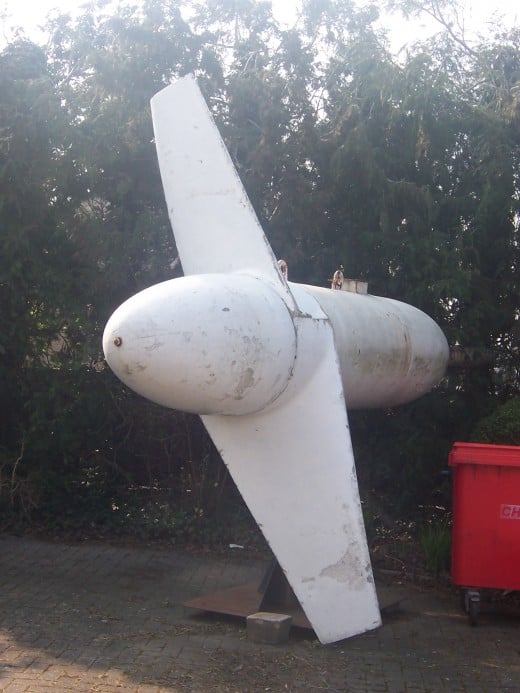
The second way of generating power from the tides is using tidal stream technologies. This is a much newer renewable energy technology, and at present there are not many working examples. One of furthest progressed technologies is Marine Current Turbine's machine, which acts like an underwater wind turbine or boat propeller and has been deployed in Strangford Loch in Northern Ireland. There are also several other potential ways of harnessing tidal stream power, but these are at present all at theoretical or prototype stage.
- Marine Current Turbines
The market leader in marine current technology.
Ocean thermal energy conversion
Ocean thermal energy conversion, or OTEC for short is a theoretical way of getting renewable energy out of the sea, by taking advantage of the temperature difference between surface seawater and deep deawater. This is a simple process, although it requires some explanation.
Whilst there is a temperature difference it is not very large, which limits the choices available for the removal of the energy. The most common option would be to use a rankine cycle. In this system the hot water at the surface of the surface of the ocean is used to turn another liquid (the so called working fluid) into a gas. Obviously this other liquid would have to have a low boiling point and so a substance such as isobutane may be used. This working fluid is then driven through a turbine which can be connected to a generator to produce renewable electricity. The working fluid which exits the turbine is then cooled back from a gas into a liquid by using the cool water from the deep ocean. This cooled liquid can then start the process again. This is shown in the video above which was produced to show how OTEC could power the island of Peurto Rico.
- What is OTEC?
An introduction to OTEC.
Geothermal
Geothermal are renewable energy sources which utilise the heat within the earth to create either a source of renewable heat or renewable electricity. On the right is a video explaining how geothermal power works.
Wave
It is possible to get renewable energy from the waves, using a series of devices. Up until recently these devices were still at the prototype stage, but recently the first commercial wave energy devices have been deployed to usher in a new type of renewable energy technology. Most wave energy devices are used to generate renewable electricity, but there have been plans to use the energy to pump water.
Waves are originally formed by winds, and like all renewable energy sources some areas have a better resource than others. Some of the best areas for wave energy are the east coast of Japan, the eastern coast of Australia, Hawaii and the western coast of Europe. It is no surprise therefore that some of the primary designers of wave energy devices come from these regions. Ideas for capturing energy from the waves are diverse in nature and so some of the major ideas are detailed below.
Video of how the Pelamis works
The Pelamis device was one of the most advanced of all wave energy devices, as it has been installed commercially to create a wave farm at Agucadoura in Portugal, after previously being tested at the European Marine Energy Centre (EMEC). Pelamis is a long snake like device made up of a series of articulated tubes. These individual tubes follow the waves as they pass, resulting in the tubes moving independently up and down. This movement results in hydraulic fluid being pumped between the tubes, and this movement of hydraulic fluid is what is used to generate renewable electricity. This process is shown in the Greenpeace video above. Unfortunately, the company who manufactured the Pelamis recently ran out of money and therefore the future of this piece of technology is uncertain.
Another device is Wave Dragon and this works by using arms to concentrate and increase the height of the waves towards a central point. The water is at an increased height, and then falls back down to the normal level, and as it does so it produces renewable electricity. This is an example of an over-topping device.
Another idea for getting power from the waves is to use buoys. These move up and down as the waves pass. This movement can be used to generate electricity as shown by a device by Fred Olsen Renewables.
EU video on how the Wave Dragon works
Another device is Wave Dragon and this works by using arms to concentrate and increase the height of the waves towards a central point. The water is at an increased height, and then falls back down to the normal level, and as it does so it produces renewable electricity. This is an example of an over-topping device. A video explaining how it works is shown on the right.
Another idea for getting power from the waves is to use buoys. These move up and down as the waves pass. This movement can be used to generate electricity as shown by a device by Fred Olsen Renewables.
Solar electric
Solar electric relies on the power of the sun to generate renewable electricty through a variety of mediums. There are a series of ways of converting a solar energy resource into renewable electricty including photovoltaics (PV), solar chimneys and concentrated solar power.
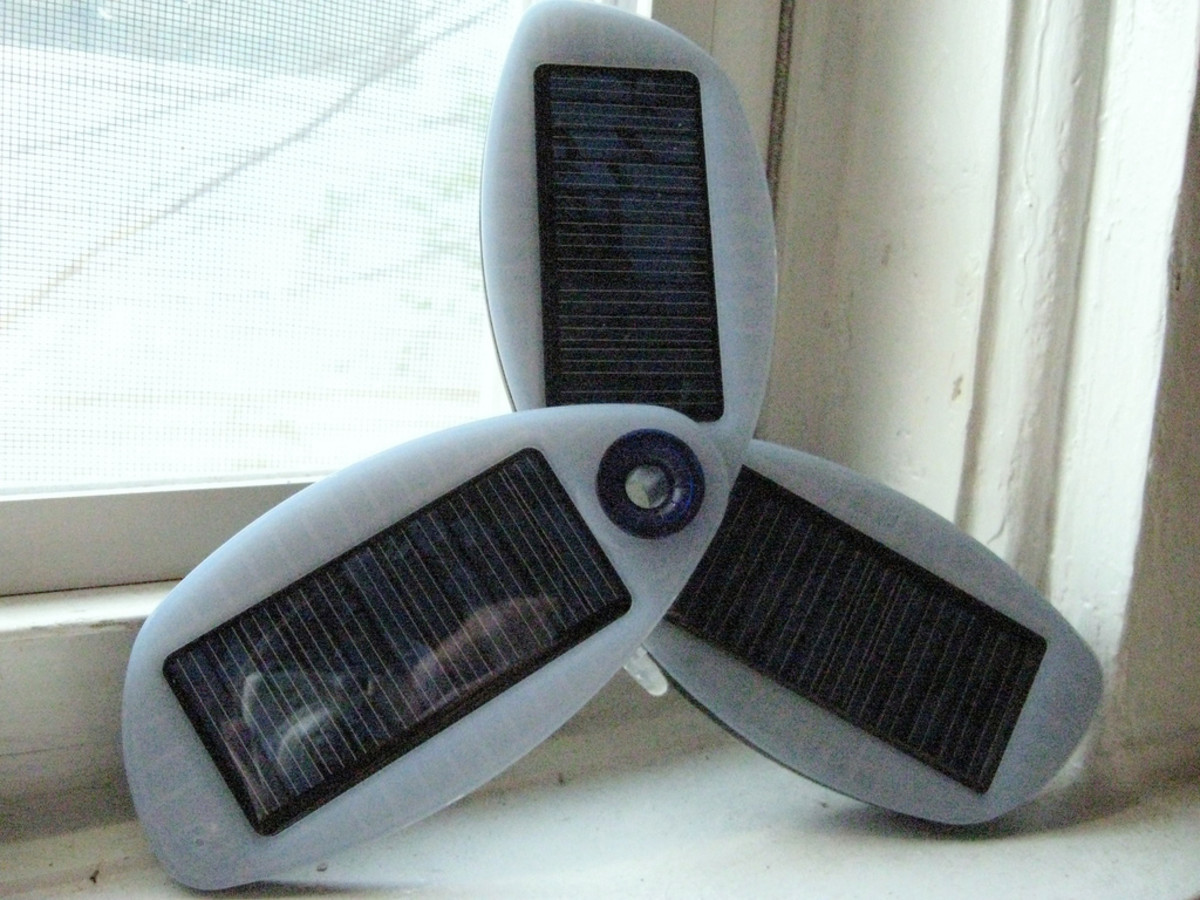
Solar photovoltaics is probably the first idea which most people have when they think about generating renewable energy from the sun. They work when light strikes a plate. There are two materials with a small distance in between and when the light hits one of these plates electrons start to flow and when the panel is connected to the grid renewable electricity starts to flow. These materials are generally made out of specially treated silicon, although there are a few alternatives which have recently come onto the market. Photovoltaic panels are included in many objects, such as satellites and calculators.
Solar chimneys are another idea. They rely on a large area of land being covered in a transparent material suspended above the ground. This material increases in height towards the centre where there will be a large tube which goes up into the air. This will vary in height depending on the amount of area covered by the glazing, but it could in fact be one kilometre or more. The chimney works as the area under the glazing is heated, creating the air to rise. There is a lower pressure at the top of the chimney than the bottom because of the rising air, and so turbines are used which utilise this pressure difference to turn a generator which in turn generates renewable elecrticity. Shown above is an animation of how a planned solar chimney in Australia will work.
Concentrated solar
Concentrated solar is another way of generating renewable electricity using the power of the sun. At present there are a large number of ways of doing this, but there are always some similarities in all concentrated solar projects. This, as the name would suggest, is the fact that they utilise some method to concentrate the power of the sun into a smaller area than it would normally occur in, and this is generally done using a mirrored surface.
The first way of generating renewable electricity using concentrated solar power is to use a number of heliostatic mirrors. These are mirrors which follow the sun in such a way that they reflect the light on a given point. There can be many, as shown in this video to the right which was taken near Saville, Spain. Due to the large number of mirrors reflecting light onto a very small point this very small point becomes very hot. This intense heat can be utilised in a number of ways, although the most common is to use it to turn a liquid into steam, which can be used to drive a turbine to generate renewable electricity.
Aside from these two ways the light can be concentrated onto a different power take-off scheme. Some systems look at concentrating light on photovoltaics panels to generate renewable electricity, and others look at concentrating light on stirling engines to produce movement which can be harnessed to create renewable electricity.
Solar heat
Like solar electric, solar heat also relies on the sun, only this time instead of converting the power of the sun into electricity it creates a form of renewable heat.
Solar energy is primarily captured in one of two ways. These are passive and active solar energy collection.
In passive energy collection a building is designed so that it makes maximum use of the earth's sunlight for heating purposes. Thus, a house in the northern hemisphere will be extensively glazed on the south facing walls.
In active solar heating either a flat plate collector or evacuated tubes are used. Evacuated tubes rely on a series of vacuums and so have the greater efficiency, but cost approximately twice as much as flat plates. However, whatever choice of panel, the output is hot water. This water can be used for several purposes. Most obviously it can be used as a supply of hot water for bathing/washing. However it can also be used as a renewable source of heating, although as would be expected often the demand for heating is inversely proportional to the solar radiation. As such a modern option is for solar thermal cooling, and with complicated thermodynamics the heat of the sun can be utilised to create renewable building cooling!
Heat pumps
Heat pumps are a way of converting a small amount of electricity into heat (or cooling). There is some controversy over whether they should be classed as a renewable energy source, but they are generally classed as a low carbon energy source. Generally though, the heat output can be classed as renewable if the electricity which is used to power it is renewable. Heat pumps can come in several forms - ground source heat pumps, water source heat pumps and air source heat pumps. The video above shows how a heat pump can be used to heat (and cool) a school along with examples.
- IGSHPA
This is a link to the international ground source heat pump association (IGSHPA) website. - Heat Pump Network Home Page
Body kinetics
This is another source of energy which is very much in it's infancy. This is all to do with utilising the movement of the human body. At present it is possible to buy torches which are charged by the human hand shaking or winding them. There are also watches which are powered by the movement of arms. These may seem like quite trivial uses for this new renewable energy, but this technology also has the potential to save lives by utilising the concept for use in military equipment for special forces and even more importantly in pacemakers. There are also floors which make use of the movement of human's above to create renewable electricity-within Europe several clubs have such a floor as do shopping centres at their entrance.
- Generating Electricity From Body Heat
A page which is linked to the idea of body kinetics. This looks at using body heat to generate renewable energy.
Other links
- Renewable Energy World - Renewable Energy News, Jobs, Events, Companies, and more
Renewable Energy World Online - Explore renewable energy news, jobs, events, companies, products, and more. - Renewable Energy UK
A hub on renewable energy in the UK.