Repossession

It is best to Work with the Lender to Try to Avoid Repossession
Repossession generally refers to a lender taking possession of a vehicle from a borrower who is in default on a vehicle loan. Because vehicles, like houses and other types of real estate, have value and can be sold, lenders are more willing to not only make loans on such property but are often willing to charge a slightly lower rate of interest on these loans compared to loans (often referred to as unsecured or signature loans) on which they simply have the borrower's promise of repayment.
When a person obtains a loan to purchase a car or other vehicle, he or she pledges the vehicle as collateral for the loan. In effect the borrower is telling the lender that they can take the vehicle and get the loan amount back by selling it if the borrower fails to repay the loan as promised. Unlike real estate, which cannot be moved, cars and other vehicles can be moved to a new location and hidden. Because of this lenders generally charge more interest than they would for real estate and try to move faster to take possession of the vehicle when the borrower fails to make the payments as promised.
It is Best to Try to Avoid Repossession
In the United States, lending is generally regulated by the states and not the Federal government. Because each of the fifty states have their own laws in this area, it is difficult to explain the process in detail. Suffice to say that, in all fifty states the lender has the right to eventually take possession of the vehicle and sell it when the borrower fails to repay the loan.
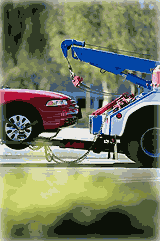
How and when a lender can take possession of a vehicle is what varies from state to state. In some states there are prescribed waiting periods between the time the borrower fist stops making payments and when the lender can start the process of taking possession of the car. In the case of the actual taking of the car this can require contacting the borrower and picking the car up from them, tracking the car down and towing it from a public place, like a parking lot, or going to the borrowers residence and towing it off the property. Some states allow taking the vehicle for a person's property and, of those that do allow this, the laws vary as to whether the vehicle can only be towed from an open area, such as a driveway, or whether the person doing the work of repossessing can break into a closed or locked garage or locked gate.
While sneaking into a person's garage in the middle of the night and surreptitiously removing the vehicle of a person who has failed to make their loan payments makes for a good story or movie, this, even when it is legal, is not that common. It is much cheaper to go and ask for the keys to the vehicle, after sending a formal notice of default and intent to repossess, than to have to go to the trouble and expense of hiring a professional to break into a property and take the vehicle. Most people will usually comply with a request to surrender a vehicle on which they are no longer able to make the payments.
Once a lender has possession of the vehicle they will proceed to sell it, usually at auction. Following the sale, the lender is entitled to keep the balance of the loan due, unpaid interest due and any other fees due them for the vehicle. Any funds in excess of these amounts are returned to the borrower as their remaining equity in the vehicle. If, which is often the case, the proceeds from the sale are not sufficient to compensate the lender for all funds due, they can still, in most states, take legal action against the borrower and get a judgment against the borrower for the balance due. This, of course, adversely affects the borrower's credit, and it also makes it difficult to buy another vehicle or other property as the lender can go after that property to get the money the court awarded them with their judgment.
If you have a vehicle loan and find yourself unable to make the payments the best course of action is to contact the lender immediately and try to work out some arrangement. Depending upon your circumstances, you may be able to work out some arrangement to temporarily reduce the payments or have late charges waived and possibly interest reduced while you solve your problem (such as temporary unemployment due to a strike, temporary layoff, temporary illness or accident, etc.). If it is an expensive car you may be able to sell it and get enough to repay the loan or you may be able to give the car to someone else in exchange for them taking over the payments (be careful here as, unless they refinance it and get a loan in their name, you will still be responsible for the repayment of the loan if they stop paying).
Generally, most lenders will try to work with you if you are sincere and can convince them that their chances of getting their money are better if they work with you (for instance, if your financial problems are temporary and you need the vehicle to get to work it does the lender no good to take the car, especially if they cannot sell it for what is due them, and thereby ensure that you will not be able to work and get the money to repay them). Repossessing a car is an expensive process and the lender's objective is to get their money back and not lose more getting revenge on the borrower.
© 2006 Chuck Nugent