Rewilding
Other Definitions of Rewilding
Rewilding is also used to describe a submovement within Green Anarchism that believes that humans are "domesticated" by civilization and proposes to return to a supposed innate "wild" state by practicing Stone Age technology, survivalism, and other skills. For more info on this use of the term, visit Rewild.info.
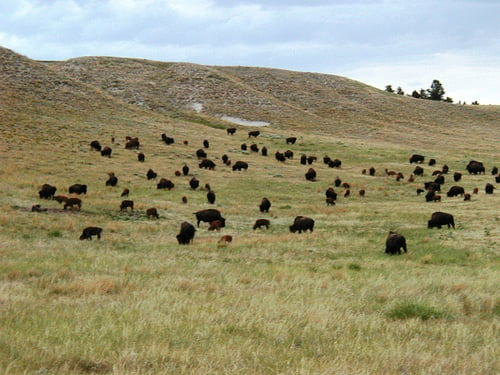
Another, more closely related, use of the term is more accurately described as "Pleistocene Rewilding." Pleistocene rewilders believe that humans were responsible for the extinction of nearly all North American megafauna near the end of the Pleistocene period 10,000-13,000 years ago, and proposes to restore balance to the ecosystem by introducing the nearest relatives of North America's Pleistocene megafauna, particularly large predators such as lions. Personally, I am skeptical of this idea, because it seems to me that North America's surviving megafauna (bison, grizzlies, etc.) are far better adapted to its current ecosystem than a bunch of African lions or elephants. But it's a thought-provoking idea.
A more plausible effort to reintroduce large mammals to their previous homes is underway in Great Britain. For more on this, check out JKenny's excellent hub Rewilding in the UK.
Rewilding, as the term is employed by the Rewilding Institute, is a growing movement towards conservation on a continental scale.
Proponents of rewilding believe that past conservation efforts have been insufficient to ensure the health of the overall ecosystem because they were too scattered and piecemeal - a bit of important habitat here, a bit of important habitat there... National parks, wildlife refuges, and other natural areas were scattered across the country and frequently separated from each other by roads, farms, towns, and other impediments.These impediments prevented animals from traveling safely between different patches of protected land and isolated populations from each other, leading to ecosystem decay as a result of "island biogeography."
Some animals adapted easily to these changes, and even became pests, like coyotes and raccoons. Others , including many so-called "keystone species" - animals whose very existence supports a more complex and diverse ecosystem - have struggled.
Migration Corridors
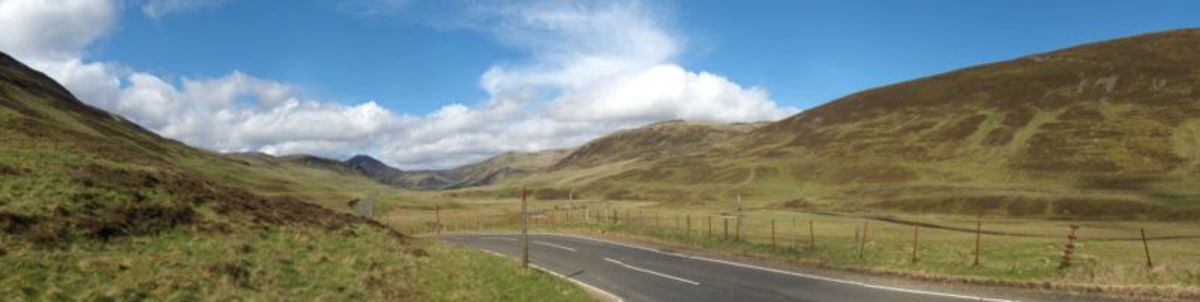
Rewilding proponents put great emphasis on the importance of migration corridors. Migration corridors connect scattered ecosystems, allowing animals and plants to travel freely between protected areas and preventing larger habitat reserves from becoming isolated "islands" with collapsing biodiversity and low ecosystem resilience.
Migrations Under Threat

Migration corridors can also be used to protect ancient migration paths. The scattered pattern of protected habitat through much of the United States and North America has put important migration corridors - and the species that use them - at risk. For example, due to human development in the Greater Yellowstone Ecosystem, migrating pronghorn must pass at several points through bottlenecks and across busy roads, causing many to be killed. Efforts are currently underway to provide them with overpasses across several of the most dangerous road crossings.
The ecological health of migration corridors has become an even more urgent problem with the rise in global temperatures we are currently experiencing. As climate zones shift north, plants and animals need a network of wildlands that will enable them to safely follow along.

Large Predators
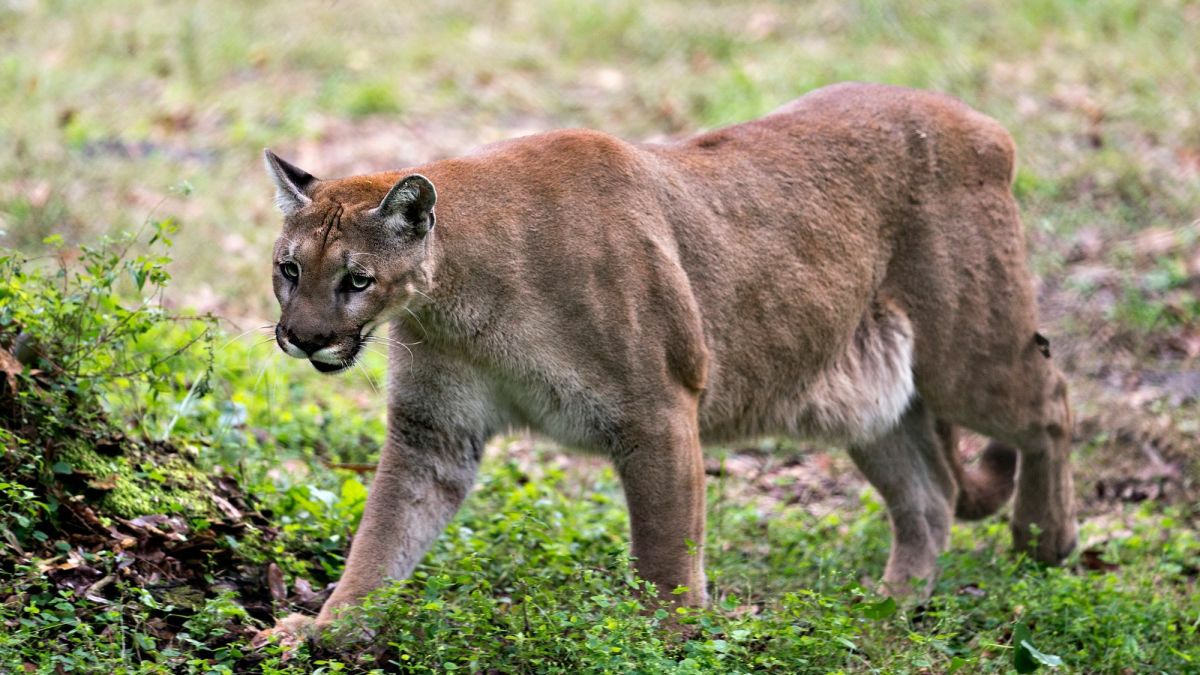
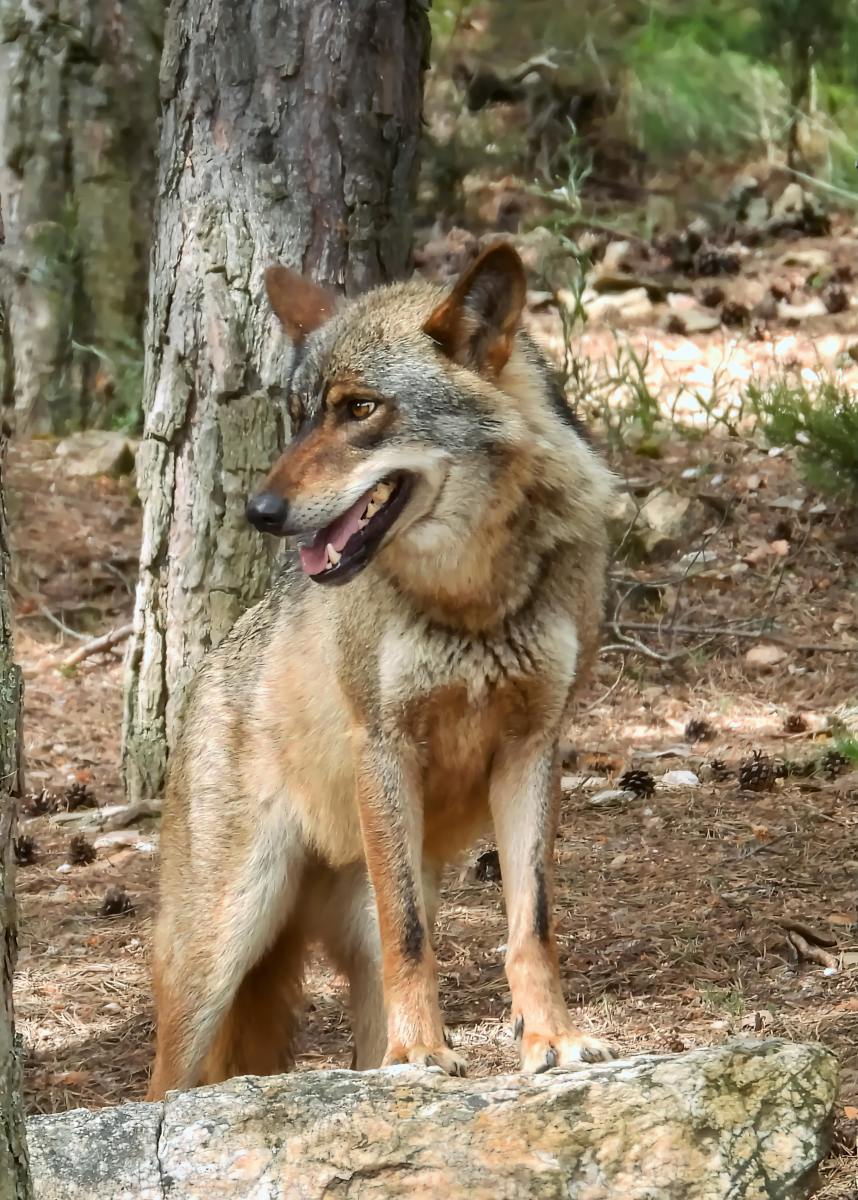
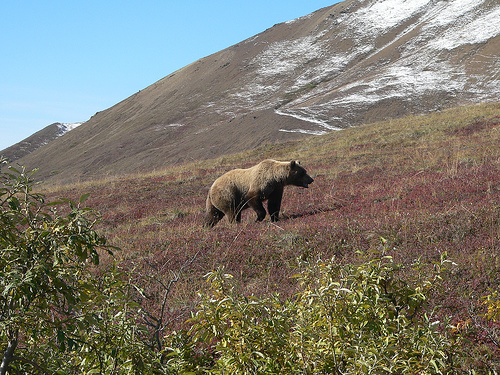
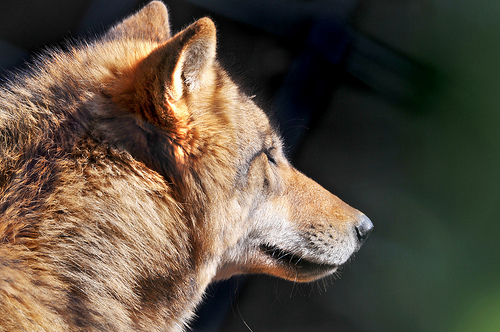
Another important goal of rewilding proponents is maintaining healthy populations of large predators such as grizzly bears, mountain lions, and gray wolves. Recent research has revealed the critical importance of top predators to maintaining ecosystem health. Top predators keep the populations of herbivores in check, preventing ecosystems from being degraded by overgrazing, trampling, and other symptoms of herbivore overpopulation. For example, the Yellowstone elk herd was considered severely overpopulated prior to the reintroduction of the gray wolf into the park in the 90's. Since the return of the wolf, the elk population has been cut in half and populations of aspens, willows, and other important plants species have made a major recovery, improving the health of forest and stream ecosystems throughout the park.
Large predators such as wolves and bears typically require enormous home ranges, and the health and sustainability of their population is viewed by many scientists as a sign of the health and sustainability of the ecosystem in which they live. Many rewilding proponents put special emphasis on improving habitat and increasing migration corridors for these critical species.
Rewilding Manifesto

How Can This Be Achieved?
Organizations working for rewilding and its goals vary in their preferred method of achieving their goal. However, most believe that a network of publicly and privately owned lands managed to support a diverse natural ecosystem is the most important step.
It is also important to provide "detours" over, under, and around obstacles such as roads and towns. These might include anything from bridges over busy roads to entire swatches of wild or semi-wild lands on the edges of cities.
Some rewilding organizations are working on improving the relationship between humans and the wild as well. In addition to its ecological benefits, rewilding offers many purely selfish benefits to humanity, including increasing natural beauty and drawing tourist dollars to local economies (the wolves of Yellowstone, for example, have brought an estimated $7-10 million dollars of extra annual tourist income to the region since their reintroduction). However, particularly where large predators are concerned, it also offers dangers to humans and human pursuits. Some of these can be (partly) overcome by education, and groups such as the Get Bear Smart Society are working towards this goal. Others can probably only be mitigated by a fundamental shift in humans' relationship with the wild, a shift that may never fully occur.
Selected Organizations
- Rewilding Institute
The Rewilding Institute Website is the essential source of information about the integration of traditional wildlife and wildlands conservation with conservation biology to advance landscape-scale conservation. - The Wildlands Project
We believe that we can stop the extinction crisis in North America. We believe we can protect and preserve our unique and irreplaceable biodiversity-by protecting the lands and waters upon which plants, animals, and people depend to stay healthy. - Yellowstone To Yukon Conservation Initiative
Y2Y offers large-landscape-scale conservation direction for the many diverse efforts taking place throughout the region. - American Wildlands
Keeping the world-renowned U.S. Northern Rockies ecologically intact by restoring and maintaining connections between key habitats for healthy populations of native fish and wildlife. - Great Plains Restoration Council
The GPRC is working to restore and tie together, over time, a million acre reserve of tribal, public and private land on the Great Plains. - Vital Ground
Founded in 1990, Vital Ground is dedicated to reconnecting isolated fragments of wildlands important for grizzly recovery and biodiversity.
How You Can Help
Here are some ways you can help rewild America:
Educate Yourself and Get Active
Though rewilding is international in scope, it will only be effective if it is also practiced at the local level. By educating yourself about native plant and animal species and local conservation issues and becoming an advocate for conservation issues in your area, you are already making a huge contribution to the rewilding movement.
Conserve and Restore Wildlife Habitat at Your Home
Birds, butterflies, and other small wildlife need help too, and even in the city, most people can provide a little habitat with the addition of a flower bed or planter box of native flowers and other plants. In suburban and rural areas, programs like the National Wildlife Federation's Backyard Habitat Program can help you learn more about making your yard into a haven for wildlife.
Farmers, ranchers, and other private property owners who practice sustainable agriculture and manage their lands to conserve or restore wildlife habitat may be eligible for tax benefits or other government assistance. The Wildlife Habitat Incentives Program (WHIP), for example, provides technical assistance and up to 75% cost share for private landowners who wish to establish or improve fish and wildlife habitat on their land. Defenders of Wildlife has more information about some of these Federal Conservation Incentive Programs.
If you are new to wildlife gardening, check out some of my articles on attracting wildlife to your garden to learn more and get stated.
Place a Conservation Easement on Your Property
Conservation easements protect the land for wildlife forever, while still allowing sustainable use by humans. Landowners are often eligible for tax benefits if they place conservation easements on their property. If you are interested in protecting your land in this way, the Nature Conservancy has much more information on their Conservation Easements page, or you can visit the American Lands Conservancy.
Join a Rewilding Organization
There is a growing number of organizations working towards large-scale habitat conservation. All need help from donations, volunteers, and word of mouth. I've selected a few to spotlight to the right.