Thermal Imaging & Predictive Maintenance

Introduction
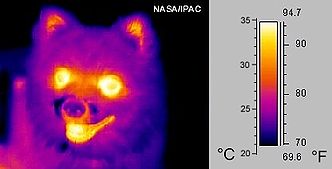
Infared is a portion of the light spectrum extending from 0.75 to 1000 microns. Infared energy is invisible to the human eye; however all objects warmer than absolute zero (0 Kelvin or -275.15º C) emit infared energy somewhere within that range. Thermography is a type of infared technology that makes thermal information visible by capturing and imaging the emitted infared energy so that distinguishing heat patterns can be discerned. Since the amount of radiation emitted by an object increases with temperature, the thermal image allows the viewer to see the variations in temperature. The warmer the object, the brighter it will appear because, when viewed through the thermal camera, warm objects stand out against cooler objects or backgrounds. Conversely, objects with the same temperature will not stand out and may even be invisible to the camera’s eye.
Thermal imaging has become a valuable tool to various industries because it allows the measurement of heat patterns that reveal flaws in electrical systems, buildings, process equipment, or even the environment which, if left uncorrected, could cause fires, facility or equipment damage, and equipment failure.
Other uses
Thermal imaging photography is used for many purposes. Firefighters use it to see through smoke, locate “hot spots” inside walls, and find persons. Power line technicians locate overheating joints and transformers, a telltale sign of failure. Facilities maintenance can use it for roof moisture inspections, detecting air leaks behind walls, and analyzing distribution of heating and air conditioning systems. Plant maintenance engineers can inspect process equipment or other machinery to help improve preventive and predictive maintenance programs. Thermography is also widely used as a medical diagnostic tool, and has been used successfully in search and rescue operations to find persons buried in avalanches.
Heat transfer
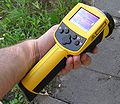
Thermographic cameras can only “see” the surface of an object, not within an object. What the camera captures is the transfer of heat from inside the object to its surface. Infared cameras cannot “see” air but can “see” the effects of air flow. For example, the cameras are frequently used to scan buildings for air leaks because the surface areas where leaks occur are cooler or hotter (depending on exterior air temperatures) than the surrounding surfaces that are not effected by the leak.
Thermographic cameras also cannot measure the actual temperature of an object. Actual temperature measurements are taken with an infared radiometer, which is a thermometer that takes a remote temperature measurement of an object without touching it. The radiometer measures the amount of infared energy emitted from the object and converts this to a digital readout.
Thermal images and predictive maintenance
One of the most practical uses of thermal imaging is “predictive
maintenance”. Long before most equipment fails there is a significant rise in its
operating temperature. By scanning a building’s electrical systems or
monitoring the operating condition of critical plant equipment, you can detect
overloaded electrical conditions or flaws in process machinery before they
become serious enough to cause a fire or equipment failure. The information
provided by a thermal imaging inspection takes the guesswork out of
establishing maintenance schedules because it identifies what equipment needs
immediate maintenance, and “predicts” what equipment is deteriorating
and will need future repairs. Performing on-time maintenance can help
reduce or eliminate the need for more expensive repairs, prevent catastrophic
machine or system failures, and increase safety, reliability, and plant
production.
Implementing a thermal imaging predictive maintenance
program requires some planning but is worth the effort. The following steps are
recommended:
Baseline surveys
- Perform a baseline survey and then track thermal images and temperatures over time. That will produce baseline images for comparison with future images. Hot spots that weren’t there during previous infrared surveys indicate problems in the making. Ongoing surveys will then help identify trends, establish key indicators, and, after repairs or maintenance, help determine if the work was successful.
- Survey new equipment and systems to establish a baseline. You might also use it as part of your new equipment acceptance process. Some plant managers have thermal images made of equipment before it is delivered to the plant.
- When conducting a survey look for “exceptions”. For example, similar pieces of equipment or systems under similar loading conditions that are operating at difference temperatures. Remember that overheating, as well as abnormally cool operating temperatures, may signal problems.
Predictive maintenance program
- Integrate the program with other predictive maintenance efforts. Thermal imaging is most useful when data from other technologies is collected. These can include vibration analysis, motor circuit analysis, airborne ultrasound, pressure testing, and temperature assessments.
- Establish written infrared inspection procedures. These will help ensure quality data collection, uniform monitoring procedures, and inspector safety. Review industry or manufacturer standards for the operating conditions of your systems and equipment and use these as a baseline.
- Create an infrared inspection schedule to determine what will be monitored and how often. Consider where failures have occurred in the past either at your plant or industry-wide, the age of equipment, overloading or heavy use of particular equipment, and whether equipment and systems have been well or poorly maintained. Base inspection frequency on factors such as facility and worker safety, critical need of the equipment to the operation, and the expense of a failure.
Establish repair priorities
- Establish a repair priority schedule that describes required actions if temperature differences between similar components under similar loading conditions are above or below established ranges. You can also set ranges within the general range and assign each a priority level, such as “continue to monitor”, “fix immediately”, “deactivate immediately”, “schedule for maintenance” etc.
- Follow basic safety procedures. The National Fire Protection Association guidelines require that all workers understand the risks when working near electrical equipment. Because thermal images are best taken while equipment is operating, personal protective equipment for thermographers typically includes flash-resistant clothing and a face shield. It is also prudent to first assess electrical panel covers while they are closed. If any appear abnormally warm, then further safety precautions may be warranted before opening them.
Thermal Imaging Demonstration
Limitations
Thermal imaging is a useful tool, but it is not a miracle technology. Conducting a proper thermal survey and obtaining quality data takes time, knowledge, and experience, and images can be difficult to interpret accurately even with experience. Other pitfalls to watch for are:
- Reflection. Reflections from hot or cold sources can can masquerade as hot spots or otherwise interfere with an accurate image. Thermographers must know how to position their cameras to minimize or eliminate reflection and remember that hot spots are hot even if they cannot be accurately measured.
- Emissivity. The color of the object does not effect infared measurement, but a surface characteristic called emissivity, does. Emissivity tracks how thoroughly the surface of the object emits energy and is controlled by the type of material being imaged and the surface finish. The standard emissivity of most organic materials and painted surfaces is 0.95. Certain materials, such as concrete and shiny metals, are poorer emitters so their emitted energy does not accurately reflect real surface temperatures. Thermographers must adjust the emissivity values on their cameras to record an accurate image. Although emissivity charts are available for various materials, adjusting for the proper values takes training and experience.
- Some persons have a false expectation that you can “see through walls” with infared cameras. This is not possible although a hot spot inside a wall may become hot enough to produce a thermal signature on the wall's exterior. This is to firefighters who are looking for smoldering hot spots inside walls.
- Thermography is best used to locate anomalies. Thermal patterns and temperature data help to identify and characterize problems, but they are not the best way to determine the cause of a hot spot or failing component. Thermal imaging works best when information from other technologies (vibration, ultrasound, and tribology for example) is added to the analysis.
Equipment Resources
- FLIR Thermal Imaging, Night Vision and Infrared Camera Systems
Official Website of FLIR Systems, Inc. The World Leader in Night Vision, Thermal Imaging Systems, Infrared Cameras, IR Detectors for Government, Commercial, and Industrial use. - Thermal Imager Vendors and Equipment Suppliers
An information resources on equipment and vendors for thermal imaging in industry, science, law enforcement, fire safety and maintenance. - Thermal Imaging | Thermal Imaging Equipment
A distributor of thermal imaging cameras by FLIR Systems, a world leader in the design, manufacturing, and marketing of thermal imaging and stabilized camera systems. - Fluke
Thermal imaging or thermography, detects heat patterns or temperature changes in objects. These changes allow the user to discover problems prior to costly downtime, or monitor developing problems so maintenance can be scheduled during a planned down
Advantages
A well planned thermal imaging program can save money by reducing maintenance expenses, avoiding costly shutdowns due to equipment failure or fire, and improving production and capacity through a timely predictive maintenance schedule. Managers should consider adding thermography to their other analysis tools, either through employee training or thermal scans conducted by an experienced outside service.
You can purchase good quality thermal cameras through online equipment manufacturers. Taking and interpreting thermal images, however, takes some skill and experience.
You may want to hire a professional thermal imaging group to survey your facility and interpret results. Conducting a proper thermal survey and obtaining quality data takes time, knowledge, and experience, and images can be difficult to interpret accurately even with experience.
![Baltic Sea Anomaly Details: Is it a UFO or Hoax [video]](https://images.saymedia-content.com/.image/t_share/MTc2MjY0ODM3MjA1MjcxNzI1/baltic-sea-ufo-unidentified-submerged-object.jpg "Baltic Sea Anomaly Details: Is it a UFO or Hoax [video]")