Socially Responsible Investing

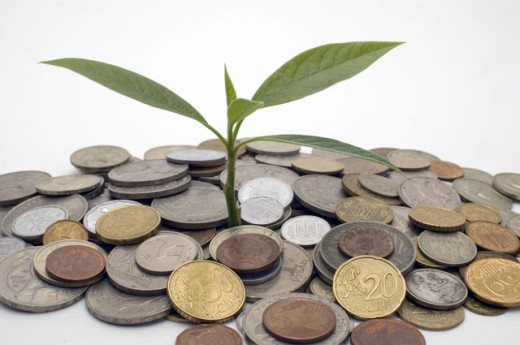
If you already have a porfolio or are considering an investment fund as part of your savings plan, you’ll do well to look at Socially Responsible Funds. Not only would you be doing the environment a favour, but you could also be doing your finances one too.
Socially Responsible Funds, also known as Socially Responsible Investment Funds (SRI Funds) are getting some serious attention from investors. According to a 2007 survey by the Social Investment Forum, Socially Responsible Funds now account for approximately $2.71 trillion of the U.S. investment market. That’s a massive 11%.
Why the growth in Socially Responsible Investment?
Two reasons:
1) People have become more aware of environmental issues. These issues are high up on the news agenda. We’ve all heard about the damage being done to the environment. So people are more environmentally conscious. Environmentally conscious people want to invest their money in environmentally conscious ways.
2) Lots of money is being poured into emerging technology companies and companies that may provide solutions to environmental problems. Governments and foundations are eagerly giving money to green companies, either as reward or encouragement. Green companies are on the rise, so people want to get in on the action.
What is a Socially Responsible Fund?
Socially Responsible Funds fall into two categories:
Dark green, or “negatively screened” funds avoid investments in companies doing harmful things to the environment. Industries like tobacco, alcohol, pornography, nuclear power and armament etc.
Light green, or “positively screened funds only invest in companies doing good things for the environment. Unlike dark green funds, specific industries are not necessarily excluded. Instead companies that are best in their area, or have potential to improve on environmental issues may be included. Investments are made in companies that create renewable energy, sustainable living products, educational products etc.
Bloomberg Talks Socially Responsible Investment
Examples
An example of a dark green fund is the Ethical Equity Fund from Aegon Asset Management. This is considered a dark green fund because of it's strict criteria for investment.
An example of a light green fund is the Growth Fund from Pax World Investments.
(these funds are used for example purposes only. I don't endorse and am not affiliated to these funds in any way).
Green Credentials
How do I know a fund is really “green”?
A good way is to look at the top 10 holdings of the fund. This shows what companies the fund has invested in, and what percentage of the fund that investment represents. It’s then a matter of deciding if you would be happy doing business with the companies listed.
PR Stunt
How do I know companies in a Socially Responsible Investment Fund aren’t just saying they are green as a PR stunt?
Another benefit of Socially Responsible Funds is that fund managers engage with companies as shareholders. Fund managers canthen look at governance issues and ask for changes through shareholder resolutions if they aren’t happy. Some funds even “name and shame” companies that behave particularly badly towards the environment or those who work for them. Such activities help ensure companies are actually socially responsible and not just saying they are.
VNR Investment Group: Socially Responsible Investment
Performance
Is the return of investment as good as standard funds?
Yes. In fact some Socially Responsible Funds have performed better. For example in 2009 the Calvert Global Alternative Energy Fund and the Winslow Green Growth Fund performed better than standard funds by a ratio of three to one.
Assets of socially responsible funds rose from $639 billion in 1995 to $2.29 trillion in 2005 according to the Social Investment Forum. That's 258%. For comparison standard funds rose less than 249% over the same period. The Ethical Equity Fund has produced a return of investment of 58% over seven years.
The FTSE KLD 400 Social Index (formerly the Domini 400 Social Index) was the first benchmark index to track companies that achieve a high standard in socially responsible governance. The index has risen 10.85% between 1990 and 2008. For comparison the S&P 500 Index rose 10.41% over the same period.
Although past performance is never an inicator of future performance, and the value of investments can go down as well as up, these figures show that Socially Responsible Funds have not performed any worse than standard funds.
On the downside, because they are restricted, Socially Responsible Funds don’t pick up the returns when certain industry sectors are doing well, e.g. tobacco, gas, oil and mining. This tends to make performance of Socially Responsible Funds look worse in the short term.
However, low risk investment funds are long term investments. Over the long term indications show Socially Responsible Funds perform as well as, if not better, than standard funds.
Final Word
Choosing to invest in a socially responsible fund doesn’t mean you are choosing less of a return than from a standard fund. It does mean your money is encouraging companies to behave responsibly towards the environment and the people who work for them. And it does mean your money is rewarding companies that already do this.
Socially Responsible Funds also make a good investment because fund managers have to look closely at how the company is run. WorldCom and Enron were avoided by Socially Responsible Funds before the collapses because of governance issues. Therefore Socially responsible funds not only make good sense for the environment, they also make good business sense.
Success stories for SRI - Socially Responsible Investing
© 2009 Don W