The Stock Market Crash of 1929: What We Can Learn From the Great Depression

As the big and small banks continue to fail, the U.S. national unemployment rate either rises or stubbornly plateaus, private companies and corporations make serious cutbacks, the US dollar falls and the Dow Jones Industrial Average bobs up and down with the rising or lowering confidence of Wall Street investors - not to mention the willy-nilly collapse of foreign governments - it becomes clear that not just the U.S., but the world is in the midst of an economic recession from which it will not soon recover. And as the recession deepens, the question no longer becomes "Is an economic depression looming?" but rather, "Is the Greatest Depression already here? And if so, what can we expect?"
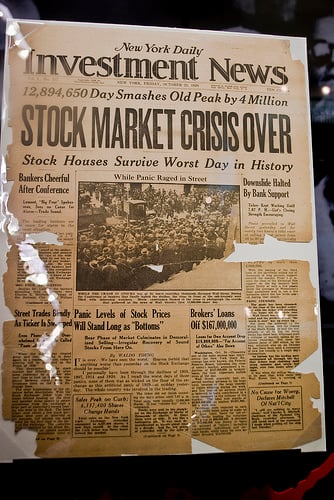
Of interest to investors, scholars, and consumers, then, is any data comparing graphs of today's stock market trends with the stock market trends from 1929. In 1929, the crash marked the launch of the Great Depression of the 20th century - even though it was years before that period was identified as, indeed, a depression.
While we do not have the advantage of hindsight to produce ready answers, I recommend you consider the following questions as you examine the 1929 stock market graph and other historical data and compare the trends for yourself.
Look at the Historical Stock Market Charts
Here you can view the online Dow Jones archived data in question. Examine not just the daily stock market charts for 1929, but the Dow Jones Industrial Average from 1929 and earlier through the 1940s up through 1945.
Note the plunges in the stock market in 1904, 1908, 1921, and other key years. Note too the peaks in 1906, 1917, and more. Compare the graph data with daily stock market charts in modern times, being sure to take into account that the Internet has an accelerating factor on the pace of economic change.
Consider the wild fluctuations in the market that occurred in 2008 and 2009. Consider the optimism of the past and the inevitable plunge in the fall.

The World Wars Sandwiching the Crash
In interpreting the 1929 data and comparing it with other years, consider the numerous factors that may have had an effect on the 1929 stock market crash and Black Tuesday.
- How did World War I (1914-1918) affect the stock market?
- Which nations - such as Japan - responded differently to the crash?
- How did World War II (1939-1945) affect the recovery?
The post-war era in the U.S. was a time of rapid change in society as the United States moved into a new economic model of industry and commerce. Ask yourself if, without the existence of a world war, there are any factors that act in a way similar to a world war in today's society. Hint: Two things that can devastate society are wars and technological changes.
Clues of the Great Depression
Study more than just the graph. Read all you can about the era of the Great Depression.
Read about the investors during the 1929 stock market crash and the Great Depression - where the Wall Street investors made their money, which investors lost money, and what economic opportunities rose and vanished.
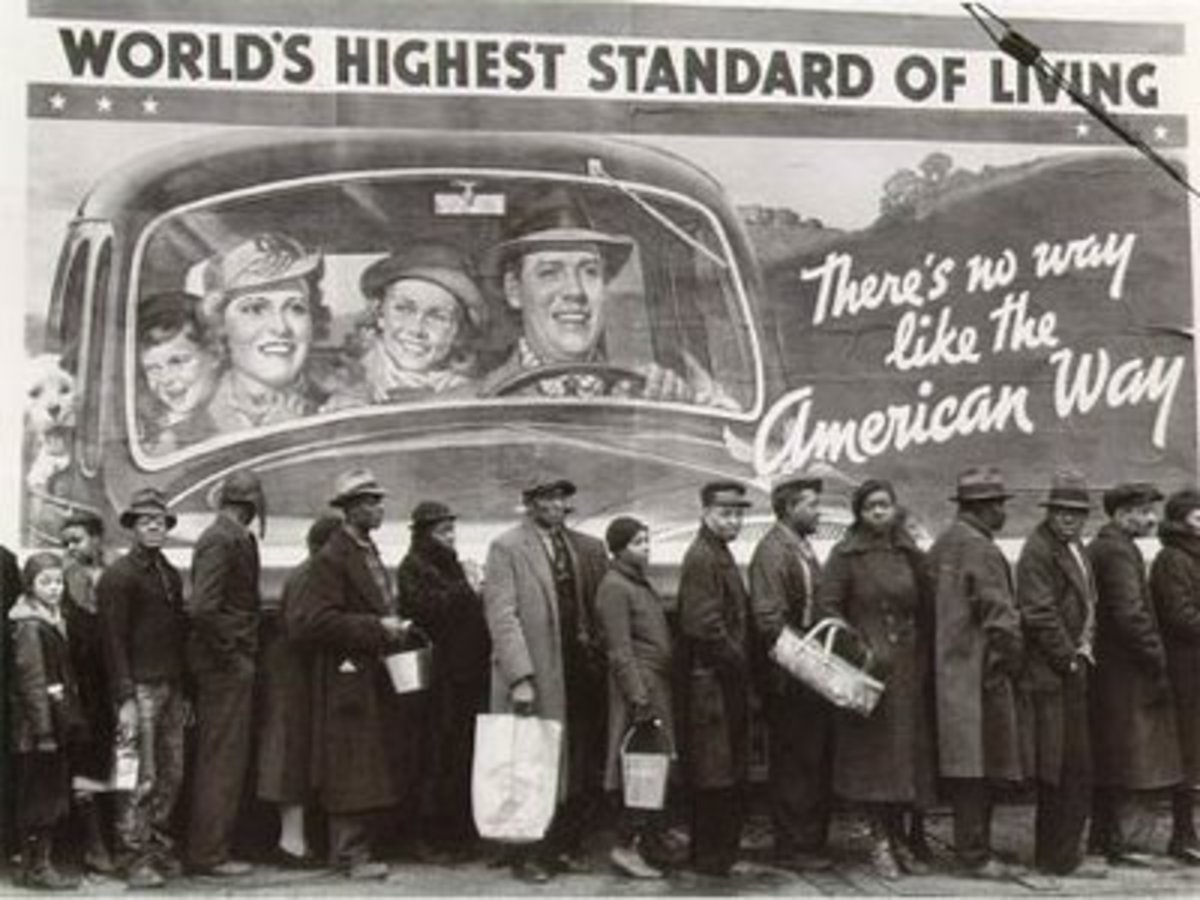
Think in particular about the strange duality of extreme economic opportunity co-existing with economic hardship, and about the same thing in our modern times. What might cause this now?
What Comes After the Downturn?
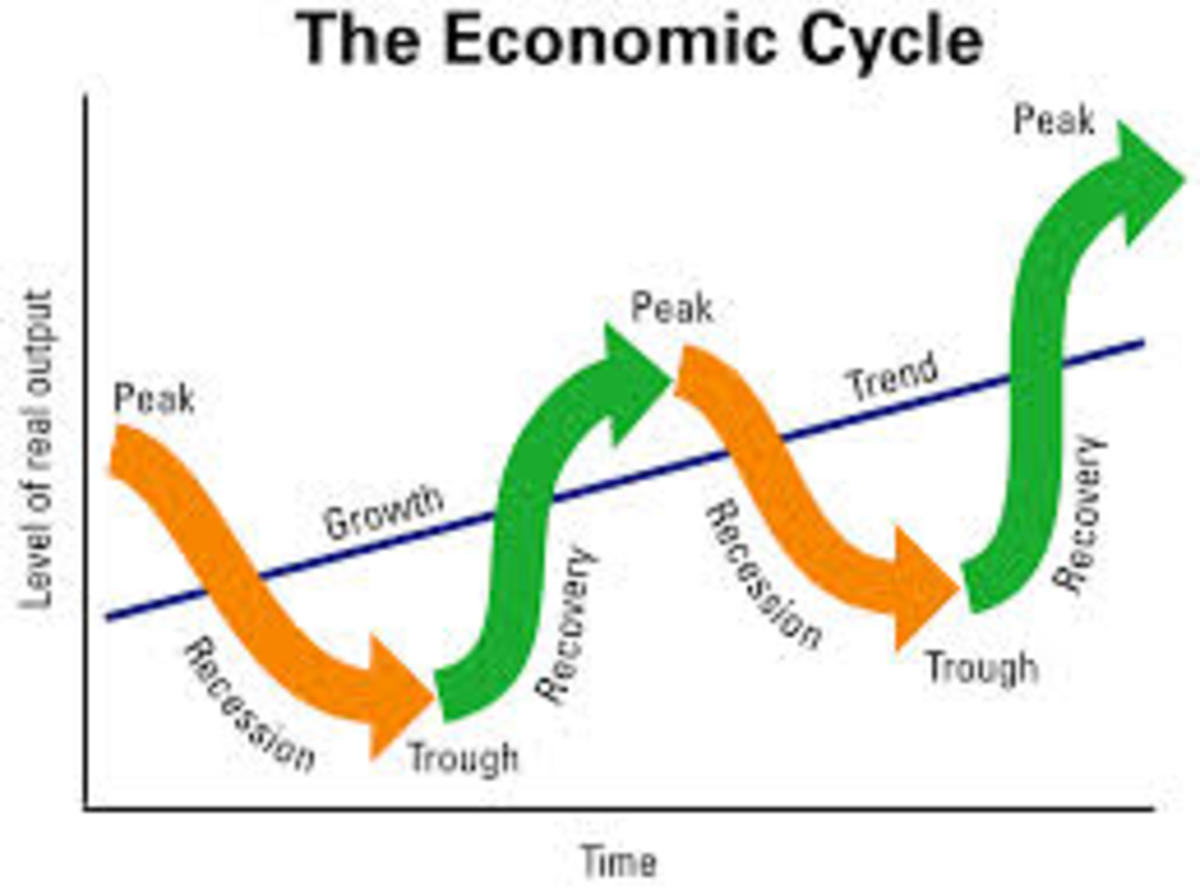
One might speculate that the economic recession and possible depression will end in a restoration of normal commerce...or, alternatively, that economic recessions and depressions are actually watershed periods, shake-ups in society that mark permanent changes in economic patterns.
As you consider these issues, keep in mind that history does repeat itself, not because
human beings never learn, but because human nature is what human nature
is. The economy, while comparable to a force as powerful as a tidal wave, is still a social force, led by people. Just as societies can change permanently, so can the economy. Nobody really knows what the world will look like after this downturn. Perhaps it will be something new and better. We can only hope.
My Thoughts on the Greatest Depression
There are a lot of similarities between our times and the time of the crash of 1929. I think we're in the midst of not just the early days of a depression, but a permanent economic change such as that which followed the last Great Depression.
That depression lasted twenty years, until the end of World War II. It was followed by a technological, cultural and economic boom evocative of the European Renaissance following the pandemic of the Black Death. The Baby Boomers grew up enjoying the promising climate of this economic surge. By the time Generation X were in the work force, however, the boom had begun to fizzle, and economic opportunities had started dwindling - accounting, by the way, for the much-maligned back-to-live-with-parents habits of Gen X and subsequent generations.
Since then, that bold galleon that had ridden the full-bodied waves of a healthy economy in the 50s, 60s and 70s has been slowly, undramatically, yet perceptably sinking. And now it's half under water and floundering.
Why? And why is the economy visibly cleaving into two sectors: those who are succeeding and those who are failing - just as it did during the Great Depression? I think I know why, but then we all have our favorite theories.
What do you think is going on? Are we in the Greatest Depression? And if so, why?
2015 Poll: Depression or Recession? What's Your Take?
Is the World Going Through an Economic Depression in 2015?
U.S. Poll - August 2011 - December 2011
Do You Think the United States is Going Through an Economic Depression Right Now?
- 70% Yes, this is an economic depression.
- 24% No, this is not a depression, but it is a recession.
- 4% No, this is not a depression, and the economy is doing fine.
- 1% Other
This poll is now closed to voting.
WORLD Poll: August 2011 - December 2011
Do You Think the Entire World is going through an Economic Depression Right Now?
2010 Poll: Is the United States Going Through a Depression?
Do You Think the United States is Going Through an Ecnomic Depression Right Now?
- 2% No, the U.S. economy is doing just fine.
- 1% No, the U.S. is in a mild economic downturn.
- 26% No, the U.S. is still in an economic recession.
- 39% Yes, the U.S. is squarely in an economic depression.
- 32% Yes, the U.S. is already in the midst of the greatest depression of all time.
This poll is now closed to voting.
2010 Poll: Is Your (Non-U.S.) Country Going Through a Depression?
If you don't live in the States, is your country going through a depression right now?
- 10% No, the economy is doing well.
- 10% No, we're in a mild economic downturn.
- 24% No, we're just in an economic recession.
- 31% Yes, my country is in a true economic depression.
- 26% Yes, we're already in the midst of the greatest depression of all time.
This poll is now closed to voting.
2009 Opinion Poll: Are We Going Through a Depression Right Now?
Do You Think the World and/or Your Country is Going Through an Economic Depression?
- 4% No, the economy is doing just fine.
- 1% No, we're in a mild economic downturn.
- 22% No, we're still in an economic recession.
- 39% Yes, we're squarely in an economic depression.
- 33% Yes, we're already in the midst of the greatest depression of all time.
This poll is now closed to voting.