Strange Daze on Fantasy Island
73Tenerife, fantasy and reality
Before you read this, please read the following hubs, which will serve as an introduction.
http://hubpages.com/hub/The-Bard-of-Elys-Nature-Conservation-Site
Some thoughts on the Bard's supposed eccentriciy
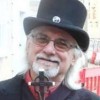
This is the thing about Steve, why he seems so eccentric to us ordinary mortals, that he sees things and feels things from Nature's point of view. There's a certain look he has, a way of looking. He'll pick something up, a small plant, a leaf or a flower, or he'll get down on his knees to look at it, peering over his glasses, and you can see that he is completely immersed in that world - in that plant, in that tiny, grimy, grubby environment - completely absorbed in the life he sees there. It's Life that interests Steve - "Life" with a capital "L" - the very processes of it on the small scale and the large scale, its very existence. And you can tell that he makes no differentiation between life forms. All are equally fascinating to him. All have an equal right to exist.
I think that's why he finds the human world so strange. In a sense he looks at the human life-form in exactly the same way. It is weird and fascinating to him. It is a sign of Life - the Big Life - that weaves and patterns its way through the world in all it's peculiar, variegated splendour. But he's not at all caught up in human self-promotion, or in the out-of-kilter human belief that only human things matter.
In other words, Steve just hasn't got the slightest notion about politics.
This is what I mean by "politics".
Politics is the human world. It's from the Greek "Polis" meaning city-state. The Greek city-states were amongst the earliest human examples of the urban life-style. Most of our modern Western concepts arise from them. There were sophists there and sophistry. The people who lived in the city-states were proud to be called sophisticated. The words "polite", "police", "policy" and "politics" all derive from this original concept. They all describe ways in which human beings work out their relationships in a purely human world.
All of this comes as second nature to most of us. We live in a world mediated by words. We make policy decisions on a daily basis. We are guided by the policies of others. We are polite in that superficial way, restraining our words so they don't cause offence. We police our own thoughts. We guard our words. We keep our thoughts (our unguarded words) to ourselves and we all think we are so, so important.
The political world is a false world created by the imagination. We live in it because we've forgotten it ever was otherwise. We negotiate our way around it with telepathic ease. That's why politicians lie. They are only grander versions of ourselves with more to gain and more to lose. They put on a false face because we require it of them. But they are only ourselves in another form.
We are all politicians.
But in the world of Nature all of this is just a blip in time. From the Greek Polis to the modern political state and the state of mind it engenders - from 500BC to today - is no time at all in biological terms. And meanwhile the biological world continues. The world that Steve personifies as "Mother Nature".
This is the world that Steve lives in and prefers, the world of plants and insects and animals. He only comes back to our modern world as a matter of necessity, in order to earn a living. But he is always puzzled by it. Our grand designs, our monstrous gestures, our strange disregard for the perennial requirements of Nature, our endless distractions from reality, none of it makes much sense to him.
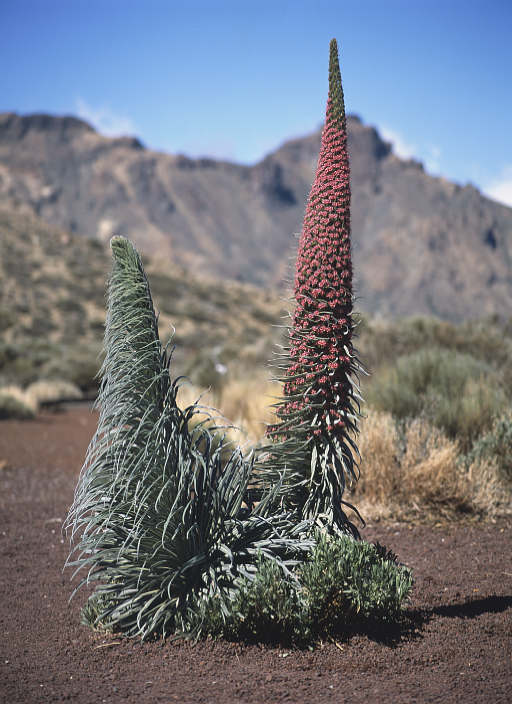
A Triffid
|
|
Going Native in Tenerife
Price: $17.35
List Price: $18.99 |
|
|
Aa Essential Tenerife (Aaa Essential Travel Guide Series)
Price: $3.46
List Price: $8.95 |
|
Tenerife Travel Pack (Globetrotter Travel Packs)
Price: $8.47
List Price: $14.95 |
|
Insight Compact Guide Tenerife (Insight Compact Guides)
Price: $6.96
List Price: $7.95 |
Which one is the weirder?
Anyone who has been to Tenerife at all will know that, historically, the people lived on the North side of the island, and that the South side is essentially a desert. The only people who lived there, in the past, were fishermen. This is because there is a prevailing wind, from the North, to the South. The wind blows off the vast ocean carrying it's load of watery air, hits the volcanic mountain around which Tenerife has formed, and drops it as rain. Hence there is always cloud perched over the mountains above Puerto de La Cruz, and the land is green and rich. But by the time the wind has reached the South it has off-loaded all it's burden of moisture, has become as dry as the dust it stirs in the Barrancos, the dry river valleys that are gouged out of the Southern landscape, a sign of the occasional torrents that break the otherwise fearsome conditions.
All this has changed, of course, with tourism. The North is hot and wet, but the South is just relentlessly hot.
So this is where the tourist trade has grown up, in the desert regions in the South, particularly around the once-small fishing village of Los Cristianos, where the sun can be guaranteed all year round.
Well Los Cristianos is not small any more. It stretches out along the coast through Las Americas to the Costa Adeje in the West in a vast conurbation of shops and hotels and bars and restaurants, crawling along the seafront and up the hillsides and growing ever taller and more grand in its hunger to satisfy the tourist's requirements for more views and more entertainments.
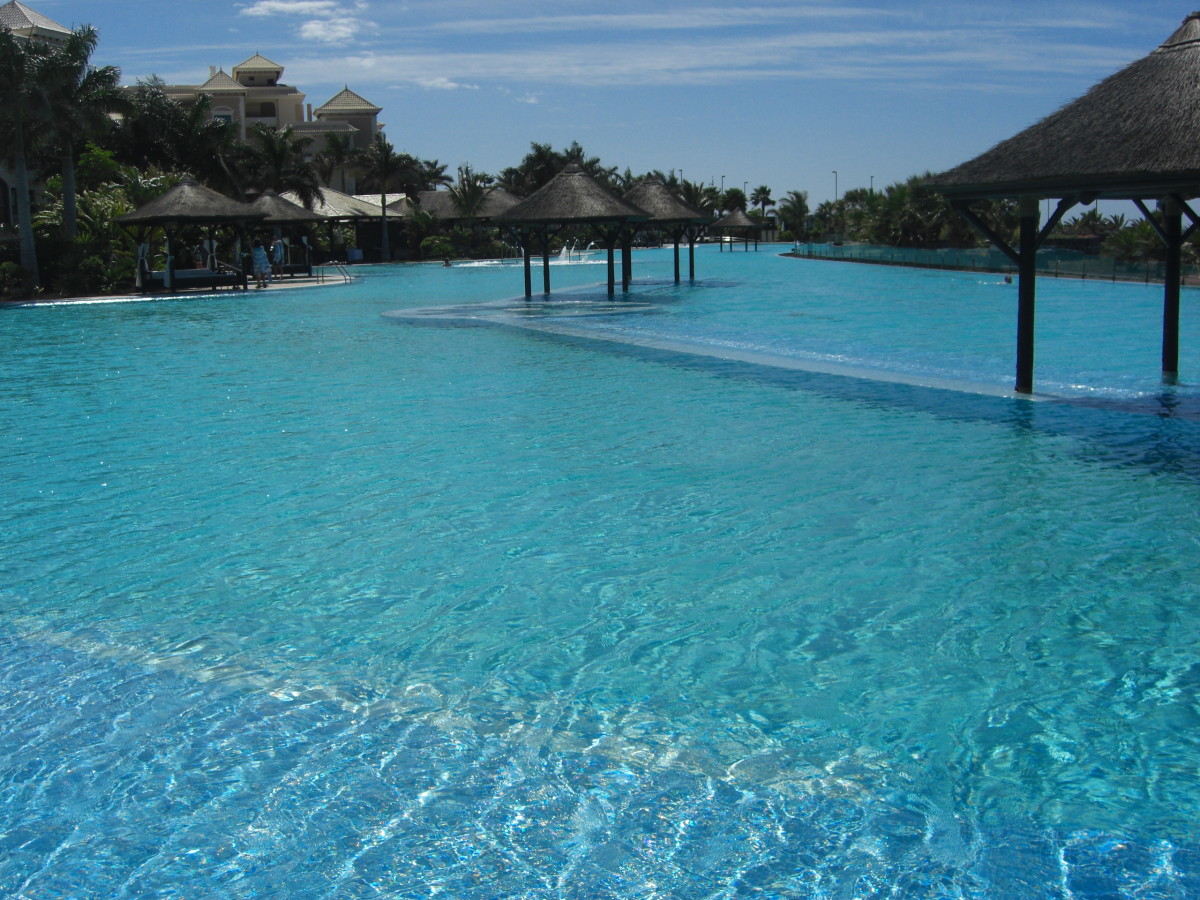
It is a landscape of fantasy and delusion. You see all sorts of strange things there. Mayan Temples and ornate, gated communities, with elaborate architectures of marble and glass. There are chip-shops and English pubs and cafes serving full English breakfasts. Bars and clubs that are open all night. People go to Tenerife to see the sun and then never do. They are up all night in the bars instead. Yachts and speedboats jostle together in the Marina, bobbing up and down on the diesel-stained waters. Air-conditioned shopping malls with piped music. Seafood restaurants in this land surrounded by sea, serving fish flown in from Spain and the EU. White sandy beaches made with sand imported from the Sahara desert. And the golf course at Adeje with its undulating fairways and greens of the finest English grasses.
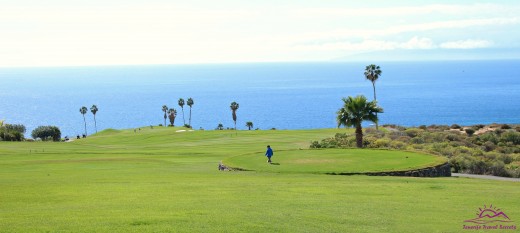
This is the strangest of sights: a whole suburban golf-course meandering around a hillside: green and sparkling with the sprinklers all day, fed by brand new roads and surrounded by marble palaces and lush green lawns; and then, suddenly, abruptly, where the golf course ends, a desert.
But this is the oddest desert you ever saw. A desert fed by water from the golf course. So all of these plants and cacti and succulents that spend the majority of the year on the rest of the island in stasis, as it were, in hibernation awaiting the rains, are in full, constant, psychedelic bloom.
I mean that literally. "Psychedelic". It means "mind-expanding". And that's what the plants appear to be. Weirdly extravagant expressions of a deranged God-head. An acid paradise of bloated strangeness. Great fat strange shapes bursting from the desert landscape like a madman's babble in the brain. I could almost hear the telepathic buzz of these Triffid-like monstrosities, communicating inter-dimensional thoughts at each other.
And then you'd shift your gaze a metre or two the other way to see an English lawn and some guy in checked shorts and socks lugging an electric trolley about.
Which one is the weirder I wonder?
- Whitstable Views on HubPages
Stories and opinions from the North Kent Coast. An on-line column by Whitstable writer CJ Stone.
PrintShare it! — Rate it: up down flag this hub
Comments
Hi Steve, thanks for the info re the plant. Actually I want a photo of all those plants near the golf course. They were so odd. As for stories including you, Steve, I haven't got to the really funny one yet.
I'll send you some plant pics of ones that grow in the desert parts. Hopefully some of them will be right!
BTW when I first got here and became fascinated by walking in such places the America lyrics to Horse with No Name made even more sense:
"On the first part of the journey I was looking at all the life,
There were rocks and birds and plants and things, sand and hills and rings.
The first thing I met was a fly with a buzz and the sky with no cloud,
The heat was hot and the ground was dry and the air was filled with sound.
I've been through the desert on a horse with no name,
It's so good to be out of the rain,
In the desert you can remember your name because there ain't no one to give you no pain."
Habia visto anteriomente el libro Tenerife Isla de Amores.
Siendo un libro que habla de tenerife y esta pagina tambien habla de Tenerife he visto que ya no esta, me gustaria verlo y que lo promecionen no solo por el libro sino tambien por esta pagina, gracias.


Bard of Ely says:
18 months ago
Thanks for including me in another story, Chris, and yes, that is an acurate depiction of me in many ways!
BTW the "triffid" is a Taginaste rojo (Red Viper's Bugloss) and I have two in pots. I want to get a lot of seed - it is a very rare plant in the wild and also not commonly grown in gardens either which was a mystery to me seeing as you can buy the seeds in packets. A friend suggested that its only tourists that buy them though and I think she might be right!
And I think its mad how they waste all that water on lawns and golf courses in a hot desert and when the island is often short of water - it is now! But not many people would agree with me so I watch their madness and continue wondering what the future holds in store for this paradise being ruined!