Summer Palace

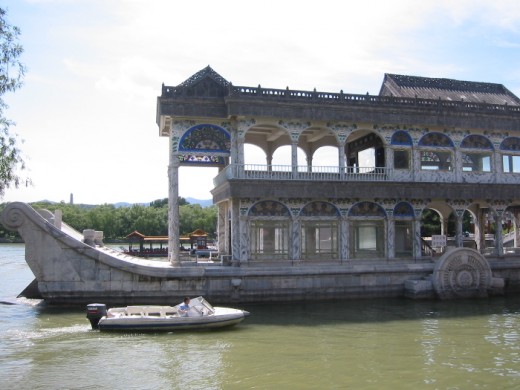
Marble Boat
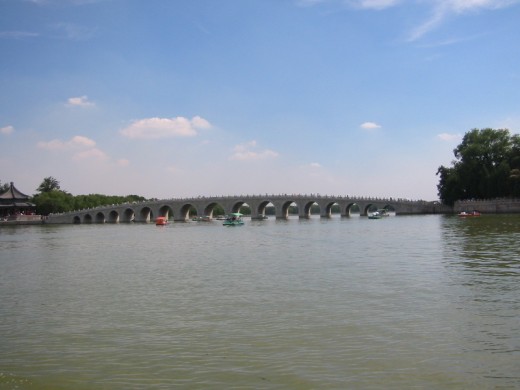
Seventeen Arch Bridge
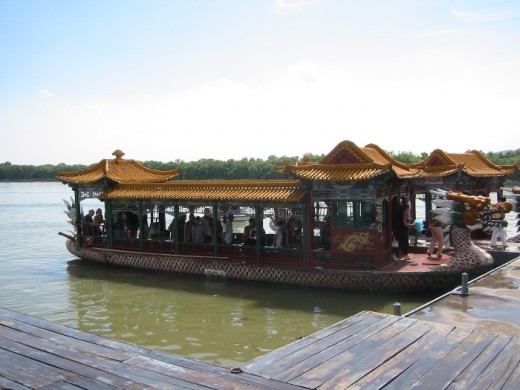
Boat Cruise
Summer Palace
The Summer Palace began as the Gold Mountain Traveling Palace in the 12th century. At that time, water was diverted from the Jade Spring to form the Gold Sea, which was the beginning of the lake that is now called Kunming Lake. When the lake was later enlarged, the palace was renamed Jug Mountain. These early beginnings of a palace were renamed Longevity Hill near the turn of the 20th century. At that time, most of what is now know as the Summer Palace was built. The Summer Palace stopped being used by the imperial family in 1908, and it became a public park in 1924. The Summer Palace contains the Deheyuan (Court of Virtuous Harmony), which is the largest in China. The theater has trap doors in the floor and ceiling that were used for the entrances and exits of supernatural characters during shows. The Summer Palace is a popular place for Chinese, as well as tourists. Many Chinese were enjoying a family picnic lunch in the park. During my visit, we walked along the Long Corridor, which goes for about 800 feet along the lake. From here, you can see the seventeen-arch bridge that crosses the lake to reach South Lake Isle. The corridor is elaborately painted from top to bottom and end-to-end. Along the corridor there are paintings of scenes from Chinese legend, history, and literature. At the end of the corridor, you will see the Marble Boat. Although, for obvious reasons, the boat does not go anywhere, you can take short cruises on colorful boats that resemble the Marble Boat from one side of the lake to the other. Open daily from 9am to 7pm.