Learning to Love Math
Math is Naturally Fun
The Joy of Teaching Math
Math has always been easy for me but it wasn't until I started taking classes to get my teaching certificate that I came to truly love math. Both my mom and dad loved to play card and board games. They taught my sister and me many mathematical concepts while playing these games without even realizing it. Puzzles and patterns, statistics and probability were daily conversations.
Then came school. Math was nothing but numbers written on paper. Easy to do but very boring and seemingly unrelated to life. Breezing through each worksheet, pages of math problems and even finishing the 7th grade math book mid-year, math became a hated subject to be put aside as quickly as possible.
I vowed that the day I graduated from high school would be the last day I ever took a math class. I succeeded in that goal all through college but when I wanted to get my Elementary Teaching Certificate the state of Vermont had other ideas. So I signed up for a summer class in teaching math.
Using Cuisenaire Rods
Math is More than Numbers
The Day I came to Love Math
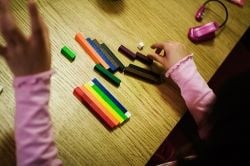
The first day of class the professor brought out pattern blocks and Cuisenaire rods. He asked us to play with them. We made patterns. We built walls. We made towers that tumbled down onto the desk with a sound that only natural wood can make. These blocks felt good in your hands with smooth edges and brilliant colors. He started to explain the mathematics behind the structures we were building.
Mathematics is based on patterns and when you build a pattern block wall, you are using mathematics. When you put a Cuisenaire rod that is 2 cm long next to one that is 3 cm long it is the same as the one that is 5 cm long. (2+3=5)
Then he got me completely hooked when he showed us how to play music on the Cuisenaire Rods.
This was math that was alive. Math that made sense. Math that I could use happily and willingly to teach the wonders of math to children.
I wish I could remember this professor's name. I guess at the time the revolution I found in discovering my love of math was more important to me. Now I hope to thank him by passing on this love to other teachers and homeschoolers.
Integrating Mathematics
Math is Everywhere
Mathematics does not have to be taught in isolation.
Math is fun, artistic, musical, historical, scientific, active, something to write home about.
Mathematics can be taught using fun, interactive learning materials as part of unit studies and as an everyday part of life.
All children can learn and enjoy math when given the right materials and opportunities. The best games for learning math involve children working together to discover the mathematical principles behind the activity.
Children should be expected to make up their own math games and play those games with others often.
Math can be enhanced by explaining what you have learned to others and by writing down those explanations in math journals.
What needs to change in mathematical education?
Teaching Math - Teaching a True Understanding of Mathematics
Numbers REALLY Mean Something
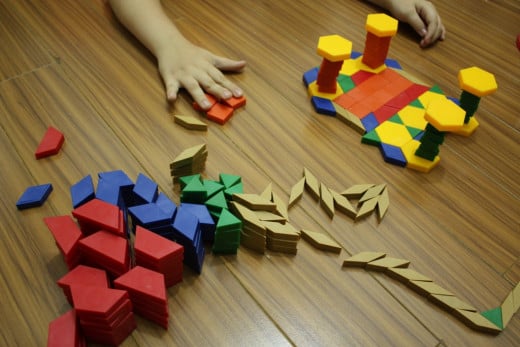
Each day since that class I have found new ways to make math come alive. When we discovered live sand dollars on the beach in Costa Rica to counting buttons with children in a small Vermont school I found that children responded with equal enthusiasm. How their eyes light up with understanding as they see 4 X 6 = 24 after arranging square pattern blocks into a rectangle with 4 blocks on one side and 6 blocks on the other.
Oh, you mean those numbers really mean something?, one child said to me one day.
When I homeschooled my own children I discovered ways to teach even algebra using Cuisenaire Rods and that hands-on approach has made it possible for my daughter to teach children mathematical concepts that her high school teachers and college professors were not able to get across to certain students.
I have found that the hands-on approach gives children the concrete understanding of mathematics that makes abstract mathematics comprehensible.
The Calendar
Calendar Time - Number Corner Math
Calendar Time Math
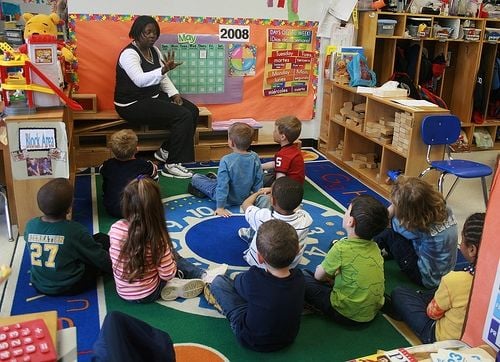
Calendar Time is my favorite time for teaching and practicing math facts. The children gather on the rug and play a guessing game to try to figure out the next picture in the math calendar pattern. By careful observation and logical reasoning they, of course, begin to accurately predict the next picture in the pattern.
After turning over the picture of our calendar we work on number sense, place value, odd and even, temperatures, skip counting and more.
I often read books to the kids that illustrate math concepts at this time as well.
Geometry
The Mathematics of Shapes
Teaching Geometry
At first it could appear that pattern blocks are just pretty colored blocks for playing with but the longer you play with them the more mathematical concepts can be seen.
As you play with your children talk about angles, sides and tessellation. Using math terms will help them as they advance in their understanding of geometry. If you are not sure of the terms, check out some videos to refresh your memory.
Make playing with the pattern blocks a fun activity and just use the terms in natural conversation..
Patterns in Math
Math for Lapbooks - Exploring Numbers in Mathematics
Math is all about Patterns
Math explains the world using patterns. Those patterns are usually represented in math as numbers.
From the beginning of the year we practice recognizing patterns.
- We make patterns with the days on the calendar.
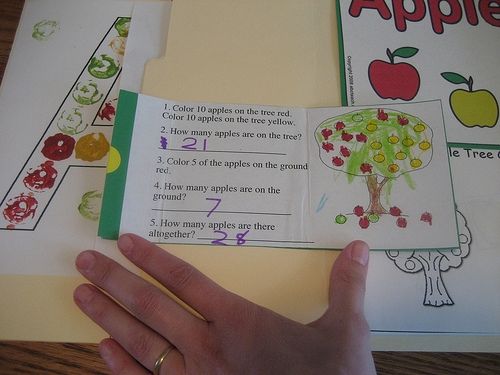
- We use red and green fingerprint paint dots to make patterns of apples on the letter A.
- We line up our shoes left, right, left, right
- We make clapping patterns clap, clap, snap
- We create necklaces with bead patterns
- We collect acorns, leaves and sticks and then turn those into patterns
- We look at the spirals of sun flowers and pine cones.
Everywhere we look we find patterns.
Writing Numerals
Teaching Numbers - Writing Numbers
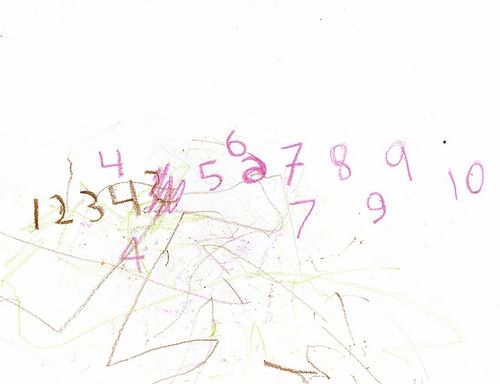
Hands-on Numbers
Learning to write the digits 0-9 can be lots of fun when it is turned into art projects. Try to think of as many different materials as possible for forming the numbers. Children can paint, draw, sculpt or stamp their numbers.
Introduce each of the materials and show the children how the materials should be used, how to get them out as well as how to put them away. Be sure to model this behavior and ask for volunteers to demonstrate the proper use of the materials.
Set out number writing stations and allow the children to choose the station they would like to work in.
Some of my children's favorite materials for writing numbers included:
- Cooked Spaghetti on black construction paper
- Colored chalk on a wet blackboard
- Salt trays with fingers
- Glue and glitter on cardboard squares
- Knitting needles poked into construction paper placed over blocks of Styrofoam
- Play dough
- Split Peas and glue on cardboard shaped like Knight's Shields
- Number Stensils, felt and scissors. Trace the numbers, cut them out and glue them onto flags
- Roll on Deodorant bottles filled with thin paint - Roll the numbers on long strips of butcher block paper
The Four Operations
Addition, Subtraction, Multiplication and Division
First Grade Math with Mrs. Thompson
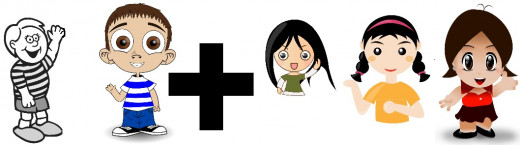
Learning Addition
Mrs. Thompson asked the first grade girls to go to the front of the room. Then she asked the boys to go to the front of the room. Then she told us that 3+2=5. You see, there were only 5 children in my first grade class.
This is the first math lesson that I can remember and the only one that I can remember for years. What was it about that lesson that made it so memorable? I believe that it was the concreteness of the activity.
For years I was always one of the best math students in the class. I was always able to get the right answers but I never enjoyed math. Math never made sense to me. It was just playing with numbers.
Now I enjoy math so much that I collect fun math games and activities on Pinterest and often send post my favorites on my Teaching Math page on Facebook.
Place Value
Pirate Pete's Place Value - Place Value Bulletin Board
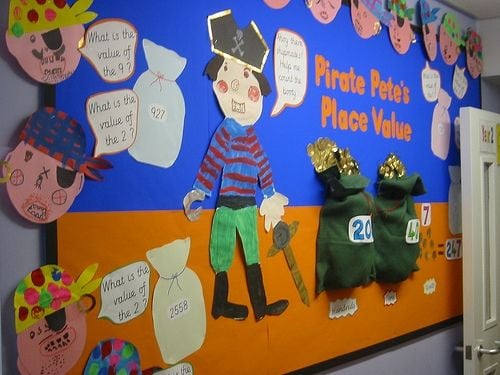
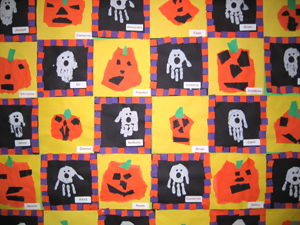
Pumpkins and Place Value
One day I substituted in a classroom where the children were exploring pumpkins that they had planted at the end of the previous school year. Those pumpkin seeds had grown into long tangled vines, produced blossoms and those blossoms had grown into huge pumpkins.
The amount of math they learned that day was phenomenal.
- They estimated the weight and compared it to the actual weight.
- The measured the circumference with strings and then graphed the results by hanging the strings in order of height.
- The counted the ridges saving those numbers for the day they would learn about the Fibonacci sequence.
- They measured the diameter and radius of the pumpkins after cutting them in half.
- Then the began counting seeds.
For me, counting the seeds was the best part.
- Put ten seeds in a small plastic pumpkin..
- Put ten small plastic pumpkins in a large plastic pumpkin.
- Once all the seeds have been counted, count the seeds by 100's tens and ones.
Telling Time
Learning to Tell Time
Math is Everywhere
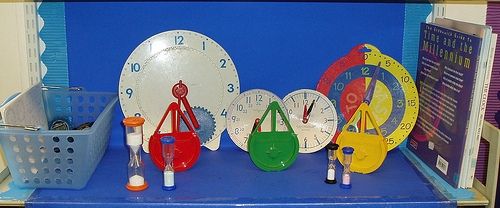
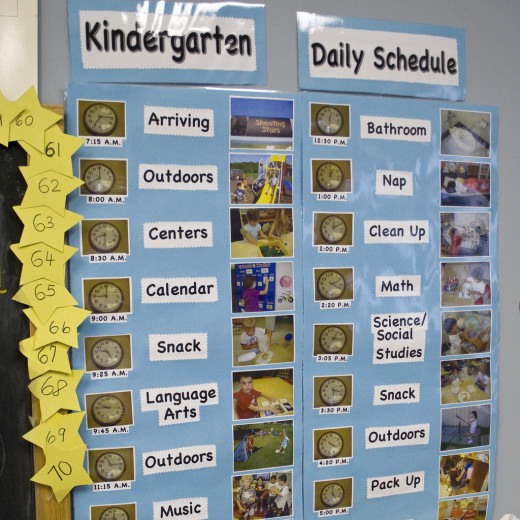
Posting a schedule with both analog clock and digital clock times helps children to learn how to tell time, recognize the order of when things happen and begin to understand lapsed time.
Each day during Calendar or Number Corner Time we would go over the schedule for the day. I had a basket of clocks near the number corner which the children used to show times. At first we would find just one or two times making sure that each of the children were able to put the hands in the correct places. By the end of the year, all of my first graders could show any of the scheduled classes on our chart.
Sometimes a few of the children would even practice their clocks during free choice time.
Posting Clocks and Times
Measurement
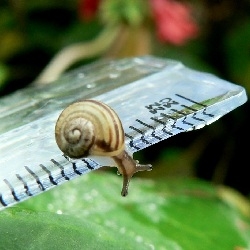
Measuring a Snail
Measuring the World
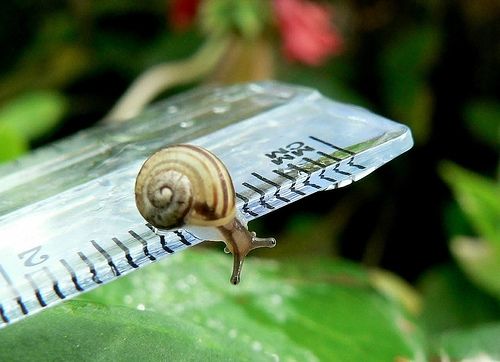
We measure when we cook and we measure when we construct. All day long we are using measurement to organize our world.
One day we were reading a book that mentioned 100 yards. Do you know how far that is? Neither did we so we got out a yardstick and measured it. We put the yardstick down in front of our house and flipped it end for end 100 times just to visualize how far it was.
To this day, when I think of 100 yards I remember that day and use that memory to visualize that distance.
How else do we use measurement in our daily lives?
- We measure the amount of gasoline we put into our cars.
- We weigh the filling we put into our pies.
- We measure the amount of oil left in the oil tank.
- We measure the temperature of the sap as we boil it into maple syrup.
- We measure the height of letters using picas.
- We measure flour in cups.
- We measure salt in pinches.
What else do you measure and what do you use to measure it with?
Math Games
Playing Math Games - Probability
My favorite Math Books for Early Grades - Teaching Math the Fun Way
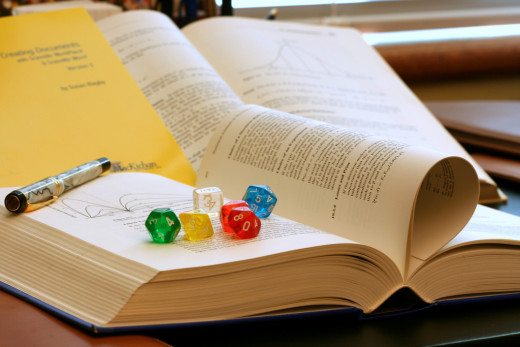
If I could buy just two books for teaching math I would buy Hands-on Math and Count-on Math. They offer practical, hands-on ideas for teaching math with materials that are easily found around the house or are very inexpensive to buy.
These books have ideas that work well in either a classroom setting or when homeschooling and also offer ideas for parents who just want to play with their children.


Count on Math
Count on Math offers hundreds of math related activities and experiments using items normally found around the house. One of my favorites is setting up a hanging cone with sand in it to watch the pattern made as the sand pours out the bottom.
Math Games
Math can be as simple as a pair of dice!
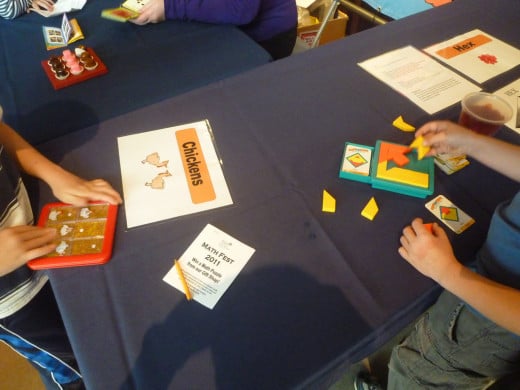
When my kids were learning math facts we kept a pair of dice on the dining room table. Each time we sat down we would throw the dice to play quick computational games.
- Each person rolls a die to see which one is greater
- Each person rolls a die to see which one is less
- Roll two dice and add the numbers. Write down your sums. First person to 100 wins.
- Roll two dice. Subtract the higher number from the lower. First person to get to 0 when subtracting from 20 is the winner.
- Roll two dice and multiply. Add any two digits together. Odd numbers score two points. Even numbers score one point. First person to 20 wins.